Cost of Living in Gyumri
Real market data
Source: Numbeo · September 2026
$880/moSolo nomad1-bed centre + living costs
$1,220/moCoupleshared 1-bed + costs
$700/moLean / localcheaper area + costs
- 1-bed rent, city centre$460AMD 170,000
- 1-bed rent, outside centre$280AMD 104,000
- Monthly costs excl. rent (1 person)$420AMD 154,033
- Meal, inexpensive restaurant$10AMD 3,750
- Buy price, per m² (centre)$730AMD 268,000
Prices are from Numbeo (September 2026), converted to USD at $1 = 366.42 AMD (01 Aug 2026). The monthly living-costs figure is our transparent one-person basket, groceries, a few meals out, utilities, phone, internet, transport and essentials, priced from those figures. Solo adds central rent; couple and lean are estimates from the same numbers.
Gyumri is one of the most affordable cities in Armenia, running roughly 30-40% cheaper than Yerevan. Expect to spend between $325 and $545 per month excluding rent, or $680-1,230 all-in as a solo nomad.
- Rent, central apartment (1BR): $435-545/month
- Rent, cheaper area (1BR): $275-355/month
- Groceries (weekly): $22-38
- Eating out, sit-down lunch: $9.50-12 at a local place
- Dinner for two: $38-44
- Coffee: $2-2.50
- Coworking hot-desk (monthly): estimated $55-96; day passes typically $8-14
- Local minibus (marshrutka) ride: $0.50
- Monthly transport pass: about $35
- Internet at home: $18/month
Total realistic range: $630-900/month solo with a decent central apartment, or under $550 if you take a cheaper flat further out. Fresh produce markets keep grocery bills low, and you can eat well at local cafes for under $10 a meal.
Where to Work
Gyumri's remote work infrastructure is small but functional. The two main options are Corner Cafe and Coworking, a hybrid cafe and coworking space in the city center, and Loft Hostel on Gorky Street, which has a coworking area open to non-guests. The Gyumri Technology Center (GTC), funded by the Enterprise Incubator Foundation, also offers co-working space booking alongside labs and meeting rooms, making it suitable if you want a more tech-focused environment.
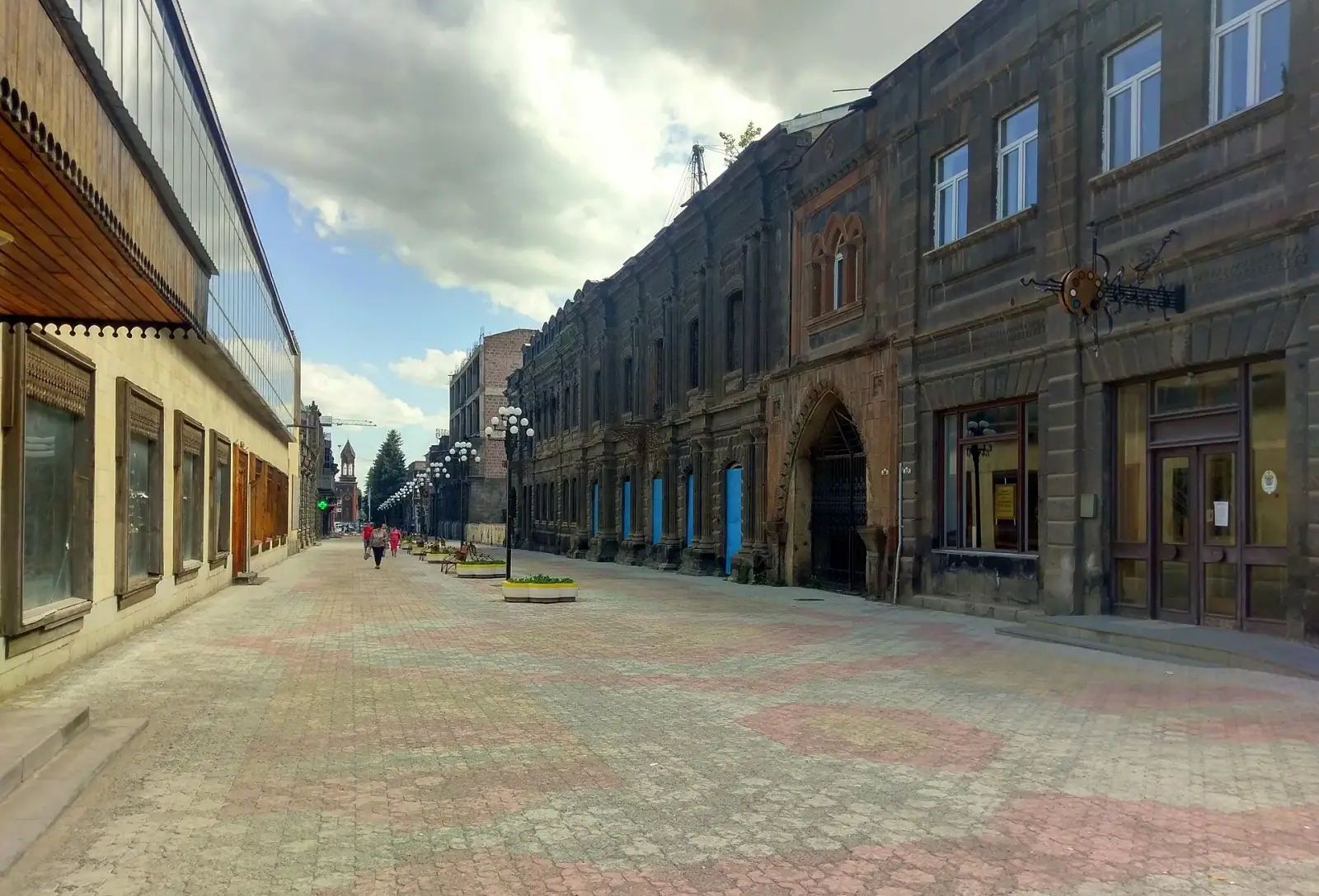
Cafe culture is real here. Herbs and Honey on Rijkov Street is popular with laptop workers for its relaxed vibe and quality coffee. Several other cafes on Sisakyan Street and Rijkov Street (the two main pedestrian strips) have wifi and do not rush you out. Connection reliability on fixed broadband and mobile is generally solid, though occasional outages happen in winter storms. Pick up an Armenian SIM card (Ucom, Beeline, or VivaCell-MTS) at the airport or a city phone shop for reliable 4G backup.
Getting Around
Gyumri is a walkable city for its center. The historic Kumayri district, main market, Rijkov pedestrian street, and most cafes and restaurants sit within a 15-20 minute walk of each other. You will rarely need transport for day-to-day life once you are settled.
Within the city, marshrutkas (minibuses) run fixed routes for $0.50 per ride. GG Taxi (the local Uber equivalent) covers the city at low cost; a cross-town ride typically runs $1.50-3.50.
Getting to Yerevan: a marshrutka from Gyumri's Gai bus station takes 1.5-2 hours and costs $4-5.50. A weekend express train runs in about 1.5 hours for roughly $7. A shared or private taxi costs $33-49 for the full car.
Shirak International Airport (LWN) is just 7 km from the city center, a 10-15 minute taxi ride for around $4-7. Direct flights connect Gyumri to Moscow and a handful of other CIS cities; for most European or international connections you will route through Yerevan's Zvartnots Airport.
Sorting transport? Book an airport transfer, or compare car rental on Auto Europe and QEEQ.
Visas and Staying Long-Term
Armenia is unusually generous on entry. Citizens of most Western countries (EU, UK, USA, Canada, Australia, New Zealand, Japan, South Korea, and around 30 others) get 180 days visa-free per year with a valid passport. No registration is required for the first 180 days. Georgia gets 360 days. There is currently no formal digital nomad visa for Armenia; most nomads simply stay on rolling visa-free allowances or leave and re-enter.
Extensions beyond 180 days require applying for a residence permit through the migration authority. The process is feasible but involves paperwork.
Best Time to Visit
Gyumri sits at about 1,550 meters elevation, which means winters are genuinely cold: January averages lows around -15 C (5 F) with significant snowfall. Summers are warm but not oppressive, with July and August highs around 26-27 C (79-81 F).
For remote work, the sweet spot is May through October. Late spring (May-June) brings green hills and mild temperatures before the summer tourist peak. September and October are arguably the best months: the heat has eased, crowds thin, and the surrounding Shirak landscape turns golden. Avoid November through March unless you are comfortable with freezing temperatures and want deeply off-season solitude; heating costs rise and some cafes have shorter hours.
Pros and Cons
- Very low cost of living, among the cheapest in the South Caucasus
- Rich history and architecture, the historic Kumayri district is UNESCO-listed and genuinely beautiful
- Safe and walkable city center, comfortable at night
- Authentic and unhurried pace; far less touristy than Yerevan
- Strong Armenian food culture, excellent local restaurants and markets
- Visa-free entry for most Western passports up to 180 days
- Small nomad and expat community; networking options are limited
- Limited English outside tourism-facing businesses; Russian is more widely spoken as a second language
- Few dedicated coworking spaces; no large coworking ecosystem
- Cold winters with potential heating and connectivity issues
- Fewer flights; most international connections go through Yerevan
- Earthquake legacy means some neighborhoods have older, less insulated housing stock
Who Gyumri Is Best For
Gyumri suits nomads who value affordability, authenticity, and slow travel over convenience and community size. If you are a writer, visual artist, photographer, or solo worker who does not need a busy coworking scene or regular networking events, Gyumri delivers a compelling package: beautiful surroundings, excellent food, very low costs, and a city that still feels genuinely itself rather than shaped around outsiders.
It is also a good base for exploring the Shirak region, nearby monasteries like Harichavank and Marmashen, and the Georgian border is accessible for a day trip or visa run.
Skip Gyumri if you need a large English-speaking community, regular tech meetups, fast international flight connections, or strong healthcare infrastructure in English. Yerevan is a two-hour marshrutka ride away and handles all of those needs far better. Gyumri works best as a primary base for those who have already spent time in Armenia and know what to expect, or as a 2-4 week deep-dive alongside a longer Armenia stay.