Cost of Living in Rotorua
Where this figure comes from. No cost survey covers Rotorua, so the $1,700 a month above is our own estimate rather than a measurement. On 416 of our 999 city guides the figure is built from a published Numbeo basket, a one-bedroom rent in the centre plus one person's monthly costs without rent, converted to USD; this city is not one of them. How we source everything.
Budget around $1,700 a month as a solo remote worker in Rotorua, which makes it one of the cheaper places to live in New Zealand while keeping full urban services. A one-bedroom apartment or a room in a shared house runs roughly $850 to $1,200, considerably below Auckland or Wellington. Groceries are expensive, as they are throughout New Zealand, and imported goods carry a premium that surprises people. A coffee is around $4 and a pub meal about $20. Geothermal heating is used in parts of the city and cuts winter energy bills noticeably. Transport costs little because the town is small and buses are cheap. Fibre runs about $55 to $75 a month for a fast connection. Running a car costs $250 to $400 monthly with petrol near $2.20 a litre, and it is difficult to avoid here. The geothermal district heating in parts of the city is a genuine and unusual saving, cutting winter power bills by a noticeable margin in the streets that have it, which is worth asking about before signing a lease. Rents in Ngongotaha and the lakeside settlements sit below the town centre and put the trails closer, which is the trade most riders here make.
Where to Work in Rotorua
Rotorua has limited formal coworking, with a small number of spaces serving the tourism and forestry businesses that dominate local employment. Most remote workers use cafes or their accommodation. Fibre broadband is widely available and New Zealand's network is good, with reliable speeds and reasonable pricing across the town. Mobile coverage is comprehensive in the built-up area and patchy in the forest and lake country around it. The practical consideration is that this is a tourism town whose infrastructure is set up for visitors rather than for professionals, so a longer stay means arranging a proper connection rather than relying on a guesthouse. New Zealand sits twelve or thirteen hours ahead of GMT depending on daylight saving, which puts it a full day ahead of Europe and makes European work a night shift, while a New Zealand morning catches the American west coast's previous afternoon. That asymmetry decides who can realistically base here more than anything about the town does. Tourism operators here run on their own seasonal rhythm, so short-term rentals loosen noticeably between May and September when the visitor numbers drop.
Getting Around Rotorua
Rotorua is small and the centre is walkable, with the lakefront, the Government Gardens and the main street all within fifteen minutes of each other. A local bus network covers the suburbs cheaply and the Redwoods mountain bike trails start a short ride from town. Beyond that a car is close to necessary: the geothermal parks, the lakes and the trailheads are spread across the district and the buses do not reach most of them. Auckland is three hours by road, Taupo an hour south, and the airport has domestic connections. Cycling is a genuine local culture rather than a niche. The Redwoods at Whakarewarewa hold around 180 kilometres of purpose-built trail and are free to ride, which is unusual for a network of that quality anywhere in the world. Wai-O-Tapu and Waimangu, the two large geothermal parks, are twenty and thirty minutes south and both need a car. The Te Ara Ahi cycle trail links the geothermal sites south of town and is one of the New Zealand Great Rides, which makes several of them reachable without a car after all.
Sorting transport? Book an airport transfer, or compare car rental on Auto Europe and QEEQ.
Visas for Rotorua
New Zealand has no digital nomad visa, but new visitor conditions that took effect on 27 January 2025 let anyone holding a visitor visa applied for from that date, or arriving on an NZeTA, work remotely for an overseas employer or overseas clients, which changed the position materially. Most Western nationals get an NZeTA and a visitor visa of up to three months, extendable to nine months in some cases. Working Holiday visas cover under-thirties or under-thirty-fives depending on nationality and allow twelve months with work rights. Longer stays run through employer accreditation or the skilled residence pathway. New Zealand adjusts its immigration rules frequently. The NZeTA must be requested before boarding rather than on arrival and airlines check it at the gate. The 2025 clarification settled what visitors may do while here rather than how long they may stay, so the three-month grant and its extensions remain the actual constraint on a longer stay.
Best Time to Visit Rotorua
November to April is the warm half of the year, with daytime temperatures in the low to mid twenties and long evenings. Summer from December to February is the busiest period, when domestic holidaymakers and international visitors fill the town and accommodation prices rise. March and April are the best combination of settled weather and thinner crowds. Winter from June to August is cool rather than cold, with highs around thirteen and frequent rain, and the geothermal pools are at their most appealing. Rain falls in every month here, so a dry spell is a matter of luck rather than season. Rotorua sits on the Taupo Volcanic Zone and the geothermal activity is constant rather than seasonal, so the mud pools and geysers are the same in July as in January, which makes winter a genuinely good time to be here when the pools are warmest against the air. Crater Lake at Waimangu and the Champagne Pool at Wai-O-Tapu are at their most photogenic on cold still mornings, when the steam holds rather than dispersing.
Pros and Cons of Rotorua
Rotorua puts a living Maori culture, a geothermal landscape and one of the best mountain bike networks in the world within a few minutes of a small, affordable town. The Redwoods, the lakes and the Whakarewarewa forest are genuinely exceptional. The sulphur smell is constant and takes real acclimatisation, the town is quiet and tourism-shaped, and there is no remote-working community here to join. New Zealand's distance from everywhere and its grocery prices are permanent conditions. Air quality scores a 6 because of the geothermal gases rather than any pollution, which is unusual and worth understanding. Te Puia and Whakarewarewa are Maori-owned and run, and the living village at Whakarewarewa has been continuously inhabited for centuries with residents still cooking in the steam vents, which makes it a working community rather than a cultural performance.
Who Rotorua Is For
Mountain bikers, trail runners and anyone whose weekends are the reason they chose a place, particularly with an existing right to work in New Zealand. It works for those who want a small town with real services and a landscape that is different from anywhere else. Nightlife, an international professional network and a city of any real size are all missing, and the sulphur in the air is a genuine consideration rather than a local joke: some people never stop noticing it. Forestry and land management run against all of that. The central North Island plantation estate is among the largest in the southern hemisphere, and the research and contracting sector built around it is based in this town rather than in Auckland. Held up against Queenstown, Rotorua is half the price, a fraction of the scenery and considerably better riding.
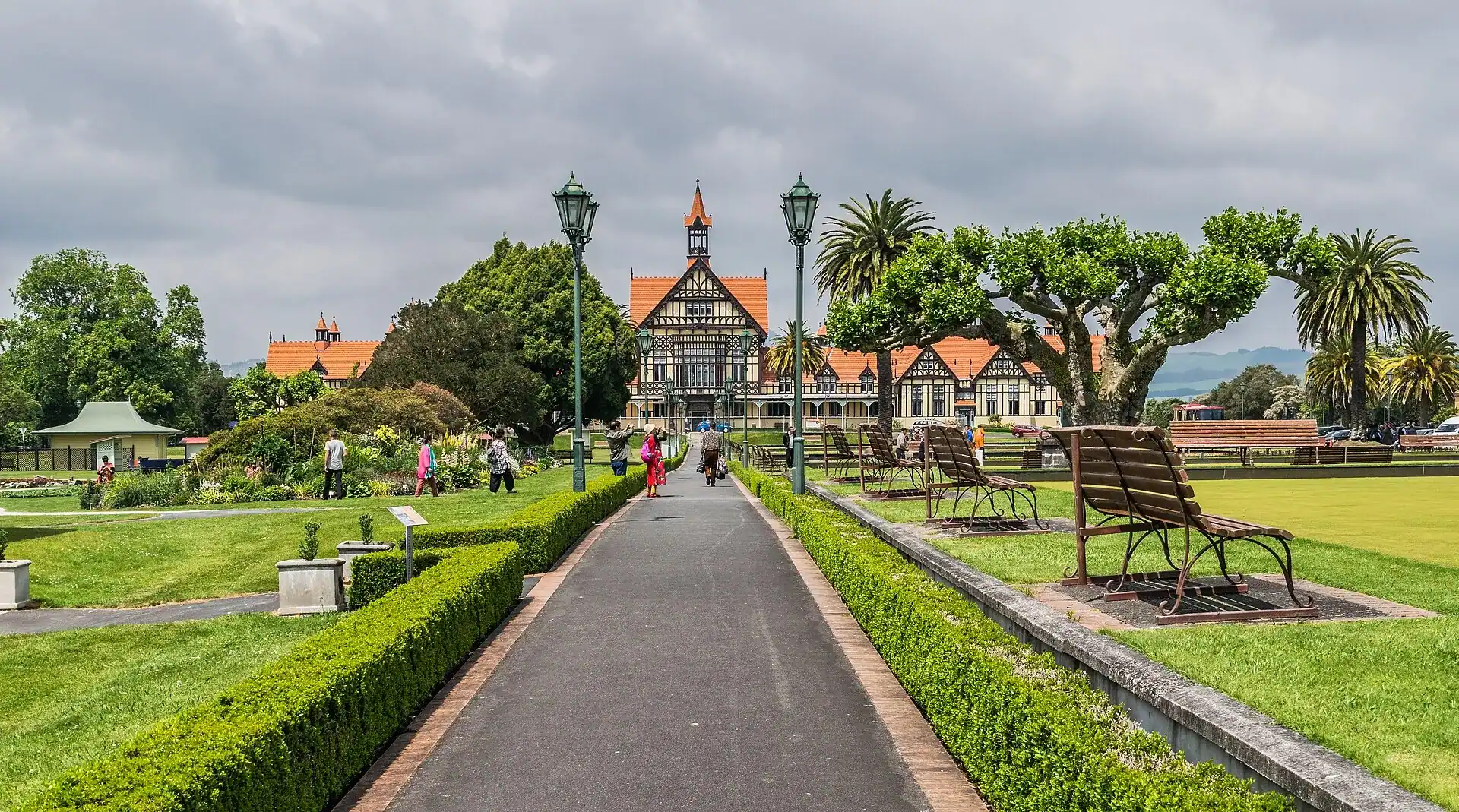 Photo: Krzysztof Golik / Wikimedia Commons (CC BY-SA 4.0)