Cost of Living in Napier
Where this figure comes from. No cost survey covers Napier, so the $1,700 a month above is our own estimate rather than a measurement. On 416 of our 999 city guides the figure is built from a published Numbeo basket, a one-bedroom rent in the centre plus one person's monthly costs without rent, converted to USD; this city is not one of them. How we source everything.
Budget around $1,700 a month as a solo remote worker in Napier, which is cheaper than Auckland or Wellington and about average for provincial New Zealand. A one-bedroom flat runs roughly $850 to $1,200, with the Art Deco centre and the Marine Parade seafront at the upper end and Taradale and Onekawa considerably cheaper. New Zealand grocery prices are high and imported goods higher still, which is the adjustment most arrivals find hardest. Hawke's Bay wine is one of the few things that costs less here than elsewhere in the country. Eating out is expensive by any measure outside the region. Fibre runs about $55 to $75 a month for a fast connection, and coworking desks $150 to $250. A car is close to unavoidable outside the flat centre and running one costs $250 to $400 a month with petrol at around $2.20 a litre. The wine is the genuine local saving: cellar door prices in Hawke's Bay are well below what the same bottles cost in Auckland, and several of the larger estates are within cycling distance of the town. Rates and insurance are worth checking on any longer let, since Hawke's Bay premiums rose sharply after the 2023 flooding and landlords increasingly pass them on.
Where to Work in Napier
Napier has a small coworking presence serving the wine, horticulture and port industries that dominate the local economy, with desks at modest rates. Fibre is widely available across the town at reliable speeds and typical New Zealand pricing, and mobile coverage is comprehensive in the built-up area. The port is one of the country's larger ones and brings a professional layer that a town this size would not otherwise have. Connections are arranged per property, so confirm what a lease includes before arriving rather than assuming the landlord has done it. New Zealand sits twelve or thirteen hours ahead of GMT depending on daylight saving, which puts it a full day ahead of Europe and makes European work a night shift. The compensation is that a New Zealand morning catches the American west coast's previous afternoon, so North American clients are workable in a way European ones are not. The port's expansion has brought logistics and engineering roles into a town that was otherwise wine and horticulture, which broadens the local network a little.
Getting Around Napier
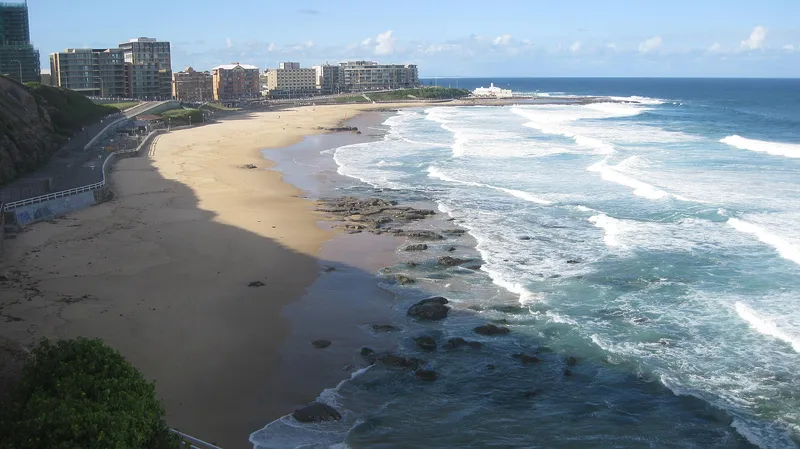
Napier is flat along the seafront and the Art Deco centre is compact enough to cross on foot in fifteen minutes. A local bus network connects to Hastings twenty minutes south, and the two towns function as one urban area for most purposes. The Hawke's Bay cycle trails run for over two hundred kilometres through vineyards and along the coast, which makes cycling genuinely practical rather than recreational. The airport is five minutes from the centre with domestic connections. A car matters for the wineries and the Cape Kidnappers gannet colony. The Marine Parade seafront runs the length of the town with Norfolk pines along it and is the reason the place reads as a resort rather than a port. Cape Kidnappers holds the largest mainland gannet colony in the world and is reached either by a long tidal beach walk from Clifton or by a tractor trailer that runs on the tide, so the timing is set by the sea rather than the timetable. There is no passenger rail; the line through Napier carries freight and a seasonal tourist service only, so intercity travel means the bus or driving.
Sorting transport? Book an airport transfer, or compare car rental on Auto Europe and QEEQ.
Visas for Napier
New Zealand clarified in 2025 that visitors may work remotely for a foreign employer while on a visitor visa, which changed the practical position for nomads considerably. Most Western nationals obtain an NZeTA and receive up to three months on arrival, extendable in some circumstances to a maximum of nine months within an eighteen-month period. Working Holiday visas cover a defined list of nationalities and ages with twelve months of full work rights. Longer stays run through the accredited employer route or the skilled residence pathway, and settings change often enough to warrant checking directly. The nine-months-in-eighteen ceiling is the constraint people miss: the visitor visa extends in stages rather than granting a long stay at once, and each extension is at the discretion of Immigration New Zealand. The 2025 clarification on remote work removed the ambiguity about what you may do while here, not how long you may stay. The NZeTA must be requested before boarding rather than on arrival, and airlines check it at the gate, which catches out a surprising number of people.
Best Time to Visit Napier
November to April is the warm half, with daytime temperatures in the low to mid twenties and Hawke's Bay recording among the highest sunshine hours in the country. February and March are the best months: the vintage is under way, the sea is at its warmest and the summer crowds have thinned. The Art Deco Festival in February fills the town for a week with vintage cars and period dress and is worth timing around or avoiding depending on temperament. Winter is mild with highs around fourteen and considerably drier than the west coast. Hawke's Bay regularly records over 2,200 sunshine hours a year, among the highest in New Zealand, and the region sits in the rain shadow of the ranges to the west, which is why the wine industry is here. Cyclone Gabrielle in February 2023 caused severe flooding across the region and its effects on the horticultural sector are still visible. Autumn brings the harvest and the region's food and wine events, and the light through March and April is the best of the year here.
Pros and Cons of Napier
Napier is the most concentrated Art Deco townscape outside Miami Beach, rebuilt in a single style after the 1931 earthquake flattened it, and it sits in New Zealand's largest wine region with a gannet colony down the coast. Costs are below the main centres and the weather is among the country's best. It is a small town, no other remote worker is here to meet, the international presence is essentially nil, and the distance from everywhere and the grocery bill are permanent conditions rather than temporary ones. The town also sits at the northern end of Hawke's Bay, so the region's other centre, Hastings, is twenty minutes away and the two share most services between them. The 1931 Hawke's Bay earthquake killed 256 people and lifted about 4,000 hectares of seabed out of the lagoon, which is the land Napier's airport and suburbs now stand on, so the town's shape as well as its architecture is a direct result of that single morning. The rebuilt centre is Art Deco with a strong Maori design influence in several buildings, which makes it stylistically distinct from anything in Miami or Napier's other comparisons.
Who Napier Is For
A warm, dry, small coastal town with good wine and a cycling network, once the New Zealand paperwork is in order. It works for anyone interested in architecture, since the Art Deco concentration is genuinely unusual. Foreigners in any number, a night that goes past ten and a career with somewhere to go all live in Auckland or Wellington, and Hawke's Bay is too far from both for a spontaneous evening. Anyone arriving in winter should know the town is quiet and the tourist economy largely pauses. Anyone arriving for the February Art Deco Festival should book months ahead, since the town's entire accommodation stock fills for that week. Wine and horticulture are the professions this town actually supports. Hawke's Bay is New Zealand's oldest wine region, and the density of growers, packhouses and research around it is unusual for sixty five thousand people. It also suits cyclists specifically, since the Hawke's Bay trail network is flat, sealed, largely traffic-free and connects the towns, the coast and the vineyards.
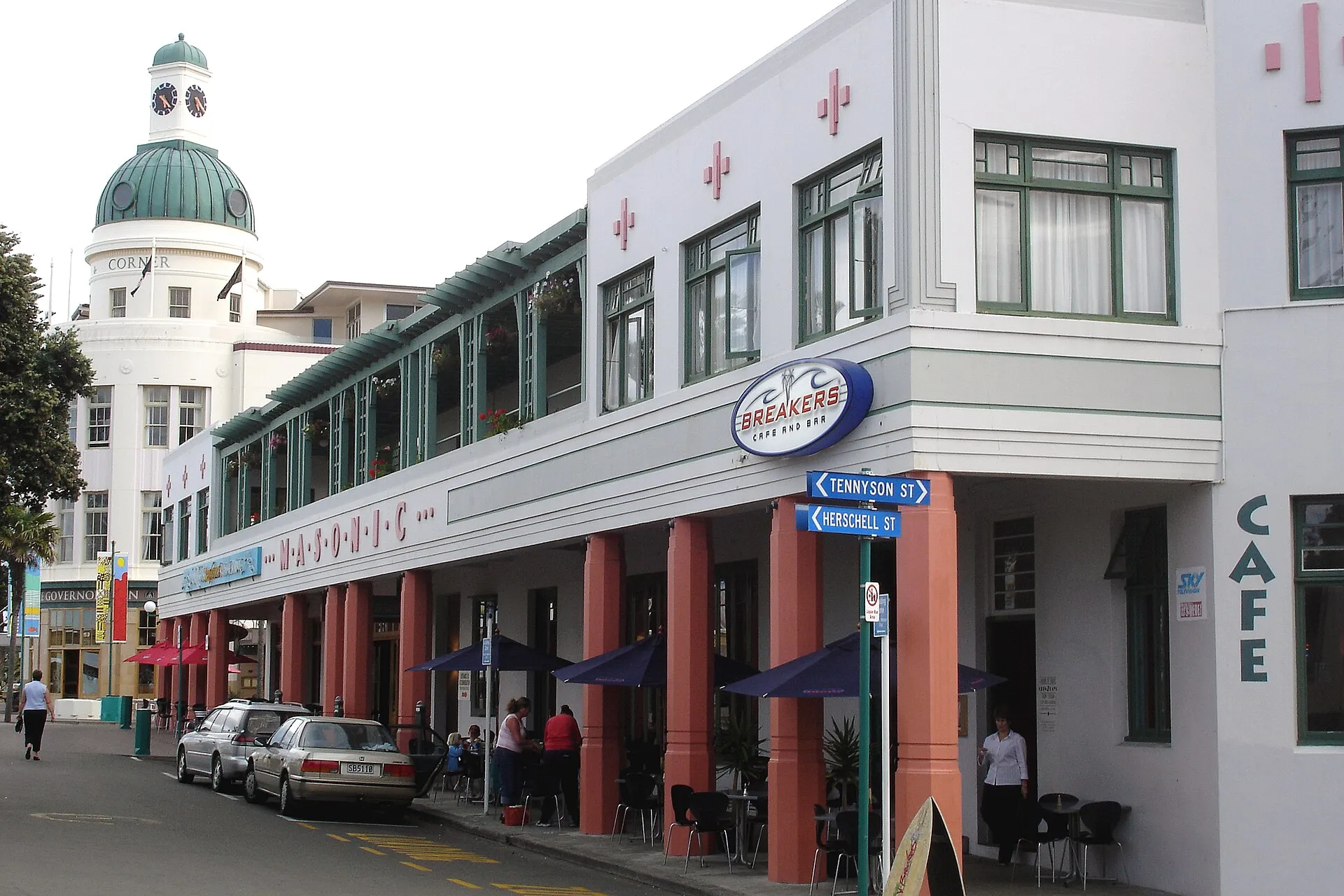 Photo: Phillip Capper from Wellington, New Zealand / Wikimedia Commons (CC BY 2.0)