Cost of Living in Rothenburg
Where this figure comes from. No cost survey covers Rothenburg ob der Tauber, so the $1,200 a month above is our own estimate rather than a measurement. On 416 of our 999 city guides the figure is built from a published Numbeo basket, a one-bedroom rent in the centre plus one person's monthly costs without rent, converted to USD; this city is not one of them. How we source everything.
Rothenburg is affordable by German standards, though not dirt cheap. A solo nomad can realistically expect a monthly total of roughly $1,100 to $1,900, depending on whether you rent inside the walls (where prices carry a small tourism premium) or in the quieter residential streets outside. Rooms and small flats are cheaper than in Munich or Frankfurt, and daily costs like groceries, bakery runs, and regional Franconian wine are gentle on the wallet. The catch is limited long-term rental supply in a small town geared toward short-stay visitors, so booking ahead and looking at nearby villages both help.
- Studio or one-bedroom rental: roughly $600 to $1,000 per month
- Groceries: around $250 to $350 per month
- Coffee-shop lunch or Franconian meal out: about $10 to $22
- Local transport: mostly free, since the old town is walkable
Where to Work in Rothenburg
There is no dedicated coworking space in Rothenburg, so your setup will lean on your apartment plus a rotation of laptop-friendly cafes. German home internet is reliable and quick, which makes a well-chosen rental your primary office. For a change of scenery, several cafes and bakeries around the Marktplatz and along the main lanes are calm outside peak tourist hours, and early mornings before the day-trip coaches arrive are golden for focus. If you need a true coworking hub or frequent meetings, the nearest options sit in larger cities like Wurzburg, Ansbach, or Nurnberg, all reachable by regional train for an occasional trip.
- Prioritize a rental with fast, tested Wi-Fi as your main workspace
- Work cafes in the early morning, before coach tours arrive
- Reserve a quiet corner table and buy regularly to earn your keep
- Travel to Wurzburg or Nurnberg when you need a real coworking space
Getting Around Rothenburg
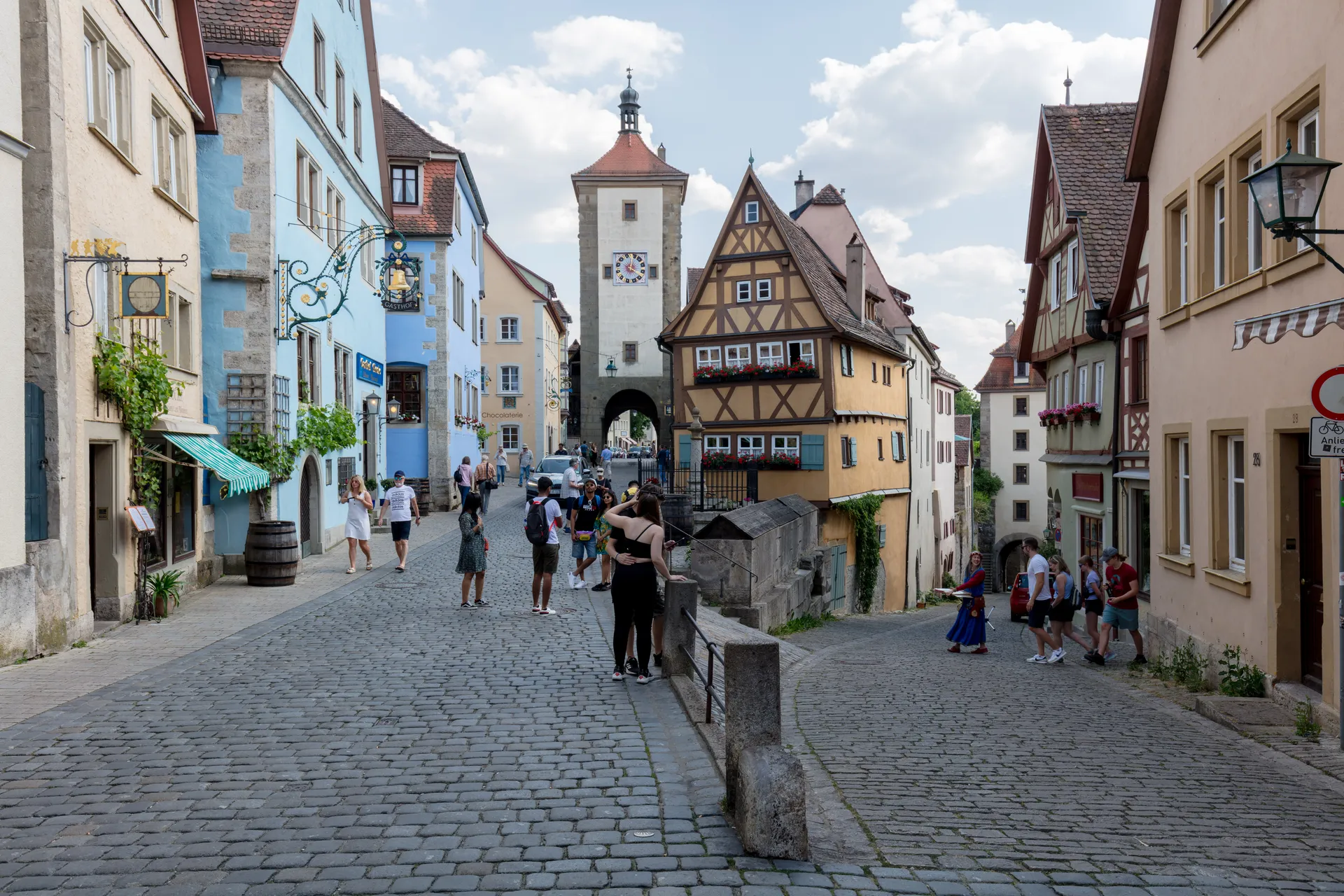
Rothenburg is a joy to move through on foot. The walled old town is compact, largely car-restricted, and best explored by walking or cycling, with the medieval walls, the Plonlein, and the Marktplatz all a few minutes apart. Cars are limited in the center, so most residents park outside the walls. For travel beyond town, regional trains run from Rothenburg's little station down to Steinach, where you change for connections to Wurzburg, Ansbach, and onward to Nurnberg. Buses along the Romantic Road link scenic stops in season. For exploring the surrounding Tauber valley, castles, and villages at your own pace, a car is genuinely useful.
- Walk or cycle everywhere inside the walled old town
- Change at Steinach for trains to Wurzburg, Ansbach, and Nurnberg
- Use Romantic Road buses for seasonal sightseeing routes
- Rent a car to reach countryside castles and quiet valley villages
Sorting transport? Book an airport transfer, or compare car rental on Auto Europe and QEEQ.
Visas for Rothenburg
Rothenburg follows Germany's national rules, so your options are the same here as anywhere in the country. Many visitors arrive under the Schengen framework, which allows stays of up to 90 days within any 180-day period for eligible nationalities. If you want to stay longer and work independently, Germany offers a freelancer path, the Freiberufler residence permit, which suits self-employed creatives and consultants who can show clients and means of support. Skilled employees may qualify for the EU Blue Card, and newer opportunity-oriented routes have widened options for qualified professionals.
- Schengen: up to 90 days within any 180-day window for eligible passports
- Freiberufler permit: Germany's freelancer route for the self-employed
- EU Blue Card: for qualified skilled employees with a job offer
- Newer opportunity options broaden paths for qualified professionals
Best Time to Visit Rothenburg
Rothenburg rewards different visitors in different seasons. Summers are warm and lively, with long evenings ideal for wandering the walls and the countryside, though the town is at its busiest with day-trippers. Spring and autumn are mild, quieter, and arguably the sweet spot for a working stay, when the light on the timbered houses is lovely and crowds thin out. December is magical in a very specific way: the Reiterlesmarkt Christmas market fills the Marktplatz, the Kathe Wohlfahrt Christmas shop glows, and snow on the medieval rooftops looks storybook-perfect. Just know that winters are genuinely cold, days are short, and some services slow down outside the festive peak.
- Summer: warm, long evenings, but the peak tourist crush
- Spring and autumn: mild, calmer, best for a focused work stay
- December: atmospheric Christmas market and snowy medieval charm
- Deep winter: cold and dark, with quieter shoulder weeks
Pros and Cons of Rothenburg
Rothenburg's appeal is unusually clear. It is one of Europe's best-preserved medieval walled towns, genuinely beautiful, safe, clean, and affordable for Germany, with reliable internet and warm Franconian food and wine. As a slow, cultural base it is hard to beat. The trade-offs are just as clear. It is small and very touristy, so the center can feel crowded by day and sleepy by night. Nightlife is quiet, the nomad community is tiny, English gets you by but German helps, and winters are cold and dark. Think of it as a charming retreat rather than a buzzing hub, and it delivers.
- Pros: stunning medieval setting, safe, clean, affordable for Germany
- Pros: good internet, rich culture, excellent Franconian food and wine
- Cons: small and very touristy, with quiet nightlife and a tiny nomad scene
- Cons: cold winters, limited long-stay rentals, German helps a lot
Who Rothenburg Is For
Rothenburg suits the nomad who wants calm, beauty, and a strong sense of place over networking events and late nights. If you are a writer, designer, remote employee, or solo creative who does your best work in quiet mornings and likes ending the day with a walk along ancient walls, this town fits like a glove. It is also a lovely slow base for couples and history lovers who want to explore Bavaria and the Romantic Road at an unhurried pace. It is a weaker match for anyone chasing a lively scene, a big coworking community, or year-round warmth. Come for the charm, not the buzz.
- Great for quiet-focused writers, designers, and remote employees
- Ideal for history and culture lovers who savor a slow base
- A pleasant, scenic home for couples exploring Bavaria
- Not for scene-seekers, big-community networkers, or winter-sun chasers