Cost of Living in Bamberg
Where this figure comes from. No cost survey covers Bamberg, so the $1,200 a month above is our own estimate rather than a measurement. On 416 of our 999 city guides the figure is built from a published Numbeo basket, a one-bedroom rent in the centre plus one person's monthly costs without rent, converted to USD; this city is not one of them. How we source everything.
Bamberg is noticeably cheaper than Munich or Frankfurt, though it is still a desirable Bavarian town and prices reflect that. A single nomad renting a furnished one-bedroom apartment can expect a realistic all-in monthly budget of roughly $1,400 to $2,200, depending on how central you live and how often you eat out. Housing is the biggest line item, and the small rental market means good long-term flats get snapped up quickly. Everyday costs, groceries, transit, and above all beer, are gentle by German standards. These figures are editorial estimates rather than official data, so treat them as a planning baseline and pad for setup costs.
- Furnished 1-bedroom rent: roughly $800 to $1,300/month, cheaper further from the old town.
- Groceries for one: around $250 to $350/month at Rewe, Edeka, and discount chains like Aldi and Lidl.
- A half-litre of local Rauchbier in a tavern: about $4 to $5.
- Monthly public transport pass or the nationwide Deutschlandticket: roughly $60.
Where to Work in Bamberg
Bamberg is a small city, so you will not find a dense cluster of glossy coworking towers, but the essentials are covered. There are dedicated coworking spaces offering day passes and desks, and the University of Bamberg gives the town a steady supply of laptop-friendly cafes and a young, studious atmosphere. Wifi in apartments and cafes is generally reliable, and Germany's mobile data coverage is solid across the town. Many nomads simply rotate between a home desk, a coworking membership for meetings and focus, and a favourite cafe for lighter afternoons. If you need frequent in-person calls or a bigger tech scene, Nuremberg sits about 40 minutes away by train and makes an easy day trip.
- Book a coworking day pass first to test the fit before committing monthly.
- University quarter cafes are lively during term and quieter in the holidays.
- Carry a backup mobile hotspot for video calls if your flat's connection is unknown.
Getting Around Bamberg
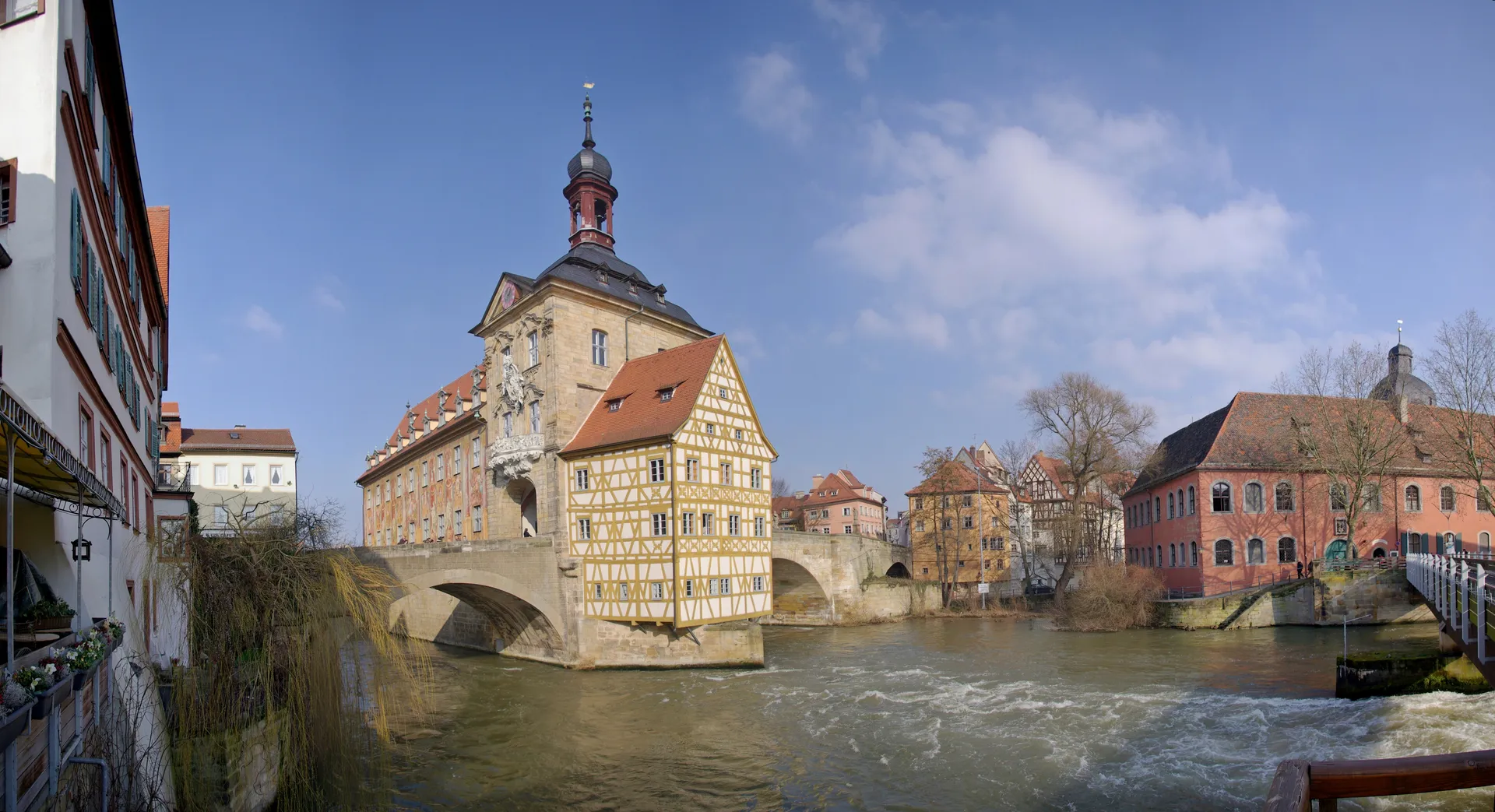
Bamberg is a joy to navigate without a car. The UNESCO-listed old town is compact, flat in the island district, and best explored on foot, with cobbled lanes and riverside paths that reward wandering. Cycling is hugely popular and often the fastest way across town. There is no tram, but a network of city buses covers the outer neighbourhoods and the university sites. For travel beyond Bamberg, the train station connects you to frequent regional services and ICE high-speed links, putting Nuremberg roughly 40 minutes away and Munich or Berlin within comfortable reach for a day or weekend. Many residents skip car ownership entirely and rely on bikes, buses, and Deutsche Bahn.
- Walking and cycling handle almost all daily trips inside the old town.
- City buses cover Wunderburg, the university, and outer districts.
- Regional and ICE trains link Nuremberg (about 40 minutes), Munich, and Berlin.
- The Deutschlandticket covers regional trains and local buses nationwide for one flat monthly fee.
Sorting transport? Book an airport transfer, or compare car rental on Auto Europe and QEEQ.
Visas for Bamberg
Bamberg follows the same German and EU rules as the rest of the country, so your options depend on your nationality. EU and EFTA citizens can live and work freely. Many visitors from visa-exempt countries arrive under the Schengen rule of 90 days within any 180-day period, which suits a short stay but not a long base. For a longer stay, Germany offers a freelancer residence permit for self-employed professionals, the Freiberufler route, alongside the EU Blue Card for qualified employees and newer schemes such as the Opportunity Card for job seekers. Germany does not yet run a single dedicated digital-nomad visa in the way some countries do. Anyone timing a summer around the Sandkerwa should know how the EU Entry/Exit System, fully running since April 2026, does the sum: it logs the day you arrive and the day you leave as full days of the Schengen allowance. A stay booked to the limit with simple calendar subtraction can therefore come out one day over, and the system flags it at the exit.
- EU and EFTA nationals need no visa or work permit.
- Schengen visitors: 90 days in any 180-day window, no work rights for locals.
- Freiberufler permit suits freelancers who can show clients and income.
- EU Blue Card and the Opportunity Card cover skilled employees and job seekers.
Best Time to Visit Bamberg
Bamberg is a year-round town with a clearly seasonal rhythm. Summer is the crowd favourite, with warm, long evenings that fill the beer gardens and the famous Sandkerwa street festival in late August turning the old town into a lively riverside party. Spring and autumn are mild, quieter, and arguably the sweet spot for working here, with pleasant temperatures and fewer tourists. Winters are cold and grey, but the Christmas markets and cosy smoke-scented taverns give the season real charm, and the town's nativity-scene tradition is a genuine draw. If your priority is beer gardens and festivals, come between June and September; if you want calm streets and lower prices, aim for late spring or early autumn. In the warm months the drinking here happens on the Keller, the hillside beer cellars whose shaded gardens open once the weather turns warm, and those on the Stephansberg lie a few minutes' climb above the old town. Forchheim, under half an hour away by regional train, holds the Annafest in late July, a festival in a forest of beer cellars that rivals Bamberg's own.
- Summer: warm evenings, full beer gardens, and the Sandkerwa festival in late August.
- Spring and autumn: mild, quieter, and comfortable for settling in to work.
- Winter: cold and grey but atmospheric, with Christmas markets and warm taverns.
Pros and Cons of Bamberg
Bamberg's appeal is easy to state: it is a strikingly beautiful, safe, walkable UNESCO town with a deep beer and food culture and a friendly student energy, all at a lower cost than Germany's big cities. The trade-offs are the flip side of its size. The nomad and international community is small, the rental market is tight, nightlife leans toward taverns and beer gardens rather than clubs, and getting the most out of daily life is much easier with some German. For the right person these are minor. For someone who wants a big, buzzy, English-first metropolis, Bamberg will feel quiet. The crowds are uneven rather than constant. River cruise ships on the Main-Danube route tie up here and coach groups fill the island district and the cathedral hill at midday, while the Gärtnerstadt, the market gardeners' quarter that belongs to the same World Heritage site, stays residential and quiet. Rent there, or up on the hill, and the tourism becomes something you visit rather than something you live inside.
- Pros: gorgeous historic setting, high safety, walkability, and outstanding beer and food.
- Pros: cheaper than Munich, with fast train links to Nuremberg and beyond.
- Cons: small international scene and a tight, competitive housing market.
- Cons: limited late-night nightlife and a real advantage to speaking some German.
Who Bamberg Is For
Bamberg suits the nomad who values quality of life over scale. If you want to write, build, or study in beautiful, calm surroundings, cycle to a riverside cafe, and end the day in a centuries-old tavern over a smoky Rauchbier, this town delivers. It rewards people who enjoy history, walkability, and a slower European pace, and who do not mind investing a little effort in German and in finding housing. It is less ideal if you need a large expat crowd, constant nightlife, or a booming startup scene at your doorstep. Think of it as a base for focused work and genuine local living, with Nuremberg and the rest of Germany a short train ride away when you want more.
- Great for focused remote workers and students who value calm and beauty.
- Great for lovers of beer, food, history, and cycling-friendly towns.
- Less suited to those wanting a large expat scene or heavy nightlife.