Cost of Living in Mar del Plata
Where this figure comes from. No cost survey covers Mar del Plata, so the $1,200 a month above is our own estimate rather than a measurement. On 416 of our 999 city guides the figure is built from a published Numbeo basket, a one-bedroom rent in the centre plus one person's monthly costs without rent, converted to USD; this city is not one of them. How we source everything.
Mar del Plata is one of Argentina's more affordable coastal cities, though costs vary significantly depending on your lifestyle and the exchange rate you get for your home currency. Since currency controls were lifted in April 2025, the unofficial blue rate has lost the advantage it once gave visitors, so a card or a digital wallet is the simplest way to pay.
- Rent (furnished, central areas like Centro or Guemes): roughly $405-605/month for a studio on a longer-term lease. Short-term furnished rentals run $300-600/month USD.
- Rent (cheaper areas like Alvarado or Libertad): $270-405/month long-term; short-term furnished closer to $200-350/month USD.
- Groceries: $80-120/month USD cooking at home with a mix of local produce, meat, and basics. Argentine supermarkets are well-stocked.
- Eating out: a sit-down dinner at a mid-range restaurant runs $5-10 per person. A coffee in a cafe is around $1.
- Coworking hot-desk: approximately $60-80/month USD at a dedicated space.
- Local transport (bus): requires a SUBE card; a single trip is under $0.50. Budget $15-20/month for regular use.
- Mobile data (~10 GB): around $10/month USD.
Total monthly range: a frugal nomad cooking at home and using public transport can manage on $500-700/month USD. A comfortable lifestyle with short-term furnished housing, dining out a few times a week, and a coworking membership sits around $900-1,400/month USD. Note that Argentina's peso fluctuates; always convert at the most favorable legal rate available to you.
Where to Work
Mar del Plata has a small but functional coworking scene. Indie Coworking (Dorrego 2826, near Parque San Martin) is the most established option, with 20 desks, fiber optic internet with a backup connection, ergonomic chairs, and lockers. It rates 4.7 on Google and is well-regarded for its calm atmosphere. LINE UP Coworking, in the Playa Grande area near Leandro N. Alem, offers private offices and hot desks with dedicated WiFi per user. Ayana Coworking is a smaller space steps from the ocean, popular with surfer-types who want a beachside work setup. Santander WorkCafe (Manuel Belgrano 3182) is a bank-run co-working concept open Monday to Friday, 7am to 7pm, free to use with no account required.
Cafe-working culture exists but is uneven. Some traditional cafes are tolerant of laptop users; others are not. Bai Bai Cafe and other spots in the Guemes and Chauvin neighborhoods are your best bets for a decent coffee with a table you can occupy for a few hours. A handful of venues appear on Laptop Friendly listings.
The real WiFi situation: fiber connections are available in most apartments and dedicated coworking spaces. Public WiFi is unreliable. Budget for a local SIM as backup.
Getting Around
The city has no metro or tram. The bus network covers most of the urban area and is the main way locals get around. You need a SUBE card (available at kiosks throughout the city) to pay fares. Buses run frequently during the day and are cheap, though schedules thin out late at night. The city center and beachfront strip around La Rambla are walkable, and the Guemes shopping zone is easy to cover on foot. Further-out neighborhoods require a bus or taxi.
Taxis and remises (private car services booked by phone or app) are affordable at roughly $3 for an average trip. Uber operates in Mar del Plata and is often the most convenient option for tourists unfamiliar with the bus system.
Astor Piazzolla International Airport (MDQ) is 10 km northwest of the city center. Bus route 542 connects the airport to the center, taking 40-50 minutes and requiring a SUBE card. A taxi or remis costs $12-17. Buses from Buenos Aires (Retiro terminal) take around 5 hours and depart every few hours; this is the most common way nomads arrive.
Sorting transport? Book an airport transfer, or compare car rental on Auto Europe and QEEQ.
Visas and Staying Long-Term
Argentina grants visa-free entry to citizens of the US, Canada, EU countries, the UK, Australia, New Zealand, and most of the Americas for up to 90 days as a tourist. You can apply for a 90-day extension once before needing to leave and re-enter.
Argentina introduced a formal Digital Nomad Visa in 2022. It allows transitional residency for up to 180 days, extendable by another 180 days for a total of up to 12 months. Requirements include proof of remote work or self-employment earning income from abroad, private health insurance covering your full stay, and evidence of the remote work itself, since no minimum income is set. The application fee is approximately $200 total and is handled online through the National Directorate of Migration. Note that eligible countries for the nomad visa partially overlap with tourist visa-free access; check your specific nationality.
Nomad visa holders are not subject to Argentine income tax on foreign-sourced income.
Best Time to Visit
Mar del Plata has a temperate oceanic climate. Summers (December to February) are warm, averaging around 20-24°C, with the most sunshine but also the most rain and the biggest crowds. January in particular is peak Argentine vacation season: the city's population effectively doubles, accommodation prices spike, and coworking spaces fill up. The beach is lively but the work-life balance tilts toward chaos.
For remote work, the best windows are March to May (late summer through autumn) and September to November (spring). Temperatures are mild at 15-20°C, crowds are gone, rents drop noticeably, and the city has a relaxed local rhythm. Winters (June to August) are cool at 8-14°C, occasionally foggy, and quiet. Snow is rare. If you like solitude and low costs, winter works fine; if you want any social scene, spring and autumn are the sweet spot.
Pros and Cons
- Low cost of living by Western standards, especially on a long-term lease
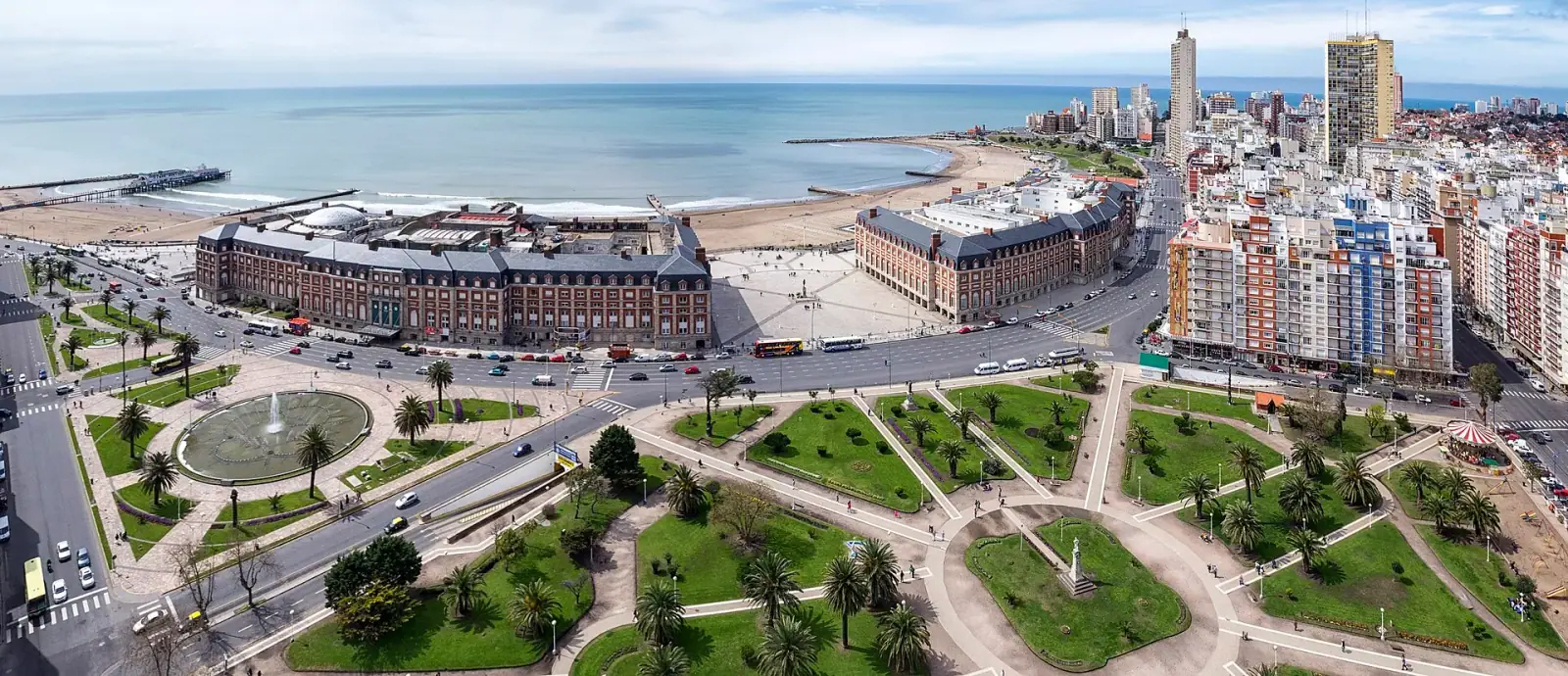
- Walkable beachfront with genuine Atlantic coast scenery
- Good food scene anchored by a serious seafood tradition and a growing chef culture
- Cheaper and calmer than Buenos Aires while retaining urban amenities
- Reliable coworking options in a compact area
- Argentina's digital nomad visa provides a legal long-stay path
- Currency complexity: Argentina's economic volatility means you need to stay on top of exchange rates and payment methods
- Limited international flights from MDQ; most routes go through Buenos Aires first
- English is not widely spoken outside tourist-facing businesses; intermediate Spanish is genuinely useful here
- Peak summer crowds (January especially) are disruptive to any work routine
- Smaller nomad community than Buenos Aires or Mendoza; networking requires more effort
- Safety requires awareness in certain peripheral neighborhoods, especially at night
Who Mar del Plata Is Best For
Mar del Plata suits nomads who want a genuine Argentine coastal city rather than a tourist-resort experience. It works particularly well if you already speak some Spanish, are comfortable navigating Argentina's currency quirks, and plan to stay at least a month so you can lock in a proper apartment rather than relying on short-term pricing.
It is a good fit for: solo workers who want affordable beach access without Buenos Aires noise, couples on a budget, outdoor types who surf or hike, and anyone doing a longer stint in Argentina who wants a change from the capital.
You should probably skip it if: you need a large English-speaking nomad community to feel at home, you rely on frequent international flights, or you are visiting Argentina for a short trip and want maximum cultural density, in which case Buenos Aires makes more sense as a base.