Cost of Living in Santiago
Real market data
Source: Numbeo · August 2026
$1,140/moSolo nomad1-bed centre + living costs
$1,590/moCoupleshared 1-bed + costs
$990/moLean / localcheaper area + costs
- 1-bed rent, city centre$580CLP$538,071
- 1-bed rent, outside centre$430CLP$396,154
- Monthly costs excl. rent (1 person)$560CLP$521,740
- Meal, inexpensive restaurant$11CLP$10,000
- Monthly transit pass$43CLP$40,000
- Buy price, per m² (centre)$2,830CLP$2,622,010
Prices are from Numbeo (August 2026), converted to USD at $1 = CLP$927.42 (01 Aug 2026). The monthly living-costs figure is our transparent one-person basket, groceries, a few meals out, utilities, phone, internet, transport and essentials, priced from those figures. Solo adds central rent; couple and lean are estimates from the same numbers. The guide below quotes its own monthly range, which is a different measurement rather than a competing one: this table prices a defined basket at the figures above, while that range is a judgement about how somebody actually lives here.
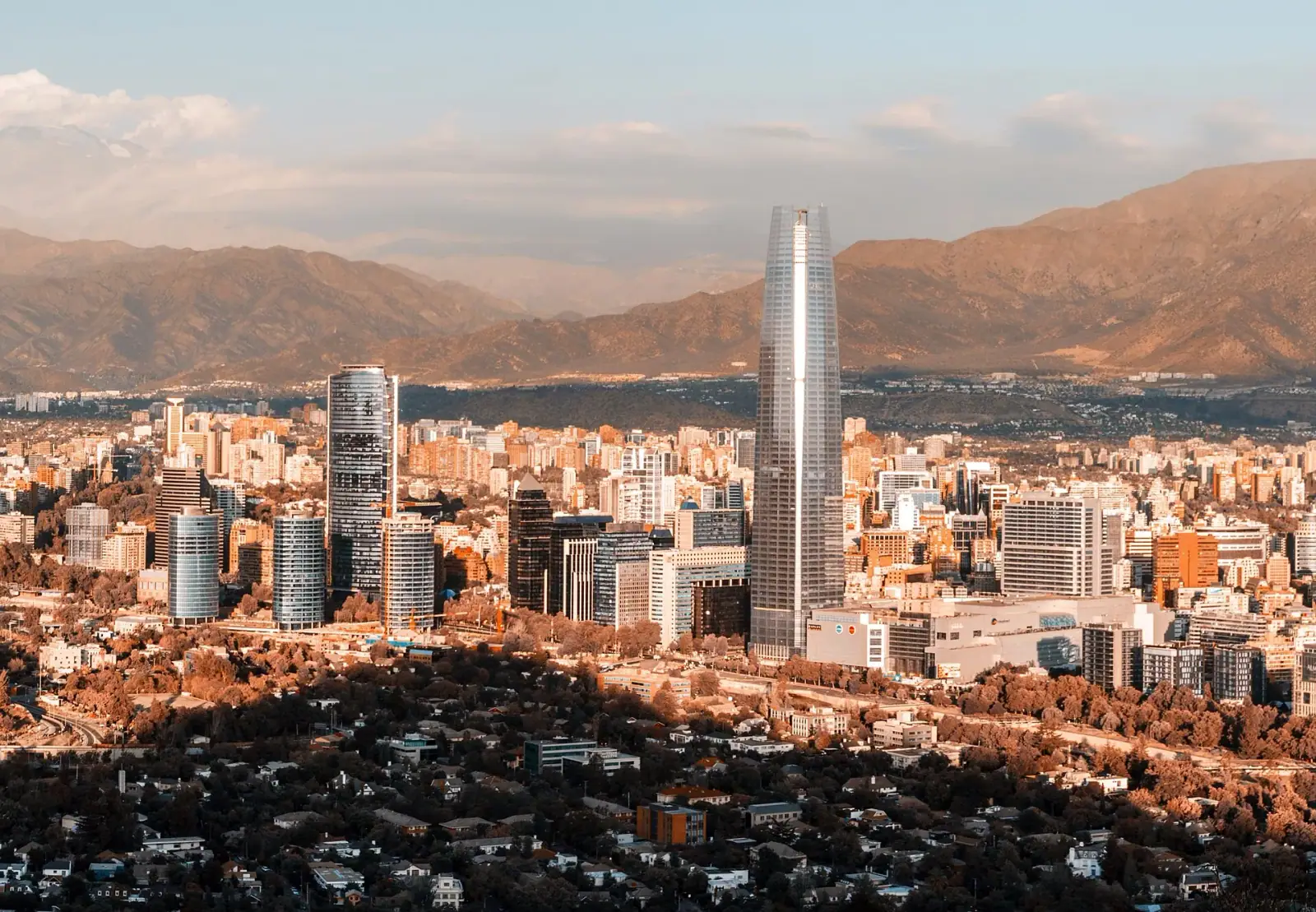
Santiago is one of South America's more expensive capitals, but it remains affordable compared to Western Europe or North America. Here is what to expect on a monthly basis:
- Rent, central neighborhoods (Providencia, Lastarria): about $580 for a one-bedroom
- Rent, cheaper areas (Ñuñoa, Santiago Centro): $325-540 for a room or small studio
- Groceries: $255-355, cooking mostly at home
- Eating out: A lunch set (almuerzo) runs $4.50-7.50; dinner at a mid-range spot $13-22 per person
- Coworking hot-desk: $97-215 per month; free-to-use Work Cafe Santander branches bring this to zero if you buy a coffee
- Local transport (Bip card): $43-59 per month for regular metro and bus use
- Utilities (internet, electricity, water): $81-100, including fast broadband (100+ Mbps)
Total realistic monthly range: $990-1,140, depending on your neighborhood and lifestyle. Living in Centro or Ñuñoa and cooking regularly, you can stay closer to $990. Renting in Providencia and eating out often pushes the total above $1,140.
Where to Work
Santiago has solid remote-work infrastructure, particularly in Providencia and Las Condes, where coworking spaces cluster. A few reliable options:
- Co-Work Latam operates multiple locations across the city, including in Las Condes and Providencia, with full amenities, meeting rooms, and fast internet.
- WeWork has several Santiago locations (Apoquindo and Mariano Sanchez Fontecilla) with the usual international-standard setup.
- Edge Cowork runs two spots, one in El Golf (Las Condes) and one in Bellavista, both with community events and reliable connectivity.
- Work Cafe Santander deserves special mention: Banco Santander operates 16-plus branches citywide as free coworking cafes open to anyone, no account required. Pay for a coffee and stay as long as you need. WiFi is consistently fast and there are power outlets at every seat.
Cafe-work culture is growing, especially in Bellas Artes, Lastarria, and Barrio Italia. Many cafes now have large tables, plugs, and solid WiFi. That said, some traditional Santiago cafes still look skeptically at people camping for hours, so read the room. Home fiber broadband is cheap and fast (around $20-25 per month), so many nomads simply work from their apartment.
Getting Around
Santiago's metro (Metro de Santiago) is one of the best in Latin America: clean, frequent, covers 136 stations across six lines, and costs $0.50-1 per trip depending on the time of day. A Bip card loaded with credit covers both metro and the extensive Transantiago bus network. For most daily needs in Providencia or Las Condes, the metro gets you there.
Walkability is decent in the inner neighborhoods (Providencia, Bellas Artes, Lastarria, Barrio Italia) but patchy in sprawling eastern suburbs. Cycling infrastructure has improved significantly but the city is large, hilly toward the east, and sharing roads with Santiago traffic is stressful.
Ride-hailing apps (Cabify, Uber) work reliably and are affordable for cross-city trips. Taxis are plentiful but always confirm a meter is running.
Airport: Arturo Merino Benitez International Airport (SCL) is about 15 km northwest of downtown. The Centropuerto airport bus runs every 10-15 minutes to central metro stations (Los Heroes, Pajaritos) for around $2, making it one of the cheapest airport connections in Latin America. Official taxis from the airport cost $19-27 to the city center.
Sorting transport? Book an airport transfer, or compare car rental on Auto Europe and QEEQ.
Visas and Staying Long-Term
Citizens of the US, Canada, UK, EU member states, Australia, and most Western countries enter Chile visa-free for 90 days. You receive a Tarjeta Unica Migratoria (PDI card) on arrival; keep it safe as you need it to exit. If you want to extend, you can apply for a Prorroga at least 30 days before your stamp expires, adding another 90 days for a fee of around $100, bringing a total possible tourist stay to 180 days.
Chile has no digital nomad visa. None of the fifteen temporary residence subcategories listed by the Servicio Nacional de Migraciones covers remote work for a foreign employer: the work permit needs a Chilean employer or a formal Chilean job offer, and the rentista permit is for steady income from property or investments rather than a salary. Every temporary residence application is filed from outside Chile. For most remote workers, the tourist entry and its one extension, 180 days in all, is the realistic ceiling.
Best Time to Visit
Santiago has a Mediterranean climate with four distinct seasons, which matters for both comfort and air quality.
Spring (September to November) is the strongest window for remote workers: temperatures are mild (15-22°C / 59-72°F), the city is green after winter rains, air quality is at its best, and the Andes are snow-capped and visible on clear days. It is also less crowded than summer.
Autumn (March to May) is a close second. Temperatures cool pleasantly, traffic decreases after the January-February holiday season, and the city feels more local.
Summer (December to February) brings dry heat, with average highs near 30°C (86°F) and hotter spells past 33°C, and a city that partially empties as Chileans leave for the coast. Ozone climbs on the hottest afternoons, though the real smog season is winter. It is manageable but not ideal for long stays.
Winter (June to August) brings cold nights (near 0°C), heavy wood-burning smog, and the worst air quality of the year. Days are short but sunny periods occur, and skiing at Farellones or Valle Nevado (about an hour away) is a real draw if that matters to you.
Pros and Cons
Pros
- Strong infrastructure: fast internet, reliable metro, good hospitals
- Large expat and nomad community, especially in Providencia
- 90-day visa-free entry for most Western passports, with straightforward extensions
- Excellent food and wine scene, from cheap almuerzos to world-class wine bars
- Day trips to the Andes, Valparaiso coast, and wine valleys within 1-2 hours
- Relatively stable political and economic environment for the region
- Free coworking at Work Cafe Santander branches across the city
Cons
- Air pollution is serious, especially in winter and summer; not suitable for people with respiratory conditions
- Petty theft is common in tourist areas and on crowded metro lines; exercise standard urban caution
- Spanish is essential: English is limited outside upscale hotels, coworking spaces, and tech circles
- The city is large and sprawling; living in the wrong area means long commutes
- Summers are hot, smoggy, and relatively quiet as locals leave
- Cost of living is higher than most of South America
Who Santiago Is Best For
Santiago suits nomads who want a genuinely functional Latin American base: good internet, real infrastructure, a growing startup ecosystem, and an interesting food and culture scene without the chaos of larger regional capitals. If you speak some Spanish and want a city that works reliably, Santiago delivers. It is particularly well-matched for people who value outdoor access (Andes, ski resorts, wine valleys, coast) alongside an urban lifestyle.
It is less ideal if you are on a tight budget and expect Southeast Asia-level costs, if air quality is a health concern for you, or if you want a small, walkable city with a strong existing nomad scene. Santiago is a large, spread-out metropolis that rewards planning your neighborhood carefully. Those who arrive without a clear base and expect things to be obvious often find it overwhelming before it clicks.