Cost of Living in Holbox
Where this figure comes from. No cost survey covers Holbox, so the $1,100 a month above is our own estimate rather than a measurement. On 416 of our 999 city guides the figure is built from a published Numbeo basket, a one-bedroom rent in the centre plus one person's monthly costs without rent, converted to USD; this city is not one of them. How we source everything.
Holbox is not a budget destination by Mexican standards, and remote workers should plan accordingly. Everything on the island arrives by ferry or barge from the mainland, and that logistics tax shows up on every price tag. A simple room or studio runs roughly $690 to $1,270 per month in low season, climbing well past that from December through April when snowbirds and honeymooners fill the island. Beachfront cabanas and boutique guesthouses cost far more. Groceries at the two main supermarkets, Super San Antonio and a smaller Oxxo-style shop, are pricier than Cancun or Merida because stock comes in on the same barge as everything else. Eating out is where Holbox splits in two: a plate of tacos or a torta from a street cart runs $2.50 to $5, while the seafood restaurants along Calle Igualdad and the pricier hotel restaurants can easily hit $23 to $52 per person with a drink. A single nomad who cooks some meals and mixes street food with the occasional splurge dinner should budget $1,300 to $1,900 a month all in; couples and those wanting AC and reliable hot water should plan closer to $2,200 to $3,000. Payments in pesos are standard, with cash still king for market stalls and golf cart taxis, though most restaurants and hotels take cards.
Where to Work in Holbox
Honestly, Holbox is a hard place to be a heads-down remote worker. There is no dedicated coworking space on the island, and the wifi that does exist is shared, satellite or fixed-wireless backhaul that gets slow and occasionally drops out, especially during storms or when the island is at capacity in high season. Most people work from cafes with decent wifi around the main plaza (Zocalo), from their rented cabana's own connection, or from hotel lobbies that let guests and sometimes outsiders sit and buy coffee. A local SIM with a solid data plan (Telcel has the best coverage) is worth carrying as backup, since cellular data is often more dependable than the island's wired internet. Video calls are the real test: they work, but expect the occasional freeze or dropped call, and build in buffer time before anything client-facing. Power cuts happen occasionally too, though less often than a few years ago. If your work genuinely requires rock-solid, always-on bandwidth, such as large file uploads or back-to-back video meetings, Holbox will frustrate you. If your work tolerates some slack, async days, or you can schedule the demanding calls for calmer parts of the day, it is very workable, just go in with realistic expectations rather than "digital nomad hub" ones.
Getting Around Holbox
Getting to Holbox is itself part of the trip. From Cancun, the standard route is a bus (ADO) to the small port town of Chiquila, about 3 hours, followed by a passenger ferry across the lagoon, roughly 20 to 25 minutes. Ferries run frequently during the day (multiple companies, tickets bought right at the dock) but taper off at night, so arriving after the last boat means an overnight in Chiquila. There is no bridge and no cars for tourists on the island itself. Once you're on Holbox, transport is entirely golf carts, bicycles, and walking, since the whole village and its sandy streets are compact enough to cross on foot in 20 to 30 minutes. Renting a golf cart (roughly $35 to $69 per day depending on season and cart quality) is the easiest way to get to farther beaches like Punta Cocos or Punta Mosquito, and bike rentals are cheaper and perfectly fine for shorter hops. Streets are unpaved sand, which means golf carts kick up dust in dry weather and can get genuinely muddy and rutted after heavy rain, so footwear and patience matter more than you'd expect. There are no ride-hailing apps; golf cart taxis wait near the plaza and the ferry dock.
Sorting transport? Book an airport transfer, or compare car rental on Auto Europe and QEEQ.
Visas for Holbox
As part of Mexico, Holbox follows standard Mexican immigration rules. Most Western passport holders (US, Canada, EU, UK, Australia and many others) receive a tourist entry stamp on arrival that is valid for up to 180 days, and this is issued at the immigration checkpoint on the mainland, not on the island itself since Holbox has no airport or international entry point. This tourist stay is not technically a work visa, but in practice it is what the overwhelming majority of remote workers use, working for foreign clients or employers while physically present in Mexico. For longer stays, Mexico offers a temporary resident visa (valid one to four years) that requires applying at a Mexican consulate in your home country beforehand, generally by showing proof of steady income or savings above set thresholds. There is no official Mexican digital nomad visa separate from this; the temporary resident route is the closest equivalent. Given Holbox's remoteness, anyone on a visa run or needing to visit an immigration office (INM) for renewals or exit stamps will need to factor in the ferry-plus-bus trip to Cancun or another mainland city with an office.
Best Time to Visit Holbox
The dry season, roughly November through April, is the most comfortable window, with lower humidity, calmer seas, and reliably sunny days, though it is also peak tourist season with the highest prices and busiest streets, especially around Christmas, New Year, and Semana Santa (Easter week). May through September brings the island's marquee wildlife draw: whale sharks gather in the waters north of Holbox and licensed tour boats run daily excursions to swim alongside them, typically peaking June through August. That same stretch overlaps with the start of hurricane season (officially June to November for the Atlantic basin), which brings higher humidity, more frequent afternoon storms, occasional sargassum seaweed on the beaches, and the small but real risk of a tropical storm or hurricane disrupting ferry service and travel plans entirely. September and October tend to be the quietest and cheapest months but carry the highest storm risk of the year. For nomads balancing weather, wildlife, and wallet, late November to early December and April to early May offer a decent middle ground: fewer crowds than peak winter, lower hurricane risk than late summer, and still-good weather.
Pros and Cons of Holbox
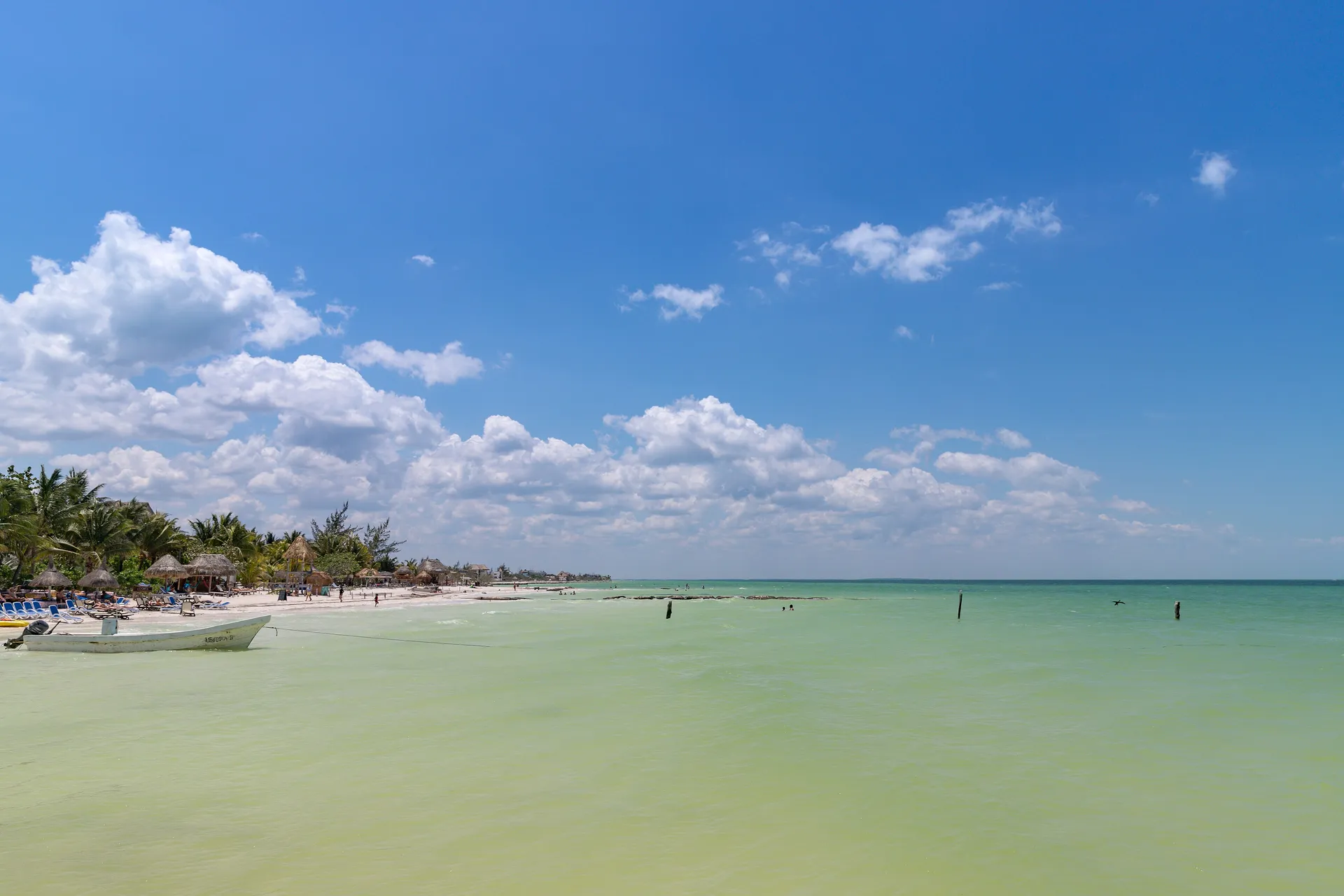
Holbox's pros are substantial: shallow, warm, turquoise water right off the village beaches, a laid-back car-free atmosphere with colorful murals throughout town, genuinely spectacular nature (whale sharks in summer, flamingos on the western end, bioluminescent plankton visible on dark nights, and mangrove ecosystems teeming with birdlife), and a small, walkable community feel that larger Mexican beach towns have lost. The cons are equally real and worth stating plainly. Wifi is slow and inconsistent, a genuine obstacle for anyone doing serious remote work. There are no cars, which is charming but also means limited mobility and higher effort for errands or reaching far-flung beaches. Sandy streets turn to mud and puddles after rain, making a rainy-season evening walk less pleasant than it sounds. Mosquitoes are present, especially near the mangroves and after rain, so repellent is essential. Sargassum seaweed shows up on beaches at times, mostly in warmer months, and can affect the postcard-perfect water clarity locals advertise. Prices run higher than most of mainland Mexico, and the island can feel genuinely crowded and noisy during peak season weeks. It is also physically isolated: any supply shortage, ferry disruption, or storm event affects the whole island at once.
Who Holbox Is For
Holbox suits nomads who want a slower, nature-forward chapter rather than a productivity-focused home base: photographers, writers, and workers with flexible or asynchronous schedules who can work around patchy connectivity rather than fight it. It is a strong fit for couples, honeymooners-turned-remote-workers, and anyone craving a genuine digital detox with just enough infrastructure to stay online part-time. Wildlife lovers drawn to whale sharks, flamingos, and bioluminescence will find few places in the world that pack in this much natural spectacle within a 10-minute bike ride. It is a poor fit for anyone who needs dependable high-speed internet for daily video calls, large uploads, or hard deadlines, and equally a poor fit for nomads on a tight budget looking to stretch pesos as far as possible. Think of Holbox less as a long-term nomad base and more as a deliberately unplugged few weeks, best enjoyed by those who have already built in slack for a slower, sandier pace of life.