Cost of Living in Khiva
Where this figure comes from. No cost survey covers Khiva, so the $600 a month above is our own estimate rather than a measurement. On 416 of our 999 city guides the figure is built from a published Numbeo basket, a one-bedroom rent in the centre plus one person's monthly costs without rent, converted to USD; this city is not one of them. How we source everything.
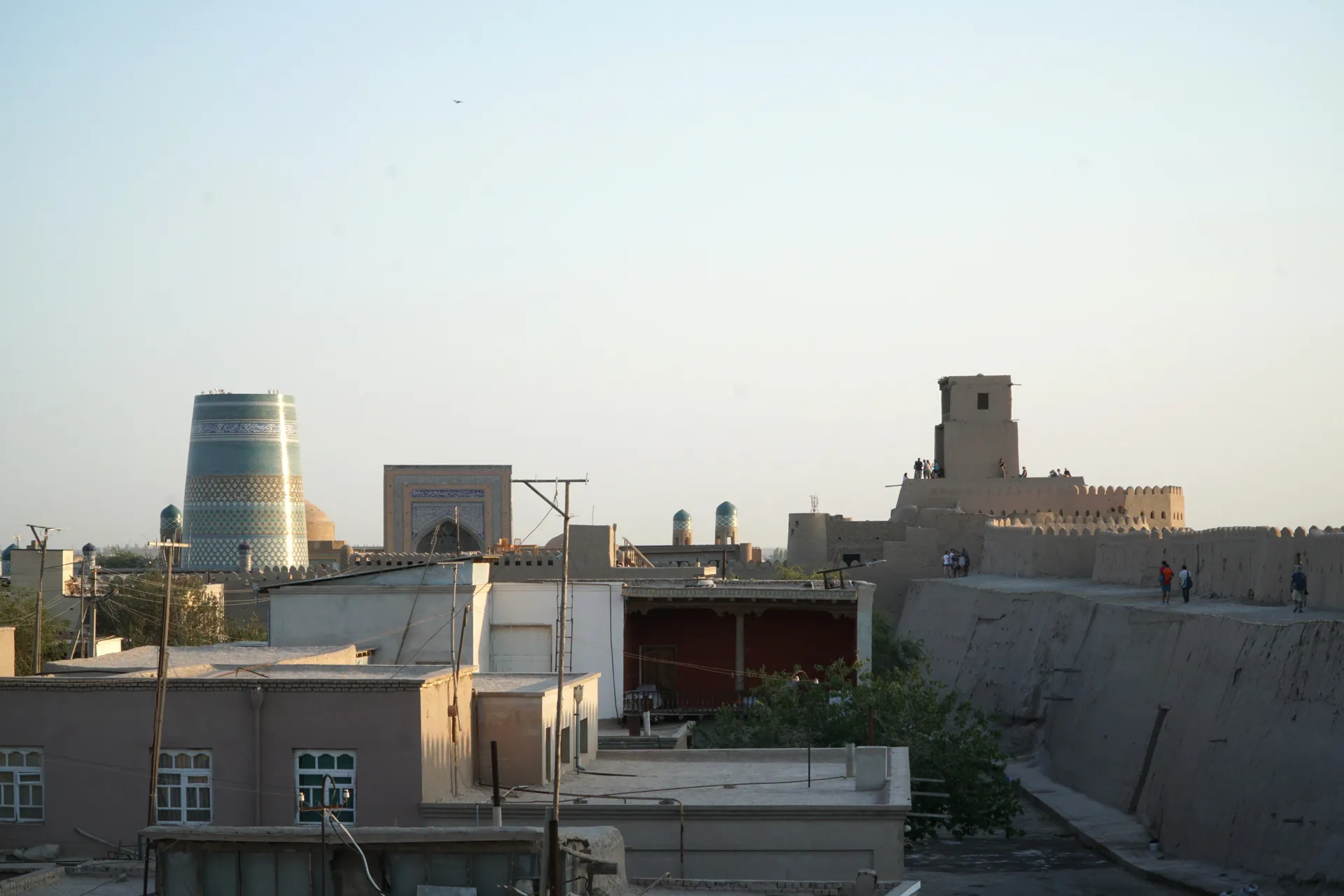
Khiva is one of the cheaper places a nomad could base themselves, and a modest budget of roughly $500 to $900 a month goes a long way in this small desert town. Guesthouses and family-run boutique hotels inside or near the old walls are affordable, and eating out at local canteens costs very little. Fresh produce from the bazaar, plov, samsa and endless green tea keep daily spending low. The trade-off is limited choice: there are few Western supermarkets, few flats built for long stays, and prices for imported goods climb. Costs below are editorial estimates rather than fixed quotes, so treat them as a guide. The unusual thing here is that the walled city is itself a ticketed site. A single pass covers the museums and monuments inside and is valid for a couple of days, which matters because a long stay means either buying it repeatedly or walking the lanes without going into anything, and the lanes are free. Residents and anyone sleeping inside the walls come and go without paying. Beyond that, the practical saving is the same as anywhere in this country: a monthly rate agreed directly with a guesthouse owner in the cold months is a fraction of what the same room lists for in May.
- Guesthouse or boutique room: roughly $250 to $500 a month for a longer stay
- Local canteen meal of plov or shashlik: a few dollars
- Bazaar produce, bread and tea: very cheap by Western standards
- SIM card and mobile data: inexpensive, though speeds are modest
Where to Work in Khiva
Khiva has no real coworking scene, no hot-desk lofts and no cluster of laptop cafes, and a stay here goes better once that is accepted rather than discovered. This is a small heritage town, so your office will almost certainly be your guesthouse room, a shaded courtyard, or a quiet tea house near the Itchan Kala walls. Many family-run hotels offer wi-fi that is basic but workable for email, writing, calls and light video, though you should not count on flawless high-bandwidth uploads. A local SIM with mobile data is a sensible backup. If your work needs fast, reliable connectivity and colleagues nearby, pair Khiva with a spell in a larger Uzbek city. The desert imposes its own timetable. Through high summer the middle of the day is genuinely dangerous to be out in, with the mud-brick radiating heat back at you until well after dark, so the working hours are early morning and late evening and everything else is indoors. In January the same walls hold cold and the rooms are hard to heat. As for connectivity, mobile coverage here reaches further than any fixed line does, so a local card with a generous data allowance is the sensible backbone rather than the backup.
Getting Around Khiva
Khiva is tiny and made for walking. The walled Itchan Kala is a compact maze of madrasas, minarets and mausoleums that you cross on foot in minutes, and cars are largely kept out of the core. Beyond the walls, the outer Dichan Kala town and the bazaar are an easy stroll or a short, cheap taxi ride. The nearest city and airport is Urgench, about 30km away, reached by shared taxi, marshrutka minibus or a slow tram-like link. Uzbekistan's railways connect the region to Bukhara, Samarkand and Tashkent, so trains from Urgench are the usual way to travel onward across the country. Getting in and out is worth planning for in two respects. The overnight train from the capital takes most of a day and is comfortable, with the sleeper being the way almost everyone does it; the flights into the nearby city are short, frequent and often cheaper than the train in a way that surprises people. And the desert road east toward the next Silk Road city crosses several hundred kilometres of nothing, which is a genuinely striking drive and a long one; the bus takes seven or eight hours and the shared taxis take less and cost more.
Sorting transport? Book an airport transfer, or compare car rental on Auto Europe and QEEQ.
Visas for Khiva
Uzbekistan has opened up considerably for travellers, and many nationalities enjoy visa-free entry for stays of up to thirty days, while others can apply for a straightforward electronic visa online before arriving. Khiva itself imposes no special local permit; you simply arrive as you would anywhere else in the country. Longer stays beyond the visa-free window need planning, as extensions and long-term residence are not designed with remote workers in mind. Keep your registration paperwork from hotels, as guests are typically registered automatically each night. The border with Turkmenistan is close enough that people ask about it, and the answer is that it is one of the hardest frontiers in the region to cross. That country issues a five-day transit visa on a fixed route with no extensions and refuses a large share of applications, and a tourist visa requires a state-approved guide for the whole stay. Plan a route that does not depend on it. Registration on this side is handled by whichever guesthouse you sleep in and the slip matters; keep every one of them until you have flown out, because the check is on departure.
Best Time to Visit Khiva
Khiva sits in a harsh continental desert, so timing matters more here than in milder places. Summers are brutally hot, with midsummer days often uncomfortable for walking the exposed old town, while winters turn genuinely cold and can be bleak. The sweet spots are spring, roughly April to early June, and autumn, September into October, when days are warm, evenings pleasant and the mud-brick city glows beautifully in soft light. These shoulder seasons also bring the clearest skies for photography and the most comfortable conditions for exploring on foot. If you dislike heat, avoid July and August; if you dislike cold, steer clear of deep winter. Put the extremes in figures, because the words hot and cold undersell them. Summer afternoons here pass forty-five degrees and winter nights drop below minus ten, a swing of nearly sixty degrees across a year in the same town, which is among the widest of any inhabited place at this latitude. The other regional condition is dust. The drying of the sea to the north has left a salt plain that the wind picks up, and dust events reach this far in the windy months, which is a genuine consideration for weak lungs and worth knowing before a long booking.
Pros and Cons of Khiva
Khiva is a place you choose with your eyes open. Its magic is the setting: an almost intact walled Silk Road city where you sleep, work and eat among centuries-old monuments, all at a very low cost and in a notably safe, calm environment. The flip side is remoteness and limited infrastructure. This is not a hub for coworking, nightlife or a big international community, the internet is workable rather than fast, and the desert climate swings to extremes. Weigh the atmosphere and affordability against the isolation and quietness before committing to a long stay here. The thing worth adding is what the walls actually contain. Most preserved old towns are a quarter of a larger city; this one is the whole thing, about twenty-six hectares inside a complete mud-brick circuit, with a couple of thousand residents still living in it among the madrasas. Walking out of a door at six in the morning into an empty walled city with nobody else awake is an experience with very few equivalents anywhere. The counterweight is that it is also small enough to know completely in three days, and after that the town gives you the desert, the light and your own company, which will strike you as the whole attraction or as the catch.
- Pros: extraordinary intact heritage setting; very low cost of living; safe and calm; walkable; rich culture and atmosphere
- Cons: remote desert location; no real coworking or nightlife; small nomad community; basic internet; harsh summer heat and winter cold
Who Khiva Is For
Khiva suits a particular kind of nomad. If you crave atmosphere, history and a slow, inexpensive base where you can write, plan or work quietly among some of Central Asia's most beautiful monuments, it can be a memorable stop. It rewards independent, self-sufficient travellers who do not need fast fibre, a lively social scene or a ready-made community to feel settled. It is far less suited to those who rely on high-bandwidth video work, thrive on nightlife, or want coworking spaces and a big expat crowd. Think of Khiva as a cultural retreat and a striking short-to-medium stay rather than a long-term nomad capital. Two to six weeks covers it honestly, and beyond that the region rather than the town is what sustains a stay: the desert fortresses an hour or two out, the delta, the old capital of the khanate, all of which need a driver for a day and none of which appear in a weekend itinerary. Hire one and the stay changes shape. Pair it with the two bigger Silk Road cities to the east, which have the food, the connection and the company this one does not, and the three together make a far better month than any one of them alone.