Cost of Living in Pushkar
Where this figure comes from. No cost survey covers Pushkar, so the $600 a month above is our own estimate rather than a measurement. On 416 of our 999 city guides the figure is built from a published Numbeo basket, a one-bedroom rent in the centre plus one person's monthly costs without rent, converted to USD; this city is not one of them. How we source everything.
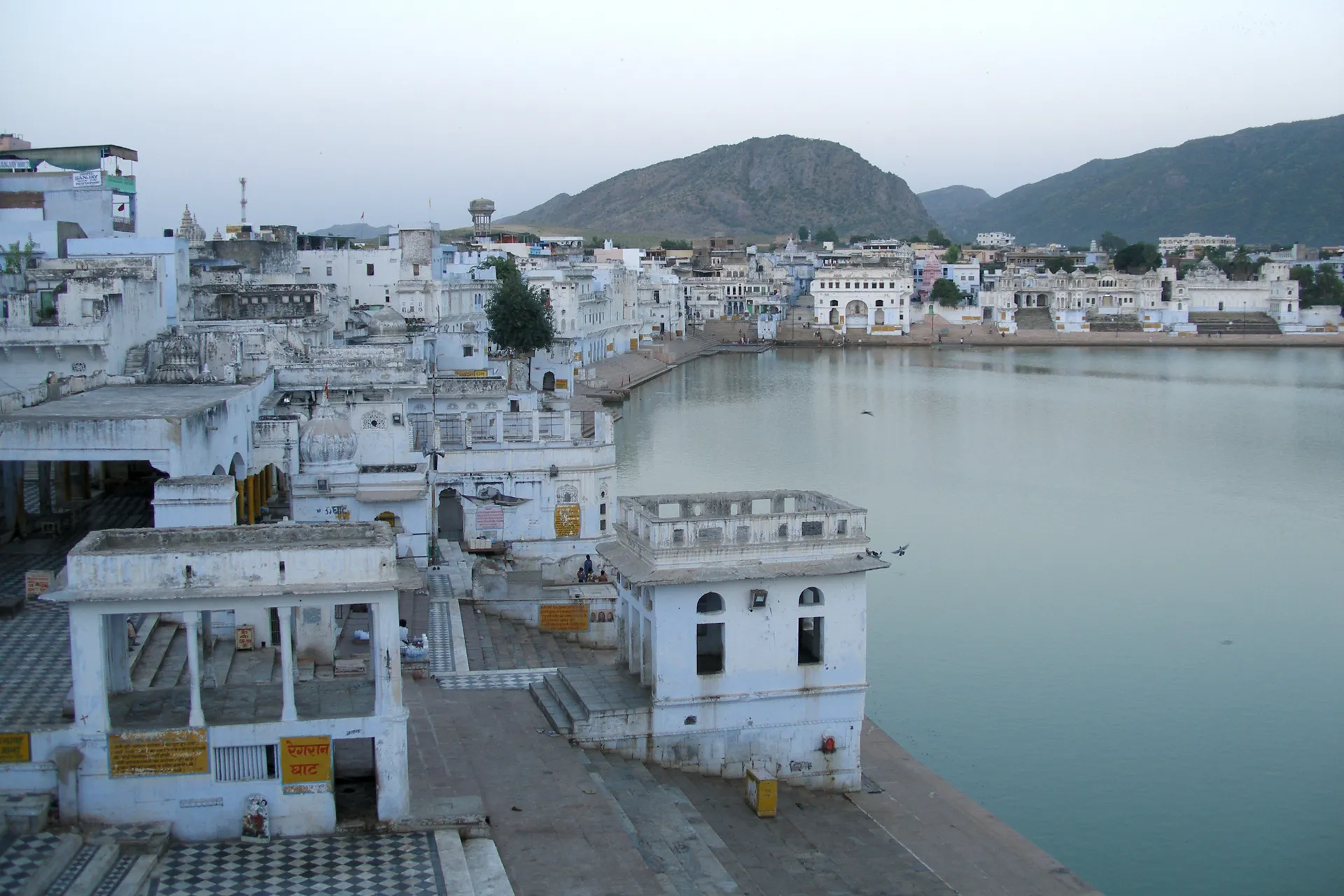
Pushkar is one of the cheapest places you can base yourself in India, which is a large part of its appeal for slow travellers. A simple guesthouse room, home-cooked vegetarian meals, chai and the odd rooftop breakfast will not stretch your money far at all. Because it is a small pilgrimage town rather than a nomad hub, there is little pressure to spend, and days can drift by on very little. The figures below are editorial estimates for a modest, long-stay budget and will rise sharply during the November Camel Fair, when rooms are booked out and prices climb steeply. A recurring cost here is not really a cost. At the ghats, men will press a flower into your hand, walk you through a short blessing and then name a figure, often a large one, framed as a donation for the whole village. It is a well-established routine rather than a religious obligation, the ceremony is not official, and the polite answer is to decline the flower before it is in your hand. Beyond that, the genuinely useful saving is a monthly rate negotiated face to face with a guesthouse owner in the quiet season, which is a fraction of any nightly price.
- Budget guesthouse room, monthly: roughly $150 to $300
- Vegetarian thali or rooftop meal: roughly $2 to $5
- Local SIM with data and a chai habit: roughly $10 to $20 a month
- Overall monthly budget: roughly $500 to $800
Where to Work in Pushkar
Pushkar has no coworking scene and no dedicated office space, and the sooner that is settled in your head the better the stay will be. What it does have is a scatter of rooftop cafes and guesthouse terraces looking over the lake and desert hills, where you can nurse a lassi and open your laptop. Wi-Fi is basic and can drop out, so a local SIM with a mobile data plan is your safest bet, and a backup eSIM is wise for anything time-critical. This is a place for light, asynchronous work, writing, editing or catching up, rather than for heavy calls, big uploads or a demanding nine-to-five with hard deadlines. The practical rhythm is set by the heat and the power. Between April and June the middle of the day is unusable and the cuts are longest in the afternoon, so the working hours that actually exist are early morning and after dark. In winter neither is a problem. On the connection, the mobile networks here beat any fixed line and carrying two cards from rival operators is the standard redundancy, because when one drops the other usually holds. Nothing here will support an hour of video reliably, and planning as though it might is the common mistake.
Getting Around Pushkar
Pushkar is tiny and made for walking. The main bazaar, the ghats and most guesthouses sit within a compact core you can cross on foot in fifteen minutes, weaving between cows, pilgrims and market stalls. Auto-rickshaws and the odd motorbike cover longer hops, such as out to the Savitri temple base or the fairgrounds. The nearest transport hub is Ajmer, about thirty minutes away by road, with a railway station linking to Jaipur in roughly three hours and onward to Delhi. Shared jeeps and buses run the Ajmer route cheaply and often. There is no need for a car here. The geography here is defined by two climbs, and one of them now has a shortcut. The temple on the ridge above the lake is a steep forty-minute walk up several hundred steps, and a cable car built in recent years runs the same route in minutes for anyone who would rather save the legs for the descent. The second hill, on the far side, has no such option. Go up for sunrise rather than sunset and you will have either largely to yourself. In the lanes, the monkeys are bolder than the cows and will take food out of a hand.
Sorting transport? Book an airport transfer, or compare car rental on Auto Europe and QEEQ.
Visas for Pushkar
Pushkar has no separate entry rules; you enter on an Indian visa like anywhere else in the country. Many visitors use the e-Tourist Visa, applied for online in advance, which is issued for varying durations and lets you fly into a major airport such as Delhi or Jaipur before travelling on by train or road. India is not a formal digital-nomad visa destination, so most remote workers simply visit as tourists and should stay mindful of the terms tied to a tourist entry. A practical corollary worth knowing: a local SIM is issued against your passport and visa and requires a local address and a photograph, the connection is activated after a verification call, and the number expires when the visa does. Buy it at an official shop at the airport rather than from a kiosk, because an unregistered card is a problem that surfaces later. Travel insurance is not required for entry and is worth carrying anyway, since the nearest hospital a foreign visitor would want is in the city half an hour away rather than in this town.
Best Time to Visit Pushkar
Pushkar sits in a hot semi-arid desert climate, so timing matters. The comfortable window runs roughly from October to March, when days are warm and sunny and evenings turn pleasantly cool, ideal for wandering the ghats and climbing to the hills for sunset. November brings the enormous Pushkar Camel Fair, a spectacular but very crowded and expensive time to be in town. Summer, from April to June, is punishing, with temperatures often soaring well above the point of comfort. The monsoon months bring some relief and greener hills but unreliable rain. For a slow, cheap stay, aim for the cooler winter months and skip the peak fair week. Worth understanding what that fair actually is, because it has two halves. The first days are a livestock market that has run for centuries, with thousands of camels and horses traded by people who came to trade, and the second half is the spectacle laid on around it, with the stadium events and the tour groups. The trading days are the interesting ones and they come first. The bathing on the full moon that closes it draws enormous crowds to the lake and is the religious heart of the whole thing. Outside that fortnight, the cooler weeks after it are the sweet spot.
Pros and Cons of Pushkar
Pushkar rewards a very particular kind of traveller and frustrates others. It is calm, cheap, deeply atmospheric and steeped in Hindu tradition, a genuine antidote to busy cities and generic nomad hotspots. But it is also small, quiet and short on the infrastructure serious remote workers rely on, and its sacred character means no meat, no alcohol and little nightlife. Weigh what you actually need. If your work is light and you crave stillness and culture, the trade-offs are easy. If you need fast internet and a buzzing social scene, look elsewhere. Something about the town belongs on that list and is usually written as colour rather than as fact: the lake is sacred, it has been drained and refilled for dredging more than once in recent decades, and the rules around it are real. Shoes come off well before the water, photography of people bathing is not acceptable, and the ghats are a place of worship rather than a viewpoint. Foreigners who treat that carefully are received with real warmth here, and the ones who do not are the reason the flower routine exists. It costs nothing to get right and it changes the whole experience of a month.
- Pros: very low cost of living; peaceful, spiritual and photogenic setting; walkable and safe; rich temple culture and desert sunsets; easy rail links via Ajmer
- Cons: basic, unreliable Wi-Fi; no coworking or nomad infrastructure; almost no nightlife; strictly vegetarian and alcohol-free; brutally hot summers and a crowded, pricey fair season
Who Pushkar Is For
Pushkar suits the slow traveller, the writer, the yoga or meditation seeker and anyone wanting a cheap, meaningful pause rather than a productivity base. It is a wonderful spot to decompress between busier destinations, to soak up temple life, camel-country sunsets and rooftop chai, and to live simply on very little. It is a poor fit for the deadline-driven remote worker, the party seeker or anyone who needs reliable bandwidth and a large expat crowd. Come with light work, an open mind and respect for its sacred, vegetarian and alcohol-free character, and Pushkar can be one of the most restorative stops in Rajasthan. On length, two to six weeks is the range that works, and beyond that most people find the same faces and the same three cafes have become the whole of their world. Pair it with a real city, which is half an hour and three hours away respectively, for the things this town cannot supply. Anyone arriving for the first time should take a room a few lanes back from the main bazaar rather than on it; the difference in noise from four in the morning, when the loudspeakers start, is the difference between sleeping and not.