Cost of Living in Nuuk
Where this figure comes from. No cost survey covers Nuuk, so the $2,600 a month above is our own estimate rather than a measurement. On 416 of our 999 city guides the figure is built from a published Numbeo basket, a one-bedroom rent in the centre plus one person's monthly costs without rent, converted to USD; this city is not one of them. How we source everything.
Budget around $2,600 a month as a solo remote worker in Nuuk, which is expensive and reflects a town of nineteen thousand people that everything must be shipped or flown to. A one-bedroom flat runs roughly $1,100 to $1,700 and housing is genuinely scarce, with waiting lists that are a standing feature of Greenlandic life. Groceries are Nordic-priced with an Arctic freight premium on top, and fresh produce is limited and expensive. Heating runs all year. The Danish krone is the currency. This is our own estimate rather than measured data. Eating out is expensive enough that most people do it rarely, and the handful of restaurants in town are priced accordingly. The supermarkets carry a narrower range than a European shopper expects, and the price of anything fresh reflects how far it has flown. Local fish and, in season, game from the fjord are the exception and are genuinely good value bought at the market. Alcohol is heavily taxed. The largest hidden cost of a Greenland stay is usually the flying: one trip north to see anything beyond the capital can cost more than a week of accommodation.
Where to Work in Nuuk
Greenland's connectivity has improved substantially with submarine cable to Iceland and Canada, and fibre reaches Nuuk at workable speeds, though prices are high and capacity outside the main towns is limited. Mobile coverage exists in the settlements and nowhere between them. Power is reliable and largely hydroelectric. There is a small amount of coworking. Greenlandic is the official language and Danish is universally taught; English is widely spoken among younger people and in business, which makes Nuuk considerably easier than its remoteness suggests. Anyone working with Europe should note that Greenland sits several hours behind, which makes a European afternoon into a Greenlandic morning. Data plans still carry caps that a video-heavy working day can reach, so it is worth checking the limit rather than assuming the fibre speed tells the whole story. Katuaq, the cultural centre, and the university are the two places in town with dependable public seating and power for a working afternoon. The compensation for the time zone is a very long uninterrupted morning: European colleagues do not come online until the middle of the Greenlandic day, which makes the first half of it the most productive stretch most people find anywhere.
Getting Around Nuuk
Nuuk is compact enough to walk across in forty minutes and has a small bus network. The important fact about Greenland is that there are no roads between towns, anywhere in the country: every journey beyond the immediate area is by aircraft, helicopter or boat, and weather cancels all three regularly. Nuuk's new international airport opened in late 2024, giving the capital direct flights from Copenhagen for the first time and ending decades of routing everyone through Kangerlussuaq. Ilulissat, with its UNESCO-listed icefjord, is a further flight north and is the trip most visitors add to a Nuuk stay. Build buffer days around any internal flight, because a cancellation for weather is normal rather than exceptional and the next seat may be days away. The coastal ferry is the slower alternative along the west coast in the ice-free months and is a journey in its own right. In town, taxis are plentiful and cheap by local standards. Ice underfoot is the real winter hazard, and studded overshoes are what residents wear from roughly November; the mountain behind the town, Store Malene, is walkable straight from the last streets in summer.
Sorting transport? Book an airport transfer, or compare car rental on Auto Europe and QEEQ.
Visas for Nuuk
Greenland is an autonomous territory of Denmark but is not in the European Union, having left in 1985, and is not in the Schengen area. A Schengen visa does not admit you and time here does not count against a Schengen allowance, which is the detail that matters most for planning. Most Western nationalities enter visa-free for up to ninety days. There is no remote work visa. Longer stays require a Greenlandic residence permit, administered separately from Denmark's. Anyone flying via Copenhagen should note that the Greenland leg is an external border crossing, with passport control in both directions. The consequence people actually use is the reset: a stay in Greenland does not consume Schengen days, so it can sit inside a longer European itinerary as genuine time off the clock. Working remotely for a foreign employer while on a visitor stay sits in the same unlegislated grey area as most places, and is not the same thing as taking Greenlandic work, which needs a permit. Health cover is worth checking closely, since a European health card does not extend here and evacuation from Greenland is expensive in a way few policies anticipate.
Best Time to Visit Nuuk
June to August is the summer, with temperatures around ten degrees, very long days and the fjords ice-free and navigable, and it is when almost all visitors come. September to April brings the northern lights, which are visible from Nuuk on clear nights through the whole dark half of the year. Winter is cold but moderated by the sea, sitting around minus eight in Nuuk rather than the extremes further north. Ice conditions rather than temperature govern what is possible in any given month. Nuuk sits just below the Arctic Circle, so there is no true midnight sun here, though June nights never get properly dark. March and April make up the season most residents would recommend and most visitors miss: the light has come back fully, the snow is still good, and the aurora is still visible on a clear night, which is a combination the summer cannot offer. Whales are in the fjord from roughly June to September. Autumn storms are severe and can shut the airport for days at a time. Mosquitoes are a real nuisance inland in July, though far less so on the coast at Nuuk itself.
Pros and Cons of Nuuk
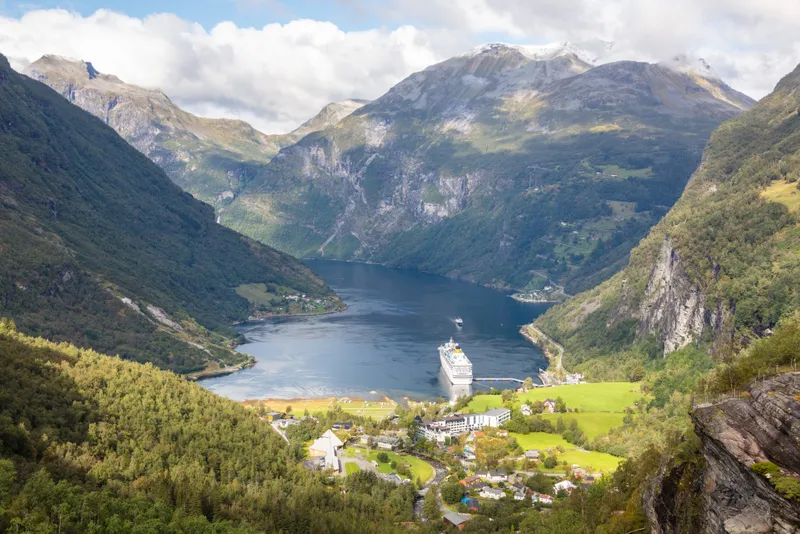
Nuuk sits at the mouth of one of the largest fjord systems on earth, with icebergs drifting past the town, whales in the fjord in summer and the northern lights overhead for half the year. It is the world's northernmost capital and, since 2024, directly reachable from Europe. Greenlandic culture is living rather than preserved. It is expensive, and housing is genuinely hard to find, the winter darkness is severe indeed, and no road connects the town to anywhere else, which shapes every plan you might make. Greenland is also the largest island in the world with one of the smallest populations, at around fifty-six thousand people across two million square kilometres. Nuuk is also a small town in all the ways that follow from the number: a handful of restaurants, limited shopping, and a social world in which anonymity is not really available. Greenland carries real social difficulties that a visitor should not pretend away, and they are discussed more openly here than outsiders expect. What the town gives back is a scale at which a newcomer can actually become known within a single season, which is rare anywhere.
Who Nuuk Is For
A real reason to be in the Arctic, whether research, photography or a long-held pull towards it, work that tolerates weather-dependent travel, and accommodation arranged before arrival rather than after. The new airport has made a short stay far more practical than it was. Greenlandic prices defeat a budget immediately, the winter takes the daylight away almost entirely, and there is no road to the next town from here or from anywhere else in the country: every journey between settlements is a boat or a plane. Self-government is being worked out here in real time rather than settled. Greenland has been steadily taking powers back from Denmark since 1979, and the argument about how far that goes is a live one in every election. A first visit is better kept short and timed for the light, because whether the Arctic suits you is not a decision that can be made in advance. It rewards people content with a small number of very good days and long stretches of weather in between, and it suits anyone whose outdoor life is hiking, sea kayaking or skiing rather than anything that needs a crowd. Anyone needing constant variety, warm evenings outdoors or cheap escapes will not last a winter.
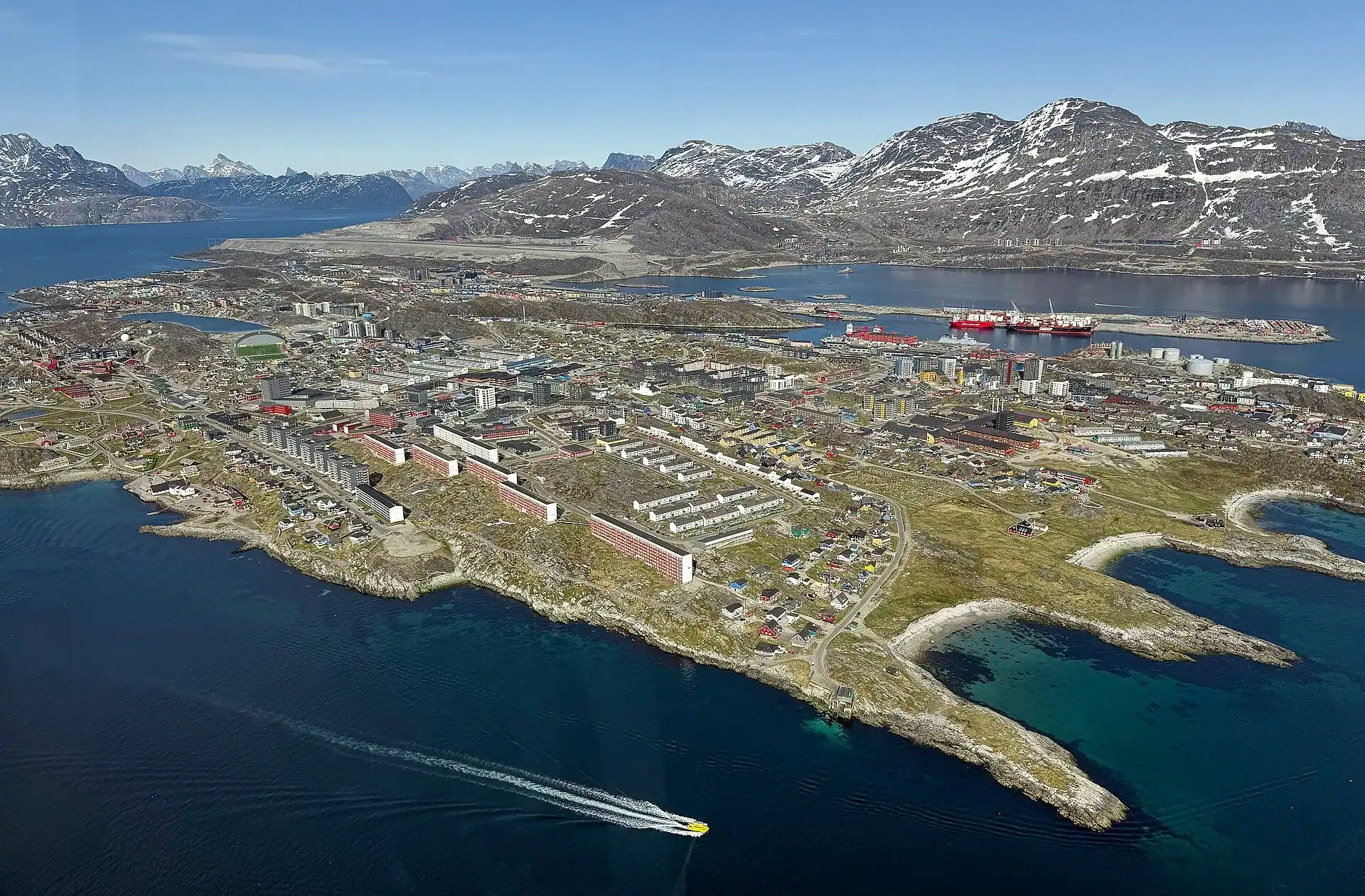 Photo: Quintin Soloviev / Wikimedia Commons (CC BY 4.0)