Cost of Living in Kolonia
Where this figure comes from. No cost survey covers Kolonia, so the $1,500 a month above is our own estimate rather than a measurement. On 416 of our 999 city guides the figure is built from a published Numbeo basket, a one-bedroom rent in the centre plus one person's monthly costs without rent, converted to USD; this city is not one of them. How we source everything.
Budget around $1,500 a month, which makes Pohnpei one of the more affordable places in the north Pacific. A one-bedroom runs roughly $400 to $800. Local produce is genuinely cheap and Pohnpei grows a great deal of its own food, which is unusual out here: bananas, breadfruit, taro and yam are everywhere, and the fish is excellent and inexpensive. Imported goods carry the usual freight markup. Utilities are moderate. Eating out is limited to a handful of restaurants and small canteens at low prices. The Federated States of Micronesia use the United States dollar and United States postal rates apply. The postal position is a genuine practical advantage and worth using: because domestic United States rates apply, ordering from American retailers costs roughly what it would cost within the States, which is by far the cheapest way to get anything the island does not stock. Delivery is slow rather than expensive. Housing at the upper end usually means a place built for the government and expatriate market, with a generator and a water tank, and it is those two features rather than the square footage that the price is buying.
Where to Work in Kolonia
Connectivity is weak. Pohnpei is served by a submarine cable and speeds in Kolonia are usable for email and light work, but bandwidth is limited, prices are high and reliability is patchy. Mobile data covers the populated coast. Power cuts happen. There is no coworking. This is not a place to run a call-heavy business from. The time zone is eleven hours ahead of GMT, which works for Asia and Australia and is difficult for anything else. Rain is heavy enough that it affects the connection on bad days. Anyone working with Australia will find the offset workable, at an hour ahead of eastern Australian time, which makes that the most practical business overlap available. The realistic adaptation is to make the work asynchronous rather than fight the line: write rather than call, pull large files down overnight, and keep anything you need offline genuinely offline. The people who last here are the ones whose output is documents and code rather than meetings. A generator, or at least a serious battery, is the other half of the arrangement, since a cut during a deadline is a question of when rather than whether.
Getting Around Kolonia
Kolonia is small and walkable, and the rest of Pohnpei is reached by the circumferential road that runs most of the way around the island, though not quite the whole way. Shared taxis are cheap and the usual way to move. A rental car helps if you want to reach the waterfalls and the inland trails. Pohnpei International Airport is on a causeway just outside town and is a stop on the United Airlines island hopper between Guam and Honolulu, which is the route in and out for most people, plus connections to Chuuk and Kosrae. The island hopper deserves its reputation: it runs a few times a week, stops at several atolls along the way, and a delay anywhere on the chain propagates to everyone, so build slack into any onward connection. Locally, the ring road is paved in parts and rough in others and a high-clearance vehicle earns its money in the wet. Nan Madol is reached by boat and the approach depends on the tide, which is one more reason the guide requirement is practical rather than bureaucratic.
Sorting transport? Book an airport transfer, or compare car rental on Auto Europe and QEEQ.
Visas for Kolonia
The Federated States of Micronesia grant thirty days visa-free on arrival to most nationalities, extendable in-country, and United States citizens may live and work here indefinitely under the Compact of Free Association. There is no remote work visa. A visit to Nan Madol requires a separate permit and a local guide, arranged through the Madolenihmw chiefs, and this is genuinely enforced rather than a formality. Proof of onward travel is normally requested. Anyone continuing to Chuuk or Kosrae should note those are separate states of the federation with their own arrangements for permits and local guides, though the entry rules are national. A wider principle sits behind that permit and it governs much of the island: land here is customarily owned, and access to waterfalls, trails and beaches often crosses someone's ground, so permission is asked rather than assumed and a small payment is normal. Extensions are handled at the immigration office in town and are routine when asked for in good time. Citizens of the federation hold reciprocal rights to live and work in the United States, which is why so many families have members abroad.
Best Time to Visit Kolonia
There is no dry season worth the name. Pohnpei is one of the wettest places on earth, receiving several metres of rain a year and considerably more in the interior, and rain falls in every month. January to March is marginally drier and is the usual window. Temperatures sit around thirty degrees all year with very high humidity. The islands lie at the southern edge of the typhoon belt and are hit less often than Guam or the Philippines. Diving visibility is best in the drier months, and the wrecks and reef walls are worth the trip. Rain here tends to be brief and torrential rather than all-day, which makes the totals misleading: a week can hold a great deal of water and still leave most of the daylight usable. Mould is the real consequence rather than the inconvenience, and anything leather or electronic wants a dry box. Surfers come for the reef passes in the northern winter, roughly December to March, which coincides with the marginally drier window and is the busiest the island gets, which is not very busy at all.
Pros and Cons of Kolonia
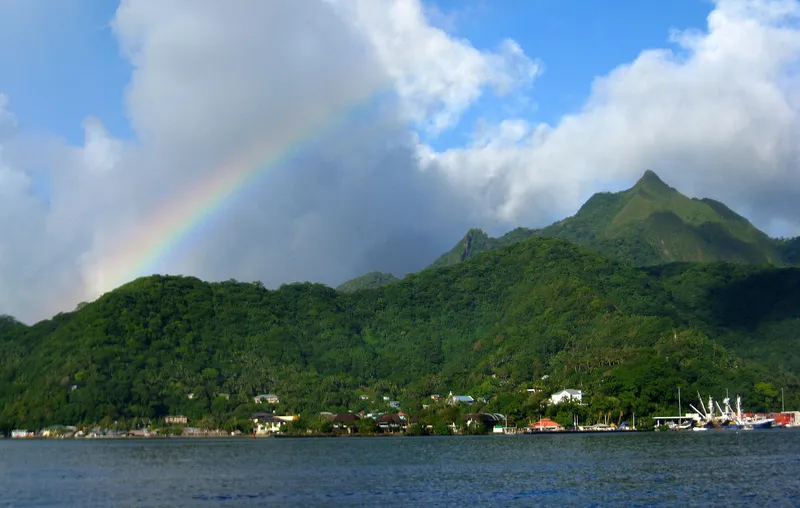
Nan Madol is the reason to come: a city of basalt logs built on artificial islets in a lagoon between the twelfth and seventeenth centuries, abandoned before any European saw it, World Heritage listed, and without parallel anywhere in the Pacific. Add rainforest, waterfalls and diving with nobody on it, at a genuinely low cost. The rain alone would put many people off, and it is joined by isolation, thin connectivity and a very short list of services. Medical care is basic and evacuation is a long way. Pohnpei also produces sakau, the local kava, which is drunk in nakas across the island and is central to social and ceremonial life rather than a novelty. The federation's outer atolls are among the places most exposed to sea level rise anywhere on earth, and that is a live local subject rather than a distant projection. And the pace is slower than almost any visitor expects: business, repairs and appointments run on an unhurried schedule, which is restful for a month and a genuine source of frustration for anyone trying to run something to a deadline.
Who Kolonia Is For
Pohnpei suits archaeologists and anyone drawn to Nan Madol, divers, and people with a working connection to Micronesia. It suits anyone who genuinely does not mind rain, because the rain here is not a season but a condition. Bandwidth-dependent work will not hold up in Micronesia, nightlife and a social scene are both absent, and the distance to a properly equipped hospital is the consideration that should decide it for anybody with a condition to manage. Remote fieldwork is one of the few professional reasons to come. The interior rainforest here is barely surveyed, and the island holds a number of species that exist nowhere else on earth. Anyone comparing the region should know that Palau is easier and better organised for visitors, Guam is where the shopping and the hospital are, and Pohnpei is the one with the archaeology and the least tourism of the three. A first visit of a week or two is enough to learn whether the isolation reads as peace or as pressure. Arrive with the medication you need, a plan for money that does not depend on a card being accepted, and no expectation that anything will move quickly.
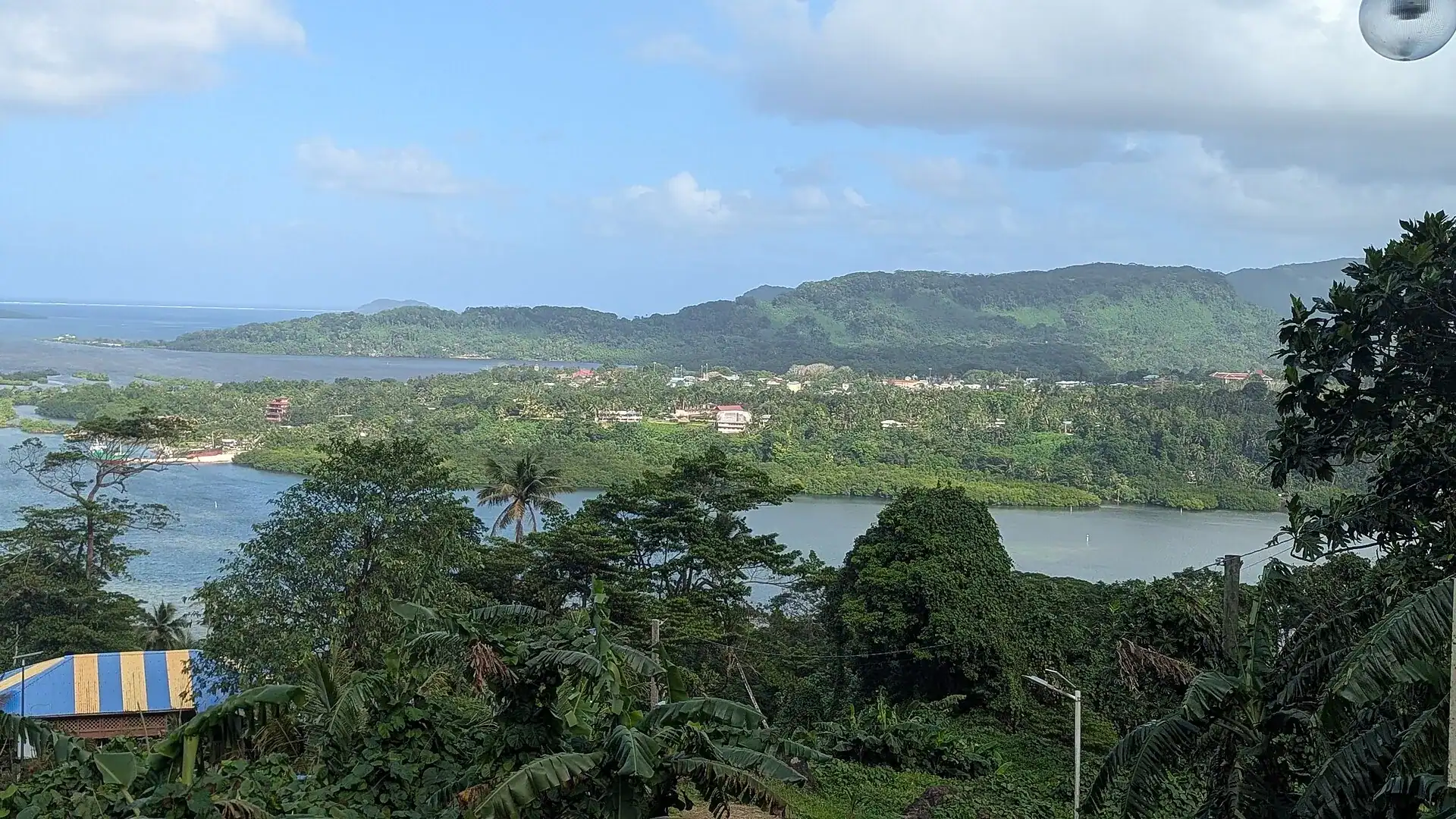 Photo: Zykasaa / Wikimedia Commons (CC BY-SA 4.0)