Cost of Living in Geiranger
Where this figure comes from. No cost survey covers Geiranger, so the $1,800 a month above is our own estimate rather than a measurement. On 416 of our 999 city guides the figure is built from a published Numbeo basket, a one-bedroom rent in the centre plus one person's monthly costs without rent, converted to USD; this city is not one of them. How we source everything.
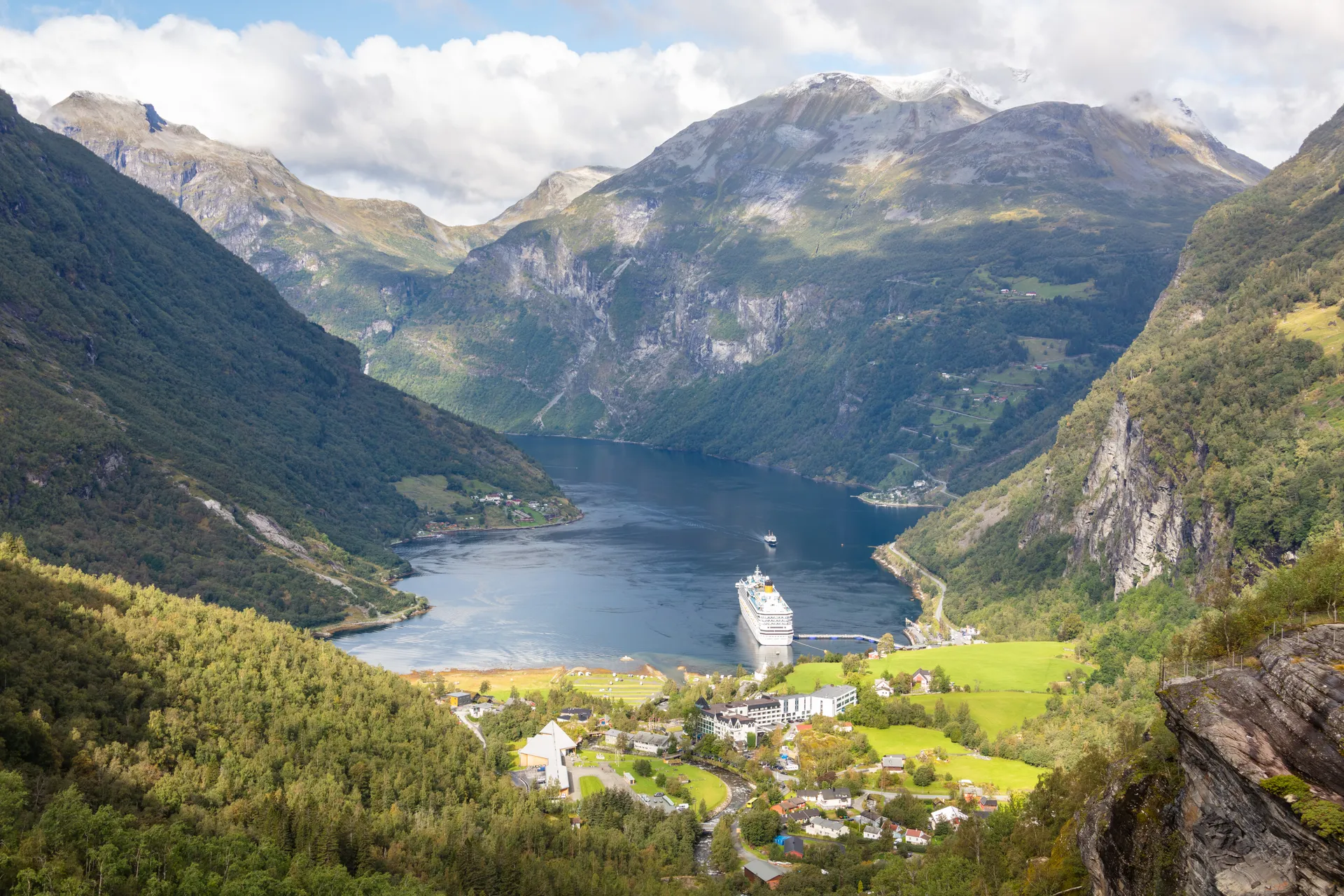
Geiranger sits in Norway, one of the most expensive countries in the world, and prices reflect that. A single slow-traveler should budget roughly $1,800 a month, and that assumes cooking most meals and traveling outside the July peak. Seasonal guesthouse or apartment rentals are scarce because the village is tiny and tourism-driven, so nightly rates often beat monthly deals. Groceries at the small village shop cost more than in Alesund or Oslo, and restaurant meals are a genuine splurge. If you want a stay here to pencil out, arrive with a healthy remote income or savings and treat Geiranger as a scenic, active retreat rather than a budget base.
- Seasonal apartment or cabin: roughly $1,200 to $2,200/month when available
- Groceries cooking at home: roughly $500 to $750/month
- A sit-down restaurant dinner: often $40 to $80 per person
- Fjord sightseeing ferry and viewpoint bus trips add up quickly in season
Where to Work in Geiranger
There is no coworking space in Geiranger, and there will not be one soon: this is a village of a few hundred year-round residents at the head of a fjord. What you do get is surprisingly usable wifi in the hotels, guesthouses and a handful of cafes, plus reliable mobile coverage from Telenor and Telia in and around the village center. For focused remote work, a room at one of the hotels or a guesthouse with a desk and a fjord view is your best bet, supplemented by a cafe for a change of scene. Cruise days can crowd the cafes for a few hours, so plan calls around the ships. Treat Geiranger as a place for deep, quiet work between hikes, not a networking hub.
- Hotel and guesthouse rooms with decent wifi and quiet desks
- Village cafes for a few hours of laptop time between meals
- A local SIM or eSIM (Telenor or Telia) as a mobile-data backup
- Plan video calls around morning cruise-ship arrivals
Getting Around Geiranger
The village itself is small and completely walkable, so you can reach the waterfront, shops and trailheads on foot. Beyond the village, options open up. The scenic car ferry runs the length of the fjord to Hellesylt, passing the Seven Sisters and Bridal Veil waterfalls, and it doubles as both transport and sightseeing. Hairpin mountain roads climb to Dalsnibba and the Flydalsjuvet viewpoint and continue toward Alesund, Andalsnes and the Trollstigen road, served by seasonal buses. A rental car is genuinely useful here and unlocks the wider Sunnmore region, though the switchbacks demand confidence. Many visitors simply arrive by cruise ship. The nearest airports are Alesund and Molde, each a few hours away by road and ferry. Since January 2026 the fjord has been a zero-emission zone for passenger ships under 10,000 tonnes, which takes in the sightseeing boats, while the big cruise liners have until 2032 to comply, so the summer ship traffic is not going away soon.
- Walk everywhere within the village center
- Geiranger to Hellesylt car ferry, scenic and practical
- Seasonal buses over Dalsnibba and toward Alesund and Andalsnes
- A rental car for the fjord region and mountain roads
- Nearest airports: Alesund and Molde
Sorting transport? Book an airport transfer, or compare car rental on Auto Europe and QEEQ.
Visas for Geiranger
Norway is not a member of the European Union, but it is part of the Schengen Area, so the standard Schengen rules apply. Most non-EU visitors, including US, UK, Canadian and Australian citizens, can enter visa-free for up to 90 days within any rolling 180-day period, which suits a scenic summer-into-autumn stay well. If you want to base yourself in Norway longer, you move into national residence and work permits, which are handled by the Norwegian Directorate of Immigration (UDI) rather than by Schengen rules, and Norway does not currently offer a dedicated digital-nomad visa. The border check itself rarely happens anywhere near the fjord. Fly-in visitors pass into the Entry/Exit System at their first Schengen airport, typically Oslo or a European hub before the short hop to Alesund, while cruise passengers sailing from a British port are processed at the ship's first Schengen port of call, usually a harbour on the coast rather than an airport.
Best Time to Visit Geiranger
Summer, roughly June through August, is when Geiranger is at its most spectacular and its busiest. The sightseeing ferries run frequently, the Seven Sisters and Bridal Veil waterfalls thunder at full flow, snowmelt keeps the fjord dramatic, and daylight stretches late into the evening. It is also peak cruise season, so the village fills with day visitors and prices sit at their highest. Late spring and early autumn, around May and September, are quieter and still lovely, with fewer ships and softer light, though some services wind down. Winter is very quiet: snow closes the high mountain roads, many businesses shut, and the village turns inward. For an active, ferry-and-waterfall trip, aim for June or September to balance access with breathing room. The roads set the calendar more than the weather does. The pass from Geiranger toward Grotli is shut by snow from about November, and its reopening, anywhere between late April and June, depends on clearing and avalanche risk, while the toll road up Dalsnibba usually runs from late May to early October.
- June to August: peak scenery, full waterfalls, long days, most crowds
- May and September: quieter shoulder seasons with fewer cruise ships
- Winter: many closures, snow-blocked mountain passes, minimal services
Pros and Cons of Geiranger
Geiranger's case is simple: almost nowhere on earth is this beautiful. You wake to a UNESCO World Heritage fjord ringed by sheer cliffs and waterfalls, with world-class hiking, kayaking and viewpoints on your doorstep, near-perfect air and water quality, low crime and excellent English. The trade-offs are just as clear. It is very expensive, tiny, and remote, with essentially no nightlife, no nomad community and no coworking. The economy revolves around a short, cruise-heavy tourist season, so the village swings between crowded summer days and near-empty winters. If you need social energy, coworking or a low budget, this is the wrong place. If you want silence, scenery and space to work and roam, it delivers. One unusual feature of life here: across the Sunnylvsfjord, the unstable Akneset mountainside is among the most closely monitored slopes on earth, with sensors that would set off sirens and an evacuation in Geiranger and Hellesylt if it began to slide, and those sirens are tested regularly.
- Pro: staggering fjord scenery and top-tier hiking and kayaking
- Pro: outstanding safety, cleanliness, air quality and English
- Con: very high costs and limited long-stay housing
- Con: no nightlife, no nomad scene, no coworking
- Con: strongly seasonal, cruise-driven and remote
Who Geiranger Is For
Geiranger is for the well-funded slow traveler who measures a place by mountains and fjords rather than by cafes and coworking desks. It suits remote workers with flexible hours and reliable income who want to bank a few focused hours online and then spend the rest of the day hiking to Skageflaa, kayaking under the waterfalls or driving to Dalsnibba. It rewards nature lovers, photographers, quiet couples and solo travelers who prize calm over social buzz. It is a poor fit for anyone chasing nightlife, a nomad community, a tight budget or a bustling work hub. Come here to disconnect and be awed, treat it as a scenic chapter rather than a home base, and Geiranger will be unforgettable.