Cost of Living in Saint-Denis
Where this figure comes from. No cost survey covers Saint-Denis, so the $1,800 a month above is our own estimate rather than a measurement. On 416 of our 999 city guides the figure is built from a published Numbeo basket, a one-bedroom rent in the centre plus one person's monthly costs without rent, converted to USD; this city is not one of them. How we source everything.
Budget around $1,800 a month as a solo remote worker in Saint-Denis, which is expensive for the Indian Ocean and reflects a French department where much of the food arrives from Europe. A one-bedroom flat runs roughly $700 to $1,100. Groceries cost noticeably more than mainland France and the price of living here has driven serious protest movements, including the gilets jaunes actions that were more sustained on Reunion than almost anywhere. The euro is the currency. This is our own estimate rather than measured data. Anyone comparing with Mauritius nearby should note that Reunion costs considerably more and offers European healthcare and schooling in exchange. The same dock duty applied across the French overseas departments is the mechanism, and it is why an identical product costs more here than in Marseille despite the shared currency. The escape is local. The markets at Saint-Paul and in the capital sell fruit, vegetables and fish grown and caught on the island at a fraction of supermarket prices, and Reunion produces a great deal of its own. A car is close to essential, and both the purchase and the fuel cost more than they would in mainland France.
Where to Work in Saint-Denis
Reunion has European infrastructure: fibre reaches most of the coastal ring at good speeds, mobile coverage is comprehensive and French plans roam here without charge, which matters for anyone based in Europe. Power is reliable. There is a small coworking scene in Saint-Denis and Saint-Pierre. French is the language of everything, with Reunion Creole spoken among locals, and English is limited. The island sits three hours ahead of Paris in the northern winter, which makes a French morning into a Reunionese afternoon. Anyone working with mainland France should note that the offset flips with European daylight saving, which changes the overlap by an hour twice a year. Everything administrative runs on the same French systems as the mainland, so a freelancer already registered in France can operate here without building any new structure, which is a real advantage over the independent islands nearby. The university and the volcano observatory give the island a research population, and the public sector is the largest employer by a distance. Unemployment on Reunion is high, which shapes the local job market and is worth understanding before assuming work can be found here.
Getting Around Saint-Denis
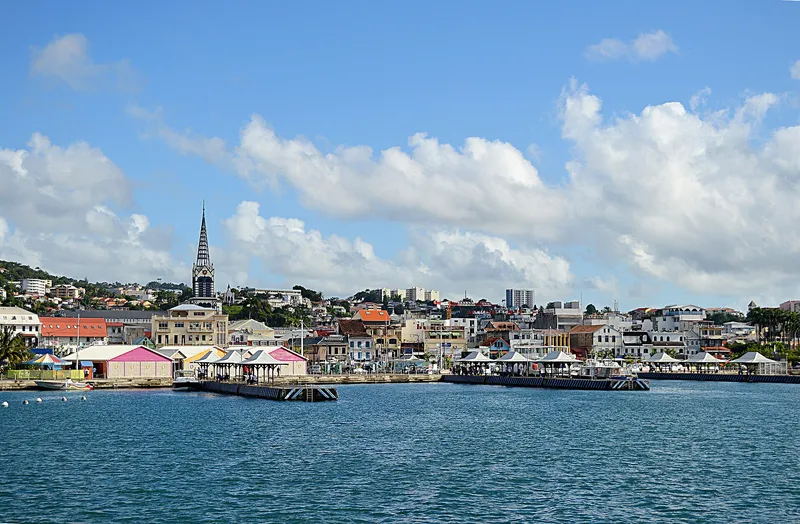
Saint-Denis sits on the north coast and its centre, with the Creole townhouses along the Rue de Paris and the Barachois seafront, is walkable. A coastal road rings the island and the new coastal highway west of the capital is one of the most expensive roads ever built in France, running partly on a viaduct over the sea because of rockfalls. Buses cover the ring. The interior, with its three cirques and the volcano, is reached by mountain roads and on foot. Roland Garros airport has direct flights to Paris. Traffic on the ring road is the daily reality: the population is concentrated on the coast, there is one route, and the peak is slow enough that residents plan around it. The roads into the cirques are the compensation. Cilaos is reached by a famous climb of some four hundred bends, and the Salazie road runs through tunnels cut into the gorge. Mafate has no road at all and is supplied by helicopter, which is why walking in is the only way. A hire car is close to mandatory for anything beyond the capital.
Sorting transport? Book an airport transfer, or compare car rental on Auto Europe and QEEQ.
Visas for Saint-Denis
Reunion is an overseas department of France and part of the European Union while sitting outside the Schengen area, which is the detail that matters: a Schengen visa does not admit you and time here does not count against a Schengen allowance. European Union citizens have full freedom of movement and can live and work here with no permit. Most other Western nationalities receive ninety days visa-free. Longer stays for non-EU citizens require a French long-stay visa applied for before travel. Anyone travelling on to Mauritius, forty minutes away by air, should note that is a separate country with its own entry requirements. As elsewhere in the French overseas departments, a visa issued for France has to name Reunion to be valid here, and it is checked at boarding rather than on arrival. Regional travel is one of the island's quieter advantages, with Madagascar, Mauritius, the Seychelles and South Africa all a short flight away and each with its own rules, so a stay here can be built as a circuit rather than a single destination. Yellow fever certificates are asked for from travellers arriving from affected countries.
Best Time to Visit Saint-Denis
May to November is the dry, cooler season and the practical window, with daytime temperatures around twenty-five on the coast and the hiking trails in the cirques at their best. December to April is the wet season and the cyclone season, and Reunion sits directly in the Indian Ocean cyclone belt; the island holds several world records for rainfall in a single day. Piton de la Fournaise, one of the most active volcanoes on earth, erupts most years, and eruptions are announced and viewable from designated points. Mafate, the cirque reachable only on foot or by helicopter, is walkable year-round but the trails are genuinely hard after heavy rain. Altitude changes the season completely. The coast can be warm while Cilaos is cool and the Piton des Neiges summit, at just over three thousand metres, gets frost, so a hiking trip needs layers the beach does not suggest. Humpback whales pass between roughly July and September. The Grand Raid runs in October and fills accommodation across the island, which is worth either planning around or planning to watch.
Pros and Cons of Saint-Denis
Reunion is one of the best hiking destinations anywhere: three collapsed volcanic cirques with villages reachable only on foot, over a thousand kilometres of marked trail, and an active volcano that erupts most years. It has European infrastructure, French healthcare and no visa question for Europeans. It is expensive, and French is essential, the cost of living is a politically contentious subject, and shark attacks have led to a swimming ban on much of the west coast that has been in place for over a decade. The island's Creole culture, mixing African, Indian, Chinese and European elements, is also more visible in daily life here than in most French departments. The swimming restriction has an important exception the headline hides: the lagoon inside the reef at Saint-Gilles, Ermitage and Saint-Leu is protected, and swimming there is permitted and entirely normal, so the island is not closed to the water, it is closed to the open ocean on that coast. Reunion also went through a major chikungunya epidemic in 2005 and 2006, and mosquito-borne illness remains a live public health concern here, with periodic dengue outbreaks since.
Who Saint-Denis Is For
French and, ideally, a European Union passport, with hiking or volcanology as the main interest, since Reunion is genuinely world class at both. Anyone who runs will know it as the home of the Grand Raid, one of the hardest ultramarathons anywhere. French is required throughout, and anybody expecting a beach holiday has misread the island: the swimming restrictions on the west coast are serious and enforced, and Reunion's argument has always been the interior, the cirques and the volcano rather than the shore. Volcanic geology is the island's other subject. Piton de la Fournaise is among the most studied and most accessible active volcanoes on earth, and it erupts often enough to be seen doing it. Anyone choosing between Reunion and Mauritius is choosing between a mountain and a beach: Mauritius is flatter, cheaper, anglophone in business and built around its coast, while Reunion is vertical, expensive and built around what is inside it. French schooling and French healthcare are the main reason people take postings here at all, and they are what makes the island workable with children. Two weeks is enough to walk the cirques properly and a month is better, since the weather will take some of the days from you.
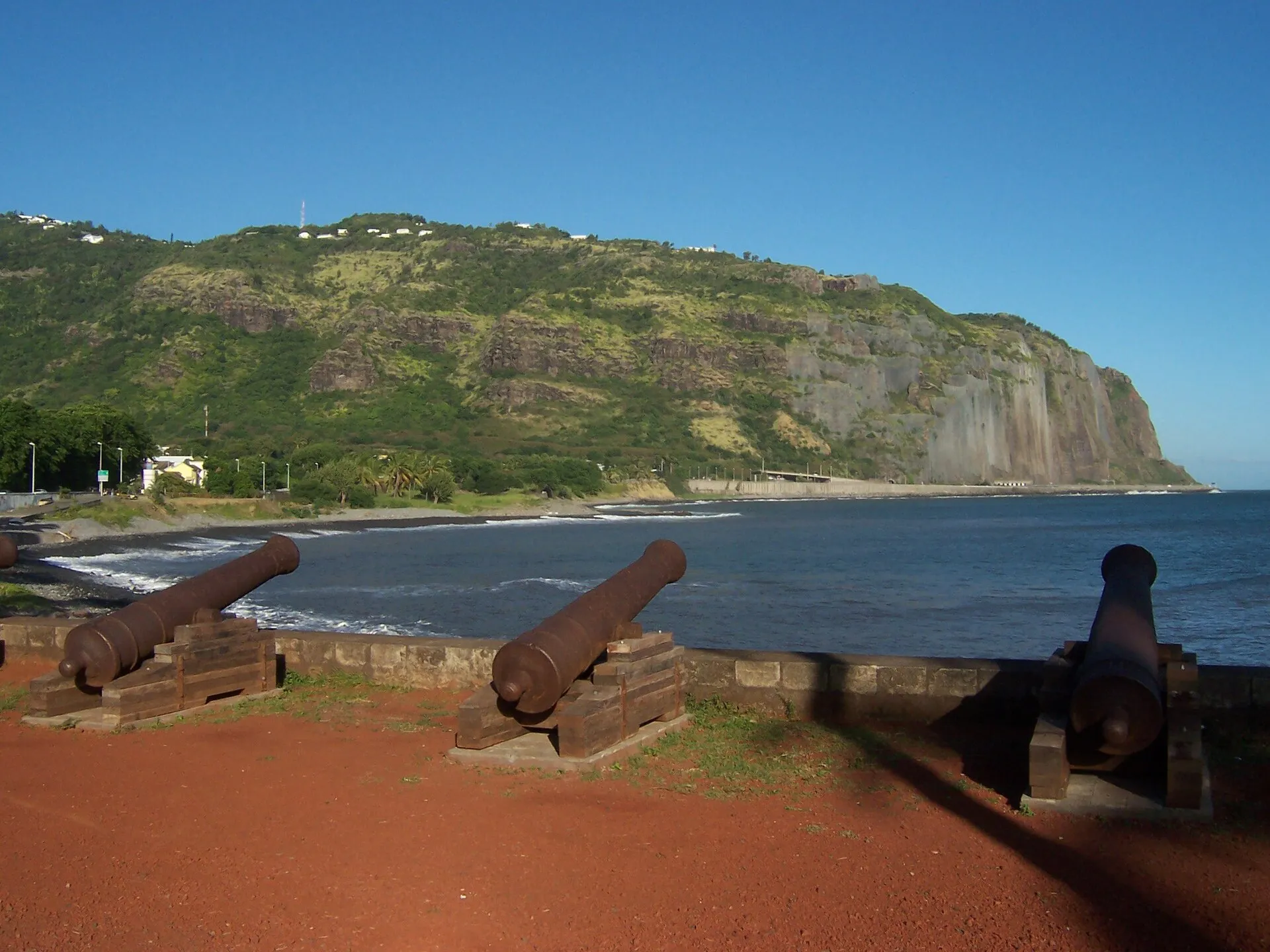 Photo: B.navez / Wikimedia Commons (CC BY-SA 3.0)