Cost of Living in Hsipaw
Where this figure comes from. No cost survey covers Hsipaw, so the $500 a month above is our own estimate rather than a measurement. On 416 of our 999 city guides the figure is built from a published Numbeo basket, a one-bedroom rent in the centre plus one person's monthly costs without rent, converted to USD; this city is not one of them. How we source everything.
Hsipaw is cheap by almost any regional yardstick, when it is reachable and open at all. A simple guesthouse room runs roughly $8-18 a night, and a private room with hot water and a fan or basic air conditioning tops out around $25-35. Local Shan noodle stalls and market food cost well under $1-2 a plate, while a sit-down meal at a traveler cafe on the main strip is $2-5. A single nomad living simply, eating mostly local food and staying in a guesthouse, can get by on roughly $400-600 a month; a more comfortable setup with better wifi, occasional taxis or trekking guides, and Western-style meals pushes that to $700-1000. The catch is not the prices, it is the money itself: Myanmar runs almost entirely on physical kyat (MMK) cash in towns like Hsipaw. International cards are rarely accepted, ATMs are unreliable or offline for stretches at a time, and foreign card networks have been intermittently cut off since 2021. Bring more cash than you think you need, in clean, unfolded US dollars to exchange, and plan for the very real chance that banking access disappears with no warning.
Where to Work in Hsipaw
Hsipaw was never built as a remote work hub, and it shows. There is no dedicated coworking space; your options are guesthouse common areas and the handful of traveler cafes along the main road near the clock tower and market, most of which offer table space, some sockets, and a router that may or may not hold a video call. Mr Charles' guesthouse and a couple of similar backpacker lodges have historically had the most reliable setups, with generator backup during outages. Treat any wifi here as a bonus, not infrastructure: connections are slow, shared, and prone to dropping during rain or grid power cuts, and mobile data (when towers are up) is a more consistent fallback than fixed-line wifi. Anyone who needs dependable video calls, large uploads, or hard deadlines should not plan to rely on Hsipaw as a base; it suits async, low-bandwidth work far better than anything synchronous.
Getting Around Hsipaw
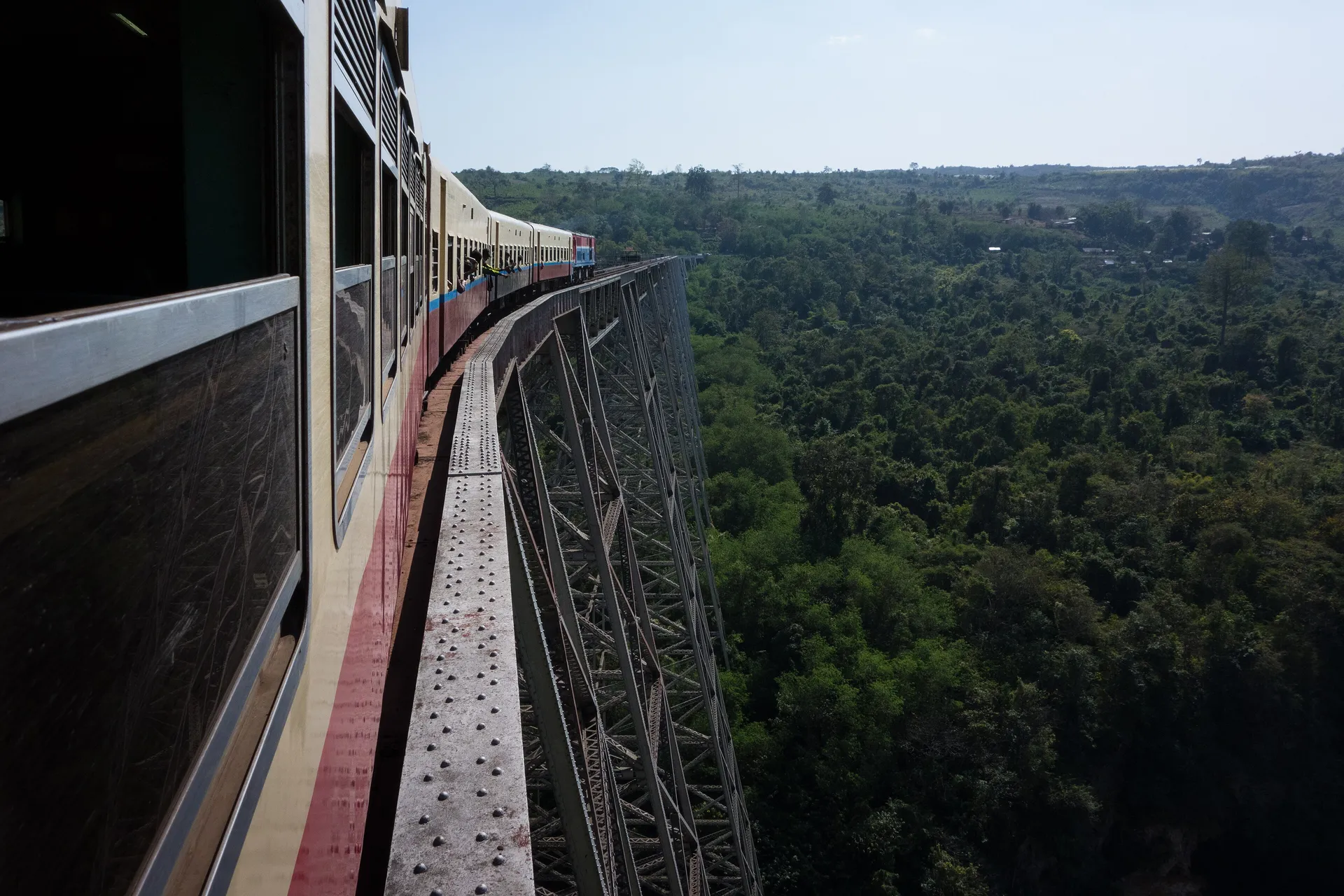
The town itself is small and entirely walkable, with the market, clock tower, riverside, and most guesthouses within a 10-15 minute walk of each other. Bicycles are the classic way to explore further, rentable cheaply from guesthouses, and flat enough riverside roads make for easy pedaling out toward the Shan Palace and nearby villages. For getting to Hsipaw in the first place, the famous route is the slow train from Mandalay, which crosses the Gokteik viaduct, a dramatic century-old steel trestle bridge, though train schedules, ticketing for foreigners, and whether the line is even running have all been unpredictable since 2021. Shared pickup trucks and buses connect Hsipaw to Mandalay, Lashio, and Pyin Oo Lwin, generally faster than the train but with far less scenery. Trekking to nearby Palaung and Shan villages is normally done on foot with a local guide over one to three days; motorbike rental exists but road conditions and checkpoints in the surrounding hills vary with the security situation and should be checked locally, not assumed. The viaduct itself was damaged by an explosion on 24 August 2025, which each side blamed on the other, and Myanma Railways had it repaired and test-loaded by mid-November, after which scenic trains resumed between Pyin Oo Lwin and the viaduct's own station.
Sorting transport? Book an airport transfer, or compare car rental on Auto Europe and QEEQ.
Visas for Hsipaw
Most nationalities can apply for a Myanmar e-visa online in advance, typically valid for a single entry and around 28-70 days depending on visa type, with tourist e-visas processed in a few business days. A visa on arrival exists at Yangon and Mandalay international airports for some nationalities, but overland entry points and their visa rules change without much notice. Beyond the visa itself, the bigger gating factor is whether the region is open to foreign travelers at all: since the 2021 coup and the ensuing conflict, foreign tourists have periodically been restricted or required special permits to travel into parts of Shan State, and this has changed repeatedly. Check both visa rules and any travel permit or "MoHT" registration requirements for Shan State immediately before booking, not months in advance. The town's own status has swung with the war. The Ta'ang National Liberation Army took Hsipaw in October 2024 and held it for a year until the military retook it on 17 October 2025, shortly before a China-brokered ceasefire, and in November 2025 the road onward to Lashio was closed again amid tension with another armed group. Any plan here depends on who controls that highway in the week you travel.
Best Time to Visit Hsipaw
Hsipaw sits in the Shan hills at moderate elevation, giving it a noticeably cooler, more temperate climate than lowland Myanmar. The best window is roughly October through February, the cool, dry season, with pleasant daytime temperatures, chilly mornings and evenings (sometimes near freezing in December-January on higher ground), clear skies, and the best trekking conditions. March through May turns hot and dry, with haze from regional agricultural burning that can affect air quality and mountain views. The June-September monsoon brings heavy rain, muddy trekking trails, occasional road washouts, and a higher chance of leeches on hikes, though the surrounding hills turn vividly green. Regardless of season, trekking and travel plans should stay flexible given the security situation, which can affect access on short notice independent of the weather.
Pros and Cons of Hsipaw
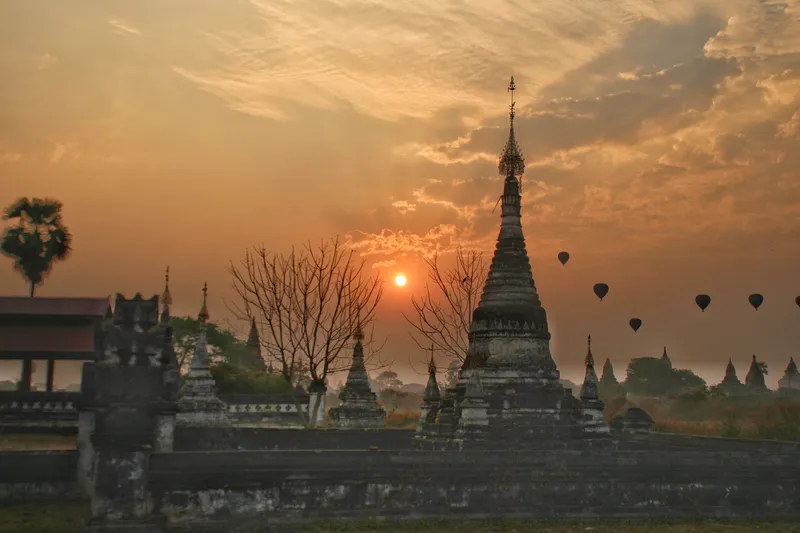
Pros: a relaxed, unpolished small town feel that has largely avoided mass tourism; genuinely excellent multi-day trekking through Palaung and Shan hill villages and tea plantations; a scenic train ride over the Gokteik viaduct when it runs; very low cost of living; friendly locals and a slower pace than Myanmar's bigger cities. Cons, and this needs to be said plainly: Myanmar has been in armed conflict and political crisis since the February 2021 military coup, and parts of northern Shan State, including areas around and beyond Hsipaw, have seen active fighting between the military and various armed groups. Most Western governments' foreign ministries currently advise against all or all but essential travel to Myanmar, and that advice can change abruptly. Internet and mobile networks are throttled or cut in some areas, domestic flights and transport routes are periodically suspended, foreign card payments and ATMs are unreliable to nonexistent, and checkpoints or closed roads can strand travelers or reroute them with little warning. This is not a place to arrive on a whim; have a flexible exit plan.
Who Hsipaw Is For
Hsipaw suits experienced, security-conscious travelers with flexible schedules who specifically want authentic hill-town trekking and Shan culture, are comfortable with cash-only logistics and unreliable connectivity, and are actively monitoring the current safety and access situation before and during their trip. It is not for first-time visitors to Myanmar, anyone needing dependable internet for work, risk-averse travelers, or anyone whose home government currently advises against travel there. If those conditions do not currently describe you, this is a place to keep on a watchlist rather than book today; reassess closer to any planned dates using current advisories, not this guide alone. For now that means watching from a distance. A town that has changed hands twice in twelve months, sits on the main trade highway to China and lost its signature train ride for part of 2025 is not one to commit a month to, however good the trekking.