Cost of Living in Mompóx
Where this figure comes from. No cost survey covers Mompóx, so the $600 a month above is our own estimate rather than a measurement. On 416 of our 999 city guides the figure is built from a published Numbeo basket, a one-bedroom rent in the centre plus one person's monthly costs without rent, converted to USD; this city is not one of them. How we source everything.
Mompóx is cheap, but "cheap" comes with caveats: there is very little to spend money on beyond lodging, food, and the occasional filigree souvenir. A simple room in a family-run posada runs roughly $19 to $31 a night, while a restored colonial guesthouse with a courtyard and pool can run $62 to $125. Longer-term monthly rentals are informal and scarce since almost nobody digital-nomads here, but a modest apartment or long-stay room can be negotiated for $250 to $470 a month if you ask around locally rather than relying on listing sites. Food is a bargain: a set-menu lunch (comida corriente) with soup, rice, meat, and juice costs $3.50 to $5.50, and a plate of the local bocachico fish at a riverside spot runs $8 to $12. A bottle of local beer is $1 to $2. Budget travelers can live on $19 to $28 a day including a decent room; a more comfortable stay with better lodging and a few splurges lands closer to $47 to $69 a day. Everything runs in Colombian pesos (COP), and cash is essential since many small businesses and moto-taxi drivers do not take cards.
Where to Work in Mompóx
Nothing in Mompóx was built with a laptop in mind, and anyone arriving with a full calendar of calls should know that before booking the van. There is no coworking space, no laptop-cafe culture, and wifi is patchy and slow even in decent hotels, sometimes cutting out entirely during storms or power blips. A handful of boutique hotels around the Albarrada waterfront and near Plaza Santa Barbara have courtyard seating and wifi that can handle email, messaging, and light browsing, but video calls are a gamble and large uploads can take a painfully long time. If your job requires reliable video conferencing or big file transfers, plan around it: schedule calls for early morning when the network is least loaded, keep a local SIM with mobile data as backup (Claro and Movistar both have coverage, though Claro tends to be steadier), and download anything you need offline before you arrive. Mompóx works far better as a place to unplug for a few quiet days between more connected stops than as a base for daily deadline-driven work. Writers, researchers, and anyone with async-friendly work who can go a day or two without a hard video call will have the easiest time here.
Getting Around Mompóx
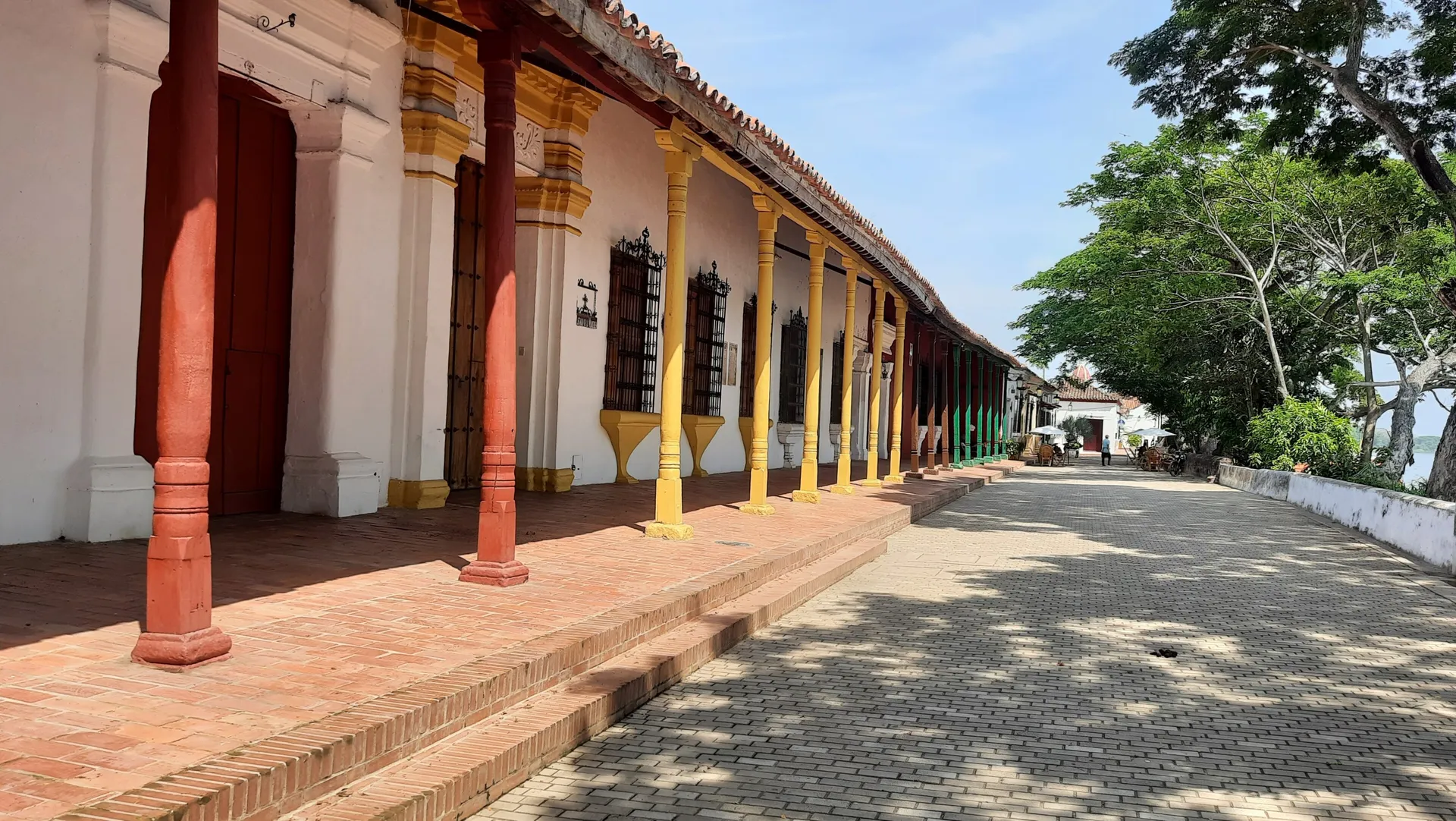
Getting to Mompóx is part of the adventure and should not be underestimated. From Cartagena or Barranquilla, the standard route is a door-to-door van (colectivo) that takes 6 to 8 hours, including a river crossing by ferry or small boat near Magangue since the town sits on an island formed by the Magdalena river's branches. Roads on the final stretch are rougher and slower than the highway portions, and departures can be delayed by weather or low water levels affecting the ferry. Some travelers instead fly into Corozal or Monteria and continue by road, which can shave time but adds cost and complexity. Once you are actually in Mompóx, everything changes: the historic center is small, flat, and entirely walkable, with cobblestone streets running parallel to the river past whitewashed churches and wrought-iron balconies. For trips to the edges of town or nearby villages, tuktuks (mototaxis) are cheap, plentiful, and the default way locals get around, typically costing about a dollar for a short hop. There are no ride-hailing apps here, so you flag tuktuks on the street or ask your hotel to call one.
Sorting transport? Book an airport transfer, or compare car rental on Auto Europe and QEEQ.
Visas for Mompóx
Visa rules for Mompóx are simply Colombia's national rules, since there is no special regime for the town. Most Western passport holders, including the US, Canada, EU, UK, and Australia, receive a stamp on arrival allowing up to 90 days as tourists, which can typically be extended once for a further 90 days at a Migracion Colombia office (Mompóx itself has no immigration office, so extensions need to be handled in a larger city like Cartagena or Barranquilla before your stamp expires). Total tourist stays are generally capped at 180 days within a 12-month period. Colombia also offers a digital nomad visa (visa V tipo nomada digital) for remote workers with proof of foreign income, valid for up to two years, though given the lack of infrastructure in Mompóx most digital nomads who go through the trouble of getting that visa base themselves in Medellin, Bogota, or the coast and treat Mompóx as a short side trip rather than a home base. If you do overstay, Colombia enforces fines and exit issues, so track your dates carefully, especially since getting to an immigration office from Mompóx eats a full travel day each way.
Best Time to Visit Mompóx
Mompóx is hot and humid essentially year-round, sitting low near the Magdalena river with little relief from the heat, so "best time" is really about rainfall and crowds rather than temperature. The drier stretch from December through March brings lower humidity, more reliable roads, and easier river crossings, making it the most comfortable window logistically as well as climatically. April brings Semana Santa (Holy Week), when Mompóx holds Colombia's oldest and most famous Easter processions, a genuinely spectacular cultural event, but also the town's busiest week by far: book lodging months ahead and expect prices to spike. The wetter months from May through November bring heavier afternoon downpours, higher humidity, more mosquitoes, and a real risk that rising river levels disrupt the ferry crossings that get you there in the first place. Whatever the season, pack for heat and humidity: light breathable clothing, strong mosquito repellent, and patience for a slower pace of life than the rest of Colombia.
Pros and Cons of Mompóx
The pros are substantial for the right traveler. Mompóx is a genuinely well-preserved slice of colonial Spanish America, a UNESCO World Heritage town where whitewashed churches, filigree silver workshops, and wrought-iron balconies have survived largely untouched by mass tourism. The pace is unhurried, the riverside evenings are beautiful, and the town's link to Gabriel Garcia Marquez's world gives it a literary, almost magical-realist atmosphere that is hard to find anywhere else in Colombia. It is also inexpensive and safe by Colombian urban standards, with low visible crime in the historic center. The cons are equally real. Getting there is genuinely arduous, with long van rides and river crossings that can be delayed by weather. The heat and humidity are intense and constant, mosquitoes are a persistent nuisance, wifi is unreliable, English is limited outside of a few tourist-facing hotels, and there simply are not many services, restaurants, or activities to fill more than a few days. This is a place to visit deliberately, not a place that accommodates spontaneity or convenience.
Who Mompóx Is For
Mompóx suits slow travelers, culture and history enthusiasts, photographers, and anyone chasing the Garcia Marquez literary trail who is willing to trade convenience for authenticity. It rewards people who can go offline for a few days without stress, who enjoy walking cobblestone streets at golden hour more than checking off amenities, and who have some basic Spanish or patience for charades, since English is limited. It is a poor fit for anyone needing dependable wifi for work, anyone with a tight schedule who cannot absorb travel delays, or anyone sensitive to heat, humidity, and mosquitoes. Think of Mompóx as a rewarding two-to-four day detour built into a longer Colombia itinerary, ideally paired with more connected bases like Cartagena, rather than a place to set up as a working base on its own.