Cost of Living in Izamal
Where this figure comes from. No cost survey covers Izamal, so the $800 a month above is our own estimate rather than a measurement. On 416 of our 999 city guides the figure is built from a published Numbeo basket, a one-bedroom rent in the centre plus one person's monthly costs without rent, converted to USD; this city is not one of them. How we source everything.
Izamal is one of the most affordable bases in the Yucatan, in part because it stays off the main tourist circuit and prices track local wages rather than resort demand. A comfortable solo budget runs roughly $700 to $1,300 per month, depending on how you rent. Long stays in a simple furnished apartment or guesthouse can be very cheap, while the small pool of nomad-ready rentals means the nicer places get booked and priced higher than you might expect for such a small town. Everyday spending is where you save most: market produce, taco stands, and neighborhood cocinas cost a fraction of Merida or Playa del Carmen.
- Furnished rental or long-stay guesthouse: roughly $350 to $650 per month.
- Local meals from $2 to $5; a sit-down restaurant meal $8 to $14.
- Fresh produce, tortillas, and staples from the municipal market are very cheap.
- Budget extra for taxis, colectivos, or a rental car to reach cenotes and ruins.
Where to Work in Izamal
As a work base Izamal asks you to bring your own structure, since this small colonial town has no shared office to rent a desk in and no circle of fellow nomads to borrow one from. That said, remote work is workable for a calm stay. Wifi in guesthouses and better-equipped rentals is generally decent for calls and everyday tasks, and a handful of cafes near the Convento let you post up with a laptop and a coffee. Speeds and reliability vary, so a local SIM with a mobile data plan is a smart backup for video meetings. If you need dependable coworking, fast fiber, and a community of other remote workers, base in Merida (about an hour away) and treat Izamal as a slow-travel visit or weekend retreat.
- A few centro cafes are laptop friendly for a few hours at a time.
- Carry a Mexican eSIM or SIM (Telcel has the best regional coverage) as a hotspot backup.
- For coworking and a nomad community, commute to or stay in Merida.
Getting Around Izamal
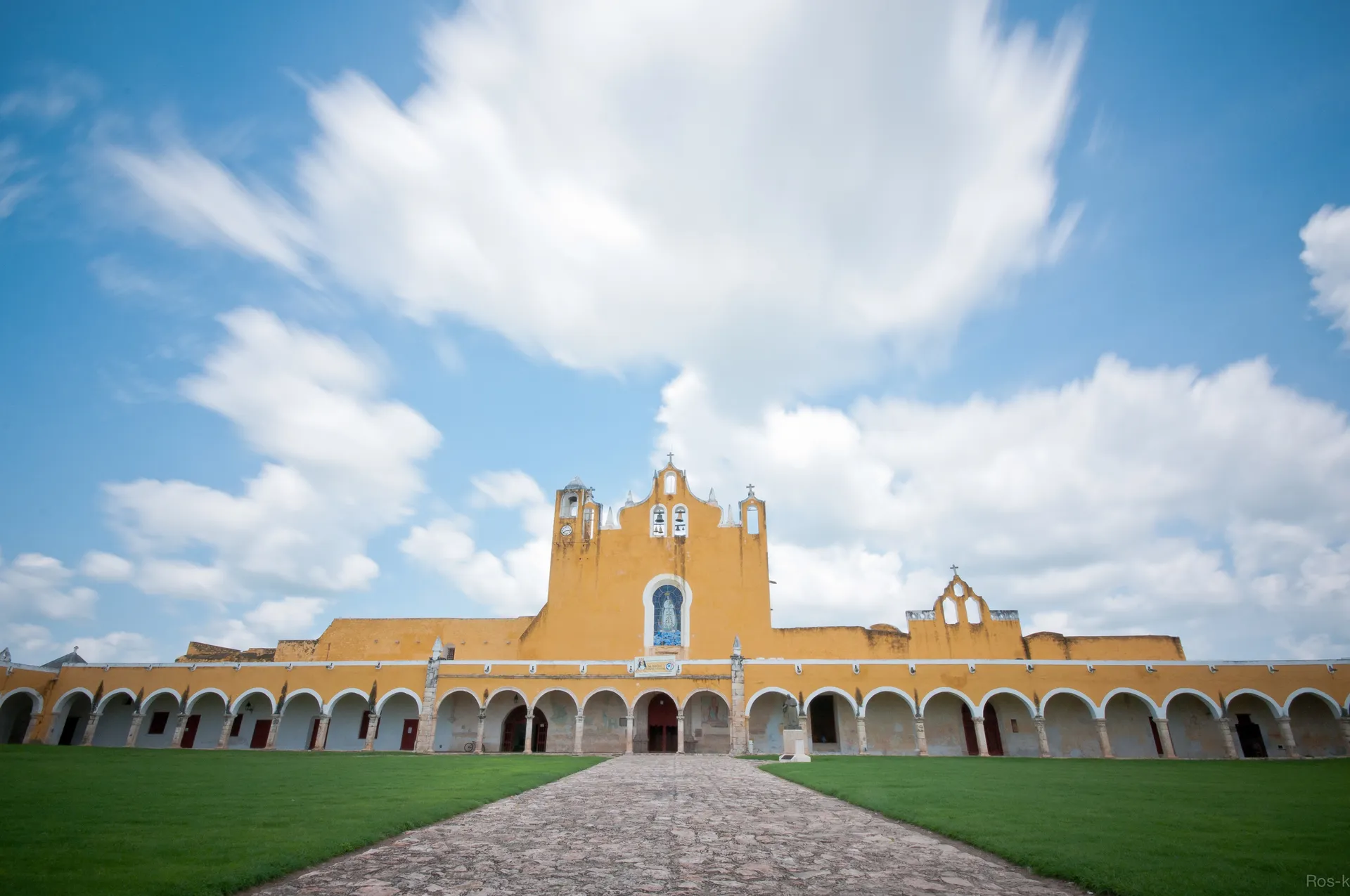
Izamal's golden historic center is compact and flat, so you can walk almost everywhere, from the vast Convento de San Antonio de Padua to the market and the main plazas. Horse-drawn carriages, the calesas, are a genuine local ride as well as a tourist novelty, and taxis are cheap for anything farther out. To reach the wider region you have frequent second-class buses and colectivos to Merida (around an hour), plus connections toward Valladolid and Chichen Itza. Merida is the practical air gateway, with the nearest major airport. If you want to explore cenotes, haciendas, and Maya ruins on your own schedule, renting a car for part of your stay is the most flexible option. Izamal also has a station on the Tren Maya, the railway that runs around the peninsula, which offers a rail alternative to the colectivo toward the state capital in one direction and Cancun in the other.
- The Centro Historico is fully walkable and easy to navigate on foot.
- Calesas (horse carriages) and taxis handle short local trips.
- Buses and colectivos link Izamal with Merida in about an hour.
- Fly into Merida; rent a car for cenotes, ruins, and rural day trips.
Sorting transport? Book an airport transfer, or compare car rental on Auto Europe and QEEQ.
Visas for Izamal
For most visitors, entering Mexico is straightforward. Many nationalities, including US, Canadian, UK, and EU citizens, can enter as tourists without a visa arranged in advance. The tourist entry has historically allowed up to 180 days, but this is no longer automatic: immigration officers now set the number of days at their discretion at the point of entry, and many travelers receive far less, so check the exact figure stamped or recorded on arrival. If you want to settle in for longer or repeatedly, the Temporary Resident visa is the usual route, applied for through a Mexican consulate abroad and based on income or savings.
- Tourist entry: up to 180 days historically, but often granted for less at officer discretion.
- Confirm your permitted days on arrival rather than assuming the maximum.
- Temporary Resident visa suits longer or recurring stays; apply at a consulate abroad.
Best Time to Visit Izamal
Izamal is warm year-round, so timing is about heat and humidity rather than cold. The cooler, drier season from roughly November to March is the most comfortable stretch and the best window for a longer stay, with pleasant days for walking the town and climbing the Kinich Kakmo pyramid. The hot season from April to June is genuinely intense, with strong sun and high temperatures that make midday sightseeing draining. The summer and early autumn months bring heavy humidity and the rainy season, with afternoon downpours and a mugginess that some find hard going, though the countryside turns lush and green. Whenever you come, plan outdoor exploring for early morning or late afternoon and rest through the hottest hours. The great pyramid is worth timing too: its base covers about 8,000 square metres and its bulk is around 700,000 cubic metres, so a climb in the midday sun is a real effort and the early morning is the hour for it.
- November to March: coolest, driest, and best for a longer visit.
- April to June: very hot and sunny; pace outdoor plans carefully.
- Summer to autumn: humid with rainy-season afternoon showers.
- Any season: it stays warm, so plan sightseeing around the heat.
Pros and Cons of Izamal
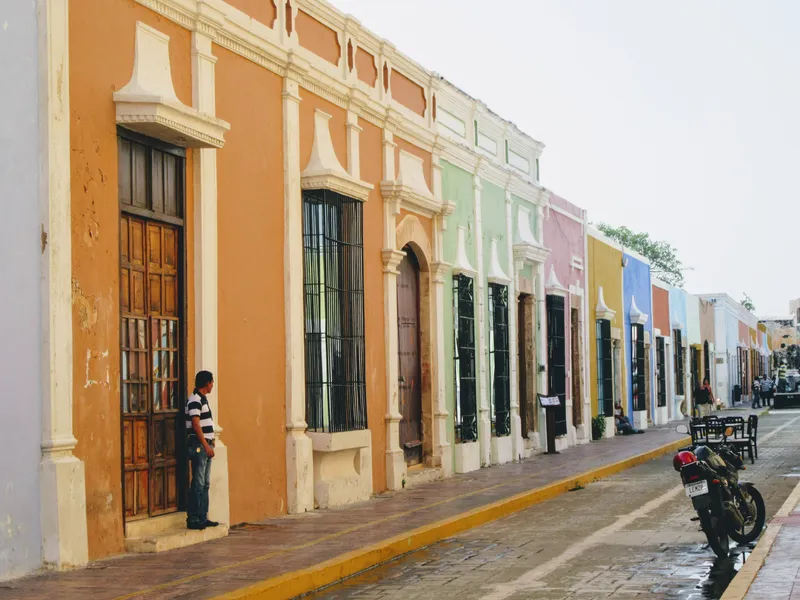
Izamal's appeal is unusual and specific. The whole historic core is painted golden ochre, the Convento is one of the largest of its kind in the Americas, and you can climb a real Maya pyramid without a crowd. It is calm, safe-feeling, photogenic, and very cheap, ideal for a slow, cultural stay. The trade-offs are equally clear. This is a small town with a modest tourist scene, no coworking, no nomad community, limited English, and few of the conveniences a bigger city offers. The heat can be punishing, and you will likely lean on Merida for anything beyond the essentials. Whether that balance works depends entirely on the kind of stay you want. The yellow is a 20th-century decision rather than a colonial one: the mayor between 1959 and 1961 stripped commercial signs from the facades and had the town painted yellow and white. The Franciscan convent's open atrium, finished in 1561, is said to be second in size only to the Vatican's.
- Pros: striking golden-city heritage, deep Maya history, low cost, relaxed pace.
- Pros: walkable, photogenic, and calm, with genuine Yucatecan food.
- Cons: no coworking or nomad scene; limited English and services.
- Cons: hot much of the year; you will rely on Merida for the extras.
Who Izamal Is For
Izamal rewards a particular kind of traveler. It suits slow travelers, culture lovers, and anyone craving a peaceful, low-cost base steeped in colonial and Maya history rather than nightlife or networking. It works well for a remote worker on a quiet stretch who can handle modest infrastructure, wants beauty and calm over buzz, and does not need a community of other nomads on tap. It is a poor fit for anyone who wants coworking, a social scene, reliable nightlife, or big-city amenities close at hand. Many nomads get the best of both worlds by basing in Merida for work and community and coming to Izamal for a few restorative days among the yellow walls. Language learners get an unusual bonus: Yucatec Maya is still the first household language for many families here, spoken alongside Spanish, so a stay doubles as an introduction to an indigenous language in daily use.
- Great for: slow travelers, culture and history lovers, and quiet-stay seekers.
- Great for: budget-conscious visitors who value calm and photogenic surroundings.
- Not ideal for: nomads needing coworking, nightlife, or a social scene.
- Smart move: base in Merida and visit Izamal for a peaceful cultural retreat.