Cost of Living in Krujë
Where this figure comes from. No cost survey covers Krujë, so the $600 a month above is our own estimate rather than a measurement. On 416 of our 999 city guides the figure is built from a published Numbeo basket, a one-bedroom rent in the centre plus one person's monthly costs without rent, converted to USD; this city is not one of them. How we source everything.
Krujë is cheap, even by Albanian standards. A one-bedroom apartment near the town center runs roughly $290 to $405 a month, and if you are willing to live a few minutes further out toward the Tirana road, you can find something for less. Because Krujë sits so close to the capital, it never fully developed its own long-term rental market for foreigners, so most listings you will see are informal, arranged through a local contact or a landlord's cousin rather than a polished platform. Eating out is inexpensive: a plate of grilled meat with bread and salad at a bazaar restaurant costs $4.50 to $8, a coffee is under a dollar, and a simple lunch of byrek and ayran can be had for $2.50 to $3.50. Both Albanian lek and euros are widely accepted in shops and restaurants around the bazaar and castle, though change often comes back in lek, so it helps to carry some. Groceries from the small markets are cheap but the selection is basic; anyone wanting imported goods, a wider range of produce, or a proper supermarket will do that shopping in Tirana. All told, a modest single-person budget of $575 to $805 a month covers rent, food, and local transport comfortably, making Krujë one of the more affordable bases in the region, provided you do not need much beyond the essentials.
Where to Work in Krujë
There is no coworking space in Krujë, and there likely will not be one soon. Work here means a laptop at a cafe table, most often one of the terrace cafes along the road up to the bazaar or overlooking the valley, where wifi is available but modest, generally fine for email, browsing, and video calls on a decent connection, though it can drop or slow down at busy hours. A few guesthouses and small hotels offer wifi to guests that is more stable than the cafes, and if your work depends on a reliable connection, booking a room with confirmed internet and testing it on arrival is the safer route. Some remote workers treat Krujë as a day or weekend visit from Tirana rather than a work base, doing their focused work from the capital and coming up for the views, the castle, and the bazaar. That said, a handful of digital nomads have used Krujë for short stretches precisely because it is quiet: few distractions, low cost, and a change of pace from Tirana's traffic. If you plan to stay and work for more than a few days, a backup mobile data plan is worth having, since Albanian SIM data coverage in Krujë is generally solid even when cafe wifi falters.
Getting Around Krujë
Krujë is a steep hill town, and getting around inside it means walking, often on cobbled streets and stairs that climb sharply from the lower town up to the castle and bazaar. It is not a place for rolling suitcases or anyone with mobility limitations without some difficulty, but it is compact enough that everything of interest is within a 15 to 20 minute walk. For getting to and from Krujë, furgon minibuses run regularly from Tirana's main terminals, taking about an hour depending on traffic and stops, and cost just a couple of dollars. Taxis from Tirana or from Tirana International Airport (Rinas), which is actually closer to Krujë than central Tirana is, take roughly 30 to 40 minutes and are a faster if pricier option, useful if you arrive with luggage. There is no local bus network within Krujë itself, and no bike rental culture to speak of given the terrain. Renting a car gives the most flexibility, particularly for side trips into the surrounding hills or down to the coast, but parking near the bazaar is limited and the old town's narrow lanes are pedestrian by nature. Most people simply base themselves near the bazaar and walk everywhere, treating any trip to Tirana or the airport as a discrete furgon or taxi journey.
Sorting transport? Book an airport transfer, or compare car rental on Auto Europe and QEEQ.
Visas for Krujë
Albania keeps entry simple for a long list of nationalities. Citizens of the EU, UK, US, Canada, Australia, and many other countries can enter visa-free and stay up to 90 days within a 180-day period, which is more than enough for a visit or an extended stay in Krujë. Albania does have a dedicated route, the unique residence permit for digital mobile workers (Article 68 of Law No. 79/2021 on Foreigners), first issued for up to one year to people with an employment or service contract with an employer or client abroad, and you apply while lawfully in Albania, for example during a visa-free stay. If you want to stay longer, Albania does offer residence permit routes, including for remote workers and freelancers who can show income, but the paperwork is handled through the Albanian immigration authorities and generally in Tirana, not in Krujë, given the town's small size and lack of any immigration office. The capital is close enough that appointments, document submission and visits to the border police are an easy day trip from here.
Best Time to Visit Krujë
Spring, roughly April through June, and autumn, September through October, are the best windows for Krujë. Temperatures sit comfortably in the high teens to mid-20s Celsius, the castle grounds and mountainside views are at their greenest or most golden, and the bazaar is busy without being overwhelmed. Summer, July and August, brings heat that can climb into the low 30s, and because Krujë is a popular day-trip destination from Tirana and from the coast, the bazaar and castle can get crowded with tour groups in the mid-morning to afternoon, though evenings are quieter and cooler thanks to the elevation. Winter is mild by regional standards but can be damp and grey, with fewer visitors and some cafes or shops in the bazaar keeping shorter hours or closing for stretches. The bazaar keeps the rhythm of the tour buses rather than of the clock, so the hours on either side of them, early in the morning and late in the afternoon, are when the place belongs to whoever actually lives in it.
Pros and Cons of Krujë
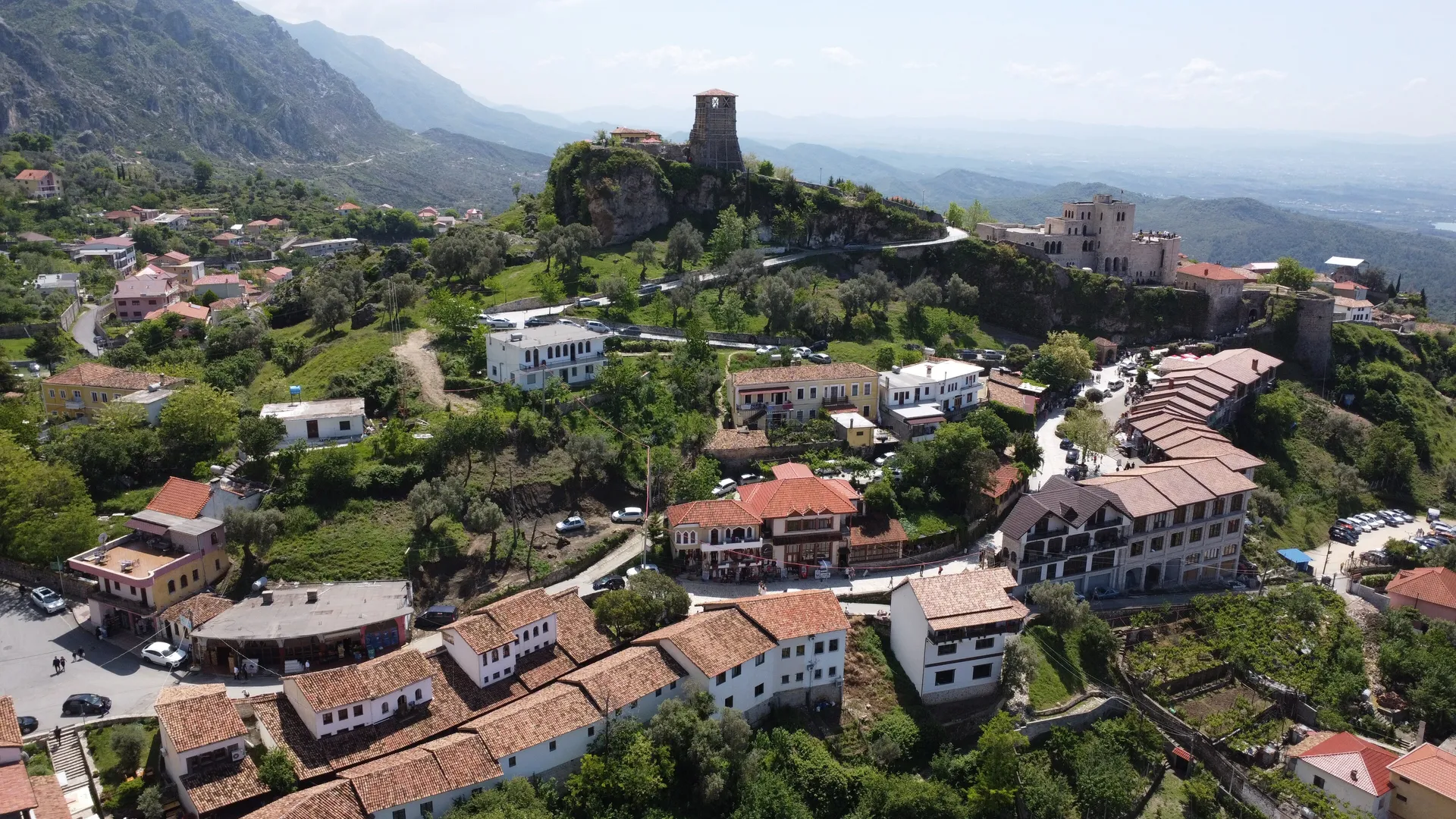
The case for Krujë starts with its character: a genuinely historic hill town built around Skanderbeg's castle, a working Ottoman-era bazaar of wooden shops selling carpets, antiques, and crafts, and sweeping views over the Tirana plain to the coast. It is inexpensive, safe, walkable within its own footprint, and close enough to Tirana and its international airport that you are never far from a bigger city or a flight out. The tradeoffs are real, though. Krujë is small: most sights can be seen in a few hours, and many visitors treat it as a day trip rather than a destination in its own right. Nightlife is minimal to nonexistent, there is no coworking space, wifi is workable but unremarkable, and the steep cobbled streets are charming but genuinely difficult terrain for anyone who struggles with stairs or hills. There is also little in the way of an established international remote-work community here, so if you are looking for coworking meetups or a built-in social scene, you will not find it in Krujë itself.
Who Krujë Is For
Krujë suits history-minded travelers, photographers, and slow-paced remote workers who want a quiet, cheap, and scenic perch above the Tirana plain, ideally as a short stay of a few days to a couple of weeks rather than a long-term base. It works well for someone based in Tirana who wants an easy escape with real cultural weight, or for a nomad passing through Albania who wants one memorable stop that is not the capital or the coast. It is a poor fit for anyone who needs strong reliable wifi, an active social or nightlife scene, a coworking space, or flat, easy walking. Anyone whose week depends on a dependable connection and somewhere to sit and work will be better served by the capital or by a town on the coast, and in practice almost everybody resolves that by coming up for the day and sleeping somewhere else entirely.