Cost of Living in Santa Marta
Where this figure comes from. No cost survey covers Santa Marta, so the $1,600 a month above is our own estimate rather than a measurement. On 416 of our 999 city guides the figure is built from a published Numbeo basket, a one-bedroom rent in the centre plus one person's monthly costs without rent, converted to USD; this city is not one of them. How we source everything.
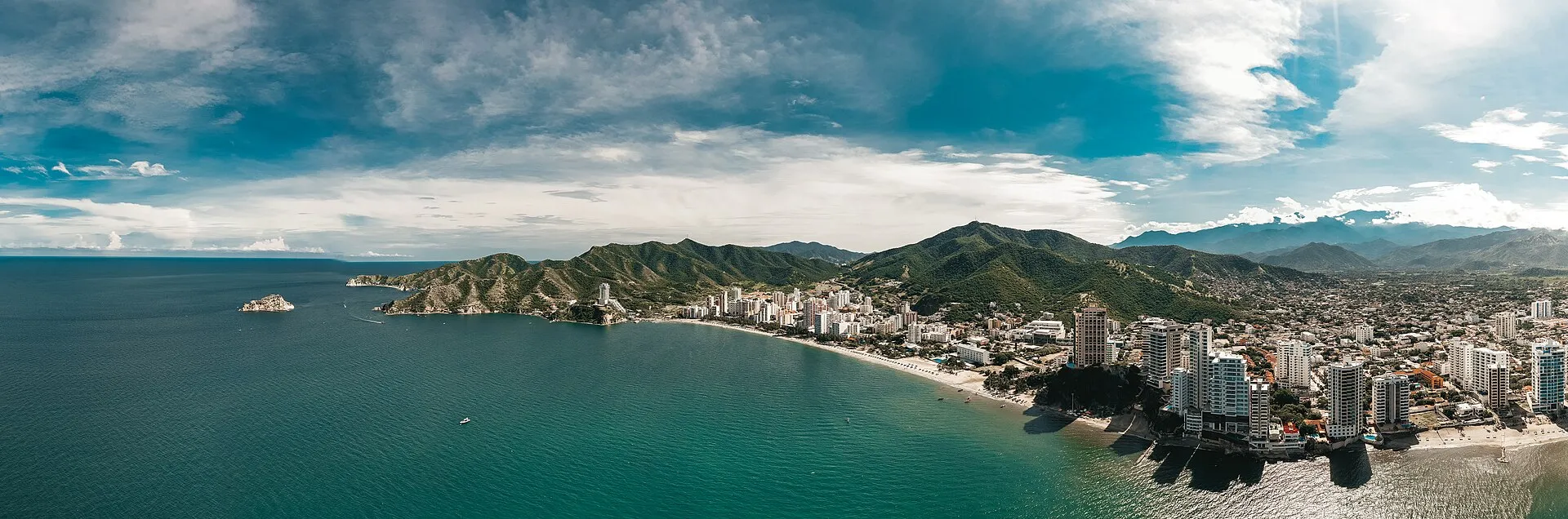
Santa Marta is one of Colombia's more affordable coastal cities, though costs have crept up as the digital nomad crowd has grown. Budget around $900-1,400 per month for a comfortable but not extravagant setup.
- Rent (El Rodadero or Centro Historico): $375-560 for a furnished one-bedroom; you can find studios closer to $280 farther from the beach in barrios like Mamatoco or Gaira
- Groceries: $110-155 per month cooking most meals at home; local markets are cheaper than supermarkets like Exito
- Eating out: A filling set lunch (almuerzo) at a local place costs $3-5.50; a sit-down dinner at a decent restaurant runs $8-19
- Coworking hot-desk: $11-16 per day; monthly memberships at dedicated spaces run $94-185
- Local transport: Shared taxis and motorbike taxis (motos) are the norm; $1-2 per short ride; a monthly bus pass costs around $28
- Total range: $900-1,200/month covers comfortable solo living; $1,200-1,500 adds coworking and regular restaurant meals
The exchange rate in mid-2026 sits around COP 3,300 per USD. Cash is widely preferred, especially for taxis and local markets.
Where to Work
Santa Marta has a handful of reliable coworking spaces and a small but growing set of laptop-friendly cafes. This is not Medellin: you will find fewer options and a smaller nomad community, but what exists is functional.
Flamingo Coworking (near the waterfront in Centro) is widely praised for some of the best and most stable WiFi in the city, with multiple work zones including standing desks and quiet areas. Maquma Coworking in Centro Historico was the first dedicated space in Santa Marta and offers private offices, unlimited coffee, and fast fiber. Feeling Coworking operates out of a hostel one block from the cathedral, which makes it social and budget-friendly. For cafe work, Ikaro Cafe (Calle 19 near Parque de los Novios) has reliable WiFi, plenty of outlets, and a relaxed vibe. Vivolo Cafe on the waterfront causeway is good for a focused morning session with sea views.
WiFi quality in accommodations is inconsistent. Always test the connection before committing to a longer-term rental. Mobile data (Claro and Tigo both have decent 4G in the city) is a reliable backup. Power outages do occur, more so during the wet season, so a coworking space with a UPS or generator is worth paying for.
Getting Around
Santa Marta is a mid-size city and not particularly walkable end-to-end, though Centro Historico and El Rodadero are each walkable within themselves. The two zones are about 5 km apart.
Shared taxis (colectivos) are the main way locals get around and are extremely cheap: $1-1.50 for most cross-city trips if you know the routes. Motos (motorbike taxis) are even faster and slightly cheaper for short hops but carry more risk. Regular metered or app taxis (InDriver and Cabify both work here) cost $2.50-5.50 across town. Renting a scooter is an option for day trips to Taganga or Minca.
The Aeropuerto Simon Bolivar (SMR) sits just 20 minutes from Centro by taxi ($6-9.50). There are direct flights from Bogota (1 hour), Medellin, and Cartagena. No rideshare apps work at the airport itself; use official taxi stands or pre-arrange a transfer.
Sorting transport? Book an airport transfer, or compare car rental on Auto Europe and QEEQ.
Visas and Staying Long-Term
Citizens of the US, Canada, UK, EU, and Australia enter Colombia visa-free and receive a tourist stamp allowing 90 days, extendable once for another 90 days (180 days total per calendar year) through Migracion Colombia.
Colombia launched a formal Digital Nomad Visa (a subcategory of the V visa) that grants up to 2 years in the country, with a maximum stay of 180 days per calendar year. Requirements include proof of remote income of at least three times Colombia's monthly minimum wage (about $1,640 a month in 2026, rising whenever the wage does), private health insurance valid in Colombia, and documentation of your foreign employment or business. Application fees total approximately $220-280 and processing takes 2-6 weeks. You cannot work for Colombian employers on this visa.
Best Time to Visit
Santa Marta has a tropical semi-arid climate and is hot year-round, with temperatures between 28-32°C (82-90°F). The Caribbean breeze keeps it more bearable than inland cities at similar latitudes.
The dry season runs December through April. This is the best window for remote work: clear skies, lower humidity, fewer power outages, and reliable connectivity. January through March is peak tourist season, which means higher accommodation prices and more noise in tourist areas.
May through November is the wet season, with the heaviest rains from August to October. Downpours are typically short afternoon bursts rather than all-day events, so morning work sessions are rarely disrupted. Prices drop significantly during these months. If your priority is budget and you can tolerate occasional connectivity hiccups, shoulder months like May and November are good value.
Avoid the hottest and most humid stretch of September and October if you are heat-sensitive and lack air conditioning.
Pros and Cons
- Pro: Very low cost of living compared to most Latin American nomad hubs
- Pro: World-class nature on your doorstep: Tayrona National Park, Minca cloud forest, and Palomino all within 1-2 hours
- Pro: Authentic Caribbean city with less tourist polish than Cartagena and genuinely good food
- Pro: Warm sea year-round; you can swim before or after work every day
- Pro: Easy and cheap internal Colombian flights for weekend escapes to Medellin or Bogota
- Con: Small nomad community; you will not find the social infrastructure of Medellin or Mexico City
- Con: Heat is relentless; air conditioning in your accommodation is not optional in the wet season
- Con: WiFi and power reliability are below the standard of Colombia's bigger cities
- Con: Limited coworking options; if your top picks are full or closed, backup options are thin
- Con: Safety requires awareness, especially in Centro at night and on beaches after dark
- Con: English is spoken only in tourist-facing businesses; Spanish is essential for daily life
Who Santa Marta Is Best For
Santa Marta suits nomads who genuinely want to be near the ocean and nature, not just nomads who want a city with a beach nearby. If your ideal work week includes a morning swim, a mountain day trip on Friday, and a weekend in Tayrona, this city delivers that loop at a price point that is hard to match elsewhere in Latin America.
It works well for slow travelers who want 1-3 months in one place, solo nomads comfortable with a smaller scene, and anyone transitioning from the Cartagena tourist bubble to something more local and affordable. Spanish learners will also get far more immersion here than in more anglicized hubs.
Skip Santa Marta if you need a deep nomad community with regular meetups and a dense coworking market. It is also a hard choice if you are heat-intolerant, need sub-50ms latency for video production or gaming, or prefer the cooler highland climate of Medellin or Bogota. If nightlife is a priority, Cartagena or Bogota will serve you better.