Cost of Living in Cappadocia
Where this figure comes from. No cost survey covers Cappadocia, so the $1,300 a month above is our own estimate rather than a measurement. On 416 of our 999 city guides the figure is built from a published Numbeo basket, a one-bedroom rent in the centre plus one person's monthly costs without rent, converted to USD; this city is not one of them. How we source everything.
Cappadocia is one of Turkey's most visited regions, but outside peak tourist season it remains genuinely affordable, especially if you rent a long-term apartment rather than staying in a cave hotel. The main nomad base towns are Goreme and Urgup, with Urgup being the larger, more local-feeling town where prices are slightly lower.
- Rent, 1-bedroom central Goreme or Urgup: $420-630/month. Cave apartments and old stone houses command a premium. Negotiating a multi-month deal can bring this down 15-20%.
- Rent, 1-bedroom outside center or in a quieter village: $250-380/month. Cavusin, Ortahisar, and Avanos have cheaper options with easy dolmus access.
- Groceries (one person, cooking at home): $84-125/month. Local markets stock excellent produce, cheeses, and bread at very low prices.
- Eating out: A local lokantas lunch runs $4-7.50. A full sit-down dinner at a mid-range restaurant is $13-25. Eating out frequently adds up fast in tourist-facing restaurants.
- Coworking or cafe work: Dedicated coworking is scarce. Cafe spending for a half-day of work runs $2-5.50. Budget around $32-63/month if cafes are your main office.
- Local transport (dolmus): Fares between towns are $1-1.50 per trip. A monthly pass is not available for dolmus routes, so budget around $42-74/month if you move between towns regularly.
- Total range, comfortable solo nomad: $525-945/month, roughly $680-1,230 at current rates. Higher-end cave-hotel stays or frequent activity spending (hot air balloons, tours) can push this significantly above $1,500.
Note: the Turkish lira continues to depreciate. Your foreign-currency income stretches further over time, but local prices in TRY rise accordingly.
Where to Work
Cappadocia does not have an established coworking scene. There is no dedicated coworking hub in Goreme, and the town is small enough that laptop culture is more of a personal arrangement than an infrastructure.
Your best options for focused work are hotel or guesthouse common areas, which often have terraces with strong WiFi, and a handful of cafes that are quiet enough in the mornings for a few hours of deep work. Kale Teras Cafe in Goreme is known for its terrace views and decent connectivity. Cafe Safak opens early and is popular for breakfast work sessions. In Urgup, Ziggy's Cafe offers reliable WiFi alongside a full menu.
Be realistic about WiFi inside cave rooms and older stone buildings: thick tufa walls absorb signal. Most modern guesthouses and hotel common areas have WiFi that handles video calls without issues.
If you need a more professional setup, Caravanserai Cafe near Uchisar Castle offers a quieter backdrop than tourist-central Goreme. Urgup town center has more local cafe options where you are less likely to be surrounded by tour groups in the afternoon.
The honest reality is that Cappadocia rewards nomads who can adapt: work from your terrace, get things done before 11am, and treat afternoons as exploration time. Trying to replicate a city coworking environment here will frustrate you.
Getting Around
Cappadocia's main towns are spread across a roughly 20-30 km area. Goreme is the most central and walkable for day-to-day life, with shops, restaurants, and several trailheads all on foot. Urgup is larger and more spread out but has more local infrastructure. Uchisar and Ortahisar are quieter and scenic but require a dolmus or scooter for errands.
Dolmus (shared minibuses) connect the main towns and run roughly every 1-2 hours from around 8am to 6pm. The Urgup-Avanos route through the center costs around $1-1.50 per leg. Services stop in the evening and are sparse on Sundays, so plan around this if you are car-free.
Many nomads rent a scooter or small car for a week or month. Scooter hire costs around $17-25/day, or cheaper by the week. This is the most practical way to reach the valleys and off-road viewpoints.
Getting to and from the airports: You have two airport options. Nevsehir-Kapadokya Airport (NAV) is about 40 km from Goreme; Ipek Tur runs a shuttle for around $5.50 per person. Kayseri Erkilet Airport (ASR) is 75-80 km away; shared transfers cost $9.50-12 per person. Taxis from Kayseri run $38-48. Most nomads fly into Kayseri for the wider flight options and take the shuttle.
Goreme itself is walkable for daily needs, but you will feel the lack of a car or scooter within the first few days if you want to explore beyond the main tourist circuit.
Sorting transport? Book an airport transfer, or compare car rental on Auto Europe and QEEQ.
Visas and Staying Long-Term
Most Western passport holders, including US, UK, EU, Canadian, and Australian citizens, can enter Turkey on a tourist basis. Many nationalities get visa-free entry for 90 days within any 180-day period. US, UK and Canadian citizens need no visa for these 90 days; nationalities that do need one buy an e-Visa in advance at evisa.gov.tr.
Turkey does have a formal Digital Nomad Visa for remote workers: it requires you to be aged 21 to 55, hold a university degree and earn at least $3,000 a month or $36,000 a year from a company outside Turkey, and the first step is a Digital Nomad Identification Certificate from the official GoTürkiye platform. This grants up to one year of legal stay.
For longer stays beyond the 90-day tourist window, the most practical option is applying for a short-term residence permit (ikamet). This is a paper process requiring an appointment, proof of address, health insurance, and financial means. Many long-term nomads in Turkey use this route successfully.
Best Time to Visit
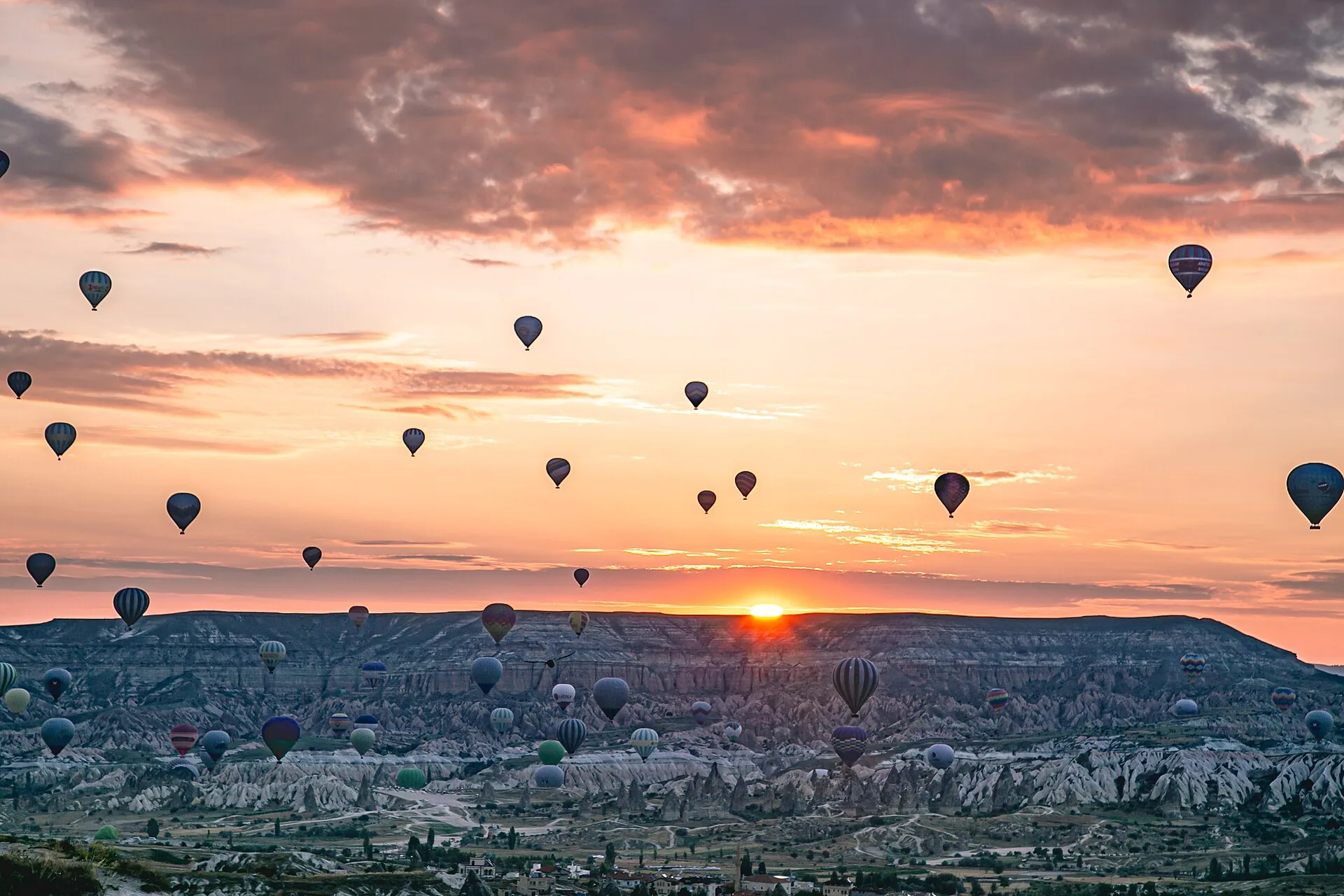
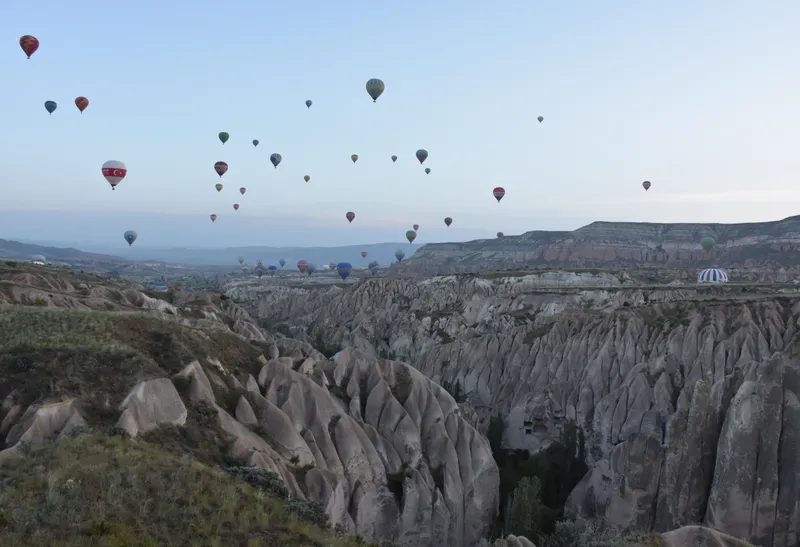
Spring (April to early June) and autumn (September to October) are the sweet spots for remote work in Cappadocia. Temperatures are comfortable at 15-25°C, hot air balloons fly reliably, the valleys are at their most photogenic, and the tourist crowds have not yet peaked or have already thinned.
April and May bring wildflowers and bright skies, though they are the rainiest months of the year. September and October are drier, with golden light and cooler evenings, and are widely considered the best overall months to be here.
Summer (July-August) is peak tourist season with daytime temperatures regularly clearing 32-35°C. The heat makes outdoor work and afternoon activity uncomfortable, accommodation prices spike, and popular viewpoints get crowded. It is workable if you have a well-cooled room, but it is not the most productive or comfortable setup.
Winter (December to February) transforms the region with snow over the fairy chimneys and dramatically thinner crowds. Accommodation is cheapest and you get real solitude. The trade-off is cold weather, reduced service hours at cafes and restaurants, and frequent balloon cancellations. If you value quiet and low cost over everything else, winter can work well.
For a balance of weather, cost, and productivity, October is the single best month to base yourself here.
Pros and Cons
- Pro: Extraordinary natural setting with a unique, lived-in quality that does not feel like a generic tourist trap
- Pro: Low cost of living compared to Western Europe, especially for accommodation and food
- Pro: Very safe, with low crime and strong local hospitality toward foreigners
- Pro: Excellent outdoor activities on your doorstep: hiking, horse riding, hot air ballooning, underground cities
- Pro: Slower pace that suits deep work mornings and adventure afternoons
- Pro: Good flight connections via Kayseri and Nevsehir airports
- Con: No real coworking infrastructure; you are improvising your work setup
- Con: WiFi in cave rooms and old stone buildings can be weak; thick walls are the enemy of signal
- Con: Small place with limited nightlife, no real nomad community, and few networking opportunities
- Con: Extreme seasonal weather: very hot summers, cold winters with occasional snow
- Con: Transport is inconvenient without your own vehicle; dolmus services stop early and run infrequently
- Con: Heavily touristic in peak season, which inflates prices and changes the feel of the towns
- Con: Limited English outside tourism businesses, especially in local shops and government offices
Who Cappadocia Is Best For
Cappadocia is a strong fit if you are a self-contained remote worker who does not need a coworking community or regular networking to stay productive. If your job is async-heavy, you thrive on natural surroundings, and you want a base that feels genuinely different from a digital nomad hub city, this is a compelling choice for a stay of 1-3 months, particularly in spring or autumn.
It also suits content creators, photographers, and writers who benefit from an inspiring environment and who can build their own schedule around the light and landscape.
Skip it, or limit it to a short trip, if you need reliable fast coworking, a social nomad scene, or frequent evening entertainment. It is also a tough long-term base for anyone who struggles with isolation or who needs the kind of infrastructure and services that only a city provides. If you want Turkey as a long-term home base, Istanbul or Izmir serve those needs far better, with Cappadocia as a side trip.