Cost of Living in Longyearbyen
Where this figure comes from. No cost survey covers Longyearbyen, so the $2,400 a month above is our own estimate rather than a measurement. On 416 of our 999 city guides the figure is built from a published Numbeo basket, a one-bedroom rent in the centre plus one person's monthly costs without rent, converted to USD; this city is not one of them. How we source everything.
Budget around $2,400 a month. A room or a small flat runs roughly $900 to $1,600, and housing is the binding constraint here rather than the price: almost all of it is tied to an employer, and finding somewhere to live without a job on the island is genuinely difficult. Groceries arrive by ship and plane and cost noticeably more than mainland Norway, though Svalbard is outside the Norwegian tax area so alcohol and tobacco are cheaper and rationed by quota. Eating out is expensive. Heating and clothing are real budget lines in a place that is below freezing most of the year. The upfront cost is the one people miss. Proper cold-weather clothing, boots and eye protection are not optional here and buying them on the island is expensive, so the first month costs far more than the ones after it. Snowmobile ownership or hire is the other large line for anyone who wants to leave town in winter. The absence of value added tax takes the edge off electronics and outdoor gear, which partly offsets the freight, and flights to and from Oslo are better budgeted as a routine cost than a one-off.
Where to Work in Longyearbyen
Connectivity is excellent and surprises people. Longyearbyen sits at the end of a dedicated fibre link to the mainland, laid to serve the satellite ground station on the plateau above town, which downloads data from polar-orbiting satellites on every pass. That gives a settlement of about two and a half thousand people better internet than most European towns. Power is reliable. There is a small coworking presence and several cafes people work from. The time zone is central European, the same as Oslo, so working with Europe is straightforward and the darkness is the only complication. The professional community is smaller and more concentrated than the population suggests: the university centre, the research stations and the tourism operators are effectively the whole economy, and a newcomer meets most of it within a month. The polar night is the real working variable. With no sunrise to anchor the day, routines drift badly, and the residents who cope best are ruthless about fixed hours, daylight lamps and getting outside even when outside is dark. It is an occupational hazard rather than a mood.
Getting Around Longyearbyen
Longyearbyen is walkable end to end in twenty minutes and that is essentially the whole road network: about fifty kilometres of road exist in all of Svalbard and none of it leaves the settlements. Beyond the town you travel by snowmobile in winter, by boat in summer, or on foot with a rifle, because polar bears are present across the archipelago and carrying protection outside the settlement is a legal requirement. Svalbard Airport is three kilometres out and connects to Oslo and Tromso daily in season, which is a genuinely good link for somewhere this far north. Rifles are rented in town and the shops that hire them expect you to know how to use one, so most visitors sensibly join a guided trip instead, which is also how the insurance tends to work. A small custom worth knowing before your first evening out: shoes come off at the door almost everywhere, including some restaurants and the hotel lobbies, a habit inherited from the coal-dust years. Taxis run to the airport and around the settlement, and the road east towards Mine 7 is about as far as driving goes.
Sorting transport? Book an airport transfer, or compare car rental on Auto Europe and QEEQ.
Visas for Longyearbyen
Svalbard is unlike anywhere else. The Svalbard Treaty of 1920 gives citizens of every signatory country the right to live and work here without a visa, a residence permit or a work permit, regardless of nationality, and that has never been repealed. Svalbard is not part of the Schengen area, so time here does not count against a Schengen allowance, but you will pass through Schengen to reach it. The catch is practical: there is no welfare system, and anyone unable to support themselves can be required to leave. Anyone planning to stay should arrange work and housing before arriving, because the treaty gives the right to be here and no right at all to be supported here. The practical catch is the journey rather than the destination. Almost every route runs through mainland Norway, so a nationality that needs a Schengen visa needs one to transit even though Svalbard itself asks for nothing, and that is the detail that trips people up most often. Anyone staying beyond a short visit registers with the Governor's office, and private health insurance is strongly advised, since the local hospital stabilises and evacuates rather than treats.
Best Time to Visit Longyearbyen
March to May is the best combination, with snow still on the ground for snowmobiling and dog sledding, returning daylight and temperatures around minus ten. June to August is the midnight sun, with continuous daylight, boat access to the fjords and temperatures a few degrees above freezing. Late October to mid-February is the polar night, when the sun does not rise at all and the town runs on street lighting and northern lights, which is either the reason to come or the reason not to. There is no month here that is warm. Late February and early March bring the blue light, a few weeks when the sun sits just below the horizon and the whole landscape turns an even cobalt for hours, and the town marks the sun's actual return with a week of events in early March. Wildlife follows the season closely: the bird cliffs are occupied from May to August, and the boat trips that reach the walrus haul-outs only run once the ice has gone.
Pros and Cons of Longyearbyen
Nowhere else combines genuine Arctic wilderness, excellent internet, Norwegian standards of safety and services, and the right to simply turn up and stay for as long as you like. Glaciers, polar bears and the Global Seed Vault are all within sight of the town. Four months of darkness affects people more than they expect it to, costs sit above the mainland's and the mainland is not cheap, finding somewhere to live is the obstacle most arrivals underestimate, and leaving the settlement at all means equipment, a rifle and, for most visitors, a guide who knows the ground. Svalbard also has no burial ground in use, because bodies do not decompose in permafrost, and seriously ill residents are flown to the mainland rather than treated locally. The community is unusually transient, with a large share of residents on two or three year postings, so friendships form fast and end on a schedule. And the place is changing visibly: Svalbard is warming faster than almost anywhere on earth, the permafrost is degrading under buildings, and after a fatal avalanche in the town a decade ago parts of it were rebuilt or abandoned outright. None of that is an abstraction here.
Who Longyearbyen Is For
Researchers, guides, photographers and anyone whose work is genuinely location-independent and who wants somewhere extreme with functioning infrastructure. It suits people who like winter rather than tolerate it. The visa freedom makes it unusually accessible to nationalities that struggle everywhere else. The sun does not rise at all for four months, hiking outside the settlement legally requires carrying a rifle against polar bears, and arriving without accommodation arranged is not a plan that works in a town where housing is allocated rather than rented casually. Anybody whose passport makes ordinary travel difficult should know what the Svalbard Treaty does. The right to live and work here applies regardless of nationality, and there is nowhere else on earth where that is true. Come first in the dark half rather than the light one, because anyone can manage Svalbard in June and the polar night is what actually decides it. Families do live here and there is a school, though most arrive because one partner was posted rather than by choosing the place from a distance. The people who struggle are the ones who came for the idea of it: the scenery is astonishing and the daily reality is a small town with one supermarket, limited privacy and weather that cancels plans.
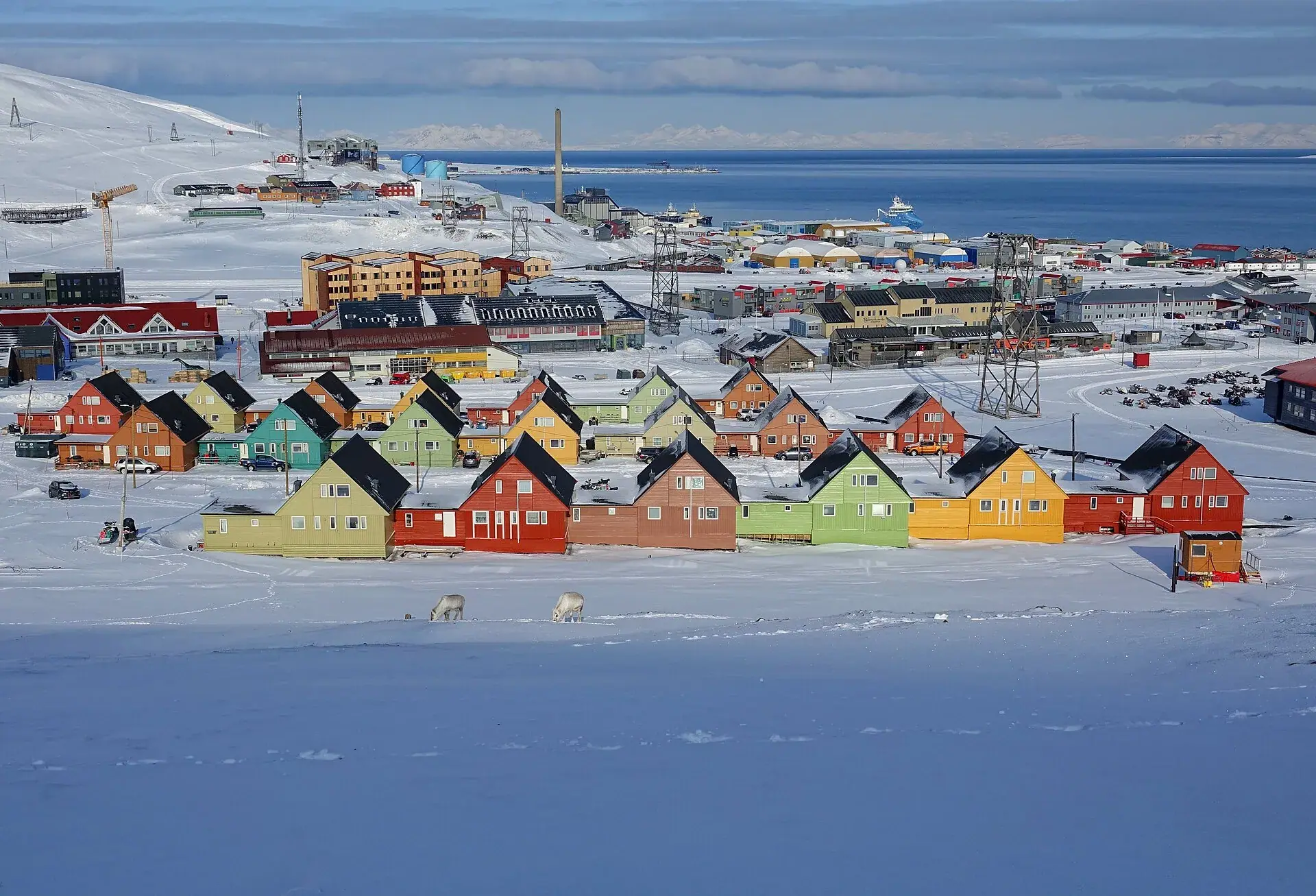 Photo: Bjørn Christian Tørrissen / Wikimedia Commons (CC BY-SA 4.0)