Cost of Living in Livingstone
Where this figure comes from. No cost survey covers Livingstone, so the $900 a month above is our own estimate rather than a measurement. On 416 of our 999 city guides the figure is built from a published Numbeo basket, a one-bedroom rent in the centre plus one person's monthly costs without rent, converted to USD; this city is not one of them. How we source everything.
Livingstone is an affordable base by Western standards, though prices at tourist-facing lodges and adventure operators can climb quickly. A realistic monthly budget sits somewhere around $700 to $1,100, depending on whether you favour guesthouses or riverfront lodges, and how often you book activities like rafting or safari drives. Local markets and small eateries keep food costs low, while imported goods and international restaurants cost more. Rent for a simple furnished room or small flat is modest, and everyday transport is cheap. These are editorial estimates rather than fixed figures, so treat them as a rough planning guide and expect seasonal swings around peak safari months. The currency situation is worth understanding before arriving. The kwacha is the legal tender and everyday prices are in it, but the tourism economy quotes in dollars, and the two rates are not always the same deal, so paying for a lodge in cash dollars and a market shop in kwacha is the normal arrangement. Cards work in the bigger places and nowhere else. Budget separately for power: the country has had sustained load shedding, lodges run generators or inverters, and the ones that do charge for it in the rate rather than absorbing it.
- Simple room or small flat: roughly $250 to $450 a month
- Local meals and market groceries: inexpensive, a fraction of Western prices
- Adventure activities: the big variable, from rafting to bungee to safari drives
- Overall monthly budget: around $700 to $1,100 as an editorial estimate
Where to Work in Livingstone
Livingstone is a small adventure and safari town rather than a purpose-built remote-work hub, which is why dedicated coworking spaces are scarce here and the ones that exist are informal. Most nomads work from their guesthouse or lodge, a riverfront cafe, or a hotel lobby with reliable seating. Internet is basic and prone to interruption, and power cuts happen, so a local SIM with mobile data and a fully charged power bank are essential backups. Some lodges toward the Zambezi offer decent Wi-Fi and quiet terraces, which suit lighter workloads. If your job depends on constant, high-bandwidth connectivity or video calls, plan carefully and keep expectations modest. The specific thing to plan for is load shedding rather than general unreliability. The country generates most of its electricity from a single hydro scheme on the river, and when the lake behind it runs low the whole grid goes on a published schedule of outages that has run to many hours a day in bad years. Published is the operative word: the schedule is available, it is followed, and a working day arranged around it is entirely possible. Ask a prospective lodge which block it is on and whether the generator covers the wifi router as well as the lights, because often it does not.
Getting Around Livingstone
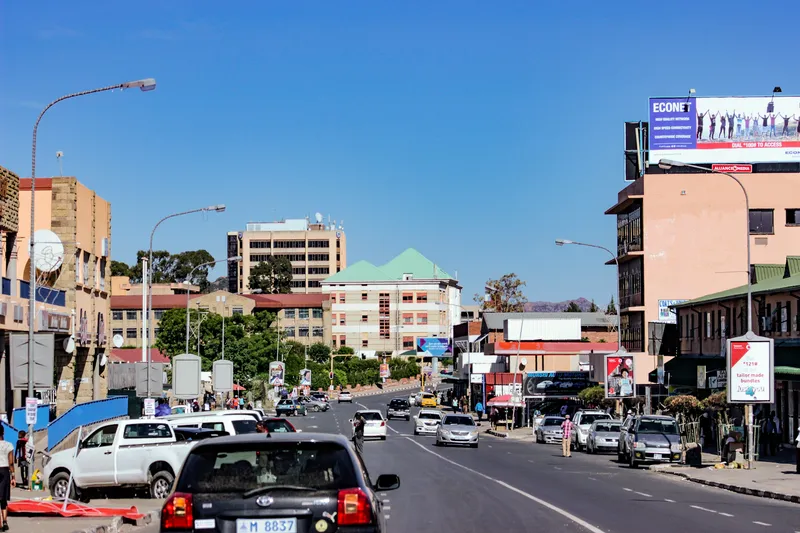
Livingstone is compact and walkable around the centre, with Mosi-oa-Tunya Road as the main spine lined with shops, banks, and eateries. Shared minibuses and taxis cover longer trips, including the run out to Victoria Falls, the border, and the riverfront lodges. Taxis are easy to arrange through your lodge, and negotiating the fare before setting off is normal practice. Many visitors hire a bicycle or simply walk for short distances, though the heat can be intense at midday. For safari drives into Mosi-oa-Tunya National Park or trips further afield, guided transport and organised tours are the usual and most practical option. The border crossing deserves its own note, because it is the most-used journey here. The bridge over the gorge is the frontier, and walking across it takes about twenty minutes with the gorge and the spray beside you, which is free and among the better things you will do. You clear immigration at each end, so the passport goes with you. On the local side, the park entrance for the falls is a separate ticket from anything else and is priced per entry, so a plan of going repeatedly needs the multi-entry option rather than a daily one.
Sorting transport? Book an airport transfer, or compare car rental on Auto Europe and QEEQ.
Visas for Livingstone
Zambia is relatively straightforward for most travellers. Many nationalities can obtain a visa on arrival at the airport or land border, or apply in advance through the e-visa system. If you plan to hop across to Victoria Falls town in Zimbabwe, the KAZA univisa is very useful, as it covers both Zambia and Zimbabwe for many nationalities and allows day trips across the bridge. There is no dedicated long-stay digital-nomad visa, so longer stays mean tracking your permitted duration and any extension rules. A practical warning about that shared visa: it is issued at some entry points and not others, it has been suspended and reinstated more than once, and it does not cover every nationality. Confirm it is available on the day and at the post you are using rather than assuming, because the fallback is buying two separate visas and paying twice. Also note that a day trip across the bridge and back does not usually need a fresh entry if you hold a multiple-entry visa or the shared permit, which is exactly why the shared permit is worth the effort.
Best Time to Visit Livingstone
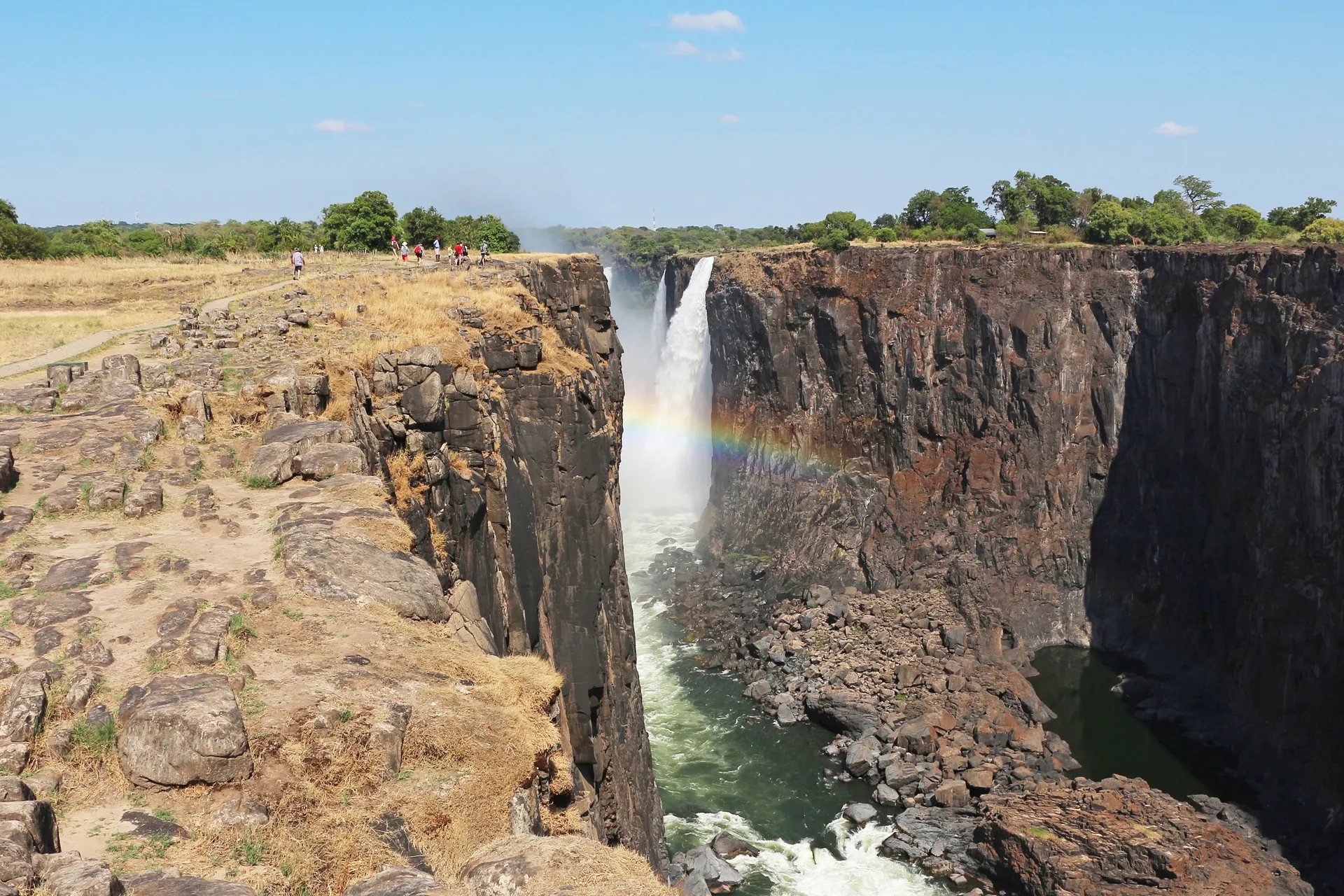
The climate is a hot tropical savanna, with a wet season running roughly November to April and a drier, cooler stretch mid-year. Timing matters most for Victoria Falls itself. The falls are fullest and most thunderous around February to May, when spray can obscure the view but the sheer volume is spectacular. Water levels drop to their lowest around October to November, which is when the Devil's Pool on the Zambezi's edge typically opens and rafting conditions peak. The dry season is also prime for wildlife viewing. Choose your window based on whether you prioritise the falls in full flood or low-water adventures. Be warned that low water can mean almost no water. In the worst recent droughts the Zambian side of the falls has run to bare rock in the last weeks before the rains, with visitors arriving to find almost nothing on their half and the only view from the Zimbabwean side. It is not the normal year but it happens often enough to check recent photographs rather than a brochure before booking those months. At full flood the opposite problem applies: the spray is so heavy that the falls are invisible from the viewpoints and a raincoat is not enough.
Pros and Cons of Livingstone
Livingstone is a place you choose for nature and adventure rather than for a slick remote-work setup. The upside is extraordinary: one of the world's great waterfalls on your doorstep, genuine safari, and a warm, English-speaking community. The trade-off is practical infrastructure, since internet is basic and power cuts occur, and the town is small with limited coworking, nightlife, and dining variety. Costs are reasonable overall, but adventure activities add up. Weigh these honestly before committing to a longer stay, and keep normal safety precautions in mind after dark and around the river. Something belongs on that list and is usually left off: this is a place where the natural hazards are real rather than decorative. Hippos and crocodiles live in the river that runs past the lodges, and people are killed by both every year in this region; the local advice about not walking the bank at dusk is not a liability disclaimer. Malaria is present and prophylaxis is a decision to make with a doctor rather than a forum. None of that makes the place dangerous to a person who listens, and the people here will tell you exactly what the rules are if you ask.
- Pros: Victoria Falls and safari on your doorstep, affordable living, widely spoken English, warm climate, easy Zimbabwe day trips via the KAZA univisa
- Cons: basic and unreliable internet, occasional power cuts, limited coworking and nightlife, small dining scene, activity costs add up, tourist-town pricing at peak season
Who Livingstone Is For
Livingstone suits the adventurous, self-sufficient nomad who wants nature at the centre of daily life and can work around modest infrastructure. It is ideal for a shorter, restorative stint between contracts, for outdoor lovers, and for anyone building a trip around the falls, rafting, safari, and river life. It is a poor fit if you need constant high-speed connectivity, a buzzing coworking scene, or lively urban nightlife. Come with realistic expectations, a mobile-data backup, and a power bank, and Livingstone rewards you with unforgettable surroundings. Apply normal safety precautions, avoid walking alone late at night, and respect the river's power. On length, four to eight weeks is the natural stay and the dry months are the ones to take. The town itself is exhausted in a week, and what fills the rest is the river, the park and the trips out, which means budgeting for activity costs as a category rather than as extras. Anyone staying longer should look at the lodges upstream rather than in town, where the rates for a month are negotiable and the setting is the reason you came. And take the malaria question seriously enough to have had the conversation before the flight.