Cost of Living in Coron
Where this figure comes from. No cost survey covers Coron, so the $800 a month above is our own estimate rather than a measurement. On 416 of our 999 city guides the figure is built from a published Numbeo basket, a one-bedroom rent in the centre plus one person's monthly costs without rent, converted to USD; this city is not one of them. How we source everything.
Coron is an affordable island base by Western standards, though prices sit a little above sleepier Philippine towns because much of what the island consumes arrives by boat or plane. A comfortable solo nomad budget lands roughly between $700 and $1,400 a month, depending heavily on your accommodation and how often you join island-hopping tours. Long-stay guesthouses and simple apartments keep housing reasonable, while daily Filipino meals, local transport, and market produce are genuinely cheap. The costs that add up fastest are diving, boat tours, and imported goods. These estimates are editorial approximations, not fixed figures, and rates rise in the busy dry season.
- Budget guesthouse or long-stay room: roughly $250 to $500 per month.
- Local Filipino meals: around $2 to $5 each; restaurant seafood a bit more.
- Island-hopping day tour: commonly $20 to $35 including lunch.
- Monthly mobile data on Globe or Smart: roughly $10 to $25.
- Fun dive or wreck dive: often $30 to $50 per dive.
Where to Work in Coron
Arrive in Coron with a full calendar of client calls and the island will test it, because nothing here was set up with remote work in mind. Wifi is variable and sometimes slow, and short power interruptions happen, so heavy deadline work carries real risk here. The single most useful thing you can do is buy a Globe or Smart SIM with a generous data package, since mobile data is often more reliable than fixed connections. Before booking accommodation, ask the host directly about actual speeds and whether they have a backup plan during outages. A handful of cafes and restaurants in town welcome laptops for a few hours, but treat them as a change of scenery rather than a guaranteed office. Plan your calls with buffer time.
- Get a Globe or Smart SIM and load a large data pack as your primary backup connection.
- Work laptop-friendly cafes in town during daylight, when power is most stable.
- Keep a power bank and mobile hotspot ready for interruptions.
- Schedule important video calls in the morning rather than late afternoon.
Getting Around Coron
Coron town itself is compact and easily walkable, so you can reach shops, dive operators, and restaurants on foot. For anything further out on Busuanga Island, the workhorse is the tricycle, and short hops around town cost only a little. Vans and rented motorbikes cover longer distances, including the run to the airport and out toward beaches and villages. The real magic, though, is on the water: bangka outrigger boats carry you to Kayangan Lake, Twin Lagoon, Barracuda Lake, the wartime shipwrecks, and outer beaches like Malcapuya and Banol. Reaching Coron means flying into Busuanga Airport or arriving by ferry. For an evening off the boats, the Maquinit hot spring, a saltwater pool among mangroves about half an hour by tricycle from town, is a cheap and easy trip.
- Walk the town center; most daily needs are within a few blocks.
- Tricycles for short trips; agree on the fare before you set off.
- Rented motorbikes or vans for airport runs and exploring Busuanga.
- Bangka boats for island-hopping, diving, and beach tours.
- Fly into Busuanga (USU) from Manila or Cebu, or take a ferry to and from El Nido and Manila.
Sorting transport? Book an airport transfer, or compare car rental on Auto Europe and QEEQ.
Visas for Coron
Coron follows standard Philippine immigration rules, since it is simply a town within the country. Many nationalities receive visa-free entry on arrival, commonly for 30 days, and that stay can be extended at a Bureau of Immigration office. Extensions are the normal path for slow travelers who want weeks or months on the islands, and they are typically handled in stages rather than all at once. Note that Coron does not always have the most convenient immigration services, so some long-stayers plan extensions around trips to larger hubs. Busuanga's airport takes domestic flights only, so your entry is stamped in Manila or Cebu and the visa-free month runs from there, travel day included.
- Visa-free entry is common for many passports, often 30 days on arrival.
- Extensions are available through the Bureau of Immigration for longer stays.
- Carry proof of onward or return travel, which airlines and immigration may request.
Best Time to Visit Coron
Coron runs on a clear seasonal rhythm, and timing shapes your whole experience. The dry season, roughly November to May, is the sweet spot: calmer seas, clearer water, and the most reliable conditions for island-hopping and diving. This is when the lakes, lagoons, and shipwrecks show off best, and when boats run their fullest schedules. The trade-off is that these months are busier and pricier, especially around the December to April peak. The wet season, roughly June to October, brings storms, rougher water, and the chance of canceled boat trips, though it also means fewer crowds and lower rates. Slow travelers who value quiet over guaranteed sunshine can still enjoy the shoulder months.
- November to May: best conditions for diving, snorkeling, and island tours.
- December to April: peak season with the highest demand and prices.
- June to October: wetter, stormier, and prone to boat cancellations, but quieter and cheaper.
Pros and Cons of Coron
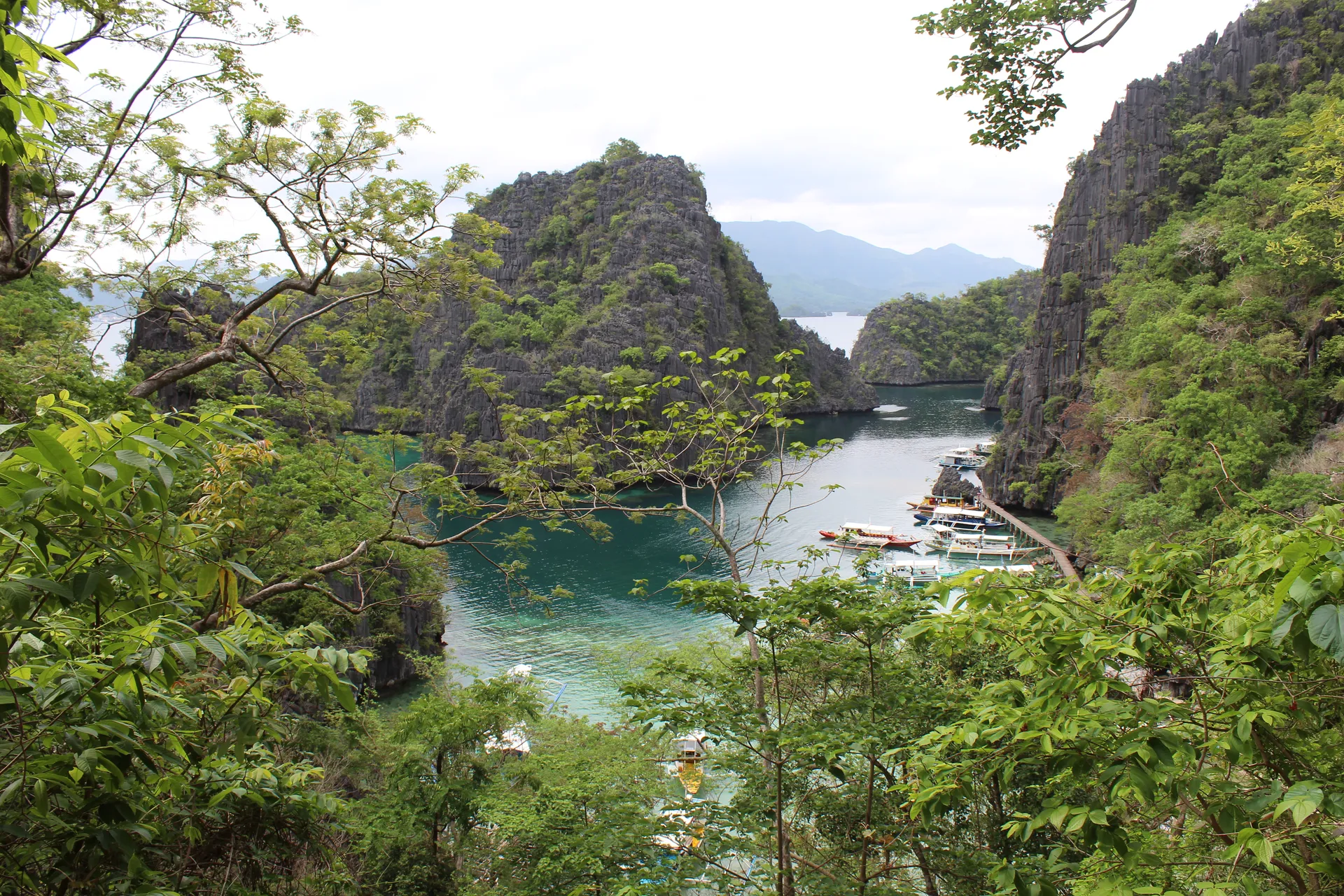
Coron is a place you choose for its nature first and everything else second. The scenery is genuinely world-class: jagged limestone cliffs, the crystal-clear water of Kayangan and Barracuda Lakes, Twin Lagoon, celebrated wreck diving, and quiet outer beaches, all crowned by the Mount Tapyas viewpoint. Costs are low, English is widely spoken, and locals are warm and welcoming. The honest downside is infrastructure: wifi is variable and sometimes slow, power can flicker, the nomad community is small, and town amenities are basic. It is a laid-back island town, not a productivity machine, so it rewards travelers who can flex around island time. Much of the famous scenery is not public land: Coron Island is the ancestral domain of the Calamian Tagbanua, whose title was the first in the Philippines to include ancestral waters, and they charge entry at the lakes and lagoons, about $5 at the most famous one, which is why each island-hopping stop carries its own small fee.
- Pro: some of the most spectacular island and diving scenery in the Philippines.
- Pro: low cost of living and widely spoken English.
- Pro: friendly locals and an unhurried, laid-back pace.
- Con: variable, sometimes slow wifi and occasional power interruptions.
- Con: small nomad community and modest town infrastructure.
Who Coron Is For
Coron suits island-loving slow travelers, divers, and nature obsessives far more than heads-down deadline workers. If your ideal month means logging off early to chase shipwrecks, swim in hidden lagoons, and climb Mount Tapyas for sunset, you will thrive here. It works well for people with flexible schedules, light connectivity needs, or the discipline to batch their online work into reliable windows. It is a weaker fit for anyone who depends on fast, uninterrupted internet for calls and uploads, or who wants a large social scene of fellow nomads. Come for the water, the diving, and the calm, and treat the work side as something you actively manage rather than take for granted. Wreck divers in particular have few better places in Asia: a US Navy air raid on 24 September 1944 sank a Japanese supply fleet in and around Coron Bay, and about a dozen of those hulls are now dived from town, some shallow enough for snorkellers.
- Great for divers, snorkelers, and island-hopping enthusiasts.
- Great for slow travelers who value nature and calm over nightlife or coworking.
- Best for those with flexible, light, or well-batched online workloads.
- Less suited to workers needing fast, always-on internet for constant calls.