Cost of Living in Johannesburg
Real market data
Source: Numbeo · August 2026
$1,240/moSolo nomad1-bed centre + living costs
$1,810/moCoupleshared 1-bed + costs
$1,140/moLean / localcheaper area + costs
- 1-bed rent, city centre$540R8,866
- 1-bed rent, outside centre$440R7,212
- Monthly costs excl. rent (1 person)$710R11,710
- Meal, inexpensive restaurant$12R200
- Monthly transit pass$91R1,500
- Buy price, per m² (centre)$980R16,287
Prices are from Numbeo (August 2026), converted to USD at $1 = R16.54 (01 Aug 2026). The monthly living-costs figure is our transparent one-person basket, groceries, a few meals out, utilities, phone, internet, transport and essentials, priced from those figures. Solo adds central rent; couple and lean are estimates from the same numbers. The guide below quotes its own monthly range, which is a different measurement rather than a competing one: this table prices a defined basket at the figures above, while that range is a judgement about how somebody actually lives here.
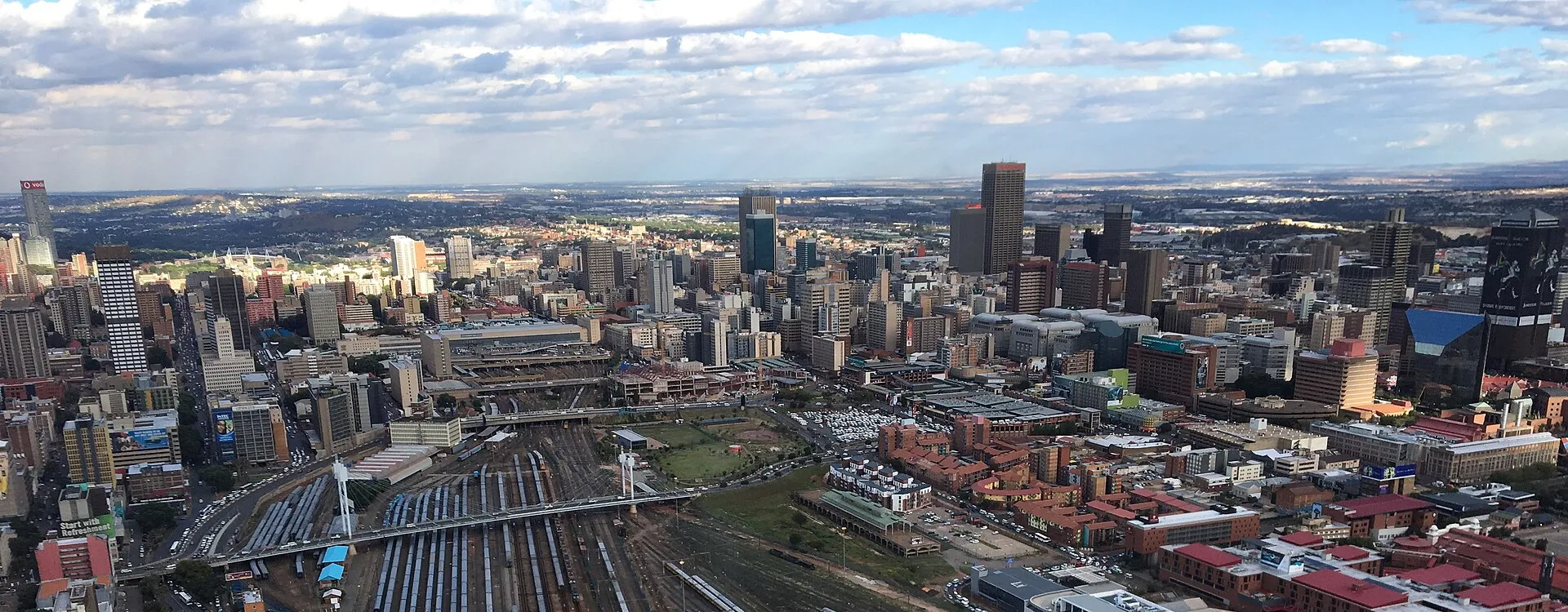
Johannesburg is one of Africa's more affordable major cities for a comfortable nomad lifestyle, though costs vary sharply by neighborhood. All figures are approximate for 2025-2026.
Monthly Breakdown
- Rent, central areas (Rosebank, Sandton): $420-720 for a one-bedroom apartment
- Rent, more affordable areas (Melville, Braamfontein, Maboneng): $240-450 for a one-bedroom
- Groceries: $150-240 per month cooking at home
- Eating out: $5-11 for a sit-down meal at a casual restaurant; $21-42 for a mid-range dinner for two
- Coworking hot-desk: $60-210 per month depending on the space and location
- Local transport (Uber/Bolt, no car): $72-150 per month for regular rides around your main area
- Utilities and internet at home: $150-210 combined
Total realistic monthly range: $840-1,650 depending on neighborhood, lifestyle, and whether you rely on Uber or have a car. Budget travelers can get by closer to the lower end by renting in Maboneng or Braamfontein; anyone wanting Sandton or Rosebank comfort should budget toward the top.
Where to Work
Johannesburg has a genuinely developed coworking scene, concentrated in Rosebank and Sandton. Workshop17 operates two strong Joburg outposts: The Bank in Rosebank (a converted heritage building a short walk from the Gautrain) and a West Street location in Sandton's CBD. Both offer 24/7 access, reliable fiber, and a professional atmosphere. Hot-desk day passes typically run $15-27.
MESH Club on Keyes Avenue in Rosebank is a more curated, members-club style space with dedicated desks, meeting rooms, a coffee bar, and a cocktail bar open until 11 PM. It suits people who want a social layer built into their workspace. Cube Workspace in Bryanston is a larger, eco-designed facility with over 200 desks and an on-site cafe, popular with established freelancers and small teams.
Cafe-work culture is less ingrained than in Southeast Asia, but it exists. Work-friendly spots with reliable WiFi include chains like Kauai (widespread, power points at most tables, free WiFi with a purchase) and independent coffee shops in Parkhurst, Melville, and Rosebank. Most serious remote workers opt for dedicated coworking rather than cafes for full-day sessions.
Home fiber internet is fast and affordable where available: uncapped plans run $42-54 per month. Mobile data from Vodacom or MTN is a solid backup. Coworking spaces consistently offer strong connectivity, which matters because power outages remain a background risk. No load-shedding has been imposed since 16 May 2025, but the grid is still under pressure, and a future return to rolling blackouts cannot be ruled out. Coworking spaces typically have generator or battery backup, making them your most reliable work environment.
Getting Around
Johannesburg is not a walking city. The metropolitan area is vast and sprawling, and pedestrian infrastructure outside of a few enclosed districts like Melrose Arch or the Rosebank mall precinct is poor or unsafe. Plan your life around door-to-door transport.
Uber and Bolt are your primary tools. Both are widely available, affordable (a typical 5 km ride runs $3-5.50 / ~$3-5), and generally safe. Most nomads rely on them daily. Share your trip details with someone and confirm your driver matches the app before getting in.
The Gautrain is the one exception to the rule against public transport. It is modern, clean, and safe. The main line connects OR Tambo International Airport to Sandton and on to Johannesburg Park Station, with another line running north to Pretoria. For the corridors it serves it is excellent. Minibus taxis are the dominant public transport for locals but are not recommended for newcomers due to route complexity and safety concerns.
Getting to and from the airport is straightforward. The Gautrain from OR Tambo to Sandton takes about 15 minutes; a transfer gets you to Park Station in the city center in roughly 35-40 minutes total. An Uber from OR Tambo to Sandton or Rosebank costs $15-24 and takes 25-45 minutes depending on traffic.
Sorting transport? Book an airport transfer, or compare car rental on Auto Europe and QEEQ.
Visas and Staying Long-Term
Most Western passport holders (including US, UK, EU, Australian, Canadian, and New Zealand citizens) enter South Africa visa-free and receive a stamp allowing a stay of up to 90 days. This is not automatically granted: the border officer decides, and you may receive fewer days. You cannot easily extend a tourist entry from within South Africa.
South Africa's Remote Work Visa, its digital nomad visa, took effect in October 2024. It covers stays of more than three months and up to three years. Key requirements: an employment contract signed by you and an employer outside South Africa, and a gross salary of about $39,350 a year ($3,280 a month), shown in three months of bank statements. You may not work for South African businesses or clients on this visa. Applications are submitted through South African missions abroad or the Department of Home Affairs.
Best Time to Visit
Johannesburg sits at 1,700 meters (5,600 feet) above sea level, which moderates what would otherwise be a subtropical climate. Temperatures are pleasant year-round, but the seasons differ meaningfully.
Winter (June to August) is the dry season, with clear sunny days, low humidity, and almost no rain. Daytime temperatures reach 15-20°C (59-68°F) and nights drop to 3-8°C (37-46°F). It is excellent for working comfortably and exploring. The downside: winter is when air quality is worst. Coal combustion, veld fires, and temperature inversions trap particulate matter over the Highveld, and Johannesburg regularly ranks among the world's most polluted cities during June and July. If you have respiratory sensitivities, this matters.
Shoulder seasons (March to May and September to November) offer the best balance: mild temperatures, low rainfall, good air quality, and fewer crowds than the December-January high season.
Summer (November to February) is warm, with frequent afternoon thunderstorms that tend to clear quickly. Temperatures reach 25-28°C (77-82°F), it is greener and more lively, but expect daily downpours. For remote work, indoor productivity is unaffected; outdoor plans need flexibility.
For most nomads, May or September to November is the sweet spot: comfortable temperatures, clean air, and easy logistics.
Pros and Cons
Pros
- Strong, modern coworking infrastructure in Rosebank and Sandton
- Fast home fiber internet and good mobile data coverage
- English is widely spoken; virtually no language barrier
- An official remote work visa allows stays of up to three years
- Africa's largest economy and financial hub; large expat and professional community
- Excellent restaurant and food scene, particularly for meat and South African cuisine
- Significantly cheaper than Western cities at similar quality of life
- Good flight connections to Europe, the Middle East, and the rest of Africa
- Pleasant sunny climate with mild, dry winters and warm summers
Cons
- Safety requires constant awareness; petty crime and robbery are common in most areas
- Not a walkable city; you will depend on Uber or a car for almost everything
- Severe winter air quality issues from coal combustion and industrial pollution
- Power grid remains fragile; load-shedding could return without warning
- Social life and city exploration require more planning and higher safety overhead than in many nomad hubs
- The remote work visa income threshold (about $39,350 a year) is relatively high
- Income inequality is stark and visible, which many visitors find confronting
Who Johannesburg Is Best For
Johannesburg suits nomads who are adaptable, security-conscious, and genuinely interested in Africa as a base rather than simply a lower-cost backdrop. You will thrive here if you are drawn to a dynamic, business-oriented city with a real professional ecosystem, excellent food, and a cosmopolitan energy that feels unlike anywhere else on the continent.
It is particularly good for people working in finance, tech, media, or creative fields, since Johannesburg has an actual industry cluster in all of these. The expat and nomad community is small but tight-knit, and networking happens faster here than in larger, more diffuse hubs.
Skip Johannesburg if you prioritize walkability, outdoor lifestyle, or low-stress daily movement. Those who want the beach, mountains, and a walkable cafe scene nearby are better served by Cape Town. If petty crime risk and urban density without the compensating payoff of a compact, pedestrian-friendly city sounds draining, this is not the place for you. It is also a poor fit if your income sits below the Digital Nomad Visa threshold and you want a stay longer than 90 days.