Cost of Living in Maun
Where this figure comes from. No cost survey covers Maun, so the $1,200 a month above is our own estimate rather than a measurement. On 416 of our 999 city guides the figure is built from a published Numbeo basket, a one-bedroom rent in the centre plus one person's monthly costs without rent, converted to USD; this city is not one of them. How we source everything.
Budget around $1,200 a month as a solo remote worker in Maun, which is more than the town's remoteness suggests because almost everything is trucked in from Gaborone or across the border. A one-bedroom house or flat runs roughly $400 to $700. Groceries at the supermarkets are noticeably more expensive than in South Africa, and fresh produce is the worst affected. Safari-facing services are priced in dollars for tourists and bear no relation to local costs. Fuel is expensive and matters, since anything outside town involves driving. Botswana is one of the more expensive countries in the region. A stocking-up trip is part of life here. Residents drive to Francistown or across to Namibia periodically and fill a vehicle, because the difference on a full load more than pays for the fuel. Botswana uses the pula, and cards work in the town's main shops while cash is needed almost everywhere else. Buying a vehicle rather than renting is what most people who stay end up doing, and a second-hand four-wheel drive holds its value here in a way it does not elsewhere, which softens the outlay considerably.
Where to Work in Maun
Maun has no formal coworking and remote work happens from lodges, from accommodation or from the few cafes. Botswana's fixed broadband reaches the town but speeds are modest and reliability inconsistent, and the safari operators who need connectivity generally pay for satellite or dedicated links. Mobile data works in town and disappears within a short drive. Power cuts happen. Anyone with a demanding video schedule should test carefully before committing, and should assume that the delta itself, where most people actually want to go, has no connectivity at all. The practical arrangement most people here settle on is to do the demanding work in town and treat any trip into the delta as time genuinely offline. Satellite internet has begun to change that calculation, as it has in other remote places on this site, and it is increasingly what the lodges use, so asking about it specifically is worth more than asking about wifi. The time zone sits two hours ahead of London, which gives a comfortable European overlap. Connectivity in town also degrades noticeably in peak season, when the visitor load lands on infrastructure sized for a small town.
Getting Around Maun
Maun is spread out and the tar road runs through the middle of it, with the airport, the shops and the river lodges strung along it. A vehicle matters here more than in most towns on this site: combis cover the main routes cheaply, but everything interesting requires either a four-wheel drive or a booking with an operator. The airport is unusually busy for a town this size because it is the gateway to the delta, with light aircraft leaving all day for the camps. Gaborone is a long drive or a short flight, and the Namibian border is a few hours west. Driving at night outside town is avoided, and the reason is specific: elephants and donkeys on unlit roads, either of which will end a vehicle. The route northeast to Kasane and Chobe is tarred and takes most of a day, while the tracks into Moremi and the delta are deep sand where tyre pressure and recovery gear matter more than horsepower. Anyone renting should confirm what the vehicle is actually equipped with rather than trusting the category name on the booking.
Sorting transport? Book an airport transfer, or compare car rental on Auto Europe and QEEQ.
Visas for Maun
Botswana grants most Western nationals ninety days visa-free per entry within a twelve-month period, which is generous and straightforward. There is no Botswanan digital nomad visa. Extensions and longer stays are handled through immigration and are tied to work or residence, which is a bureaucratic process. Namibia, Zambia, Zimbabwe and South Africa are all reachable overland and the Kazungula crossing puts four countries within a short distance, which makes a border reset easy. Botswana has strict rules on importing meat and plant material because of foot-and-mouth controls. Anyone driving in should also budget time for the veterinary cordon fences, where vehicles are stopped and shoes are disinfected. The ninety days is generally counted across the twelve-month period rather than reset by each exit, so repeated short hops out and back do not extend a stay the way they do in some neighbouring countries. The KAZA univisa, covering Zambia and Zimbabwe on a single document, is useful for anyone doing the Victoria Falls circuit. Park entry and camping fees are charged per person per night and are high by regional standards.
Best Time to Visit Maun
The dry season from May to September is both the best weather and, paradoxically, when the delta floods, because the water arriving from the Angolan highlands takes months to reach here. That combination of dry air, cool nights and high water is why July and August are peak season, with prices to match and cold mornings that surprise people. October is very hot, regularly above thirty-eight, before the rains break. The wet season from November to March brings afternoon storms, green landscape, dispersed game and much lower prices. Winter nights can drop close to freezing. The flood is not the same every year: its extent depends on rainfall in Angola months earlier, and a poor flood year changes which channels can be poled, so a mokoro trip is worth confirming rather than assuming. And the green season from December to March is the birding season, when the migrants arrive and the photography is at its best, which is the argument for the months everyone else avoids. Malaria risk rises with the rains, and prophylaxis is a doctor's decision made beforehand.
Pros and Cons of Maun
Maun is the gateway to the Okavango Delta, one of the great wildlife landscapes on earth, and living here means light aircraft over the river and mokoro trips as a weekend rather than a trip of a lifetime. Botswana is stable, safe, English-speaking and well run. It is expensive for the region, the town itself is functional rather than in any way attractive, connectivity is weak, and there is no community beyond the safari industry. Medical facilities are limited and serious cases mean Gaborone or Johannesburg. Prices also swing hard with the safari season, so the same house can cost noticeably more in July than in February. Botswana holds the largest elephant population in Africa, and what to do about it, including whether to permit hunting, is argued domestically with far more nuance than the international coverage suggests. Anyone arriving with a view formed abroad should expect the conversation here to be more complicated. The delta's water is the other long-term question, since it depends on rainfall and upstream decisions in Angola and Namibia rather than on anything Botswana controls.
Who Maun Is For
The delta brings people, and the town is the base between trips, which is why most resident foreigners work in conservation, safari operations or wildlife research. Wildlife and space are the reasons anybody comes, and the town itself is small and practical rather than a place to enjoy. Reliable connectivity, urban amenities and an international social scene are all absent from a town that exists to launch safaris. Botswana's high-value tourism policy is deliberate rather than accidental, and it keeps costs up on purpose, which makes this an awkward place to be on a budget. It also suits pilots and anyone in aviation, since the airport handles an unusual volume of light aircraft for a town of this size. Among the northern Botswana bases, Kasane sits at the Chobe end with the four-country border and easier access to Victoria Falls, while this town has the delta and the aviation. Seasonal work in the safari industry is a genuine route in for people with the right skills, and it is how a good many foreign residents first arrived. For everyone else it works best as a base of months attached to a purpose rather than an open-ended stay.
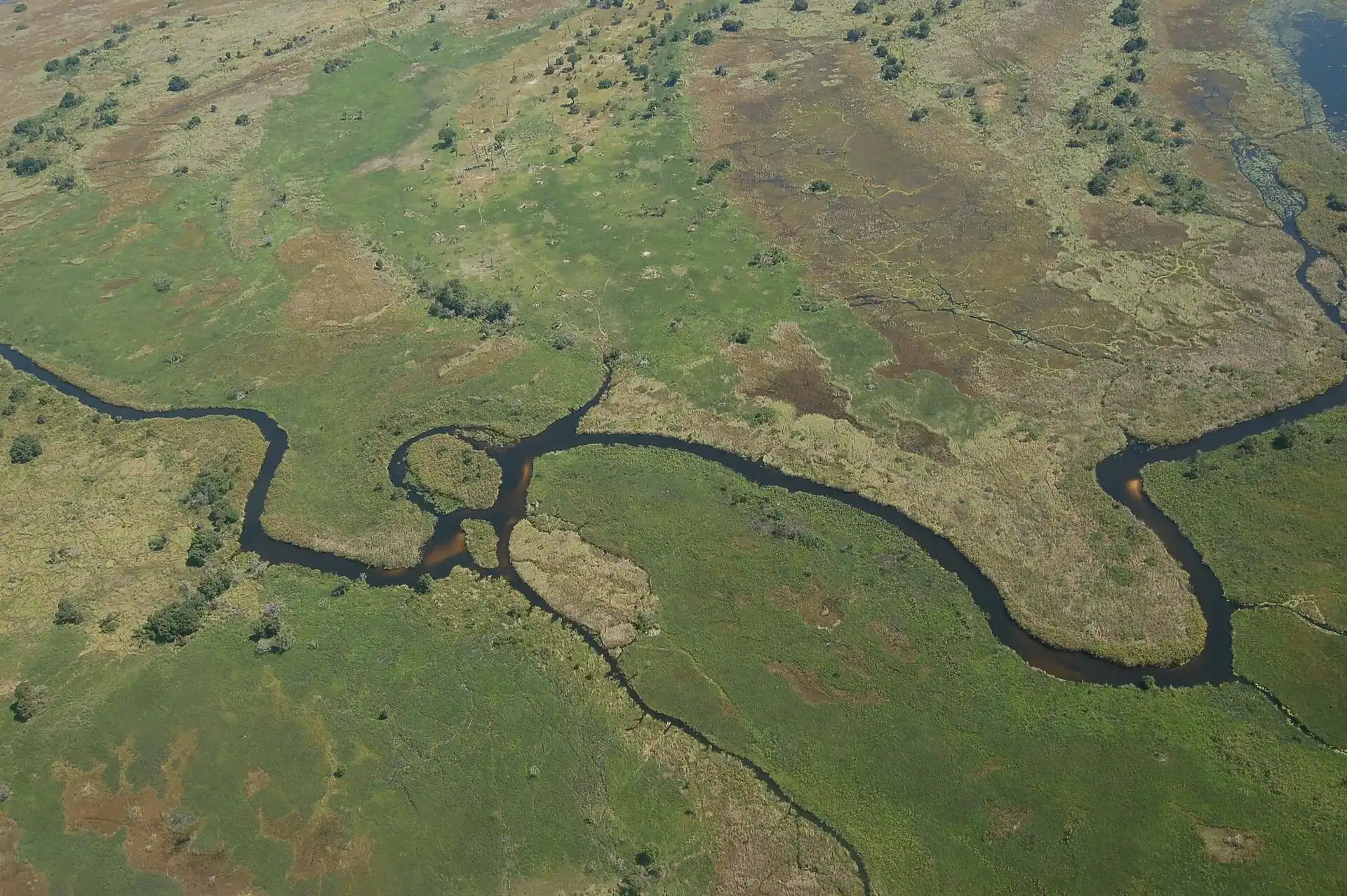 Photo: Joachim Huber / Wikimedia Commons (CC BY-SA 2.0)