Cost of Living in Funafuti
Where this figure comes from. No cost survey covers Funafuti, so the $1,600 a month above is our own estimate rather than a measurement. On 416 of our 999 city guides the figure is built from a published Numbeo basket, a one-bedroom rent in the centre plus one person's monthly costs without rent, converted to USD; this city is not one of them. How we source everything.
Budget around $1,600 a month, which is high for a country with almost nothing to buy, and that is precisely why: every tin, every litre of fuel and every sheet of roofing arrives by ship, and the ships are infrequent. A one-bedroom runs roughly $400 to $800 and the rental market is tiny and mostly informal. Fish is cheap and abundant. Fresh produce is limited, irregular and expensive, with pulaka, breadfruit and coconut doing much of the work. Utilities cost a great deal because power is diesel-generated. Tuvalu uses the Australian dollar alongside its own coins, which circulate only here. There is no fixed internet worth quoting a price for and mobile data is sold in small expensive bundles. Fuel is the hidden multiplier behind every figure here, since the diesel that generates the power also arrives by the same infrequent ship. Anyone staying more than a fortnight should bring what they cannot do without rather than expecting to buy it, because the shelves depend entirely on when the last vessel called. Accommodation is a handful of guesthouses and the government-owned hotel, so the market is not a market and rates are what they are.
Where to Work in Funafuti
Connectivity is the hardest constraint on this list. Tuvalu had no submarine cable for most of its history and relied on satellite, which meant slow, expensive and weather-dependent internet; a cable connection has been in progress and coverage remains limited and unreliable. Mobile data exists on Funafuti and thins to nothing on the outer atolls. Power cuts happen. There is no coworking, no business centre and no fallback. Anyone whose work requires a stable connection should treat Tuvalu as unworkable rather than difficult. The time zone is twelve hours ahead of GMT. Tuvalu joined the East Micronesia cable project and has been working toward a fibre connection, but until it lands the honest position is that this is the least connected country on this site. Anyone who must work should plan around asynchronous, text-based tasks and treat any call as a bonus rather than a fixture. Government offices and the handful of aid organisations hold what bandwidth there is, and even they schedule large transfers around the day rather than assuming them.
Getting Around Funafuti
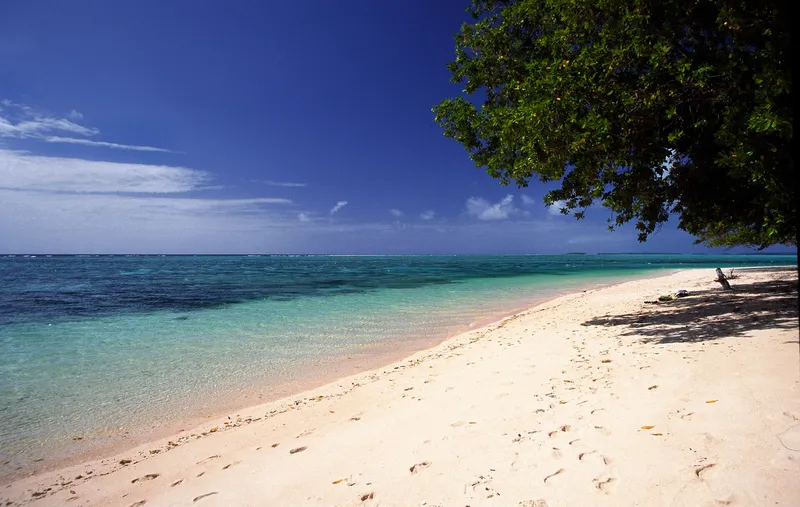
You walk, or you borrow a scooter. Funafuti's main islet, Fongafale, is about twelve kilometres long and a few hundred metres wide at most, and in places narrow enough to see both the lagoon and the ocean from the middle of the road. There are no formal taxis. The airstrip runs down the centre of the settlement and doubles as the town's open space, used for football and socialising between the few flights. Funafuti International Airport is served by Fiji Airways from Suva a handful of times a week, and that is the only scheduled connection to the country. The Funafuti Conservation Area covers about thirty-three square kilometres of lagoon, reef and islets on the western rim and is reached by boat arranged locally rather than through any operator. The lagoon itself is roughly twenty-five kilometres across, so crossing it is a real trip rather than a short hop. The runway is closed to the public only when a flight is due, and a siren clears it, which is the closest the island comes to a timetable.
Sorting transport? Book an airport transfer, or compare car rental on Auto Europe and QEEQ.
Visas for Funafuti
Tuvalu grants visa-free entry to citizens of most Commonwealth countries, the European Union and the United States for one month, issued on arrival, with extensions available in-country up to three months. Everyone else applies in advance, and because Tuvalu has almost no diplomatic missions, that usually means through the High Commission in Suva. There is no remote work visa. Proof of onward travel is required and is genuinely checked, since leaving depends on a flight that runs a few times a week and is often full. Anyone hoping to visit the outer atolls should plan around the government ship, which runs on an approximate schedule and is the only way to reach most of them. Flights are the binding constraint rather than the paperwork: Fiji Airways operates the only scheduled service and a cancelled flight can mean several extra days in the country, so travel insurance that covers delay matters more here than almost anywhere. Onward proof matters more than usual because the return leg is the same scarce flight, and immigration will ask to see it.
Best Time to Visit Funafuti
May to October is the drier, cooler season and the practical window, with steadier trade winds. November to April is the wet season and the cyclone season, and Tuvalu is dangerously exposed: the highest natural point in the country is about four and a half metres and most of it is barely two. Temperatures sit around thirty degrees year round. King tides now flood parts of Fongafale several times a year regardless of the weather, pushing seawater up through the porous coral from below, which is the image the country has taken to every climate conference. Tuvalu is one of the least visited countries on earth, receiving a few thousand arrivals a year, most of them on official business, which means there is no high or low season in any commercial sense and accommodation is booked directly rather than through any platform. The king tides peak around February and again in the spring, and the flooding they bring is now a routine part of the calendar rather than an event.
Pros and Cons of Funafuti
Almost nobody goes, which for a certain kind of traveller is the entire point, and the country stands at the front of the argument about sea level rise in a way no report conveys. The government has begun creating a digital replica of the nation and has leased its .tv domain for a substantial share of national revenue. Nothing about the practical side works in its favour, from the unreliable internet and the few flights a week to the minimal medical care, the narrow food supply, and the fact that once you have walked the atoll there is nowhere else to go. Tuvalu signed the Falepili Union treaty with Australia in 2023, which provides a pathway for a limited number of Tuvaluans to migrate each year and is the first bilateral agreement of its kind framed around climate displacement.
Who Funafuti Is For
Tuvalu suits journalists, climate researchers, development staff and anyone with a specific working reason to be here, plus the small number of travellers collecting countries. It suits anyone who genuinely wants to be somewhere with no distractions. Remote work in any ordinary sense is not possible here, because the connectivity will not carry it. Beyond that, this is a very small, very flat, very quiet place, and most people discover after about a week that they find those three things harder than they expected to. Atoll hydrology is studied here with unusual urgency. The freshwater lens under Fongafale is thin and contested, and whether it holds is the question that decides whether this country stays habitable. Sovereignty is being tested here in a form no other state has yet had to face. Tuvalu's digital nation project and its treaty arrangements with Australia are watched closely by every low-lying country, because whatever gets settled here becomes the precedent for all of them. Anyone considering it should arrange their accommodation and their departure before arriving, since neither can be improvised once here.
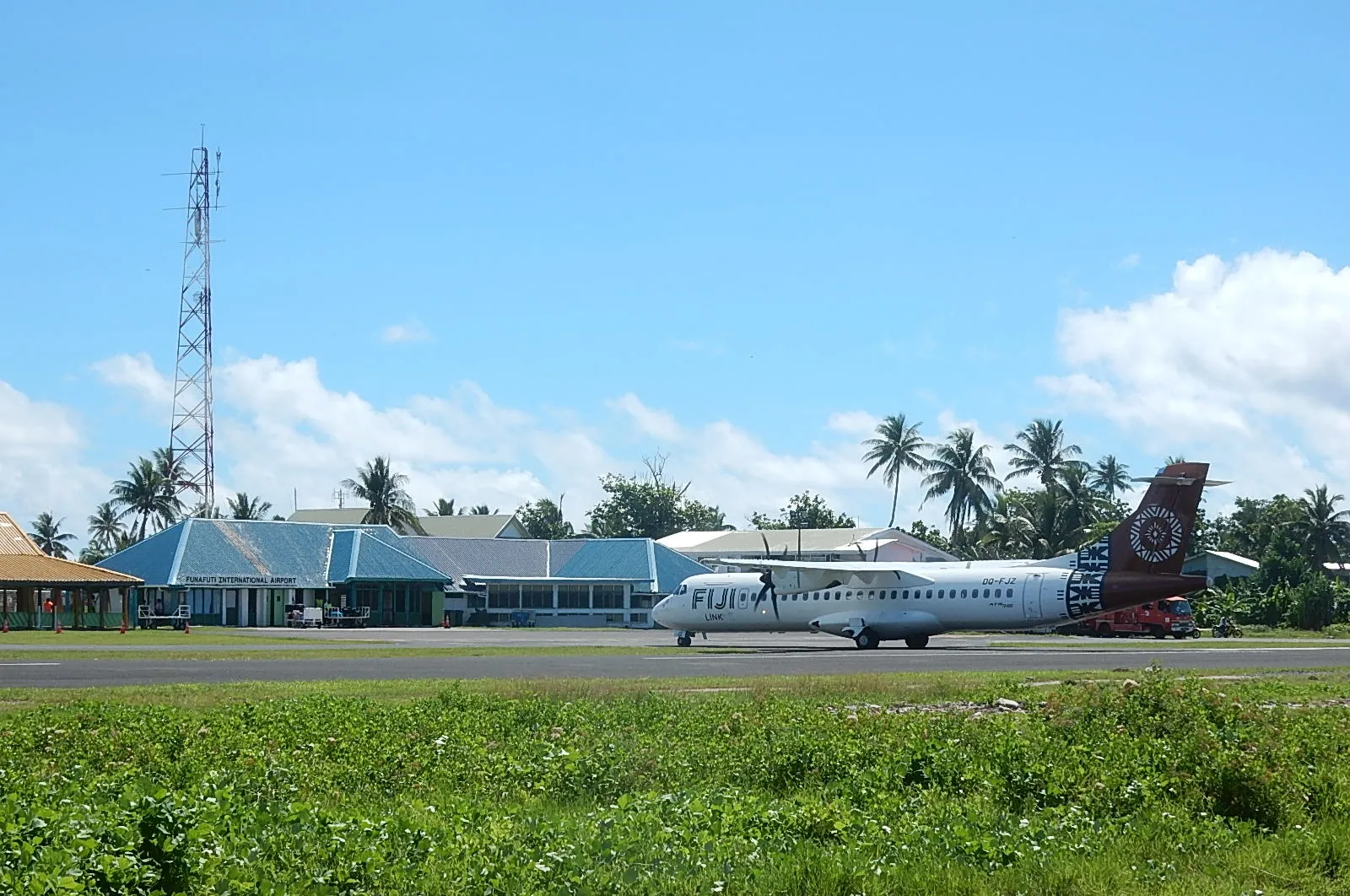 Photo: Michael Coghlan / Wikimedia Commons (CC BY-SA 2.0)