Cost of Living in Wadi Rum
Where this figure comes from. No cost survey covers Wadi Rum, so the $900 a month above is our own estimate rather than a measurement. On 416 of our 999 city guides the figure is built from a published Numbeo basket, a one-bedroom rent in the centre plus one person's monthly costs without rent, converted to USD; this city is not one of them. How we source everything.
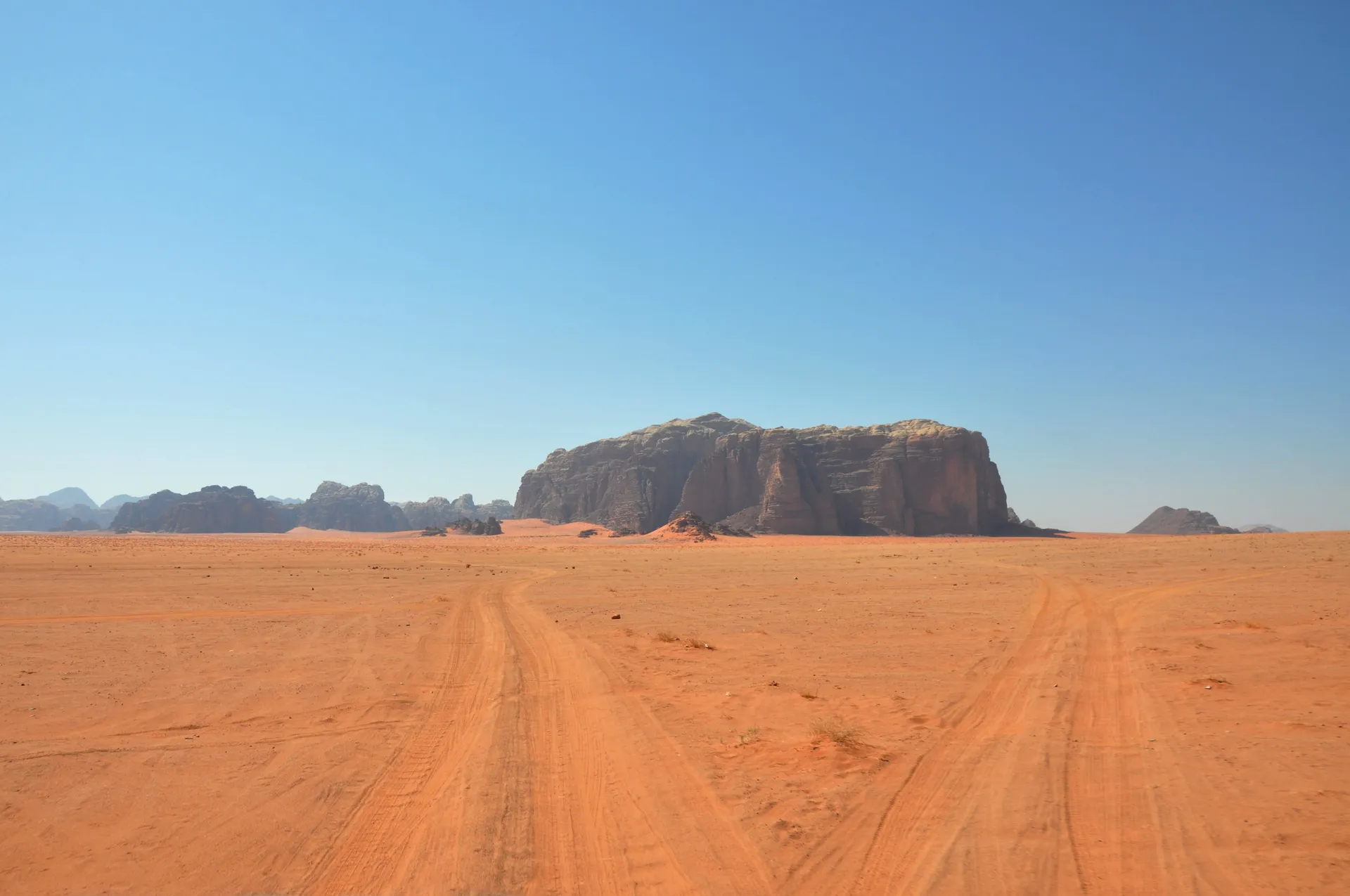
Wadi Rum is not a place you rent an apartment and settle into. It is a protected desert reserve based around Rum village and its scattered Bedouin camps, so your "cost of living" is really the cost of camp stays, meals, and tours. Budget roughly $900 to $1,700 a month if you strung together back-to-back camp nights, but almost nobody does that, and most visitors stay two to four days. Prices are per person and usually bundle bed, dinner, and breakfast. Alcohol is scarce and pricey in this conservative area. Think of Wadi Rum as an experience you buy in short blocks rather than a base you cost out monthly.
- Basic tented camp with half board: roughly $30 to $60 per night, per person
- Bubble or "Martian" dome camp: roughly $90 to $250 per night
- Half-day 4x4 desert tour: roughly $40 to $80 per person
- Bottled water, snacks, and SIM top-ups: budget extra, options are limited
Where to Work in Wadi Rum
Wadi Rum is where people come to switch off, and the desert camps make no attempt to support anyone chasing deadlines. Wifi in the desert camps is weak, shared, satellite-based, or simply absent, and it drops the moment everyone tries to stream at once. There is no coworking space and no cafe scene built for laptops. A Jordanian SIM from Zain, Orange, or Umniah gives you patchy mobile signal near Rum village and along the main tracks, but coverage fades fast among the massifs. If you genuinely must work, do it in Aqaba or Wadi Musa before or after, and treat your desert nights as offline time. That is the whole point of coming here.
- Camp wifi is unreliable and often satellite or solar limited, do not count on it
- Buy a Zain, Orange, or Umniah SIM in Aqaba or Amman for the best odds of signal
- Signal is strongest around Rum village and the visitor center, weak deep in the reserve
- Download maps, files, and entertainment before you head into the sand
Getting Around Wadi Rum
You arrive at the Wadi Rum visitor center just outside Rum village, where you pay entry and meet your camp or guide. From there you cannot drive the reserve yourself. Exploration happens by Bedouin-driven 4x4 pickup, by camel, or on foot with a guide, and your camp typically arranges everything. Reaching Wadi Rum is straightforward: it is about an hour by car from Aqaba and roughly 1.5 to 2 hours from Petra and Wadi Musa. The JETT bus also runs a tourist service, and camps will often collect you from the visitor center. Once inside, distances are deceptive and the terrain is soft sand, so always move with your Bedouin drivers. The reserve covers about 720 square kilometres, which is why even a full-day jeep tour sees only part of it. Jabal Umm ad Dami, Jordan's highest point at 1,840 m, stands about 30 km south of Rum village near the Saudi border, a separate guided day rather than an add-on.
- Arrive at the visitor center near Rum village, then transfer with your camp
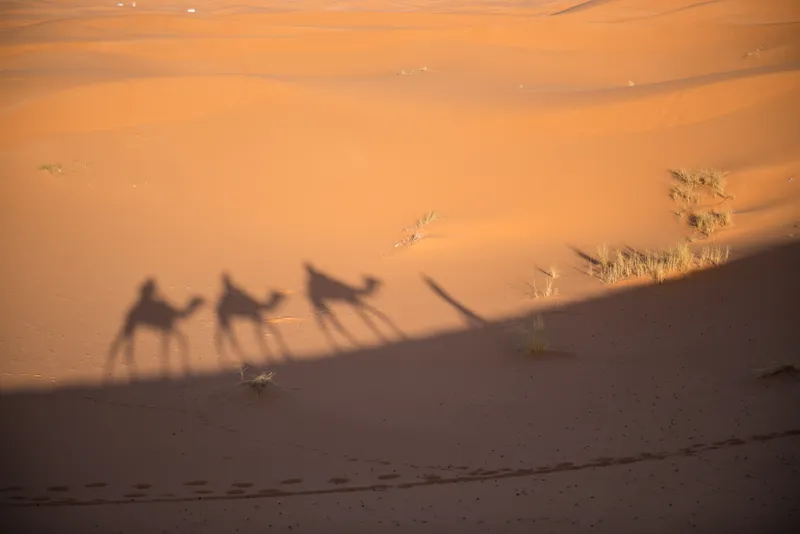
- Explore only by Bedouin-driven 4x4, camel, or guided walking
- By car or JETT bus: about 1 hour from Aqaba, 1.5 to 2 hours from Petra and Wadi Musa
- Arrange pickups in advance, taxis do not roam the desert
Sorting transport? Book an airport transfer, or compare car rental on Auto Europe and QEEQ.
Visas for Wadi Rum
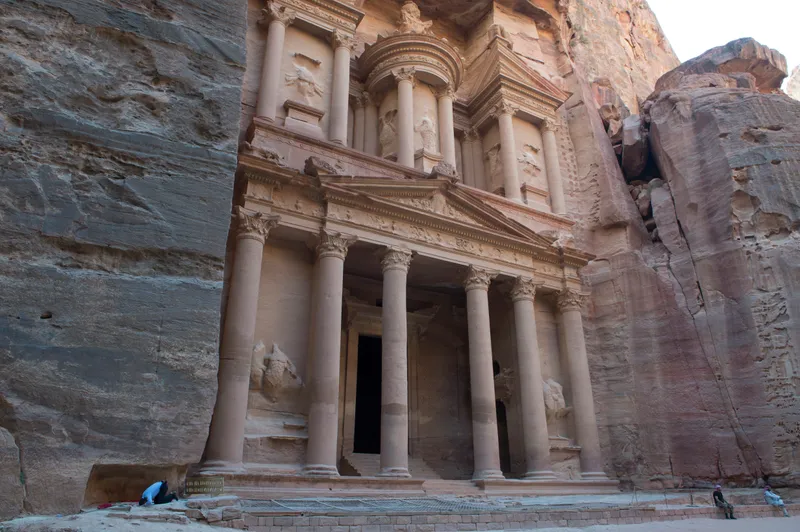
Wadi Rum sits in southern Jordan, so entry follows Jordan's national rules. Many nationalities can get a visa on arrival at Jordanian airports and land borders, but the smarter move for most visitors is the Jordan Pass. Bought online before you fly, it waives the tourist visa fee (as long as you stay at least two whole nights) and bundles entry to major sites including Wadi Rum and Petra, which usually pays for itself if you visit both. Keep your passport and Jordan Pass handy at the Wadi Rum entry gate. Without the pass the visa on arrival costs about $56, and since the cheapest pass, at about $99, costs only some $28 more than the one-day ticket for the Nabataean city alone, the pass comes out ahead the moment that city is on the route.
- The Jordan Pass can bundle the visa waiver with Wadi Rum and Petra entry
- Visa on arrival is available to many nationalities, but confirm your own case
- Buy the Jordan Pass before arrival and check the minimum-stay condition
Best Time to Visit Wadi Rum
Spring, from March to May, and autumn, from September to November, are the sweet spots, with warm days, cool clear nights, and comfortable conditions for tours and stargazing. Summer, from June to August, is brutally hot by day, often well above comfortable, and best avoided for daytime activity. Winter brings mild days but genuinely cold desert nights that can drop near or below freezing, so pack proper layers if you come then. Whatever the season, the desert swings hard between day and night temperatures. Remember this is a conservative Bedouin area, so dress modestly out of respect, covering shoulders and knees, and bring sun protection year round.
- Best overall: March to May and September to November
- Summer days are extremely hot, plan activities for early morning and dusk
- Winter nights are very cold, bring warm layers even for a short stay
- Dress modestly and respectfully in this conservative Bedouin community
Pros and Cons of Wadi Rum
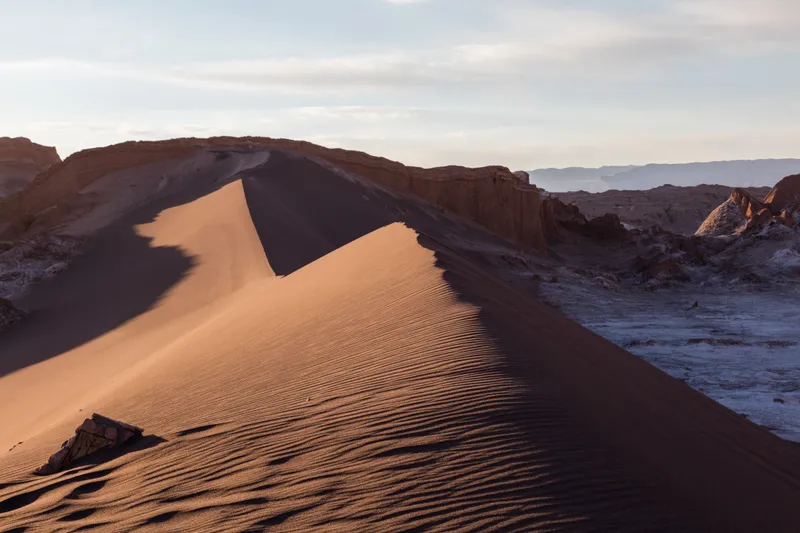
Wadi Rum delivers one of the most cinematic landscapes on earth, the kind of place that reorders your sense of scale. The upside is obvious: towering sandstone and granite massifs, red sand valleys, natural arches, ancient petroglyphs, warm Bedouin hospitality, and some of the clearest night skies you will ever sleep under. The tradeoffs are just as real. Infrastructure is basic, connectivity is poor to nonexistent, there is no nightlife or nomad scene, and services are limited to what the camps provide. It is unforgettable for a few days and impractical for weeks. Come for the experience, not for productivity, and set your expectations to match the desert. The film crews are a fair measure of how alien the place looks: The Martian, Rogue One and Dune all used these valleys to stand in for other worlds. The formation sold as the Seven Pillars of Wisdom, by contrast, was only given that name in the 1980s and has no real link to Lawrence's book.
- Pros: world-class scenery, dark-sky stargazing, rich Bedouin culture, strong safety, clean air
- Pros: genuine digital detox and a short, high-impact adventure
- Cons: weak or absent wifi, no coworking, near-zero nightlife
- Cons: basic infrastructure, tiny community, harsh hot-and-cold climate
Who Wadi Rum Is For
Wadi Rum is for the traveler who wants a short, unforgettable desert experience and is happy to log off completely while they have it. It suits adventurers, photographers, stargazers, honeymooners, and curious wanderers threading Jordan's south between Aqaba and Petra. It rewards anyone willing to trade comfort and connectivity for silence, scale, and starlight. It is absolutely not for deadline-driven remote work, for anyone who needs reliable wifi, or for those wanting a walkable town with cafes, coworking, and nightlife. Treat it as a two-to-four-night highlight inside a wider Jordan trip, arrive with realistic expectations and modest dress, and Wadi Rum will likely become the memory you talk about most. Climbers are the exception to the short-stay rule: the sandstone walls around the village are a long-established climbing ground, and local Bedouin guides take visitors up both the classic scrambles and the technical routes.
- Great for: adventurers, photographers, stargazers, couples, and Jordan road-trippers
- Great for: anyone craving a genuine offline reset in extraordinary scenery
- Not for: remote workers who need reliable wifi and daily focus time
- Not for: travelers wanting a walkable town, nightlife, or a nomad community