Cost of Living in Hagatna
Where this figure comes from. No cost survey covers Hagatna, so the $2,200 a month above is our own estimate rather than a measurement. On 416 of our 999 city guides the figure is built from a published Numbeo basket, a one-bedroom rent in the centre plus one person's monthly costs without rent, converted to USD; this city is not one of them. How we source everything.
Budget around $2,200 a month in Guam, which is expensive for the region and unsurprising once you know that almost everything arrives by ship from the United States or Asia. A one-bedroom runs roughly $900 to $1,500, with Tumon and Tamuning at the top and the villages inland cheaper. Groceries carry a visible freight markup and imported produce is the worst of it. Utilities are high because air conditioning runs constantly and power costs more than on the mainland. Eating out is the one area of relief: Chamorro barbecue, Filipino canteens and Korean restaurants are all inexpensive. The territory uses the United States dollar, so there is no conversion to think about. Federal rules sit underneath the prices in two places. Shipping between American ports must use American-flagged vessels under the Jones Act, which raises the delivered cost of anything arriving from the mainland, and the territory funds itself through a gross receipts tax levied on businesses rather than a sales tax, which is passed on invisibly at the till. Military and federal salaries also set the top of the local pay scale, and the rental market near the bases is priced against them rather than against local wages.
Where to Work in Hagatna
Connectivity is genuinely good. Guam is a landing point for several trans-Pacific submarine cables and the island's position in the network is one of its strategic assets, so fibre reaches most developed areas and mobile coverage is comprehensive across the populated west coast. Power is reliable by Pacific standards, though typhoons interrupt it. Coworking is limited to a handful of small operators, and most remote workers use hotel business centres in Tumon or work from home. The time zone is the real consideration: Guam sits ten hours ahead of GMT and fifteen hours ahead of United States Eastern time, which puts an American working day squarely in the middle of your night. Federal and military employment is the backbone of the professional economy, along with tourism and the construction that follows each round of base investment, and that mix is stable in a way most Pacific islands cannot manage. Businesses here rely heavily on temporary foreign labour, and the visa category that supplies it has been restricted and then partially restored more than once, which is a live commercial issue rather than an administrative footnote. Working Asian hours is what most people here settle into.
Getting Around Hagatna
A car is close to essential. Guam is about fifty kilometres long and built around Marine Corps Drive, the highway that runs the length of the developed west coast, with no rail and a bus network that is thin and slow. Rental cars are widely available and cheap by island standards. Tumon and Hagatna are walkable within themselves but not to each other. A B Won Pat International Airport sits between the two and connects to Tokyo, Seoul, Manila and Honolulu with a frequency no other Micronesian island comes close to, which is what makes Guam the practical hub for the whole region. Marine Corps Drive carries essentially all of the island's traffic and the peak around the bases and Tumon is heavier than a population this size would suggest. Hiking is the local pastime, called boonie stomping, with organised weekly walks to waterfalls, latte stone sites and Second World War remains in the interior, and it is the best way anyone finds to see the parts of the island the highway misses. Roads deteriorate quickly in the interior and a high-clearance vehicle helps.
Sorting transport? Book an airport transfer, or compare car rental on Auto Europe and QEEQ.
Visas for Hagatna
Guam is a United States territory with its own immigration arrangement, and it is more open than the mainland. The Guam and Northern Mariana Islands visa waiver programme admits citizens of a set of Asian countries, including South Korea, Japan, Taiwan and Hong Kong, for forty five days without a visa. Everyone else needs the same United States visa or ESTA they would need for the mainland, and an ESTA is valid here. There is no remote work visa and working on a visitor status is not permitted. United States citizens need only proof of identity and can live and work here indefinitely. Migration under the Compacts of Free Association is a defining feature of the territory rather than a technicality: citizens of the Marshall Islands, the Federated States of Micronesia and Palau may settle and take work here without any visa at all, thousands have done so, and the resulting pressure on schools and health services is one of the island's persistent political arguments with Washington over reimbursement. Military dependents form the other large arriving population, and both groups shape the island more than the tourism figures do.
Best Time to Visit Hagatna
December to June is the dry season and the practical window, with temperatures around thirty degrees, lower humidity and calmer seas for diving. July to November is the wet season and the typhoon season, and Guam sits in the most active typhoon basin on earth. The island is built for it, with concrete construction and serious building codes, but a direct hit closes everything for days. Water temperature barely moves all year, so diving is a question of visibility rather than warmth. The shoulder months of November and June often give the best combination of price, weather and space. Liberation Day on the twenty first of July is the island's largest occasion by a distance, marking the American return in 1944 and observed with a parade, village fiestas and a carnival that runs for weeks around it, and it matters here in a way no visitor should mistake for a summer festival. Village fiestas run through the year, each parish holding its own, and an invitation to one is the best food anybody will eat on Guam.
Pros and Cons of Hagatna
Guam offers infrastructure without leaving the tropics, which few tropical islands manage: American medical care, reliable power, good connectivity, a proper airport and everything in English, on an island with reef diving and a genuinely distinct Chamorro culture. Cost, distance and scale are the three arguments against it. It is expensive, it is a very long way from anywhere except East Asia, and fifty kilometres of island runs out of new things faster than most people expect. The military presence is large and shapes the island's economy and land use. There is essentially no remote worker community, so the social side is what you build yourself. The brown tree snake is the island's quiet catastrophe and worth knowing about: introduced accidentally after the war, it eliminated almost all of Guam's native forest birds, and the resulting silence in the jungle is something visitors notice before they are told why. Land is the other long argument, with a large fraction of the island held by the federal government, and with Chamorro self-determination and land return are live political questions rather than settled history.
Who Hagatna Is For
Guam suits anyone who wants tropical Pacific living with American systems underneath it: divers, people working on Asian time zones, and anyone with a family who wants schools and hospitals that work. It also suits people already connected to the region through work or military service. Guam prices rule out a budget stay, there is no nomad scene to plug into, and the time difference punishes work with Europe and the Americas in both directions at once, which is the sort of problem no amount of discipline solves. Anyone considering a longer stay should also weigh the typhoon season honestly, since a serious storm can close the airport and the ports for the better part of a week. Saipan, three hours north, is the comparison worth making: cheaper, quieter, far less developed and with a fraction of the flights, which suits some people better and leaves others stranded. Hawaii is the other end of the same spectrum, at several times the cost. Anyone arriving through the military, a federal posting or a regional employer will find the island straightforward, while an independent remote worker has to build the entire social side from nothing.
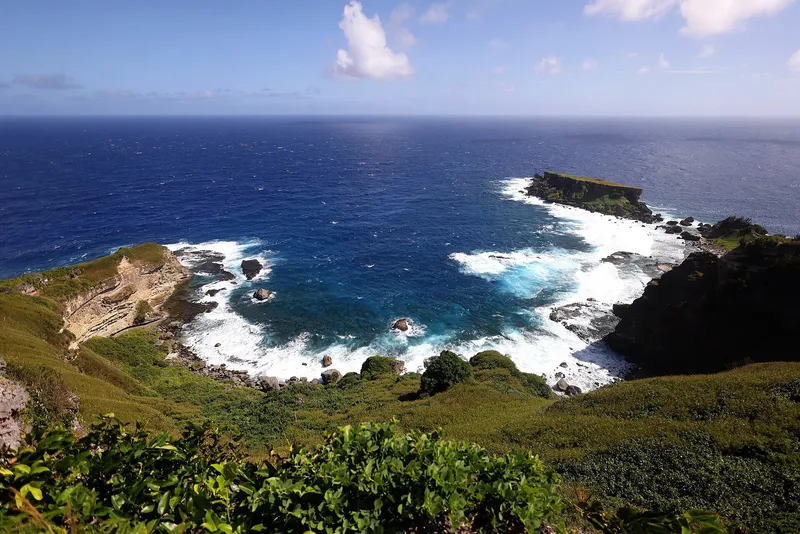
 Photo: Abasaa / Wikimedia Commons (Public domain)