Cost of Living in Honiara
Where this figure comes from. No cost survey covers Honiara, so the $1,400 a month above is our own estimate rather than a measurement. On 416 of our 999 city guides the figure is built from a published Numbeo basket, a one-bedroom rent in the centre plus one person's monthly costs without rent, converted to USD; this city is not one of them. How we source everything.
Budget around $1,400 a month. A one-bedroom runs roughly $400 to $800, with the areas near the ridge and the diplomatic quarter at the top. Market produce is cheap and the Honiara Central Market is the best value in the country, with fish, root vegetables and fruit at genuinely low prices. Imported goods carry a heavy markup and the supermarkets are expensive. Utilities cost a lot because power is diesel-generated and among the most expensive in the Pacific. Eating out is limited, with a handful of Chinese and Asian restaurants and the hotel dining rooms. The Solomon Islands dollar is the currency. Housing at the top of that range usually comes with a compound wall, a guard and a generator, and those three things rather than the space are what the rent is buying, which is worth understanding before comparing a figure here with one somewhere calmer. Expatriate rentals are often quoted in Australian dollars and asked for well in advance. Cash remains central outside the larger businesses and hotels, and the market runs entirely on it. Fuel price movements feed almost immediately into the cost of everything else on the island.
Where to Work in Honiara
Connectivity has improved with the Coral Sea cable, which landed in 2019 and gave Honiara a real internet connection for the first time, so fibre in the centre and the better hotels is workable. Mobile data from Our Telekom and Bmobile covers the town and the main road. Power is unreliable and generators are standard in any serious business. There is no coworking. The time zone is eleven hours ahead of GMT, which puts Honiara an hour ahead of eastern Australia and makes that the practical business overlap. Anyone travelling to the outer provinces should assume no connectivity at all beyond patchy mobile coverage near the larger settlements, and plan the work accordingly. Data remains expensive relative to local income even after the cable, so heavy video use is a cost question as much as a bandwidth one, and mobile bundles are worth understanding in detail rather than buying blind. An uninterruptible power supply matters more than a fast connection here: the failures are usually electrical rather than in the line, and a laptop plus a router on battery turns a cut from a lost afternoon into an inconvenience.
Getting Around Honiara
Minibuses run along the single coastal road through Honiara for a very low flat fare and are the normal way to move, though they are crowded and stop constantly. Taxis are available and cheap by the hour. Walking in town is possible by day and generally avoided after dark. Honiara International Airport, formerly Henderson Field and the object of the 1942 campaign, is about eleven kilometres east and connects to Brisbane, Port Moresby, Nadi and Port Vila. Domestic flights and ships reach the outer provinces, and the ship schedules are approximate. The whole town is strung along that one road, which means a single accident or a protest can close the only route between the airport and the centre, so allow considerably more time for a departure than eleven kilometres suggests. Outside town the sealed surface runs out quickly and a four-wheel drive becomes necessary rather than useful. The Guadalcanal battlefield sites sit mostly within a short drive of that same road, which makes them easy to reach and easy to miss without a guide who knows where they are.
Sorting transport? Book an airport transfer, or compare car rental on Auto Europe and QEEQ.
Visas for Honiara
The Solomon Islands grant visa-free entry to citizens of most Commonwealth countries, the European Union and the United States for up to ninety days, issued as a visitor's permit on arrival. Everyone else applies in advance. There is no remote work visa and working on a visitor's permit is not permitted. Extensions are applied for at the immigration office in Honiara. Proof of onward travel and accommodation is normally requested at the airport, and it is worth having both printed. Anyone continuing to the Western Province for diving should note that domestic flights are frequently rescheduled and that building slack into a trip is the norm rather than caution. A second layer of permission sits below the national one and matters more in practice for anyone leaving the capital. Reefs, beaches and land in the provinces are under customary ownership, so diving, filming or even camping usually needs the agreement of the landowning group, arranged through a local contact rather than an office. Operators handle this for their guests. Anyone arranging their own trip should assume it applies and ask early, because sorting it on arrival is slower and occasionally impossible.
Best Time to Visit Honiara
May to October is the drier, cooler season and the practical window, with south-easterly trade winds and better diving visibility. November to April is the wet season and the cyclone season, with heavy rain and the risk of flooding in Honiara, which has flooded severely more than once. Temperatures sit around thirty degrees all year with high humidity throughout. The diving is world class in either season, with the wrecks of Iron Bottom Sound offshore, but visibility and sea state are better in the dry months. The Solomon Islands sit within the cyclone belt but are struck less often than Vanuatu or Fiji, and the storms that do arrive usually track south of the main group. The flooding risk is specific rather than general. The rivers running through the town, the Mataniko in particular, rise very fast in heavy rain and the settlements along them are the ones that suffer, which is worth knowing when choosing where to stay in the wet season. Flights fill around the Australian school holidays and Christmas, and there are few enough seats that booking late can mean not going at all.
Pros and Cons of Honiara
Diving and history come together here in a way they do not anywhere else, since Iron Bottom Sound holds dozens of ships and aircraft lost in the 1942 campaign and the reefs beyond are among the most biodiverse on earth. Costs are low and the country is genuinely uncrowded. Honiara itself is the problem: street crime is a real and daily concern, the city rioted seriously as recently as 2021, the infrastructure is poor, the power is unreliable and medical care does not go far. This needs current advice rather than assumption. Malaria is present and the Solomon Islands carry one of the higher burdens in the Pacific, so prophylaxis is a medical decision made before travel rather than on arrival. And the hospital in the capital handles routine care, with anything serious meaning evacuation to Australia, which is why every organisation working here carries cover for that and why an individual traveller should too. Set against the capital's problems, the provinces are calm, and most people who love this country love it for what lies outside Honiara.
Who Honiara Is For
The Solomon Islands suit divers above all, and anyone drawn to the Pacific war, since Guadalcanal is where the ground campaign turned. They suit development and conservation workers, of whom there are a good number. They do not suit anyone wanting a comfortable or safe-feeling capital, anyone needing reliable infrastructure, or anyone without a specific reason to be here, because Honiara is a working town rather than a destination in itself. The outer islands are what justify the journey out here. Marovo Lagoon in the Western Province is the largest saltwater lagoon anywhere on earth, and it can be reached in a single day from the capital. The shape of a good trip here is usually to treat the capital as a transit point rather than a base: arrive, overnight, and move on to the Western Province or Marovo the next morning, which is what most experienced visitors do. Anyone comparing Melanesian destinations will find Vanuatu easier and better set up for visitors and Papua New Guinea harder, with the Solomons between the two. Women travelling alone should seek out recent first-hand accounts rather than rely on any general rating.
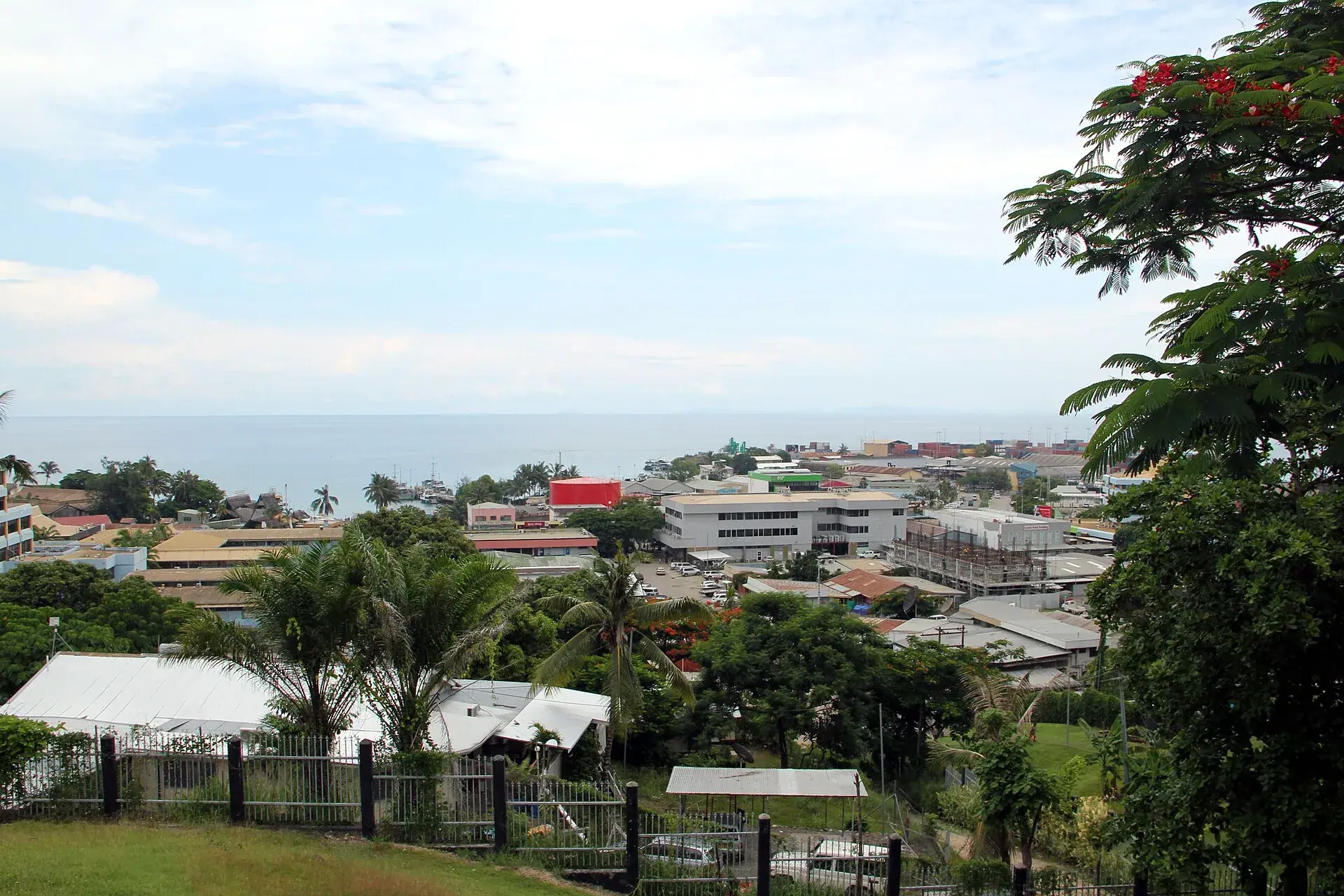 Photo: Kahunapule Michael Johnson from Pukalani, Hawaii, United States of America / Wikimedia Commons (CC BY-SA 2.0)