Cost of Living in Katowice
Where this figure comes from. No cost survey covers Katowice, so the $950 a month above is our own estimate rather than a measurement. On 416 of our 999 city guides the figure is built from a published Numbeo basket, a one-bedroom rent in the centre plus one person's monthly costs without rent, converted to USD; this city is not one of them. How we source everything.
Budget roughly $950 a month as a solo remote worker in Katowice. A one-bedroom apartment in Śródmieście or Koszutka runs about $380 to $520, and the outer districts drop that to $290 to $380. Katowice sits at the centre of a conurbation of over two million people, so the rental market is deep and moving one tram stop out saves real money. Groceries land around $210 to $260. A lunch is $4 to $6, a restaurant dinner with a beer $13 to $20, and a monthly transit pass about $14, valid across the whole metropolitan network. Utilities add $85 to $170, with heating the winter variable in a region built on coal. Rent is usually quoted without the czynsz, the monthly building charge covering shared costs, which can add a fifth to the figure and is payable whether or not the flat is occupied. A PESEL number is the identifier everything else hangs on, and a foreigner can obtain one once there is an address to register. Deposits run to one or two months. Coal heating in the older housing stock is being replaced under a national programme, and a flat on gas or district heat is worth paying for rather than economising on.
Where to Work in Katowice
Katowice has the strongest coworking supply of any Polish city outside Warsaw and Krakow, with desks at roughly $90 to $160 a month, concentrated in the centre and around the business parks. The city has worked hard to convert itself from coal to services and has drawn a substantial outsourcing sector, so the other members are Polish professionals rather than visiting nomads. Internet is excellent: fibre is standard and cheap, and mobile data is inexpensive. The regenerated Culture Zone around the Spodek arena and the NOSPR concert hall has cafes that suit laptop work. English is common in the business districts and patchy elsewhere. Most technology work here is contracted rather than employed: an engineer will typically invoice through a sole trader registration, and the same structure is what a foreigner ends up using. Social contributions are a flat monthly amount rather than a percentage, which makes them heavy on a small income and light on a large one, with a reduced starting rate for the first two years. The flat-rate tax option suits anyone whose costs are low, which describes most remote work.
Getting Around Katowice
Katowice sits at the heart of a dense conurbation, and its transport reflects that: trams and buses run across fourteen neighbouring towns on one ticket, with a monthly pass around $14. The centre is walkable and largely rebuilt, with a striking modernist railway station at its middle. That station is the best-connected in southern Poland, putting Krakow at under an hour and a half and Warsaw at two and a half. Katowice airport is 30km north at Pyrzowice and carries a large number of budget European routes, which is one of the city's genuine practical advantages. A car is unnecessary and parking in the centre is difficult. The tram network across the conurbation runs to a track length few systems anywhere can match, a legacy of moving miners between towns that now moves everybody else, and it is what lets fourteen separate towns behave as one place to look for work. Direct trains reach Vienna and Berlin in around six hours. Cycling infrastructure is improving steadily but is not yet a reason anyone chooses the city.
Sorting transport? Book an airport transfer, or compare car rental on Auto Europe and QEEQ.
Visas for Katowice
Poland is in the European Union and the Schengen area. EU and EEA citizens may live and work freely; most other Western passports get 90 days in any 180. There is no Polish digital nomad visa. Longer stays run through a temporary residence permit tied to employment, study or business, or through registering as a sole trader, which is a well-worn route for freelancers and comes with a choice of tax regimes including a low flat rate for some professions. The Poland Business Harbour fast track, aimed at tech specialists from a set list of nationalities, is no longer an option, because the foreign ministry suspended it in January 2024 and has not reopened it. Applications are handled by the voivodeship office and are conducted in Polish; an agent is worth the fee. Festival regulars who fly into Pyrzowice for OFF each August from outside the bloc only sit through the full Entry/Exit System registration once: the file is held for three years, so the next summer's arrival is a quick identity check against it.
Best Time to Visit Katowice
May, June and September are the best months, warm without being hot and with the city's festival calendar at its fullest. Katowice hosts OFF Festival in August and Tauron Nowa Muzyka in June, both of which fill the accommodation. July and August are warm, into the mid twenties, and quieter as residents head for the mountains or the coast. Autumn is grey. Winter, December to February, is cold and often below freezing, and it is also when the air is at its worst: the Silesian basin traps smog from domestic coal heating, and Katowice regularly records some of the poorest winter air quality in Europe. That is a real consideration for anyone with a respiratory condition. The worst air arrives on still, cold, high-pressure days rather than steadily through the winter, and the readings are published hourly, so the practical response is to check before committing to a run rather than to write off the months. An hour south the air is clean, which is why the mountains fill at weekends between November and February. The Christmas market on the main square runs through December and is the one time the centre feels like an old European city rather than a rebuilt one.
Pros and Cons of Katowice
Katowice is the most interesting reinvention story in Poland: a coal city that built a concert hall, a museum and a conference centre on top of its old mine and drew a services economy in behind them. It has the best airport connections in southern Poland, excellent internet, deep coworking supply, and prices below Krakow. The Beskids mountains are an hour south. It is not beautiful, and much of the surrounding conurbation is post-industrial in a way that takes a while to warm to. Winter air quality is genuinely poor. The nomad community is small, the tourist infrastructure is thin, and English runs out quickly outside business settings.
Who Katowice Is For
A functioning, well-connected Polish city at a discount to Krakow, for people who value cheap European flights and fast internet over scenery. Business in the Silesian technology and outsourcing sector is the professional reason to be here. Musicians and music people have a festival calendar that runs most of the year, and the Beskids and the Tatras are both an easy drive south. It is a reasonable base for couples. Anyone sensitive to air pollution should rule this out on the winter figures alone. The centre is functional rather than attractive, and an English-speaking social scene does not exist to be found. Krakow is an hour and a half away and offers the beauty and the crowd at a higher price. A year is the natural unit here, long enough for the residence paperwork to be worth filing and short enough to leave before a second winter of the air. Anyone arriving for the technology sector should expect the contracting structure to be the first thing a client asks about and the language to be the second.
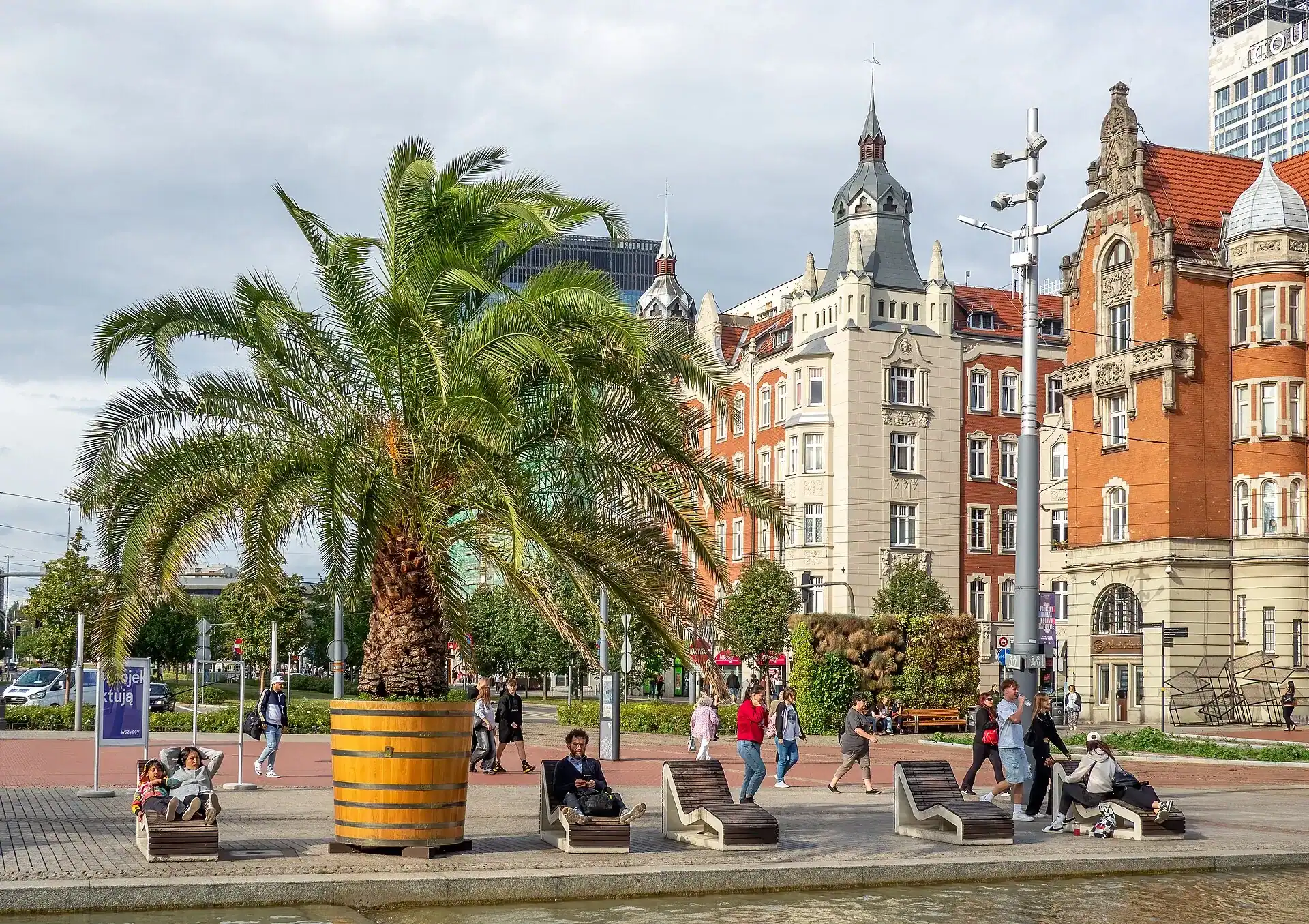 Photo: Rhododendrites / Wikimedia Commons (CC BY-SA 4.0)