Cost of Living in Baku
Real market data
Source: Numbeo · August 2026
$930/moSolo nomad1-bed centre + living costs
$1,250/moCoupleshared 1-bed + costs
$720/moLean / localcheaper area + costs
- 1-bed rent, city centre$540AZN 911
- 1-bed rent, outside centre$320AZN 548
- Monthly costs excl. rent (1 person)$400AZN 676
- Meal, inexpensive restaurant$9AZN 15
- Monthly transit pass$21AZN 36
- Buy price, per m² (centre)$2,300AZN 3,910
Prices are from Numbeo (August 2026), converted to USD at $1 = 1.7 AZN (01 Aug 2026). The monthly living-costs figure is our transparent one-person basket, groceries, a few meals out, utilities, phone, internet, transport and essentials, priced from those figures. Solo adds central rent; couple and lean are estimates from the same numbers.
Baku is one of the more affordable capitals in the broader Europe and Central Asia region, though costs have crept up in recent years as the city modernises. A realistic monthly budget for a digital nomad runs between $1,100 and $1,600, depending on how you live.
- Rent, central (Sahil, Fountain Square, Old City fringe): $410-530 for a one-bedroom
- Rent, cheaper areas (Narimanov, Binagadi, outer Nasimi): $265-380
- Groceries: $145-205 per month cooking mostly at home, using Taza Bazar or Bazarstore
- Eating out: A local pide or kebab lunch costs $4.50-9; dinner at a mid-range restaurant runs $15-29 for one
- Coworking hot desk: $120-205 per month; day passes around $12-18
- Local transport: Monthly metro and bus pass roughly $15; taxis via Bolt cost $2-4.50 per ride
- Home internet: Very cheap at roughly $13 per month for a fibre connection
All-in, a comfortable nomad month lands around $1,100-1,400. If you want a modern apartment in the centre and eat out regularly, budget closer to $1,500-1,700. The Azerbaijani manat (AZN) is pegged to the US dollar at roughly 1.70 AZN per $1.
Where to Work
Baku has a small but functional coworking scene. Lotfi Zadeh Technology Center (LTC) is the most established option, with two locations: LTCy at Caspian Plaza (Cefer Cabbarli 44) and LTCx at Demirchi Tower. Both offer 24/7 access, fast fibre, and a professional atmosphere. Alas Coworking and Fabrika are smaller alternatives in the centre, while Regus has serviced offices in BWC and ASK Plaza for those needing a more corporate setup.
Cafe work is genuinely viable in the tourist belt. Socialbee Coffee (Semedvurgun Street) is Baku's most popular nomad cafe, with reliable WiFi and good specialty coffee. United Coffee Beans is another solid choice with power outlets and a quieter vibe.
The honest WiFi situation: mobile data (Azercell or Bakcell SIM cards, available at the airport) is faster and more reliable than most public WiFi. Home fibre broadband is fast. Mobile LTE in the centre is strong. Free WiFi in random cafes and public spaces is patchy; do not rely on it for video calls without testing first.
Getting Around
The centre of Baku is compact and walkable. The seafront boulevard (Bulvar), Fountain Square, and the Old City walls are all within 15-20 minutes of each other on foot, and the streets are wide, flat, and well-maintained.
The metro is clean, cheap, and frequent, running two to three minutes between trains from 06:00 to midnight. You pay with a BakiKART smart card, purchased for $1 at any station; each trip costs under $1. City buses use the same card and cover areas the two-line metro misses. Bolt (ride-hailing) works well throughout the city and is inexpensive.
Airport to centre: The H1 airport bus runs every 30 minutes to the 28 May metro hub for $1. Journey time is 35-50 minutes depending on traffic. A Bolt taxi from the airport costs roughly $15-21 and takes 30-40 minutes.
Sorting transport? Book an airport transfer, or compare car rental on Auto Europe and QEEQ.
Visas and Staying Long-Term
Azerbaijan does not offer a digital nomad visa. Most Western passport holders (US, UK, EU, Australia, Canada) can obtain an e-visa online in advance through evisa.gov.az, valid for 30 days from your chosen start date. The e-visa itself has 90 days of validity from issue, so you can schedule your entry. Cost is around $26 for a single-entry visa.
Citizens of Turkey, some Gulf states, and a handful of Asian countries can enter visa-free or get a visa on arrival. If you are staying 10 or more days, you are required to register your stay. Hotels handle this automatically; if renting privately, your landlord or local authorities can register you, or you can use the ASAN service centres.
There is no straightforward long-stay path beyond repeated 30-day visits with exits in between. Extensions inside the country are not routinely granted to tourists.
Best Time to Visit
Baku sits on a peninsula on the Caspian Sea and is windier than most cities. Summers are hot (35-40C in July and August), dusty, and can feel oppressive for outdoor work or exploration. Winters are mild by Central Asian standards but grey, damp, and persistently windy, with temperatures dipping to 1-5C in January.
The best windows for remote work are April to June and September to October. In these months temperatures stay between 18-28C, skies are clearer, and the city is at its most pleasant for walking and eating outside. Spring in particular brings the roses and the greenest version of the Old City. Avoid July and August unless you are heat-tolerant and staying in an air-conditioned apartment.
Pros and Cons
- Very affordable rent and food compared to Western Europe and much of Southeast Asia
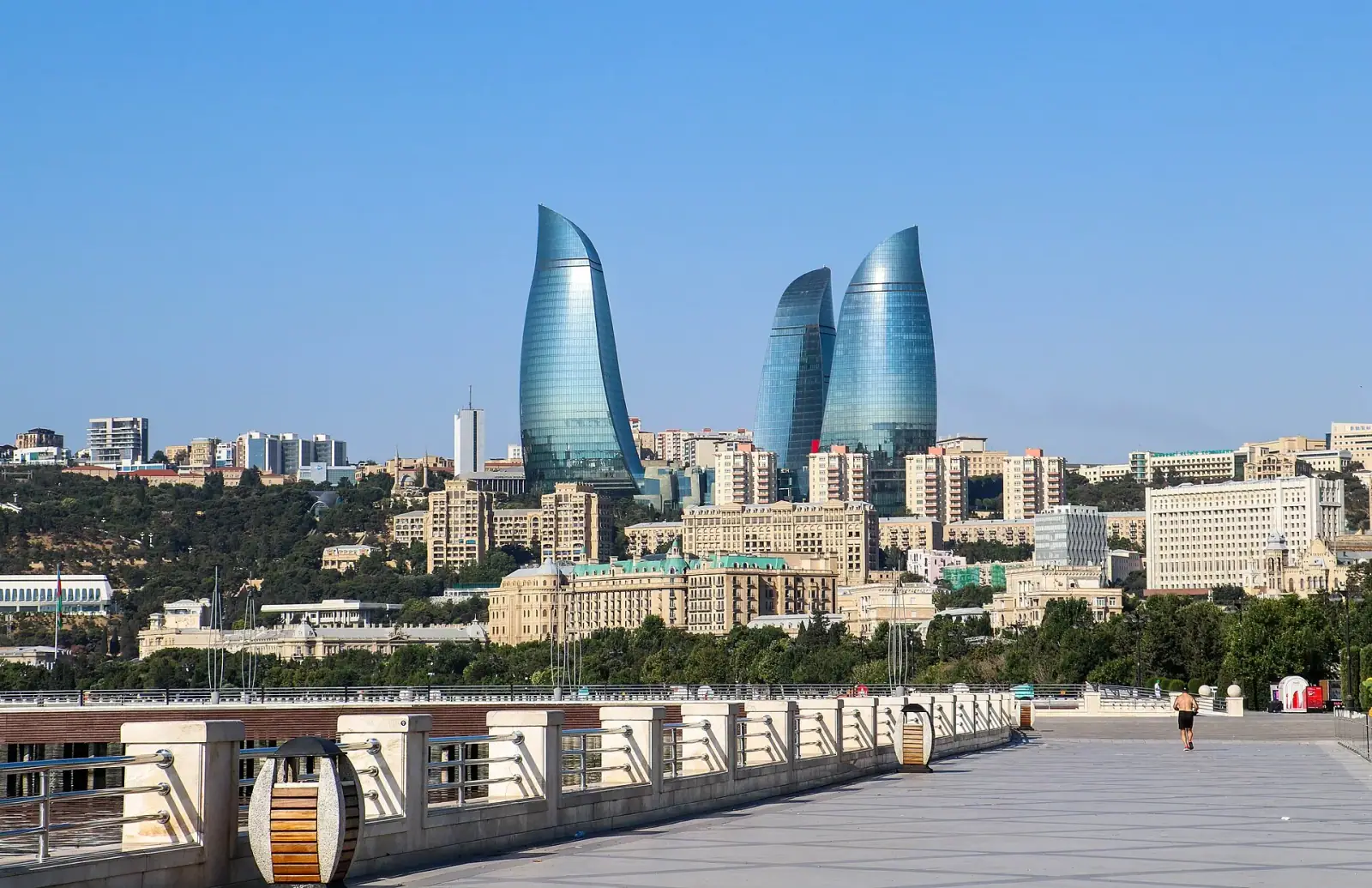
- Genuinely stunning Old City (UNESCO-listed) and dramatic Flame Towers skyline
- Low crime rate in tourist and central areas; Baku feels safe to walk at night in busy zones
- Fast home internet and strong 4G/5G coverage in the centre
- Excellent food scene combining Azerbaijani, Georgian, Iranian, and Russian influences
- Easy e-visa accessible to most Western passport holders
- Small nomad community; connecting with other remote workers takes effort
- English is limited outside hotels and tourist restaurants; Russian is more useful
- Not safe or welcoming for LGBTQ+ travellers; open expression carries real risk
- No long-stay visa option makes it hard to base here for more than 30 days without border runs
- Moderate air quality issues, particularly from traffic, and strong dusty winds in summer
- Limited nightlife diversity and social scene compared to Istanbul or Tbilisi
Who Baku Is Best For
Baku rewards nomads who are drawn to places slightly off the main trail. If you want a low cost of living, a UNESCO Old City you can actually afford to base yourself near, and a striking urban landscape that still surprises, it delivers. It works particularly well for solo travellers who are self-contained in their work routine and enjoy walking a city alone.
History and culture enthusiasts, people who have already worked through the obvious nomad hubs (Tbilisi, Istanbul, Lisbon), and anyone wanting a quiet, affordable spring or autumn stint will find real value here. The food scene alone, built around wood-fired kebabs, saffron rice dishes, and pomegranate-laced stews, is worth making the trip for.
You should probably skip Baku if you rely on a large nomad community for motivation or social life, if you are LGBTQ+ and unwilling to stay closeted, or if you need more than 30 days without planning a border run. It is also a harder sell in peak summer, when the heat and dust undercut the appeal considerably.