Cost of Living in Brno
Real market data
Source: Numbeo · August 2026
$1,760/moSolo nomad1-bed centre + living costs
$2,340/moCoupleshared 1-bed + costs
$1,560/moLean / localcheaper area + costs
- 1-bed rent, city centre$1,020Kč21,418
- 1-bed rent, outside centre$830Kč17,354
- Monthly costs excl. rent (1 person)$740Kč15,476
- Meal, inexpensive restaurant$10Kč200
- Monthly transit pass$26Kč550
- Buy price, per m² (centre)$6,620Kč139,208
Prices are from Numbeo (August 2026), converted to USD at $1 = Kč21.02 (01 Aug 2026). The monthly living-costs figure is our transparent one-person basket, groceries, a few meals out, utilities, phone, internet, transport and essentials, priced from those figures. Solo adds central rent; couple and lean are estimates from the same numbers.
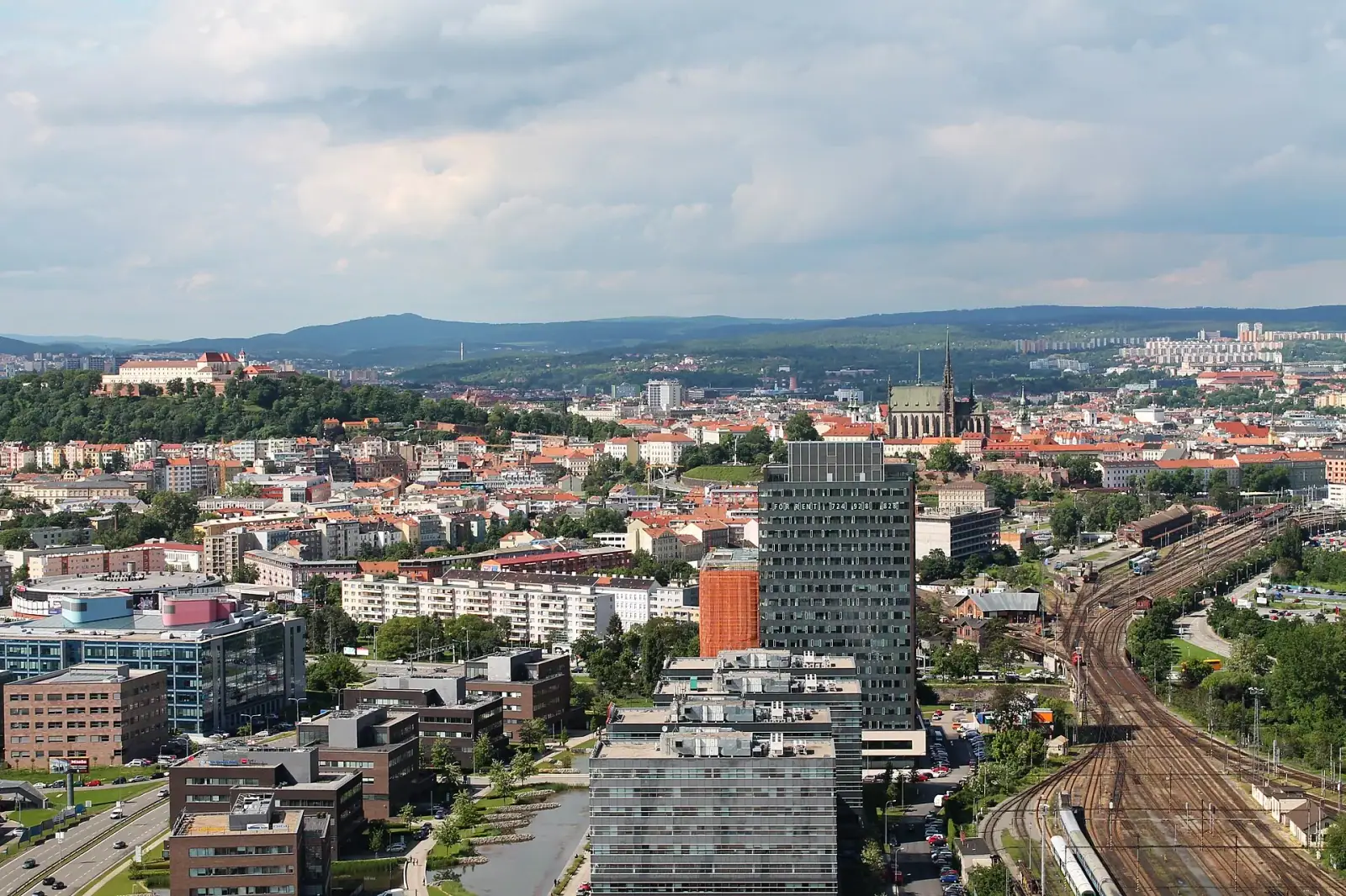
Brno is one of Central Europe's best-value cities for remote workers. Everything costs noticeably less than Prague, and the quality of life remains high.
Monthly rent: A one-bedroom apartment in the city centre runs roughly $855-1,190. In quieter residential districts like Královo Pole, Líšeň, or Bohunice, you can find similar apartments for $715-855. Coliving rooms with utilities included start around $525-620.
Groceries: A typical week of home cooking costs $71-95. Basics are cheap: bread around $1.50, eggs (12) around $4, chicken breast per kilo around $9.
Eating out: A lunch menu at a Czech pub runs $7-9.50. A sit-down dinner for two at a mid-range restaurant is $33-67. Street food and Vietnamese options are plentiful and cost even less.
Coworking hot desk: A single day at Impact Hub or Clubco costs roughly $24-30. Monthly unlimited plans at established spaces run $165-280. Budget coworking memberships are available from $83 for a week.
Local transport: A monthly public transport pass is $26, covering trams, buses, and trolleybuses across the city.
Total monthly range: A frugal remote worker can live comfortably on $1,430-1,660 all in. A comfortable lifestyle with regular dining out sits around $1,900-2,620.
Where to Work
Brno has a solid coworking scene anchored by a tech and university culture that keeps demand for good workspace high.
Impact Hub Brno (Cyrilska 7, city centre) is the flagship space, offering flexible hour-based memberships starting at $42 for 10 hours per month, up to full-access plans. It runs regular events and has a genuine startup community around it.
Clubco at Vlněna (a short walk from the main train station) is a large, modern facility with 6,000 m² of space, free coffee all day, 24/7 member access, and tram connections at the door. Hot desks from $24.
COWO Brno (Kobližná 2) sits 100 metres from Freedom Square in the heart of the old town, with fast WiFi and a bright, sunlit workspace. Day rates start at $30.
Cafe-working is genuinely possible in Brno. SKØG Urban Hub on Dominikánské náměstí, JAGA on Žerotínovo náměstí, and Industra Coffee in Židenice all offer reliable WiFi, power sockets, and an atmosphere that tolerates laptops. Most cafes in the centre will let you sit for the length of a coffee without pressure, though arriving early on weekdays is safer for securing a good seat.
Internet is dependable. Average broadband in Brno runs 60+ Mbps for around $21 per month. Coworking spaces typically offer even faster symmetric connections.
Getting Around
Brno's public transport network is run by DPMB and is genuinely excellent. Trams are the backbone and connect the main train station, the old town, and most residential districts. A single ticket covers transfers across trams, buses, and trolleybuses within a time window. The DPMB app lets you buy mobile tickets without needing exact change.
The city centre is compact and walkable. You can cross the historic core on foot in around 20 minutes. Cycling infrastructure has improved, though it is less complete than you would find in Dutch or German cities.
Brno Airport is small but serviceable. Bus line E76 runs every 30 minutes to the main train station and takes about 20 minutes. The night line N89 covers 23:00-05:00 hourly. Direct flights connect to major European hubs including London, Amsterdam, Frankfurt, and Vienna.
If your flights run through Vienna or Prague, both are well-connected. RegioJet and FlixBus run roughly 20 buses per day to Prague (2.5 hours) and about 5 per day direct from Vienna's Schwechat airport to Brno centre (2.5 hours). The train to Prague takes around 2.5-3 hours.
Sorting transport? Book an airport transfer, or compare car rental on Auto Europe and QEEQ.
Visas and Staying Long-Term
Czech Republic is a Schengen member, so citizens of the US, UK, Canada, Australia, and most other Western countries can enter visa-free for up to 90 days within any 180-day period across the entire Schengen zone.
There is no standalone digital nomad visa for Czech Republic, but the government introduced a Digital Nomad Program in 2023 that fast-tracks a long-term visa application for remote professionals. It is open to employees of foreign companies and to self-employed people on a Czech trade licence, from 13 eligible nationalities working in IT or marketing, with income of at least 1.5 times the Czech average gross salary, about $3,510 a month. The visa is valid for up to one year. This can later convert to a long-term residence permit if you continue meeting the requirements.
EU citizens have the right to live and work in Czech Republic without any additional visa. Fly in on the London service and Brno's small airport becomes your external Schengen border, so the Entry/Exit System takes your fingerprints and a face image there, whereas anyone arriving through Vienna is enrolled at Schwechat and rides into Moravia unrecorded.
Best Time to Visit
Brno has a moderately continental climate: cold winters, warm summers, and generally low humidity.
Best window for remote work: April through October. Late spring (April to June) brings mild temperatures of 15-22°C, long days, and an active cultural calendar without the peak-summer heat. The city's festivals and outdoor terraces fill up in May and June, which creates a lively atmosphere without overwhelming crowds.
July and August are warm (averaging 23-26°C daytime) and are when most locals take holidays, so the city feels relaxed. This is also the peak for accommodation prices.
September and October are arguably the sweet spot: cooler working conditions, the university population returns to add energy to the city, and events like the Brno Grand Prix and Velká Morava music festival create a social scene. Prices drop from summer peaks.
Winter (November through March) is cold and grey, with January averaging around -1°C. It is functional and cheap, but short daylight hours and overcast skies can wear on you over a longer stay. If you can handle Central European winters, costs and competition for coworking spots are both lower.
Pros and Cons
- Genuinely affordable: rent, food, and transport cost significantly less than Prague or most Western European cities
- Excellent infrastructure: fast internet everywhere, good coworking options, reliable public transport
- University city energy: young population, active cultural scene, independent cafes and bars year-round
- Compact and walkable: the whole old town is accessible on foot or a single tram ride
- Good food and wine scene: South Moravia is Czech wine country; local restaurants and wine bars are well above average
- Safe: low violent crime, streets are comfortable at night
- Limited English in daily life: younger people usually manage, but services, signage, and admin are primarily in Czech
- Grey winters: November through February are cold, overcast, and have fewer daylight hours
- Small airport: international connections exist but are fewer than from Prague; you may need to transit Vienna or Prague for many routes
- Quieter than Prague: for those wanting a buzzing capital-city social scene, Brno is a step down
- Bureaucracy: if you go for the long-term visa route, Czech admin processes can be slow and paperwork-heavy
Who Brno Is Best For
Brno suits remote workers who want a real, lived-in Central European city without the tourist saturation or higher costs of Prague. It rewards people who are comfortable figuring out basic Czech for daily interactions and who value a strong local culture, good food, and reliable infrastructure over an international expat bubble.
It is a particularly good fit for tech workers and startup founders: the city has a dense cluster of universities, research institutions, and companies like Red Hat that create a genuine tech community and regular events. The coworking options are good but not excessive, which keeps them from becoming transient nomad hubs and instead makes them places where you can actually meet people building things.
Budget-conscious travellers spending more than a week or two will find the maths very favourable: comfortable living at $1,660-2,140 per month all in is realistic without deprivation.
You may want to look elsewhere if you need a large English-speaking nomad community on arrival, if you have most of your flights running through airports that are not Vienna or Prague, or if you struggle with grey, cold winters and still want to be in Central Europe from November through February. Prague offers a livelier international scene if that matters more than the cost savings.