Cost of Living in Timișoara
Real market data
Source: Numbeo · August 2026
$1,100/moSolo nomad1-bed centre + living costs
$1,540/moCoupleshared 1-bed + costs
$920/moLean / localcheaper area + costs
- 1-bed rent, city centre$560lei2,547
- 1-bed rent, outside centre$370lei1,697
- Monthly costs excl. rent (1 person)$540lei2,478
- Meal, inexpensive restaurant$11lei50
- Monthly transit pass$35lei160
- Buy price, per m² (centre)$2,600lei11,861
Prices are from Numbeo (August 2026), converted to USD at $1 = lei4.56 (01 Aug 2026). The monthly living-costs figure is our transparent one-person basket, groceries, a few meals out, utilities, phone, internet, transport and essentials, priced from those figures. Solo adds central rent; couple and lean are estimates from the same numbers.
Timișoara is one of the most affordable cities in the EU for remote workers. All prices below are in US dollars, converted from Romanian leu prices.
- Rent, central (Cetate, Piata Unirii area): $395-505 for a furnished one-bedroom
- Rent, cheaper areas (Olimpia-Stadion, Circumvalatiunii): $285-375 for a furnished one-bedroom
- Groceries: $220-305 per month for a single person cooking at home
- Eating out: A sit-down meal costs $6.50-13; a coffee is around $2
- Coworking hot-desk: $175-220 per month
- Local transport: A single tram or bus ticket costs $1; a monthly pass runs around $13-15
- Monthly total (rent included): Budget end around $900-1,100; comfortable mid-range $1,300-1,600
You will not find cheaper comparable infrastructure in Western or Central Europe. Eating out, transport, and leisure remain far below EU averages even as rents in the center have crept up over the past two years.
Where to Work
Timișoara has strong remote-work infrastructure for a city of its size. Internet is fast, and most coworking spaces and cafes offer fiber-backed connections.
Coworking Spaces
Cowork Timisoara (The Office) near Iulius Town is the most established operator, with hot desks, dedicated desks, private offices, and a full event calendar. DevPlant Cowork on Strada Proclamatiei de la Timisoara occupies a historic building in the center and leans toward the tech and startup crowd, with specialty coffee included. Workify on Bulevardul Revolutiei din 1989 is centrally located, 24/7-accessible, and one of the more affordable options at around $175 per month for a hot desk.
Cafe Work Culture
Working from cafes is well tolerated. Garage Cafe near Piata Unirii is a go-to: spacious, reliable WiFi, good food, and staff who do not rush you. Narativ Specialty Coffee by the Bega river is quieter and popular with freelancers. Most specialty coffee spots have no formal time limits and are accustomed to laptop users.
Mobile data on Romanian SIMs is cheap (around $5 for 10 GB) and a good backup for days when you are moving between spots.
Getting Around
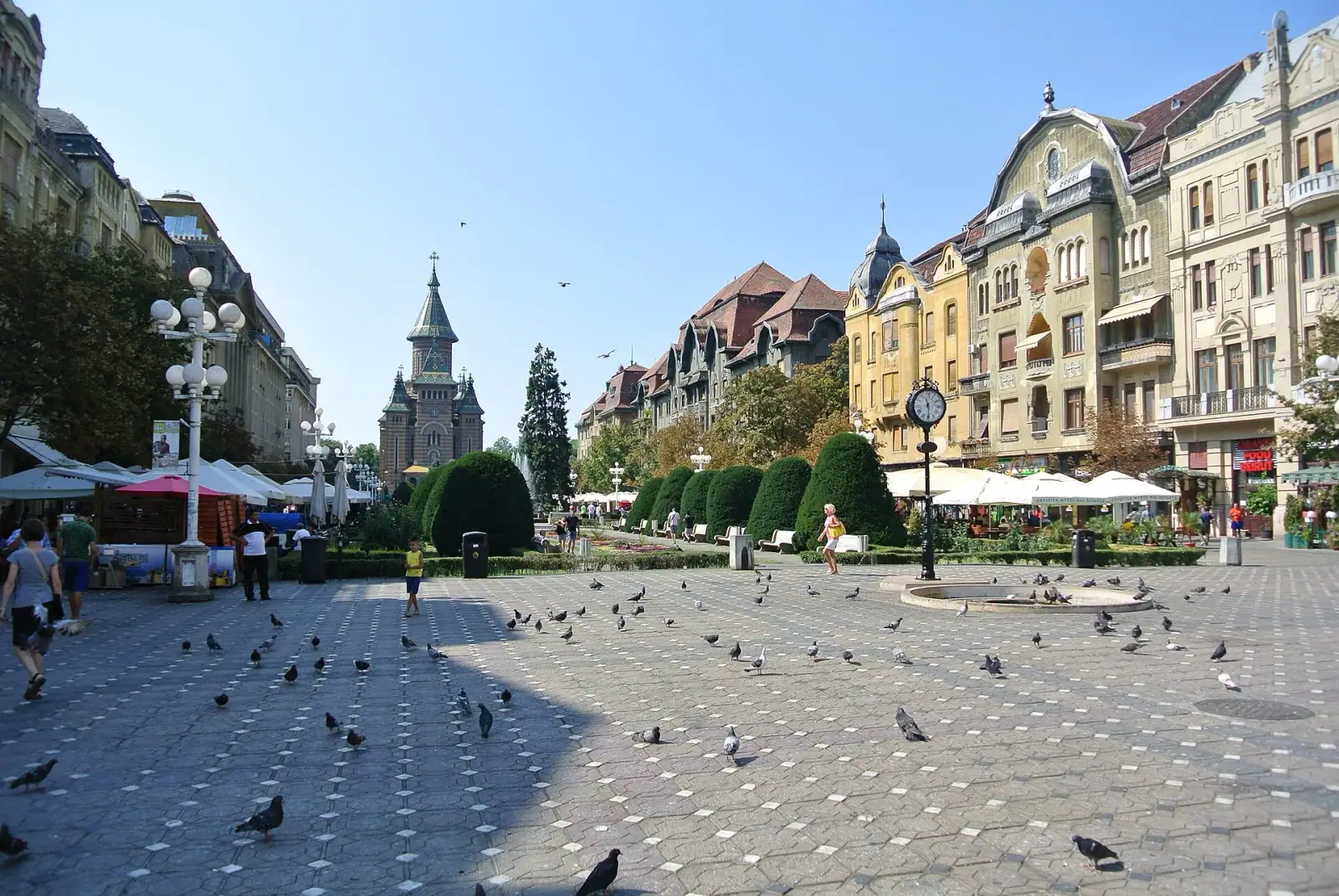
The city center is compact and very walkable. Most cafes, restaurants, parks, and coworking spaces in the Cetate district are within a 15-20 minute walk of each other. Cobblestone streets in the historic core are charming but uneven; a sturdy pair of shoes helps.
Public Transport
STPT runs 7 tram lines, trolleybuses, and buses. A single ticket costs $1 and is valid for 60 minutes across all lines. Tickets are available via contactless card, the 24pay app, or paper kiosks. A novelty worth trying once: the vaporetto boat that runs along the Bega Canal.
Bikes, Taxis, and Ride-sharing
The city has a VeloTM bike-sharing scheme and flat terrain in most areas, making cycling practical. Bolt and Uber both operate here; a short city ride typically costs $3.50-5.50.
Airport
Traian Vuia International Airport is 12 km from the center, about 15 minutes by taxi ($7.50-13). The E4b express bus connects the airport to the city center more cheaply. Direct flights serve Vienna, Munich, London, and several other European hubs, plus budget carriers across the continent.
Sorting transport? Book an airport transfer, or compare car rental on Auto Europe and QEEQ.
Visas and Staying Long-Term
Romania joined Schengen fully on 1 January 2025, so its borders are now integrated with the wider Schengen zone for people arriving from other Schengen member states.
Visa-free Entry
Citizens of the US, Canada, Australia, UK, and most other Western nations can enter Romania visa-free and stay up to 90 days within any 180-day period. Because Romania is now in Schengen, this 90/180 rule is shared across all Schengen countries, not separate from them.
Romania Digital Nomad Visa
Romania offers a dedicated digital nomad residence permit (D-type long-stay visa). Requirements include working remotely for a company registered outside Romania, proof of income of at least three times the Romanian average gross monthly salary (approximately $6,450 per month at 2025 rates), and private long-term health insurance. The visa is typically approved in 30-45 days; after arrival you convert it to a temporary residence permit within 30 days. Holders can travel Schengen visa-free for 90/180 days.
Best Time to Visit
Timișoara has a continental climate: cold, occasionally foggy winters and hot summers that can push past 35°C in July and August.
Best window for remote work: April through June and September through October. Temperatures are pleasant (15-25°C), outdoor seating at cafes is comfortable, and the city is lively with festivals in autumn. Spring also lines up with the city's parks coming into bloom along the Bega Canal.
Summer (July-August) is warm and social but can bring heat spells and afternoon thunderstorms. Air conditioning in coworking spaces is standard; in older apartments it is less reliable. Winter (December-February) is cold, sometimes foggy, with occasional lows below -10°C, but coworking spaces are well-heated and indoor cafe culture picks up. Flights in and out of Timișoara are more frequent and affordable outside peak summer.
Pros and Cons
- Pro: Very low cost of living by EU standards with reliable, fast internet
- Pro: Compact, walkable historic center with cafes, restaurants, and parks
- Pro: Full Schengen access since January 2025 opens easy travel to 29 countries
- Pro: Good flight connections to Western Europe via the nearby airport
- Pro: Young, university-town energy with a growing international community
- Pro: Safe: violent crime is rare and the city feels secure day and night
- Con: English is spoken by younger residents but less common with older locals and in service roles
- Con: Central rents have risen noticeably in recent years and are higher than smaller Romanian cities
- Con: Traffic congestion and parking in the center can be frustrating if you have a car
- Con: Limited direct long-haul flight routes; most connections to non-European destinations require a layover
- Con: The digital nomad community is growing but smaller than Bucharest or Cluj-Napoca
Who Timișoara Is Best For
Timișoara suits remote workers and freelancers who want a genuine European city at a fraction of Western prices. If your income is in euros or dollars, your purchasing power here is high: good food, coffee, and a well-located apartment all come cheaply. The city works well for people who value a walkable historic core, a relaxed pace, and solid infrastructure over a large nomad meetup scene.
It is a strong fit for anyone already spending time in Central or Eastern Europe who wants Schengen access, easy connections to Vienna or Munich, and a base that does not feel like a tourist circuit. Couples and solo workers who prioritize quality of life over nightlife or a built-in nomad social scene will settle in quickly.
Consider skipping Timișoara if you need a large English-speaking professional network, depend heavily on a thriving coworking community with daily events, or find cold and occasionally grey winters hard to work through. Bucharest or Cluj-Napoca may suit those needs better within Romania.