Cost of Living in Zakopane
Where this figure comes from. No cost survey covers Zakopane, so the $1,000 a month above is our own estimate rather than a measurement. On 416 of our 999 city guides the figure is built from a published Numbeo basket, a one-bedroom rent in the centre plus one person's monthly costs without rent, converted to USD; this city is not one of them. How we source everything.
Budget roughly $1,000 a month as a solo remote worker in Zakopane, and expect that figure to move more with the calendar than in any Polish city. A one-bedroom apartment or a room in a pension runs about $400 to $600 on a year-round lease, but owners earn far more from weekly winter and summer lets, so long contracts are scarce and best negotiated in the shoulder months. Groceries land around $220 to $280; the town is a resort and prices reflect it. A meal in a karczma with a beer is $12 to $18, a coffee about $3, and a day ski pass at Kasprowy Wierch or Białka roughly $30 to $45. Utilities add $90 to $180. Two charges appear here that a lowland city would not levy: a nightly local tourist fee on short stays, collected by whoever you are staying with, and an entry ticket to the national park, small per visit but a real monthly number for anyone walking most days. A season pass exists and pays for itself inside a fortnight. Winter heating is the other surprise, since many of the older wooden houses still burn coal or wood, which is why the air in a cold still January is among the worst in the country.
Where to Work in Zakopane
Zakopane has no coworking space to speak of, and remote workers here work from their accommodation or from the cafes along Krupówki and in the quieter side streets. Polish internet quality holds up well even in the mountains: fibre reaches most of the town and is fast and cheap, and mobile coverage is reliable in the valley though it drops in the peaks. That reliability is what makes the town workable at all as a base. The practical constraint is the crowd rather than the connection: Krupówki in high season is one of the busiest streets in Poland, and finding a quiet table between December and February or in August takes local knowledge. The working rhythm is set by the weather rather than by the desk: a clear February morning belongs to the mountain and the afternoon gets the work, and anyone who cannot move their hours will take less from the place than the setting promises. Highlander culture is not a performance staged for visitors, and the dialect, the music and the building style are living things a resident is expected to at least recognise. Most of the people around you work three months hard and then stop, and the town is quiet enough between times to hear itself.
Getting Around Zakopane
Zakopane is small and the centre is walkable end to end in twenty minutes, which is fortunate because parking is difficult and the town chokes on cars in high season. Local buses and shared minibuses reach the trailheads at Kuźnice, Palenica Białczańska and the Chochołowska valley cheaply and frequently. The cable car up Kasprowy Wierch and the funicular to Gubałówka both start in town. Getting here is the harder part: Krakow is about two hours by road on a route that jams badly at weekends, with frequent buses from Krakow's main station. There is no railway service worth planning around and no airport; Krakow Balice is the gateway. The cable car sells a capped number of tickets each day, a limit set to protect the mountain rather than to manage the queue, so the summer allocation goes early and booking ahead is the difference between a day on the ridge and a day in the valley. A railway line does reach the town, but it is slower than the bus and runs only a few times each day, which is why almost nobody uses it. Winter tyres are an ordinary expectation on the valley roads from November, and a hire car collected at the airport will not always arrive with them.
Sorting transport? Book an airport transfer, or compare car rental on Auto Europe and QEEQ.
Visas for Zakopane
Poland is in the European Union and the Schengen area, so EU and EEA citizens may live and work without restriction and most other Western passports get 90 days in any 180. There is no Polish digital nomad visa. Longer stays go through a temporary residence permit tied to work, study or business, or through registering as a sole trader, which is the common freelance route and offers several tax regimes. The Poland Business Harbour programme, which gave technology workers from listed countries a quicker path, takes no new applicants after the foreign ministry suspended it in January 2024. All of it is administered regionally and in Polish, and Zakopane sits under the Małopolska office in Krakow rather than having its own. The Slovak side of the Tatras is inside Schengen too, so the road over at Łysa Polana and the marked trails across the main ridge pass no Entry/Exit System checkpoint, and every night in a Slovak mountain hut comes out of the same short-stay allowance.
Best Time to Visit Zakopane
Zakopane has two full seasons and two quiet gaps, and the difference matters more here than the weather. Ski season runs roughly late December to March and fills the town; the Christmas and New Year fortnight is the single busiest period in Polish tourism and prices double. Summer, late June to September, is the hiking season, with the Tatra trails open and daytime temperatures in the low twenties, and August is very busy. The best value and the best walking are in May, June, late September and October, when the trails are clear, the crowds have gone and rooms are cheap. November and April are wet, muddy and largely shut. The halny is the local fact no forecast prepares you for: a warm dry wind that falls off the Tatras several times a year, strips roofs, closes the trails and is blamed locally for headaches and short tempers, with more justification than that sounds. The ski jumping hill above the town hosts a World Cup competition in January and fills the place in a way the ordinary ski season does not. In August the international festival of mountain folklore brings ensembles from across the range, and it is the one week when the crowd is worth joining.
Pros and Cons of Zakopane
Zakopane puts the Tatras at the end of the street: Poland's only alpine range, with a proper cable car, hundreds of kilometres of marked trail and skiing from December. It is cheap by mountain-resort standards anywhere in Europe, the wooden Zakopane-style architecture is genuinely distinctive, and the internet is good enough to work on. It is a resort town and behaves like one, with a crowded main street, high seasonal prices and a permanent population of only about 27,000 people. Year-round rentals are hard to find. There is no nomad community, healthcare beyond a local hospital means Krakow, and the two hours to Krakow can become four on a bad Sunday.
Who Zakopane Is For
Skiing or hiking seriously, daily rather than on holiday, is the reason to be here, and the trick is arranging a lease outside the season peaks. Mountains at Polish prices, with no visa question at all for anybody from the European Union, is the whole of the case. It works for a focused month or two and not as somewhere to settle permanently. Couples and solo workers who spend their free time outdoors get the most from it. No coworking space exists, no social scene beyond the seasonal one, no warm weather and no airport within easy reach, and for half the year the town belongs to visitors rather than to the people living in it. Krakow is the obvious base with Zakopane at weekends.
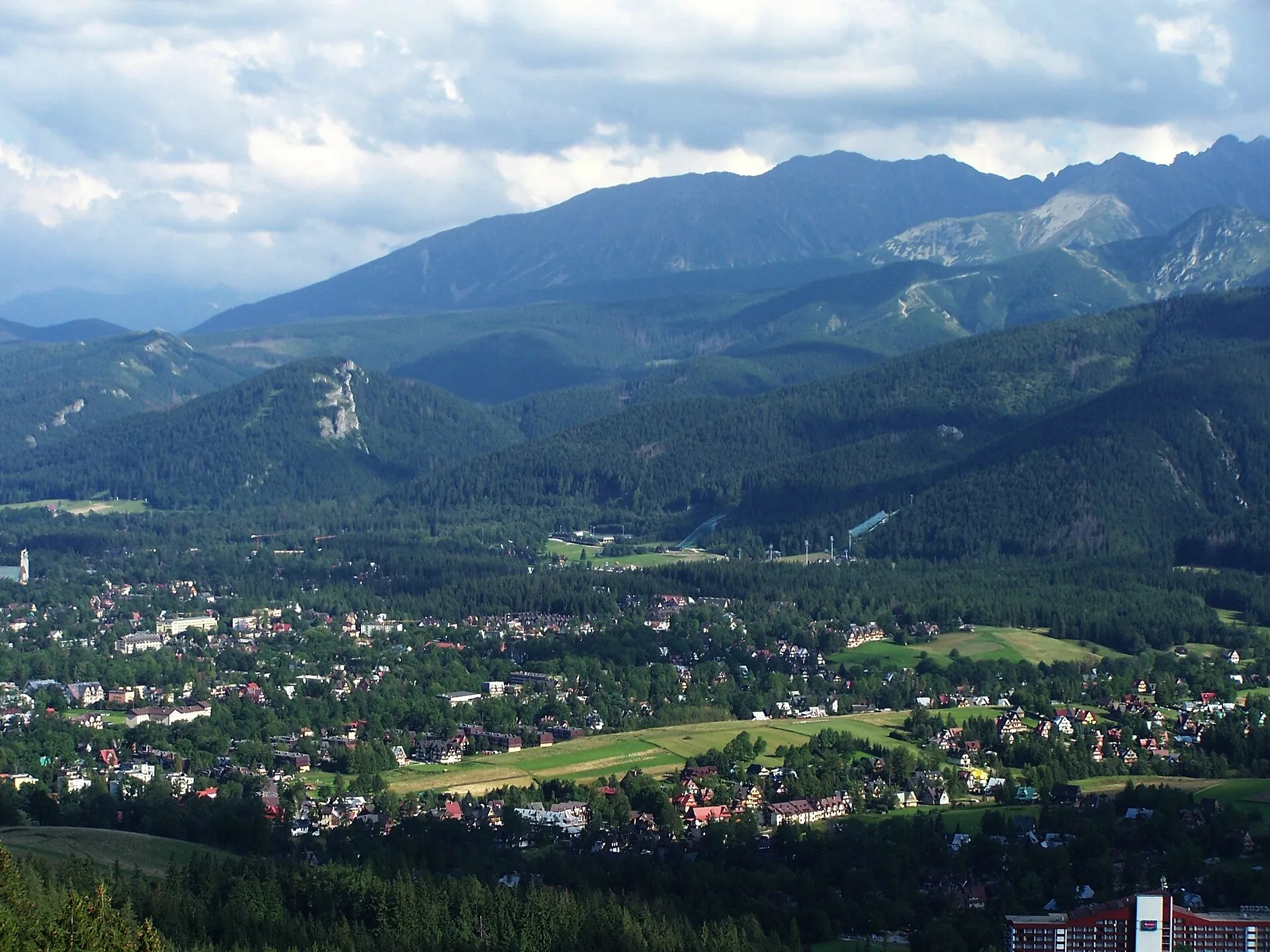 Photo: Jerzy Opioła / Wikimedia Commons (CC BY-SA 4.0)