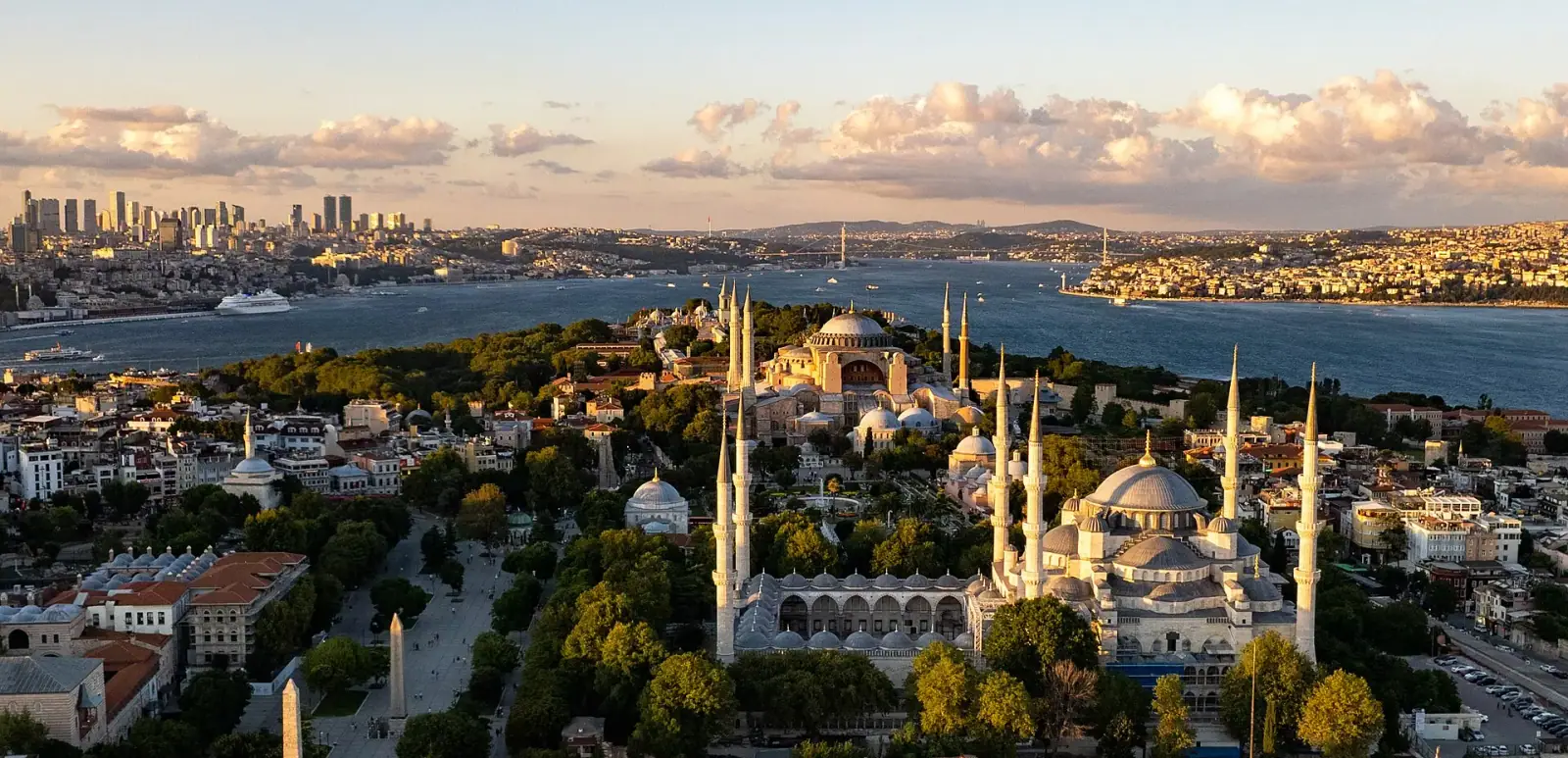
 Istanbul
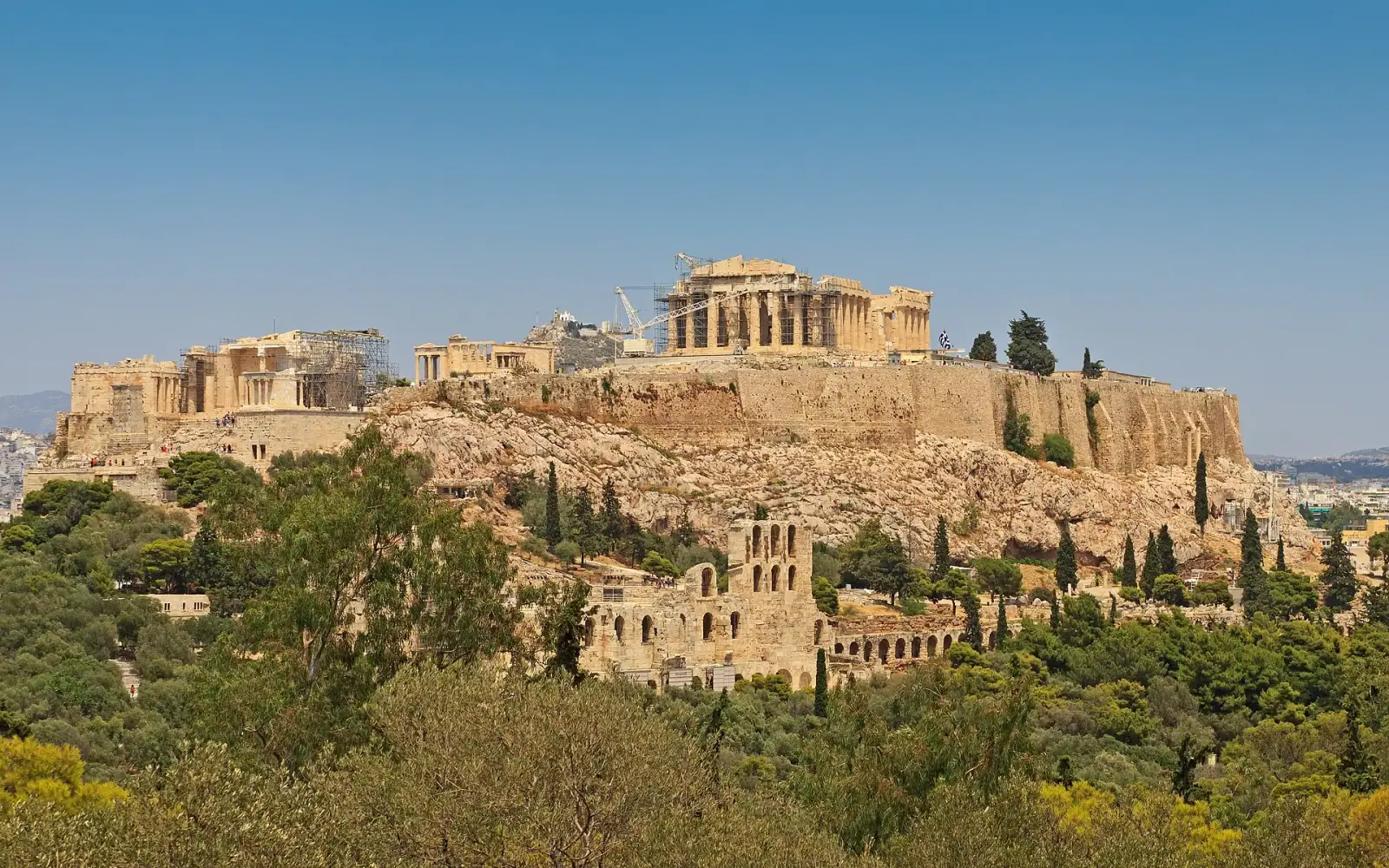
 Athens
The word both cities share
A Greek who says "den écho kéfi gia douleiá símera" is telling you there is no mood for work today. Kéfi is high spirits, the state a table reaches when nobody wants to go home. It came into Greek from Ottoman Turkish keyf, and Turkish still has it as keyif: pleasure, good humour, the mood you are in. Both go back to an Arabic word for a condition or state. Four centuries of shared history left the two sides of the Aegean with one word for what makes life worth living, and each city now produces it in its own way.
In Istanbul, keyif tends to be solitary and it tends to float. The City Lines ferries, running since the 1850s, carried 40 million passengers in 2023, and the crossing from Kadıköy to Karaköy costs very little for a seat by the rail with gulls alongside and the mosques of the old city sliding past. That is a commute, and it may be the best one in the world. Around it lies a city of over 15 million that you will never finish: the food stalls of the Kadıköy market, the fish in Beşiktaş, whole districts you will only reach by accident.
In Athens, kéfi tends to need other people. It lives at a taverna table in Pangrati or Koukaki, late, with Greeks who are in no hurry. The city's 3.7 million are few enough that you start recognising faces, the Acropolis keeps appearing at the end of ordinary streets, and the tram runs down to the sea. From Piraeus there are islands to choose from on any free weekend. The Istanbul pleasure is immensity, and the Athens pleasure is that you can get to know it.
Money and permits
On paper Istanbul is the cheaper, at $2,000 a month on our estimate against $2,400 for Athens. Do not lean on that gap. Turkey's official inflation for 2025 was 31%, and an independent group of economists put it at 56%. Your landlord knows both numbers. If you are paid in dollars the falling lira protects you to a degree, but a price you agreed in spring may be a different conversation by autumn, and euros in Athens make it much easier to plan a year.
The paperwork pulls the other way. Americans, Britons and most EU citizens get 90 days in any 180 in Turkey, separate from the Schengen count that governs Greece, and Turkey's nomad route asks for $3,000 a month, less than the Greek one on our nomad visa page. One catch: a number of districts, Fatih among them, have been closed to first-time residence applications, so check the address before you sign.
Earthquakes, politics and heat
On 23 April 2025 a magnitude 6.2 earthquake under the Sea of Marmara damaged more than 4,000 buildings, about 80% of them on Istanbul's European side, and around 100,000 people slept in shelters that night. Many seismologists expect something far larger: a commonly cited estimate puts the chance of magnitude 7 or more near the city at 64% before 2030. If you live here, the age of your building matters more than its view.
Istanbul's politics are also close to the surface. Its elected mayor, Ekrem İmamoğlu, has been in prison since March 2025, and the arrest brought protest bans and restrictions on social media, which is worth a thought if your income depends on those platforms.
Athens has a danger of its own, and it comes in July. It has been called the hottest city in mainland Europe, and it was the first in Europe to appoint a chief heat officer. August averages 35°C by day and 24°C at night, in a city short of shade. You can leave for the islands, and you should.
Think about the winter of your second year. By then, the ferry will have become a commute and the taverna will have regulars. For a first six months we would take Istanbul, because nowhere else gives you so much to see. For anything longer we lean to Athens. Which of those two moods do you expect to be looking for when the novelty wears off: the one you find alone at the rail, or the one that needs a table of friends?
 United States
 United Kingdom
 Germany
 Canada
 Australia
 India