Cost of Living in Amasra
Where this figure comes from. No cost survey covers Amasra, so the $700 a month above is our own estimate rather than a measurement. On 416 of our 999 city guides the figure is built from a published Numbeo basket, a one-bedroom rent in the centre plus one person's monthly costs without rent, converted to USD; this city is not one of them. How we source everything.
Budget around $700 a month as a solo remote worker in Amasra, which is inexpensive even by Turkish standards and reflects a small Black Sea town rather than a city. A one-bedroom flat runs roughly $200 to $350, with the peninsula and the two harbours at the top of that range and anything a short walk inland at the bottom. Fish is the local staple and cheap in season, and the region's produce keeps grocery costs low. Turkish inflation makes any figure here a moving target. This is our own estimate rather than measured data. Fibre runs about $10 to $20 a month where the building supports it, which is among the best value in Europe, and there is no coworking cost because there is no coworking. Summer rents on the peninsula can double when the domestic season starts in July, so a lease signed in May on annual terms is worth considerably more than a monthly booking made in August. Bartin twenty minutes inland has the supermarkets, the hospital and the bank branches, and most practical shopping happens there rather than in the town.
Where to Work in Amasra
Amasra has no coworking spaces. This is a town of a few thousand people that fills with domestic tourists in summer and empties in winter, and remote work happens from apartments and a handful of cafes along the harbour. Turkish fibre reaches the town and mobile coverage is good, with data cheap by European standards, but connection quality varies by building and the older stock on the peninsula is the weakest of it. Anyone dependent on being online should test before signing anything longer than a month. Bartin, the provincial centre, is twenty minutes inland and has the services the town lacks. Turkey sits three hours ahead of GMT year-round since it dropped daylight saving in 2016, giving a full European overlap and an early-afternoon window with the American east coast. The town's population roughly triples in summer, and mobile data slows noticeably in July and August as a result. The town's summer influx is domestic rather than international, so English is no more useful in August than in February.
Getting Around Amasra
Amasra is built on a small peninsula between two bays and is completely walkable, which is much of its appeal; the castle, both harbours and the museum all sit within fifteen minutes of each other on foot. Buses run to Bartin and on to Safranbolu and Ankara, and the coastal road east towards Sinop is one of the better drives in the country. Istanbul is around six hours away by bus. There is no airport nearby, with the nearest useful connections at Zonguldak or a longer trip to Ankara. A car opens up the Black Sea coast but is not needed in the town itself. Safranbolu, an Ottoman merchant town that is a UNESCO World Heritage site, is about ninety minutes inland and is the standard excursion from here. The coastal road east through Kurucasile and Cide is slow, winding and among the least-travelled scenic drives in the country. Buses to Istanbul run overnight and are comfortable, which is how most people make that journey rather than driving it.
Sorting transport? Book an airport transfer, or compare car rental on Auto Europe and QEEQ.
Visas for Amasra
Turkey allows most Western nationals ninety days within any hundred and eighty on arrival or through a straightforward e-visa, which covers a season comfortably. Turkey does have a Digital Nomad Visa in the sense other countries use the phrase: citizens of 36 listed countries who hold a university degree, are 21 to 55 and earn $3,000 a month from outside Turkey get a Digital Nomad Identification Certificate online, apply for the visa at a consulate, and can then seek short-term residence once they are here. Short-term residence permits are the traditional longer route and have become notably harder to obtain in recent years, with many neighbourhoods closed to new foreign registrations. The residence permit quota is the practical obstacle rather than the visa: the interior ministry closes neighbourhoods to new foreign registration once foreigners exceed a set share, the list changes, and a small town like Amasra can be affected disproportionately by a handful of registrations.
Best Time to Visit Amasra
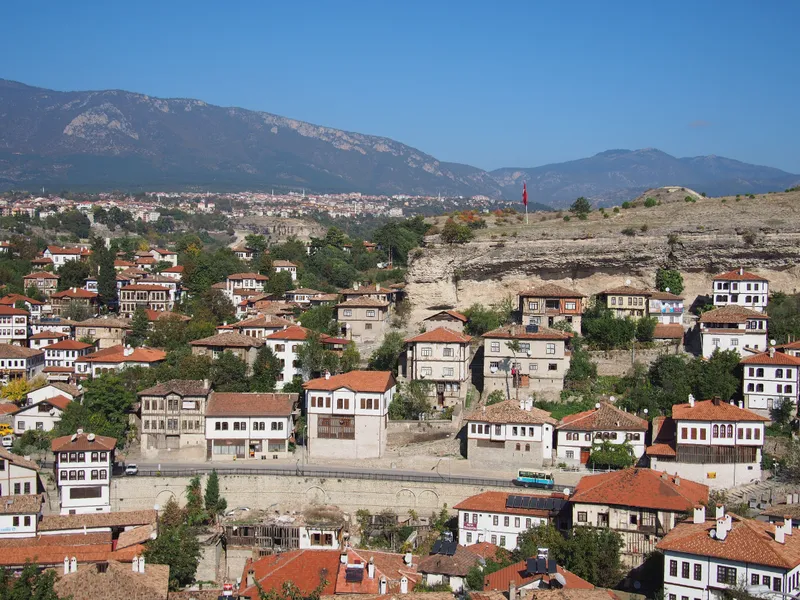
June to September is the season, with warm days, a swimmable Black Sea and a town that fills with Turkish holidaymakers who have known about it for generations. July and August are genuinely crowded and prices rise accordingly. May and September are the better months if the point is to work rather than to holiday. Winter on this coast is grey, wet and windy, with temperatures around eight degrees and much of the tourist infrastructure closed; the Black Sea coast gets rain in every month, unlike the Aegean or Mediterranean coasts, and that is the defining fact of the off season. The number behind that is about a metre a year, much the same total as Antalya's but spread across all twelve months instead of packed into winter, and the storms are real weather rather than merely dreary, which is why the season here shuts down completely instead of slowing. The two harbours face different ways, so one is always sheltered whatever the wind is doing, which is why the town was settled where it is.
Pros and Cons of Amasra
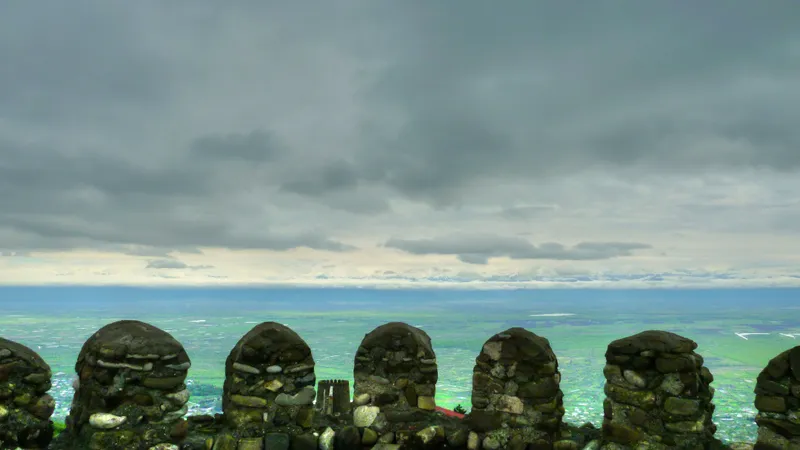
Amasra is one of the prettiest small towns on the Turkish coast, a Roman and then Genoese harbour settlement on a peninsula with a castle around it, cheap fish and a beach on each side. Costs are very low and the setting is unusual. It is tiny, it has no international presence, English is barely spoken, and the winter is long, wet and thoroughly empty. The 2022 mine disaster in the wider Bartin coalfield is part of the region's recent history and its economy is not only tourism. Anyone imagining a Mediterranean summer should understand this is a different and much wetter sea. Amasra was the Roman colony of Amastris and the Genoese held it until 1460, and the castle walls still enclose part of the town, with houses built into and against them rather than the ruins being fenced off. The mine disaster in October 2022 killed forty-two workers and is recent enough that it remains a live subject locally. The future of this coast is still argued over: a proposed 2,640-megawatt coal power station nearby was abandoned on environmental grounds, but new coal mining proposals keep returning, so the quiet bays are not guaranteed to stay that way.
Who Amasra Is For
A genuinely cheap and genuinely quiet Turkish base with a working harbour and a walkable centre, for anyone happy to be the only foreigner in the room. It works best as a summer or shoulder-season stay of a few weeks rather than a year, given what winter does to the place. There is no nomad community in a town of six thousand, the internet is domestic rather than enterprise grade, and nothing here operates in English. Anyone considering a longer stay should look at Bartin or Safranbolu for the practicalities and keep Amasra for the weekends. Anybody working along the Black Sea coast properly should start at this end. The shoreline runs east from here through Sinop and on to Trabzon, and it takes a small fraction of the visitors that the southern coasts absorb every summer. Sinop is the nearest comparison, and Amasra is smaller, prettier and considerably closer to Istanbul. History-minded visitors get more than the castle: the archaeological museum holds finds raised from the sea, including a Roman statue of Glykon, the snake god of a notorious ancient religious hoax, and the Fatih Mosque inside the walls began life as a ninth-century Byzantine church.
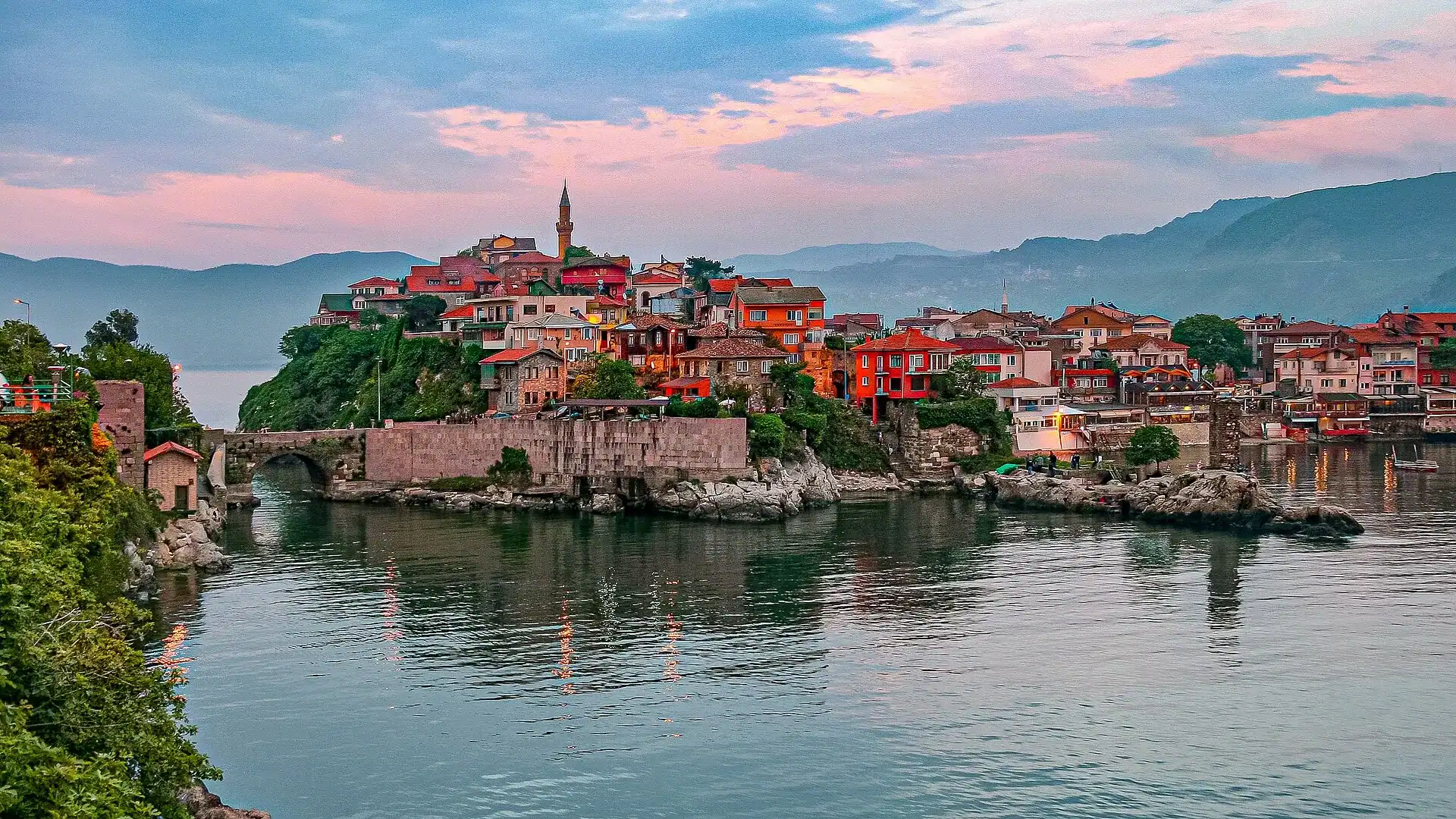 Photo: Jorge Franganillo / Wikimedia Commons (CC BY 2.0)