Cost of Living in Guadalajara
Real market data
Source: Numbeo · August 2026
$1,450/moSolo nomad1-bed centre + living costs
$1,880/moCoupleshared 1-bed + costs
$1,050/moLean / localcheaper area + costs
- 1-bed rent, city centre$910MX$15,742
- 1-bed rent, outside centre$510MX$8,915
- Monthly costs excl. rent (1 person)$540MX$9,322
- Meal, inexpensive restaurant$14MX$250
- Monthly transit pass$32MX$560
- Buy price, per m² (centre)$3,250MX$56,333
Prices are from Numbeo (August 2026), converted to USD at $1 = MX$17.34 (01 Aug 2026). The monthly living-costs figure is our transparent one-person basket, groceries, a few meals out, utilities, phone, internet, transport and essentials, priced from those figures. Solo adds central rent; couple and lean are estimates from the same numbers.
Guadalajara sits at a comfortable mid-tier for Mexico. You can live well without stretching your budget, though popular expat neighborhoods have seen rents climb in recent years.
- Rent, central (Americana, Chapultepec): $805-1,440/month for a furnished 1BR
- Rent, cheaper areas (Zapopan outskirts, Chapalita): $460-750/month
- Groceries: $175-290/month cooking mostly at home
- Eating out: $4.50-10 per meal at local spots; $14-29 at mid-range restaurants
- Coworking hot-desk: $115-260/month; day passes $12-26
- Local transport: $29-52/month mixing metro, Macrobus, and Uber
Total realistic range: $1,100-1,600/month on a budget; $1,800-2,500/month for a comfortable setup with coworking and regular dining out. Remote workers from North America or Western Europe will feel substantial savings compared to home.
Where to Work
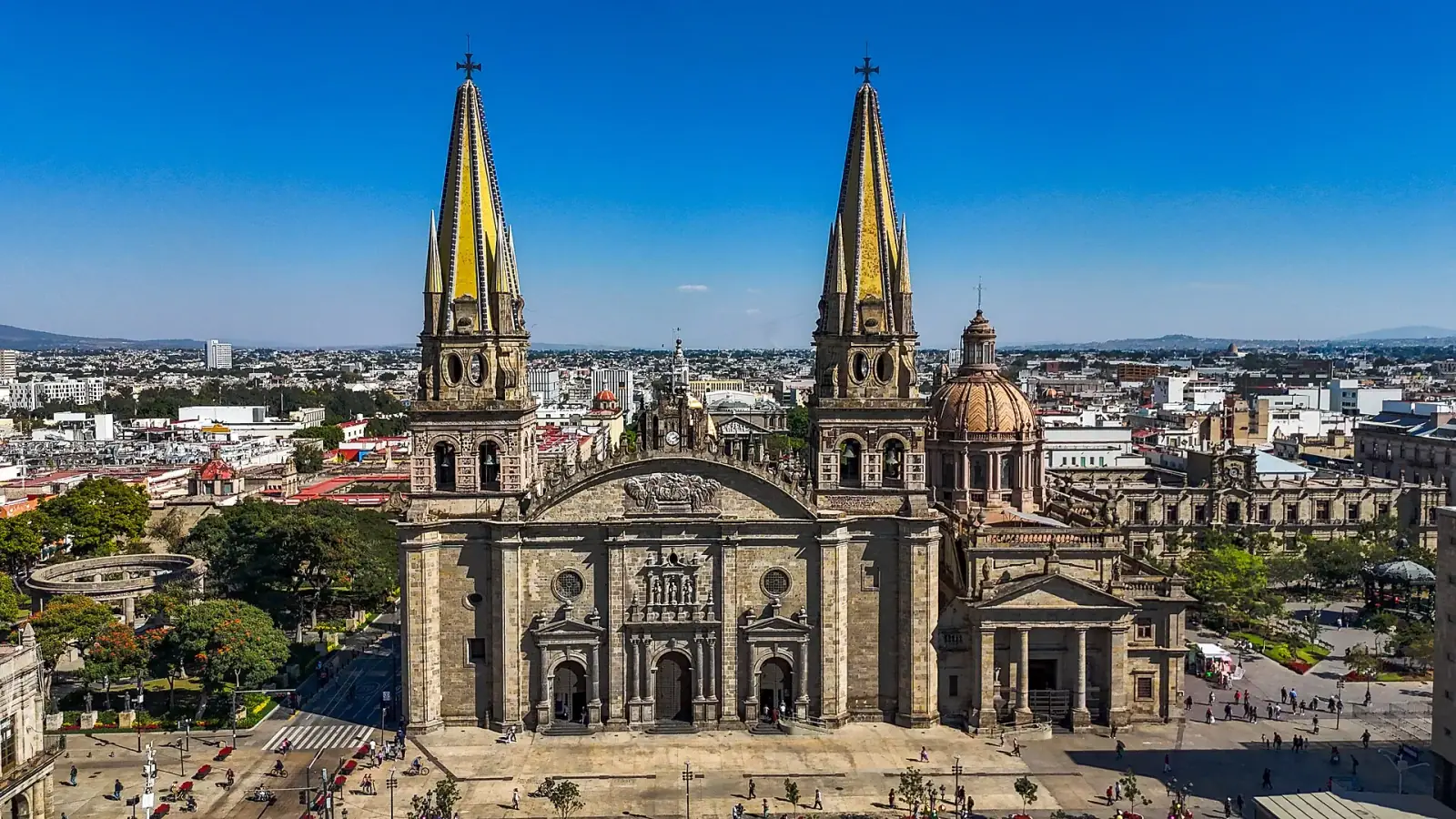
Guadalajara has a genuine coworking ecosystem built around its tech and startup scene, sometimes called the Silicon Valley of Mexico. Colonia Americana is the main hub, with a cluster of spaces and laptop-friendly cafes within a few blocks of each other.
Coworking
Nevermind (Ladron de Guevara area) is a boutique space with fast, reliable fiber and a quieter vibe suited to solo workers. Mutuo (also near Americana) has a creative-startup mix with flexible memberships. WeWork operates two locations, including one in Midtown Jalisco, for those who need a corporate-grade setup with meeting rooms. IOS Offices in the Americas corridor is the best choice if you need a polished client-facing environment.
Cafes and WiFi
Cafe culture is strong here. Cafe Correcto in Colonia Americana is a popular choice with reliable WiFi and specialty coffee. Cafe palReal in Arcos Vallarta draws a brunch crowd and works fine for a morning session. Most serious cafes in Americana have stable connections. Smaller neighborhood spots can be inconsistent. The city's fixed-line internet infrastructure is solid; most apartments in popular neighborhoods can get fiber.
Getting Around
Walkability in Colonia Americana is excellent. The neighborhood is flat and compact, and most daily needs are within walking distance. Outside of that core, Guadalajara is a large, sprawling city and you will need transport.
The city has a light rail system (SITEUR) with three lines covering much of the metro area at around $0.50 per trip. The Macrobus rapid transit lines add coverage on major corridors for $0.50 per trip. Both are cheap and reasonably reliable during off-peak hours, though crowded at rush hour.
Uber and Didi are widely available, cheap, and far more predictable than street taxis. A typical cross-city ride costs $3.50-8.50. Use them at night rather than hailing cabs on the street.
Getting to and from Miguel Hidalgo International Airport (GDL) takes about 20-30 minutes by taxi or rideshare from central neighborhoods, costing roughly $14-23. Uber cannot pick up at the arrivals terminal, so you will need to take an official airport taxi out (buy tickets at the counter inside) and use rideshare for your return.
Sorting transport? Book an airport transfer, or compare car rental on Auto Europe and QEEQ.
Visas and Staying Long-Term
Most Western passport holders, including US, Canadian, UK, and EU citizens, enter Mexico visa-free for up to 180 days as a tourist. The actual number of days is set by the immigration officer at the border and is written on your entry form, so ask for the full 180 if you plan to stay.
Mexico does not have an official digital nomad visa as of mid-2026. The standard long-term path is the Temporary Resident Visa, applied for at a Mexican consulate before you arrive. It requires proof of consistent income, around $3,700/month or savings above $73,000, documented over the prior six months. The visa is granted initially for one year and is renewable for up to four years total. Processing takes up to three months.
Border runs to reset a tourist stay are done by some nomads but are not guaranteed to work and should not be counted on.
Best Time to Visit
Guadalajara sits at 1,560 meters elevation, which keeps temperatures more pleasant than coastal Mexico year-round. The city has two clearly distinct seasons.
Dry season (November to May) is the sweet spot for remote workers. Temperatures range from 20-30C (68-86F) during the day, with cool evenings from November through February. March to May brings hotter, drier weather with occasional dust but little rain. This is the best window overall.
Rainy season (June to October) sees heavy afternoon and evening downpours, particularly in July and August. Mornings are usually clear. The rain cools things down and keeps the city green, but flooding in lower-lying areas can disrupt commutes. Internet and power cuts during storms are uncommon but happen. If you can only visit during rainy season, it is manageable, just plan indoor afternoons.
October is a good compromise month: the rains taper off, the city fills with the Guadalajara International Book Fair (October-November) and cultural festivals, and the weather turns ideal.
Pros and Cons
- Pro: Strong, established tech and startup community with a real nomad scene
- Pro: Significantly cheaper than Mexico City while offering a comparable urban experience
- Pro: Excellent food scene ranging from street tacos to Latin America-ranked restaurants
- Pro: Mild, dry-season climate with comfortable working temperatures
- Pro: Good coworking infrastructure and fast residential internet
- Pro: Rich culture, music, and nightlife, particularly in Colonia Americana
- Con: Air quality can be poor in the dry season, particularly March-May
- Con: Sprawling city layout means getting around outside of central neighborhoods requires apps or transit
- Con: English is less widely spoken than in Mexico City or tourist-heavy beach towns
- Con: Rainy season brings genuine disruption from July-August storms
- Con: Temporary Resident Visa income thresholds are high, ruling it out for lower-income nomads
- Con: Petty theft is a real concern in crowded areas; standard big-city vigilance required
Who Guadalajara Is Best For
Guadalajara suits nomads who want a real city rather than a resort town. If you are drawn to Mexico's culture, food, and nightlife but want lower costs than Mexico City, this is a strong pick. It is particularly good for people in tech, design, or startups who want to tap into a genuine local professional community. The city rewards those who learn at least basic Spanish, since daily life outside the expat bubble runs entirely in it.
Remote workers who want a longer-term base rather than a short hop will get more out of Guadalajara. The first few weeks are spent learning the city; the payoff comes after that.
Skip it if you prioritize beach access, need a fully English-speaking environment, or are looking for a quiet, small-town pace. Guadalajara is a large, loud, energetic city and it does not pretend otherwise. Budget travelers who want to keep costs under $900/month will find it tight unless they live far from the central neighborhoods.