Cost of Living in Nha Trang
Real market data
Source: Numbeo · August 2026
$650/moSolo nomad1-bed centre + living costs
$850/moCoupleshared 1-bed + costs
$530/moLean / localcheaper area + costs
- 1-bed rent, city centre$400₫10,571,499
- 1-bed rent, outside centre$280₫7,214,405
- Monthly costs excl. rent (1 person)$250₫6,551,284
- Meal, inexpensive restaurant$3₫75,000
- Buy price, per m² (centre)$2,840₫74,350,217
Prices are from Numbeo (August 2026), converted to USD at $1 = ₫26167.86 (01 Aug 2026). The monthly living-costs figure is our transparent one-person basket, groceries, a few meals out, utilities, phone, internet, transport and essentials, priced from those figures. Solo adds central rent; couple and lean are estimates from the same numbers. The guide below quotes its own monthly range, which is a different measurement rather than a competing one: this table prices a defined basket at the figures above, while that range is a judgement about how somebody actually lives here.
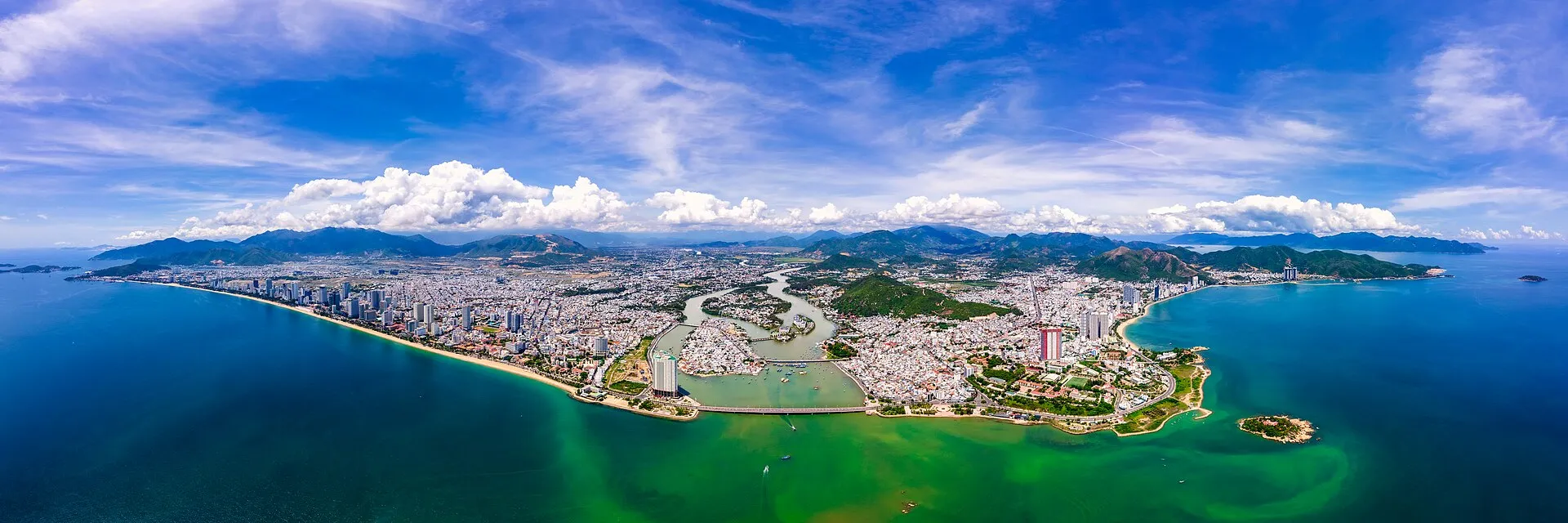
Nha Trang sits at the more affordable end of Vietnam's coastal cities. Here is what a typical month looks like in Vietnamese Dong and USD:
- Rent, central apartment (1-bedroom): $305-460
- Rent, quieter outer areas: $190-270
- Groceries (self-catering): $57-96
- Eating out (local pho, banh mi, seafood stalls): $57-96, assuming one or two meals out per day at $2-4.50 each
- Coworking hot-desk (monthly): $69-155; daily passes at Stockholm Bistro or LIVIN run around $5.50
- Local transport (Grab bike, occasional taxi): $19-38
- Mobile data SIM (10GB+): $7.50-11
- Utilities (if not included in rent): $19-38
Realistic monthly total: $700-1,100 for a solo nomad living modestly but comfortably. Push closer to $1,200-1,400 if you cowork full-time, eat out often at international restaurants, and rent beachside. Cash still dominates most transactions, and you will want to budget for bottled water since tap water is not safe to drink.
Where to Work
Nha Trang has a small but functional coworking scene. Stockholm Bistro and Co-Working on Biet Thu Street is the most popular option with nomads: four floors, fast Wi-Fi, ergonomic seating, and a restaurant on the ground floor. A day pass ($5.50) includes a coffee. LIVIN Collective in the city center is a beloved hybrid: coworking upstairs, American barbecue and craft beer below. It attracts a mix of expats and locals and has a genuine community feel. SMART SPACE in the Vinh Hai area caters more to local professionals and offers longer-term packages.
Cafe work culture is alive but uneven. Cong Caphe (rated 4.3 on Tripadvisor) has reliable Wi-Fi and a distinctive retro-Vietnamese atmosphere. KAT Coffee offers two floors, plenty of outlets, and stays quiet enough for focused work. Highlands Coffee at Vincom Plaza is a fallback with consistent connectivity and long opening hours.
Fiber broadband is widespread in Nha Trang and connections at good cafes are genuinely fast. Power outages are infrequent. The main risk is peak-hour cafe crowding, especially on weekends near the beach strip.
Getting Around
Nha Trang's city center is compact. If you stay near the main beach boulevard (Tran Phu), many restaurants, cafes, and the central market are within a 15-20 minute walk. Sidewalks in the tourist core are passable, though expect parked motorbikes to eat into pedestrian space away from the waterfront.
For anything beyond walking distance, Grab is your best tool. Grab Bike is cheap and fast for short hops (around $1 for a typical 2-3 km trip). Grab Car is reliable for longer journeys. The Maxim app also operates here. Renting a motorbike yourself costs around $5.50-7.50 per day and opens up the surrounding coastline, waterfalls, and Po Nagar towers.
Airport: Cam Ranh International Airport (CXR) is about 35 km south of the city center, a 45-60 minute drive. A Grab Car costs roughly $9.50-13. Airport shuttle buses run for about $2 but have fixed stops and less flexibility. There is no rail link from the airport to the city, though Nha Trang has a train station served by the North-South line if you are traveling to or from Hanoi or Ho Chi Minh City.
Sorting transport? Book an airport transfer, or compare car rental on Auto Europe and QEEQ.
Visas and Staying Long-Term
Vietnam's e-visa is available to citizens of all countries, costs $25 (single entry) or $50 (multiple entry), and allows stays of up to 90 days. Processing takes 3-5 business days and is handled entirely online at evisa.xuatnhapcanh.gov.vn. This is the simplest and most common route for nomads.
One important caveat: as of 2025, the Vietnam e-visa cannot be extended in-country. If you want to stay longer than 90 days, your options are to exit Vietnam and re-enter on a new e-visa (a "visa run" to a neighboring country), or to obtain a longer-stay visa through a Vietnamese embassy before arrival. Some nationalities qualify for short visa-free stays (15-45 days depending on passport), but the e-visa at 90 days is the most practical choice for remote workers.
Vietnam does not currently offer a dedicated digital nomad or remote worker visa.
Best Time to Visit
Nha Trang has a more favorable climate than much of Vietnam, with over 300 sunny days a year. The dry season runs roughly January through August, with the clearest skies and calmest seas falling between February and May. Temperatures hover between 26-31 degrees Celsius (79-88F) during this window, with low humidity and reliable sunshine. This is the ideal period for remote work combined with beach access.
June through August is still dry but hotter, with temperatures regularly hitting 33-35 degrees Celsius. You will spend more time indoors or air-conditioned coworking spaces.
The rainy season runs October through December, driven by the northeast monsoon. October and November bring the heaviest rain, occasional flooding in low-lying areas, and rough seas. Some days during this period are perfectly fine; others can be washed out. If work is your priority, the December-January shoulder period offers improving conditions and lower accommodation prices before peak tourist season kicks in.
Pros and Cons
- Low cost of living: comfortable nomad life under $1,100/month is realistic
- Fast, reliable internet at coworking spaces and most cafes
- Long dry season with genuine beach access for nine months of the year
- Fresh seafood at consistently low prices
- Compact city center: easy to walk or Grab to most places you need
- Growing expat and nomad community with coworking meetup spots
- Nightlife strip can be rowdy near Tran Phu, especially with large Russian tourist groups
- No dedicated digital nomad visa: the 90-day e-visa requires exit to extend
- Walkability is limited outside the beachfront strip due to motorbike-clogged sidewalks
- Community is smaller than Hanoi, Ho Chi Minh City, or Da Nang
- Air quality is moderate and tap water is not drinkable, adding cost and friction
- Rainy season (Oct-Nov) can disrupt outdoor plans and cause brief flooding
Who Nha Trang Is Best For
Nha Trang suits nomads who want a beach-town base without paying beach-town prices. If your priority is reliable internet, low overhead, warm weather for most of the year, and the option to snorkel or swim after your workday, it delivers. It also works well as a short-term stint of one to three months within a longer Southeast Asia loop, particularly when paired with a Vietnam e-visa.
It is a stronger fit for solo nomads or couples who are self-sufficient and do not need a large or vibrant co-working community. The nightlife, while present, skews toward beach bars and clubs rather than a craft cocktail or independent music scene.
Skip Nha Trang if you want a dense digital nomad hub with daily meetups and a strong tech scene: Da Nang or Ho Chi Minh City serve that need better. Also reconsider if you are sensitive to heat, need walkable urban infrastructure, or plan to stay beyond 90 days without doing a visa run.