Cost of Living in Ohrid
Real market data
Source: Numbeo · August 2026
$750/moSolo nomad1-bed centre + living costs
$1,110/moCoupleshared 1-bed + costs
$630/moLean / localcheaper area + costs
- 1-bed rent, city centre$290MKD 15,667
- 1-bed rent, outside centre$170MKD 9,333
- Monthly costs excl. rent (1 person)$460MKD 24,669
- Meal, inexpensive restaurant$7MKD 400
- Monthly transit pass$24MKD 1,300
- Buy price, per m² (centre)$2,110MKD 113,752
Prices are from Numbeo (August 2026), converted to USD at $1 = 54.04 MKD (01 Aug 2026). The monthly living-costs figure is our transparent one-person basket, groceries, a few meals out, utilities, phone, internet, transport and essentials, priced from those figures. Solo adds central rent; couple and lean are estimates from the same numbers. The guide below quotes its own monthly range, which is a different measurement rather than a competing one: this table prices a defined basket at the figures above, while that range is a judgement about how somebody actually lives here.
What this figure covers. The measured figure covers Ohrid year-round, including the winter months when the town empties. Lakefront rents in the season, which is when almost everyone comes, run to the figures in the guide below instead. How we source everything.
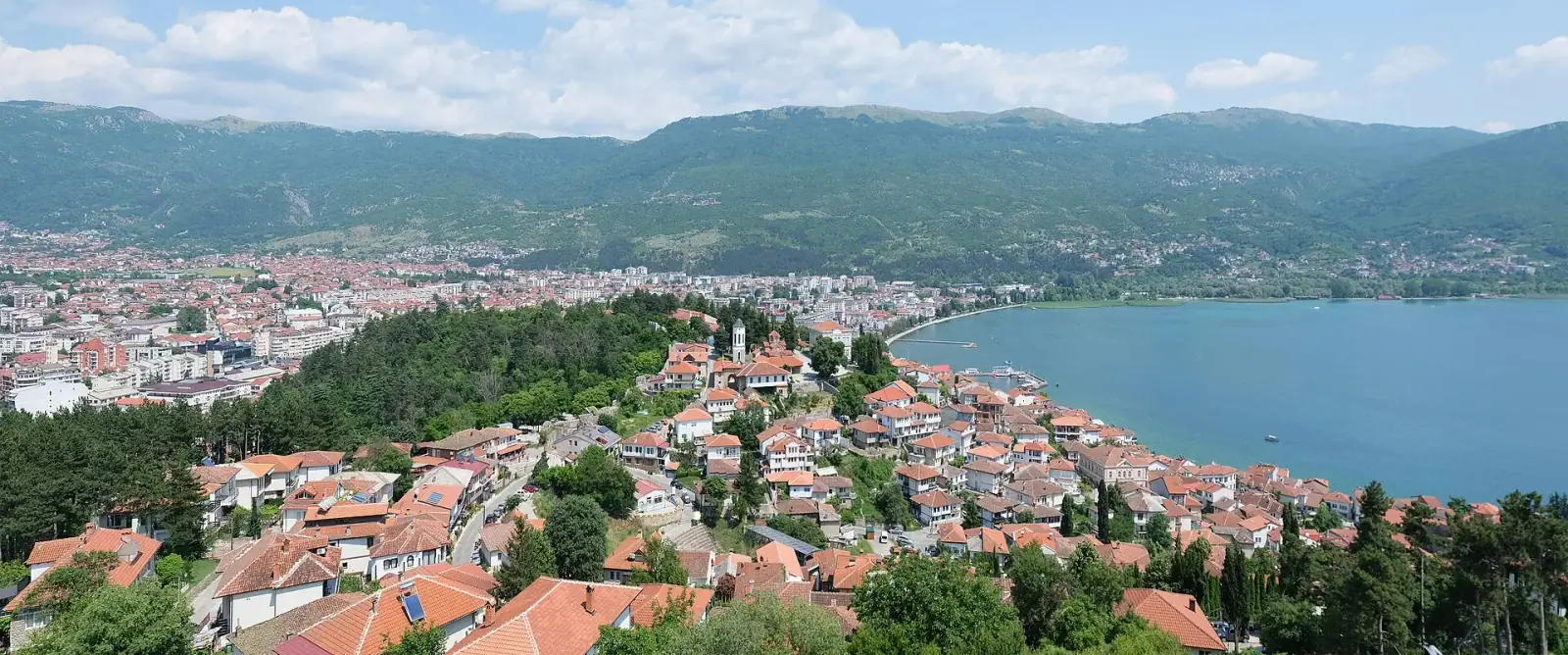
Ohrid is one of the most affordable places in Europe for remote workers. All prices below are in US dollars, converted from Macedonian denar prices.
- Rent, central Old Town or lakefront: $445-650/month for a one-bedroom apartment
- Rent, quieter residential areas (Struga road, northern suburbs): $220-335/month for a studio or basic one-bedroom
- Groceries: $165-205/month cooking most meals at home; chains like Kam, Tinex, and Ramstore keep prices low
- Eating out: A sit-down meal with a drink at a mid-range restaurant runs $9.50-13; a pizza or cheap local plate can be $5-6.50
- Coworking hot-desk: CoWorkOhrid charges about $15/day or $57/week; Kasarna Hub runs $9.50/day or $37/week
- Local transport: Taxis within the city cost $3-4.50 per ride; minibuses a little less; most of the old town is walkable so you may spend very little here
Realistic monthly total: A comfortable solo nomad cooking at home, renting a decent central apartment, and hot-desking a few days per week can live well on $1,390-1,670/month. On a tighter budget, dropping to a cheaper apartment and cooking almost every meal can bring this under $835.
Where to Work
Ohrid has two real coworking options. CoWorkOhrid is the more polished of the two: centrally located near the old town, it offers fiber internet, a conference room, private offices, 24/7 access, and complimentary coffee. It is reliably used by the small nomad crowd that passes through. Kasarna Hub sits in a converted army barracks north of the center and operates more like a community startup space. It is pay-what-you-can, has good WiFi, and a much more local, entrepreneurial feel.
Cafe culture in Ohrid is strong but uneven for work. Lakefront cafes are beautiful and have free WiFi, but they fill with tourists in peak season and staff may quietly prefer you to order more if you linger for hours. A few quieter spots in the residential streets behind the old town work better for focused sessions. Connections in most cafes and apartments are sufficient for video calls. Outages are infrequent but not unheard of, so have a mobile backup: a local SIM from A1 or Telekom with a 10 GB plan costs around $5 per month.
Getting Around
The old town and lakefront are compact and walkable. Almost everything you need day to day, restaurants, supermarkets, the coworking spaces, beaches, and historic sites, is reachable on foot. The main bus station is about 1.5 km from the old town center, an easy 20-minute walk or a short taxi ride for $3.50.
For trips further afield, taxis are inexpensive. A ride to Struga (15 km away) costs around $5. Shared minibuses (marshrutkas) cover common local routes for a couple of dollars. Buses to Skopje depart several times daily and take 3.5-4 hours, costing $11-15.
Getting to and from Ohrid Airport (OHD) requires a taxi or private transfer: there is no public bus. The airport is 10 km north of the center and a cab takes about 15 minutes, costing roughly $13. Wizz Air and Turkish Airlines run seasonal routes, so check availability before planning your arrival.
Sorting transport? Book an airport transfer, or compare car rental on Auto Europe and QEEQ.
Visas and Staying Long-Term
Citizens of EU and Schengen member states, the US, UK, Canada, Australia, and most other Western countries enter North Macedonia visa-free and can stay up to 90 days within any 180-day period. Crucially, time in North Macedonia does not count toward your Schengen 90/180-day allowance, making it a useful buffer destination for Schengen-hopping nomads.
There is currently no dedicated digital nomad visa for North Macedonia. Extending beyond 90 days requires either leaving and re-entering or applying for a temporary residence permit, which involves local bureaucracy and is uncommon for nomads. Most remote workers treat Ohrid as a one-to-three month stop and move on before the limit.
Best Time to Visit
Ohrid has a mild Mediterranean-influenced climate moderated by the lake. Summers are warm and dry, with August highs around 27 degrees Celsius (81 F) and 350 hours of sunshine in July alone. Winters are cool and wetter, with January averaging 5 degrees C (41 F) and noticeably fewer daylight hours.
For remote work, May, June, and September into early October are the sweet spot. Temperatures are comfortable (18-24 degrees C), the lake is swimmable from late June onward, and the worst of the summer tourist crowds have not yet arrived or have already thinned out. July and August are peak season: the old town fills with domestic and regional tourists, cafe seating is scarce, and accommodation prices rise sharply. Winter (November through March) is quiet and cheap but grey; some lakefront cafes and restaurants close or reduce hours significantly.
Pros and Cons
- Very affordable cost of living, well below Western European and many other Balkan cities
- Genuinely beautiful setting: a UNESCO-listed old town on one of Europe's oldest and clearest lakes
- Safe city with a low crime rate and minimal harassment of visitors
- Good enough internet for most remote work, with two reliable coworking options
- Time outside Schengen, useful for resetting your 90-day count
- Relaxed pace and walkable layout; easy to settle into a daily routine
- Small nomad community: you will not find the ready-made network you get in Lisbon or Tbilisi
- Seasonal extremes: packed and expensive in July-August, very quiet and somewhat closed in winter
- Limited English outside the tourist zone and younger generation; everyday errands can require patience
- No nomad visa and limited long-term visa options make stays beyond 90 days complicated
- Connectivity to other cities requires long bus rides; no direct train links
Who Ohrid Is Best For
Ohrid suits you well if you want an affordable, beautiful European base for one to three months, particularly in shoulder season. It is a strong fit for solo nomads who are self-sufficient, do not need a big co-working scene, and want a slower pace with outdoor access. If you are on a tight budget and want a Balkan lake town that is significantly cheaper than Ljubljana or Kotor without sacrificing scenery, Ohrid delivers. It also works well as a Schengen reset destination: you can stay 90 days without touching your EU allowance.
Skip it if you rely on a large nomad community for networking or socializing. It is also a poor fit if you need to fly frequently for client meetings, as the airport has limited routes. Families or couples looking for modern co-working infrastructure or a buzzing urban scene will find the city too small and quiet outside of summer.