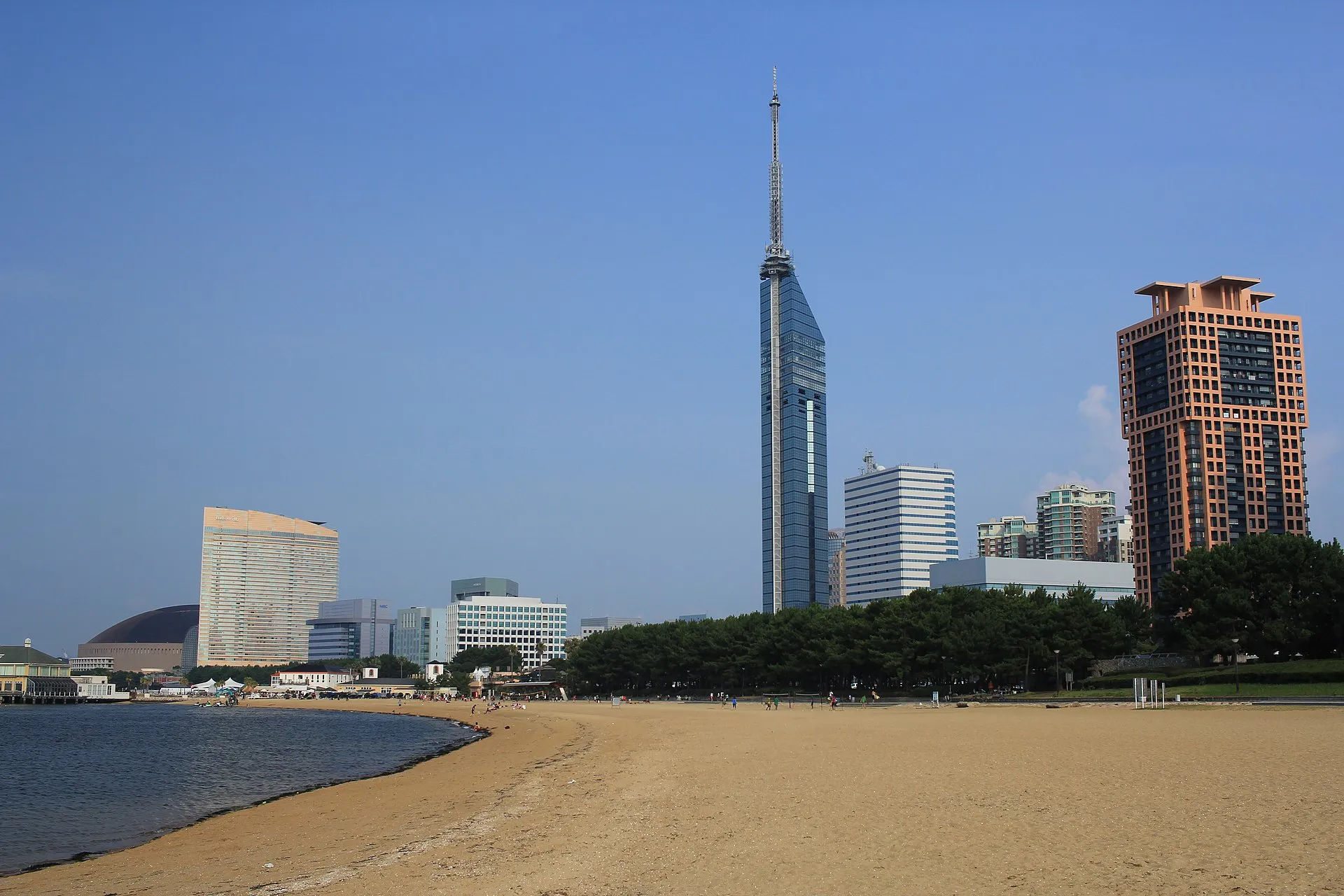

Around five in the afternoon, small carts are pulled onto the pavements of central Fukuoka, and within about an hour each one has become a restaurant: windbreaks up, counter folded down, burners lit, a row of stools set out along it. By six the first bowls are going over the counter. On Nakasu, the island between the Naka and Hakata rivers, around twenty of these stalls stand in a line along the water, facing the office towers of Tenjin on the far bank.
These are the yatai, and they are the city's evening ritual. Each seats seven or eight people, close enough that strangers end up talking, and serves Hakata ramen in pork-bone broth, oden simmering in its pot, chicken skewers and gyoza until around two in the morning. About 100 yatai operate across the city, more than 40 percent of them run by operators chosen in open recruitment, down from around 400 at their peak.
That detail says a lot about Fukuoka. Rather than let its stalls fade away, the city wrote Japan's first yatai ordinance in 2013, set rules for prices and clean pavements, and began recruiting new stallholders in 2016. It runs its startup policy the same way: decide what the city should be, then build the plumbing for it. For someone arriving with a laptop, that plumbing is the reason Fukuoka is one of the easiest places in Japan to settle into.
So here is the verdict. Fukuoka suits you if you want Japan for a season, at about $1,100 a month on our one-person budget, in a city of 1.6 million where the airport is five minutes from the main station. It is the wrong choice if you need to stay longer than six months without a large income, or if you want to handle a lease, a bank or a doctor in English without help.
| Monthly budget, one person, central one-bedroom | about $1,100 |
|---|---|
| One-bedroom rent, city centre | $480 a month |
| One-bedroom rent, outside the centre | $300 a month |
| Meal in an inexpensive restaurant | $7 |
| Monthly transit pass | $41 |
| Airport to Hakata / Tenjin by subway | 5 / 11 minutes |
| Visa-free stay (US, UK, EU, Canada, Australia) | 90 days |
| Digital nomad visa, income floor | about $63,080 a year |
| Digital nomad visa, length | 6 months, no extension |
| Average high, January / August | 10.2°C / 32.5°C |
| Time zone | UTC+9, all year |
Rents, the meal, the transit pass and the budget are the Numbeo figures on our Fukuoka page (August 2026); the budget is our one-person basket priced from them. Visa: Japan National Tourism Organization. Weather: Japan Meteorological Agency normals for 1991 to 2020. All prices are shown in US dollars, converted at the exchange rate of 1 August 2026.
Why a startup city is easy to land in
In 2012 the mayor declared Fukuoka a "Startup City", and in December 2015 it became the first place in Japan to accept startup visa applications, which gave foreign founders time to meet the usual business requirements. That head start has narrowed: since January 2025 the national startup visa programme runs through local governments across Japan, from Tokyo to Sendai. Fukuoka is no longer the only door, just the oldest one.
For a remote worker the visa itself does not matter, since it is for people incorporating a company. What matters is what the policy left behind. The clearest example is Engineer Cafe, a free, city-backed coworking space inside the Akarenga Cultural Center, a red-brick building with copper domes completed in 1909 for an insurance company and now an Important Cultural Property. It opens from nine in the morning to ten at night, closes on the last Monday of the month, and asks for no membership.
The other piece is help with paperwork. The city's Consultation Support Center for Foreign Residents answers questions on visas, work and medical care, with interpreting in English, Chinese and Korean. In a country where most forms are in Japanese only, a free office that exists for exactly that problem is worth knowing about before you need it.
How long can you stay?
On an American, British, Canadian, Australian or EU passport, you enter Japan visa-free for up to 90 days. For a spring or an autumn in Fukuoka, that is the whole answer, and it is how most people should try the city first.
For longer, Japan has had a digital nomad visa since April 2024. It asks for an annual income of at least ten million yen and allows a stay of six months, with no extension, which works out at about $63,080 a year. Your work must be for employers or clients outside Japan, you need private health insurance for the whole stay, and a spouse and children may come with you on the same terms.
It is open to citizens of the visa-exempt countries that also have a tax treaty with Japan, which includes the United States, the United Kingdom, Canada, Australia and most of the EU.
Read plainly, that is a long season, not a base. Six months in Fukuoka on a high income is entirely possible; a year is not, unless you qualify for a work or business visa. If you are weighing Japan against countries with longer and cheaper nomad routes, our comparison of digital nomad visas sets the floors side by side.
Where should you live?
Start with how you rent, because it decides where you can live. A standard Japanese lease usually asks for reikin, a non-refundable payment to the landlord of one or two months' rent, a refundable deposit of about the same again, and a guarantor company that charges half to a full month on top. On a 90-day visitor stay you cannot sign one at all, so a first visit means a monthly mansion, a furnished flat let by the month, or a room in a share house.
Within that, the city is compact enough that you choose by character. Our figures put a central one-bedroom at about $480 a month and one further out at about $300, a gap you only feel if you stay long enough to sign a real lease.
Tenjin and Daimyo: the centre on foot
Tenjin is the commercial heart, with the department stores, the subway interchange and most of the coworking. Daimyo, just west of it, is the opposite in scale: small streets of boutiques, cafés and bars that fill up with a young crowd at weekends. Living here puts Engineer Cafe a five-minute walk from Tenjin station and the Nakasu yatai a short walk across the bridge.
Hakata: the station side
Hakata grows around the main railway station, where the shinkansen leaves for the rest of Kyushu and for Osaka and Tokyo. It suits you if you will travel a lot: the airport is two subway stops away, five minutes from the platform, and the Canal City shopping complex is on foot.
Ohori Park: the lake on the old moat
Ohori Park was carved out of the great moat that Lord Kuroda Nagamasa dug for Fukuoka Castle, and rebuilt as a park in 1929 on the model of Hangzhou's West Lake. The surrounding streets are greener and quieter, with the castle ruins on the hill beside them and a fireworks festival over the water each August. For a longer stay where you want to run before work rather than drink after it, this is the area.
Nakasu: eat here, sleep elsewhere
Nakasu is the largest entertainment district in western Japan, with around 3,500 restaurants, bars and shops on one narrow island. It is where you will spend evenings, not where you want your bedroom. For lower rent with the subway at the door, look at Ohashi or Nishijin, both still a short ride from Tenjin.
What a working day looks like
Picture a Tuesday in May. You could start at Engineer Cafe, or at a paid desk: our city page lists coworking from about $3.50 an hour at a space under Hakata station, and a 24-hour plan at a local chain for about $62 a month.
The clock might. Fukuoka sits on UTC+9 all year, so a London morning arrives in your late afternoon and a New York morning lands late at night. Working with Asia or Australia is easy; working with Europe means late afternoons, and with the Americas it means evenings you will need to protect.
Lunch is the easy part. Hakata ramen, thin noodles in a cloudy pork-bone broth, is the city's own dish, and an inexpensive meal runs about $7 on our figures. When the calls end, the evening writes itself: walk to the river, find a free stool at a yatai and order whatever is in the pot. A monthly transit pass at about $41 covers the trips your feet do not.
Need a doctor who speaks your language?
Our Fukuoka directory lists doctors by the language they work in, each with the source for that claim, so you can find one before you need one.
Find a doctor in Fukuoka →Weekends: Kyushu and the ferry to Busan
Hakata station is the gateway to the whole island. The fastest Kyushu Shinkansen reaches Kumamoto in about 33 minutes, close enough for a morning at Kumamoto Castle and back by lunch. Nagasaki is about an hour and twenty minutes away, changing at Takeo-Onsen from the relay express to the Nishi Kyushu Shinkansen.
Korea is the other weekend. Busan lies about 180 kilometres across the strait, and the Camellia Line ferry still connects the two: a daytime sailing from Hakata takes about six hours, and the overnight boat back leaves Busan in the late evening and docks in Hakata in the morning. The three-hour Queen Beetle fast ferry no longer runs; JR Kyushu ended the service for good in December 2024. Our Busan guide covers the city on the other side.
When should you go?
The calendar matters here more than in most of Japan. The rainy season reaches northern Kyushu in early June and usually lifts in the second half of July, which makes July the wettest month. Then the heat arrives: August highs average 32.5°C with heavy humidity, the kind of month you spend moving between air-conditioned rooms.
July also brings the city's great festival. For the first half of the month, Hakata Gion Yamakasa fills the old streets with decorated floats more than ten metres high, and at 4:59 a.m. on 15 July teams race one-tonne floats through the streets from Kushida Shrine. In early May, Hakata Dontaku draws more than two million people into the streets.
For a working stay, aim for April and May, when highs climb from about 20°C to 24°C before the rain, or for October and November, when October has the fewest rainy days of the year and the heat has gone. Winter is mild for Japan and a fair choice if you want quiet streets and do not mind short, cool days.
Japanese, healthcare and getting help
Daily life works with a translation app and patience. The friction comes at the big moments: a lease, a hospital visit, registering anything. That is where the consultation centre earns its place, so save its number before you arrive.
For medical care, Japan's own register of hospitals that accept foreign patients is the best starting point, and our guide to finding an English-speaking doctor in Japan explains how it works and what a visit costs without national insurance. Bring travel or international health insurance, which the nomad visa requires anyway.
Fukuoka, Tokyo or somewhere cheaper?
Against Japan's biggest cities, Fukuoka is the bargain. On our one-person budgets it costs about $820 a month less than Tokyo and about $360 less than Osaka. It is not the cheapest large city we track, though: Nagoya comes in slightly lower, and our estimate for Hiroshima is lower still. What Fukuoka adds is the setting: a five-minute airport, a coast, a ferry to Korea and a city government that has spent more than a decade courting newcomers.
If you do choose it: come visa-free for up to 90 days in spring or autumn, book a monthly mansion rather than chasing a lease, and keep the evenings for the river. If you can show the income and want six months, apply for the nomad visa before you fly, and buy insurance that covers the whole stay.
See the whole picture for Fukuoka
The full cost table, neighbourhood notes, coworking spaces and all 13 of our category ratings, on one page.
Open the Fukuoka city guide →Frequently Asked Questions
How much does it cost to live in Fukuoka as a digital nomad?
About $1,100 a month for one person with a central one-bedroom. A one-bedroom in the centre rents for about $480 and one outside it for about $300, though a visitor's first stay is usually a monthly mansion.
Does Japan have a digital nomad visa?
Yes, since April 2024. It needs an income of at least ten million yen a year, about $63,080, from outside Japan, plus private health insurance, and allows six months with no extension. Spouses and children can accompany you.
Is Fukuoka cheaper than Tokyo?
Yes. Our one-person budget for Fukuoka is about $1,100 a month against about $1,920 for Tokyo, and it is also below Osaka and Kyoto. Nagoya and Hiroshima come in lower still.
What are the yatai in Fukuoka?
Open-air food stalls set up on the pavements each evening and taken down at night. About 100 operate in Tenjin, Nakasu and Nagahama, from around 6 p.m. to 2 a.m., each seating seven or eight people.
Is there free coworking in Fukuoka?
Yes. Engineer Cafe, backed by the city, is free and needs no membership. It sits in the 1909 Akarenga Cultural Center in Tenjin and opens from 9 a.m. to 10 p.m., closing on the last Monday of each month.
When is the best time to work remotely from Fukuoka?
April and May, or October and November. The rainy season runs from early June to mid-July, and August highs average 32.5°C with high humidity.
Can you still take a fast ferry from Fukuoka to Busan?
No. The Queen Beetle fast ferry ended permanently in December 2024. The Camellia Line ferry still sails, taking about six hours by day from Hakata, with an overnight crossing from Busan.


