Cost of Living in Dili
Where this figure comes from. No cost survey covers Dili, so the $1,100 a month above is our own estimate rather than a measurement. On 416 of our 999 city guides the figure is built from a published Numbeo basket, a one-bedroom rent in the centre plus one person's monthly costs without rent, converted to USD; this city is not one of them. How we source everything.
Budget around $1,100 a month as a solo remote worker in Dili, which is moderate for Southeast Asia and higher than a country this poor suggests, because Dili's rental market was shaped by the international missions that followed independence. A one-bedroom place runs roughly $400 to $700. Timor-Leste uses the United States dollar as its currency, so nothing needs converting, though the coins are local. Food from the markets is cheap and the coffee, which is the country's main export outside oil, is excellent and absurdly inexpensive. This is our own estimate rather than measured data. The dollarised economy is a genuine convenience for anyone earning in dollars, though the local centavo coins circulate alongside American ones and small change is often given in either. Fibre where it exists runs $80 to $200 a month for speeds that would be unremarkable anywhere else, which is among the worst internet value on this site. Timorese coffee, mostly arabica grown in the highlands around Ermera, sells for a couple of dollars a kilo at the market and is exported to specialty roasters worldwide.
Where to Work in Dili
Dili's connectivity is poor and it is the main practical obstacle: the country relies on a limited submarine connection, prices are high relative to speed, and outages are common. Mobile data from Telkomcel and Telemor is the usual fallback. Power cuts happen regularly and anyone whose work cannot pause needs a building with backup. There is essentially no coworking. Tetum and Portuguese are the official languages, Indonesian and English are widely understood, and English is more common than in most of the region because of the long international presence. Anyone working with Australia will find the time zone useful, since Dili sits within an hour of the eastern Australian working day. Dili runs nine hours ahead of GMT, level with Tokyo and Seoul and an hour ahead of Jakarta, which puts it inside the Australian working day and makes Sydney and Brisbane clients entirely practical. That is the strongest structural argument for basing here rather than elsewhere in the region. Starlink became available in 2024 and is the single change most likely to make a serious stay workable, so it is worth asking any prospective landlord about by name.
Getting Around Dili
Dili is a small coastal capital laid out along the waterfront, and the central strip from the Government Palace east towards the Cristo Rei statue is walkable. Microlet minibuses cover the city for a few cents and taxis are cheap. Most expatriates drive, and a four-wheel drive is needed for anywhere outside the capital, because Timor-Leste's roads are mountainous and in poor condition; the drive to Baucau or the south coast takes far longer than the distance suggests. The ferry to Atauro Island takes a couple of hours and is the trip most visitors come for. The Cristo Rei statue at the eastern end of the bay is reached by a long flight of steps and is where Dili exercises at dawn and dusk. Atauro's ferry runs on a limited schedule, a couple of times a week on the government boat with faster private options, so an island trip is planned around the timetable rather than dropped into a weekend.
Sorting transport? Book an airport transfer, or compare car rental on Auto Europe and QEEQ.
Visas for Dili
Timor-Leste grants a thirty-day visa on arrival at Dili airport to most nationalities for a fee of around $30, and it is straightforward. There is no remote work visa. Extensions are available from the immigration service in Dili, and a longer stay can be arranged through a business or work visa with local sponsorship. Portuguese citizens and some others have separate arrangements. The land border with Indonesian West Timor has its own requirements and is not the same process as arriving by air, so check that route separately if planning it. The visa on arrival covers Dili airport specifically; arriving overland from Indonesian West Timor at Batugade requires a visa obtained in advance, which is the single most common planning mistake people make with this country. Extensions are handled at the Migration Service in Dili and are routine for a further thirty days. Accession to the regional bloc has been agreed and is being worked through, which over time should ease movement and trade across the wider region, though nothing about the position facing a visitor has actually changed yet. The airport handles a handful of flights a day and the visa desk closes along with them.
Best Time to Visit Dili
May to November is the dry season and the practical window, with daytime temperatures around thirty-one, clear water for diving and the roads passable. December to April is the wet season, when heavy rain makes the mountain roads difficult and the sea murkier. Diving is the reason many people come and the visibility is best between roughly June and September. The waters around Atauro Island were found in a 2016 survey to have the highest average reef fish diversity recorded anywhere in the world, which is not a claim the country makes loudly enough. The figure behind it is 253 species per site, counted by Conservation International, and no other site surveyed anywhere has matched that number since. Whale and dolphin migration through the Ombai Strait peaks between October and December and is visible from the ferry.
Pros and Cons of Dili
Timor-Leste has the most biodiverse reef waters ever surveyed half an hour off its capital, mountains rising to nearly three thousand metres, coffee that is among the best in Asia, and almost no tourists at all. It is the youngest country in Asia and its independence history is recent and openly told, at the Chega and Resistance museums. The internet is genuinely bad and the roads are worse still, medical facilities are limited, prices are higher than the region for what you get, and there is no nomad infrastructure whatsoever. Timor-Leste joined ASEAN in principle in 2022 and has been working through accession since, which is expected to change trade, travel and investment considerably over the coming years and is the main reason the country's economics may look different in five years than they do now.
Who Dili Is For
A diver, or someone working in development or conservation, who wants somewhere genuinely unvisited and whose work tolerates a poor connection. Atauro is the reason to come and it is extraordinary. A call-heavy schedule and the local bandwidth are in direct conflict, Southeast Asian prices do not apply in a dollarised economy that imports almost everything, and the infrastructure is thin in ways that shape every ordinary day. The country is easier for an English speaker than most of its neighbours, which is the one thing that consistently surprises people who go. Watching a country assemble itself from nothing is a genuine reason to be here. The institutions of Timor-Leste are younger than most of the people using them, which is a rare thing to observe at close range. Coffee at origin is a serious reason to come. The highland cooperatives around Ermera and Maubisse are reachable from here, and the harvest between May and September is when the country's main non-oil industry can actually be watched working rather than described.
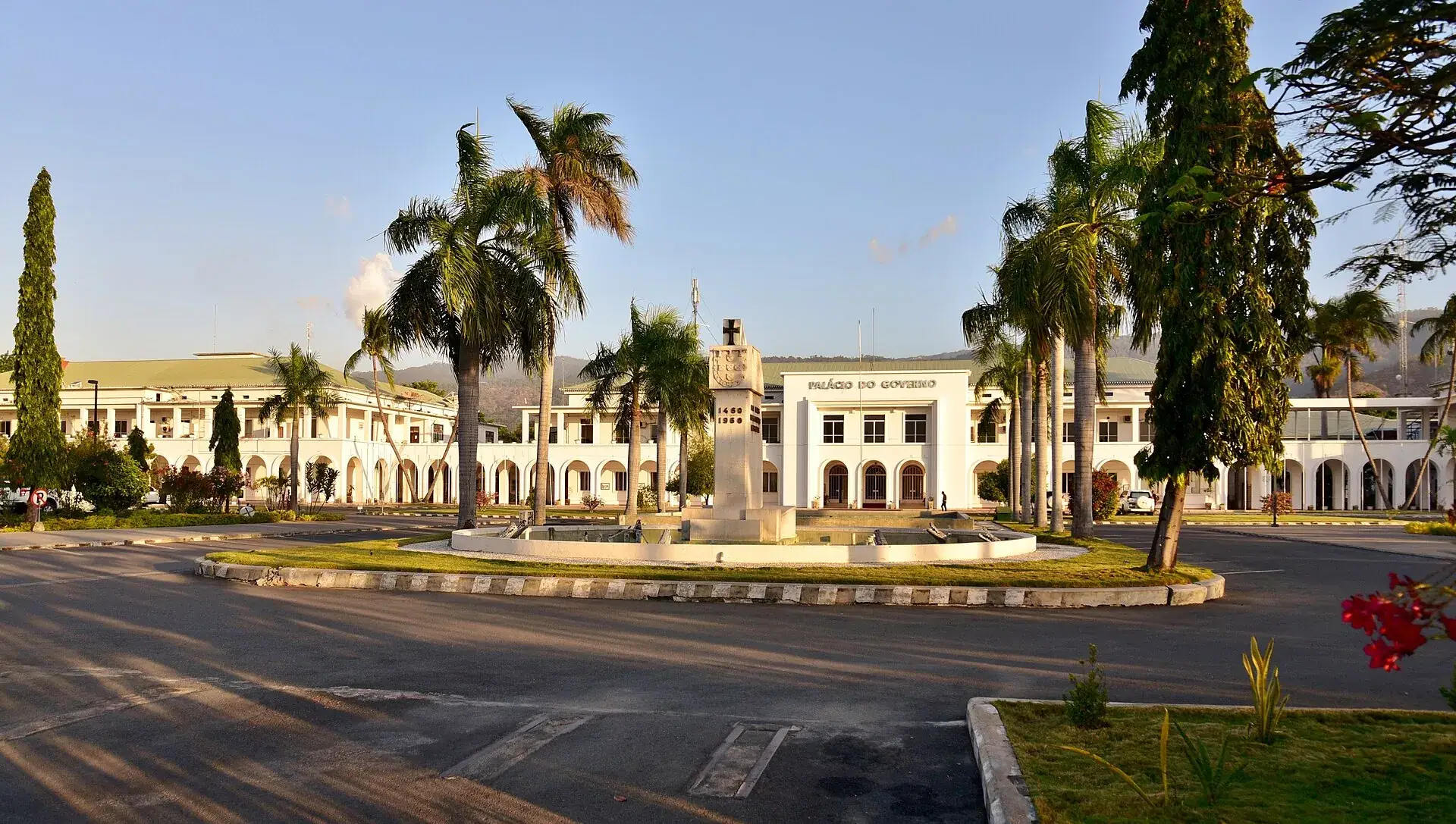 Photo: Bahnfrend / Wikimedia Commons (CC BY-SA 4.0)