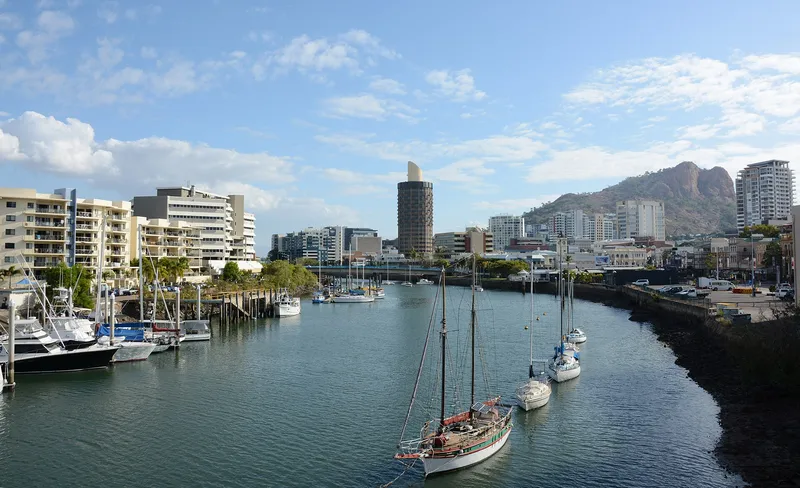
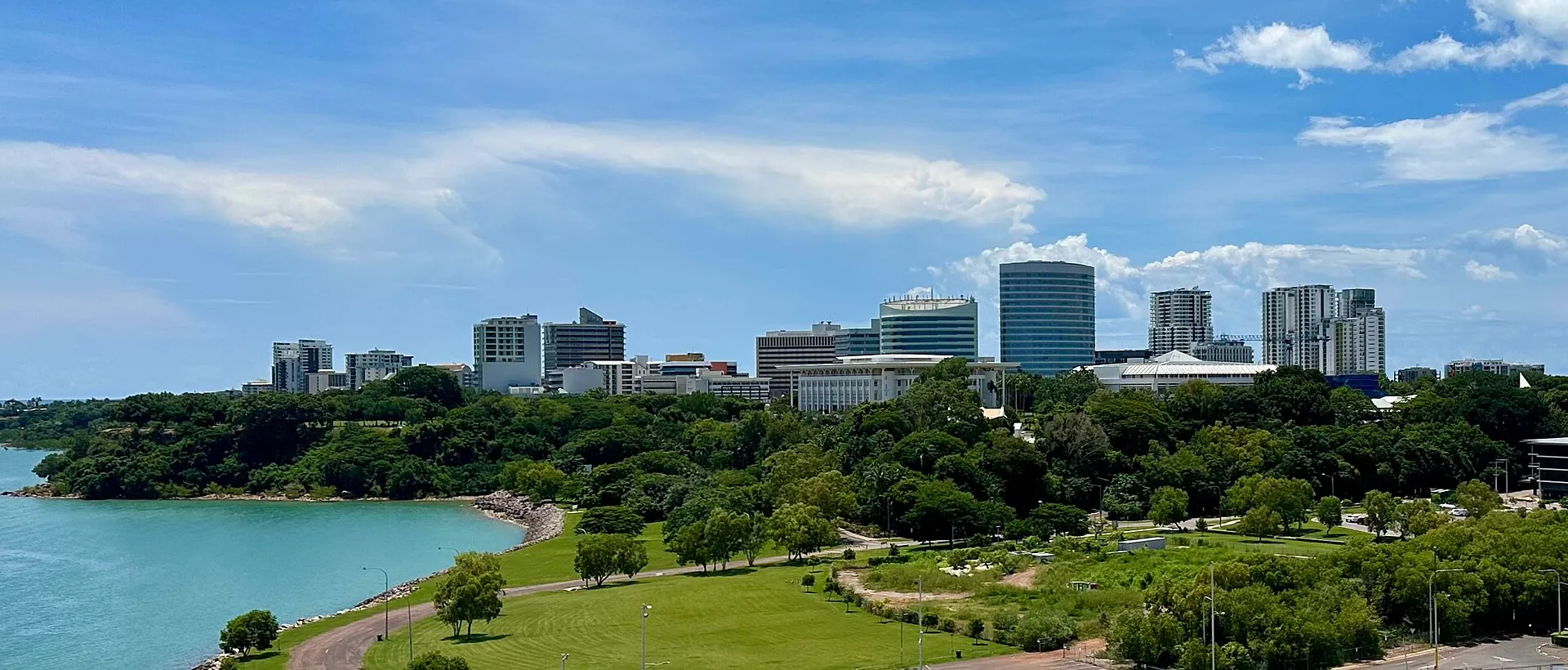
Darwin city skyline with turquoise harbour and tropical parkland
Photo: Richard N Horne / Wikimedia Commons (CC BY 4.0)
Australia flag

Darwin

Australia

Australia's tropical frontier town.

A$3.800
Monthly Budget
--
Current Weather
Tropical Savanna
Climate Type
80 Mbps
Avg. WiFi Speed
7/10
Safety Score
500+
Active Nomads
--
Time Difference
Scroll
0
Nomad Score

A Remote Worker's Guide to Darwin

Australia's tropical frontier town. What pulls nomads here is English, backed by nature and fast WiFi. Budget around $3,800 a month. The size of the nomad scene is the weak spot.

Compare Darwin vs Makassar →

Category Breakdown

How Darwin scores across all 13 factors

Weather in Darwin

Monthly averages from 2019-2023 (Open-Meteo), and the best time to visit

30°
26°
Jan
30°
26°
Feb
30°
26°
Mar
31°
26°
Apr
31°
24°
May
30°
22°
Jun
29°
21°
Jul
30°
22°
Aug
31°
24°
Sep
31°
26°
Oct
32°
27°
Nov
31°
27°
Dec
Daily high & low (°C)Rainfall (mm/month)Best months to visit

The best time to visit Darwin for comfortable weather is Jun, Jul, Aug. The warmest month is Nov (around 32°C by day), and the wettest is Jan (about 386mm of rain).

Chasing good weather? See other cities that are warm in Jun, or plan a multi-city route around the seasons. Staying a while in Darwin? Check visa options, your time-zone overlap and how far your budget stretches, or find it on the world map.

Historical monthly averages, not a forecast. Source: Open-Meteo.

Best Neighborhoods in Darwin

Where to base yourself for the perfect nomad experience

CBD / Mitchell Street

$$
Backpacker & Lively

Backpacker strip and tropical nightlife

Darwin's CBD centers on Mitchell Street - backpacker hostels, bars, and tropical nightlife. Australia's gateway to the Top End with frontier energy.

Best for: Backpackers, nightlife seekers, and budget travelers
✓ Pros
  • Great nightlife
  • Backpacker hub
  • Central location
  • Wet season energy
✗ Cons
  • Can be rowdy
  • Tourist-focused
  • Hot and humid

Waterfront Precinct

$$$
Modern & Family

Modern development with wave lagoon

Darwin Waterfront is the city's modern face - wave lagoon, restaurants, cruise terminal. Where Darwin shows its contemporary ambitions.

Best for: Families, cruise passengers, and modern seekers
✓ Pros
  • Wave lagoon
  • Safe swimming
  • Good restaurants
  • Modern facilities
✗ Cons
  • Artificial feel
  • Expensive dining
  • Limited nightlife

Cullen Bay

$$$
Marina & Upscale

Marina lifestyle and sunset dining

Cullen Bay offers Darwin's marina atmosphere - waterfront apartments, sunset dining, boat access. Where locals and visitors enjoy harbor views.

Best for: Foodies, sunset lovers, and marina enthusiasts
✓ Pros
  • Great restaurants
  • Sunset views
  • Marina atmosphere
  • Safe area
✗ Cons
  • Expensive
  • Limited activities
  • Residential feel

Mindil Beach

$$
Market & Beach

Famous sunset markets and beach vibes

Mindil Beach is Darwin institution - famous sunset markets (dry season), beach swimming, multicultural food. Where Darwin shows its diversity and tropical lifestyle.

Best for: Market lovers, foodies, and sunset seekers
✓ Pros
  • Sunset markets
  • Beach access
  • Multicultural food
  • Free entertainment
✗ Cons
  • Seasonal markets
  • Crowded market nights
  • Crocodile warnings

Fannie Bay

$$
Cultural & Green

Museums and botanical gardens

Fannie Bay holds Darwin's cultural side - Museum of Northern Territory, botanical gardens, casino. Where history and nature meet in tropical surroundings.

Best for: Culture seekers, nature lovers, and families
✓ Pros
  • Great museum
  • Botanical gardens
  • Casino
  • Cultural depth
✗ Cons
  • Spread out
  • Limited dining
  • Need transport

Cost of Living in Darwin

Darwin is the most expensive city in Australia relative to what you get, driven by its remote location and reliance on imported goods. That said, a solo remote worker living modestly can make it work on a budget.

  • Rent (1BR, CBD or waterfront area): AUD 1,800-2,200/month (USD 1,150-1,400)
  • Rent (1BR, suburban areas like Parap or Nightcliff): AUD 1,400-1,700/month (USD 900-1,090)
  • Groceries: AUD 400-600/month (USD 260-385) for one person; expect 10-20% more than Sydney prices
  • Eating out (casual to mid-range): AUD 15-30 per meal; a coffee costs around AUD 5-6
  • Coworking hot desk: AUD 300-400/month (USD 190-260)
  • Local bus travel: AUD 3 per trip; most nomads rely on rideshare (Uber) or a car for anything beyond the CBD
  • Utilities (electricity/AC, water): AUD 250-400/month; AC runs constantly during the wet season
  • Mobile data (10GB plan): AUD 40-50/month

Total realistic monthly range: AUD 3,200-4,500 (USD 2,050-2,880), all-in for one person. Darwin is cheap compared to New York or London but expensive by Southeast Asian or South American standards.

Where to Work

Darwin has a small but functional coworking scene anchored in the CBD and inner suburbs.

Coworking Spaces

The Array is a creative coworking space in the CBD with fast fiber WiFi, private offices, and shared desks, oriented around the tech and creative sectors. Impact North Cowork runs two locations: one in Parap and one in Nightcliff, both with enterprise-grade fiber internet, meeting rooms, and regular networking events. Regus Darwin offers hot desks in the CBD from around AUD 300-400/month on flexible terms, suited to short-term visitors.

Cafes for Laptop Work

Cafe culture is relaxed and nomad-tolerant. Laneway Specialty Coffee in Parap is the most popular option, with strong WiFi and a crowd used to seeing laptops. Besser Kitchen in Winnellie has excellent WiFi and natural light. Eva's Botanic Gardens Cafe inside the botanic gardens offers a tranquil setting with WiFi, though it closes mid-afternoon.

The WiFi Situation

Fixed-line internet in Darwin is notably slower than Australia's eastern capitals, with average speeds around 22 Mbps. Coworking spaces use dedicated fiber and are reliable for calls and uploads. Cafe WiFi is adequate for email and browsing but inconsistent for video calls. The City of Darwin provides free public WiFi in the CBD under the SmartDarwin network, useful as a backup.

Getting Around

Darwin is a compact, flat city and the CBD is walkable in the early morning and evening. During the day, especially in the wet season, the heat and humidity make walking more than a few blocks uncomfortable. Most nomads staying longer than a week pick up a cheap secondhand car or rely on Uber, which operates throughout the city.

Public buses run regularly and cover the main suburbs, but routes are infrequent outside peak hours and do not serve outlying areas well. A single bus fare costs AUD 3.

Darwin International Airport (DRW) sits about 15 minutes from the CBD. An Uber or taxi from the airport to the city costs AUD 30-35 and takes 15 minutes. A public bus connects the airport to the city for AUD 3, though you need to walk about eight minutes to the nearest stop on the main road. There are no direct trains.

Visas and Staying Long-Term

Australia has no dedicated digital nomad visa. As a visitor, most nationalities from Western Europe, North America, and East Asia can obtain an Electronic Travel Authority (ETA) or eVisitor visa online, allowing stays of up to three months per visit, with the option to stay up to 12 months in some cases depending on the visa subclass. Citizens of certain countries may qualify for the Working Holiday Visa (Subclass 417) if aged 18-30, or the Work and Holiday Visa (Subclass 462) for nationals of specific countries at the same age range. Both allow a 12-month stay with the ability to extend for a second year if you complete three months of specified regional work, which Darwin and the Northern Territory qualify for.

There is no official way to work remotely for a foreign employer on a tourist visa, though enforcement is not systematic. Always verify your situation with the Australian Department of Home Affairs at homeaffairs.gov.au before travel.

Best Time to Visit

Darwin has two distinct seasons: the dry (May to October) and the wet (November to April). For remote work, the dry season is the clear choice. June through August offers daytime highs around 30 degrees Celsius, low humidity (20-35%), clear skies, and comfortable evenings. You can work with windows open and spend evenings outdoors.

The wet season brings daily downpours, humidity above 80%, temperatures that feel closer to 38 degrees with heat index, and occasional cyclone risk. Coworking spaces remain functional, but power interruptions occur and the general mood in the city dips. The shoulder months of May and September-October offer good weather with smaller tourist crowds and slightly lower accommodation prices than the peak dry-season rush.

Pros and Cons

Pros

  • Exceptional access to nature: Kakadu National Park, Litchfield, and Nitmiluk are all within a day trip
  • Very low crime and genuinely safe for solo travellers of all genders
  • English is the only language you need
  • Excellent fresh seafood and a multicultural food scene shaped by Southeast Asian and Indigenous influences
  • Compact, easy-to-navigate city with no traffic stress
  • Dry season weather is genuinely pleasant and unlike anywhere else in Australia

Cons

  • Among the most expensive cities in Australia for the lifestyle on offer
  • Slow average internet outside coworking spaces (22 Mbps); no NBN gigabit availability citywide
  • Small population of around 120,000 means a limited social scene and fewer nomads than major hubs
  • Wet season (roughly November to April) is genuinely difficult: extreme humidity, heavy rain, and heat
  • Getting anywhere else in Australia requires a flight; Darwin is isolated
  • Nightlife is limited and skews heavily toward drinking culture

Who Darwin Is Best For

Darwin suits remote workers who want to combine serious nature access with a functioning Australian city. If you are doing the east-coast Australia circuit and want to add something genuinely different, or you are already in Southeast Asia and want a short Australian stint, Darwin makes sense as a 4-8 week base during May to September.

It works well for people who value safety, English-language convenience, and outdoor access over nightlife, coffee shop culture, and social energy. The small nomad community means you will not stumble into a ready-made tribe here.

Skip Darwin if you are budget-sensitive, need fast and reliable internet at all hours, or want an active social scene with other remote workers. The wet season is genuinely miserable for anyone not acclimatized to tropical conditions, so unless you have specific reasons, avoid November through March entirely.
Where to Stay in Darwin

Top neighborhoods and accommodations for digital nomads

Adina Apartment Hotel Darwin Waterfront

Aparthotel
Darwin Waterfront

Spacious apartments with full kitchens and free Wi-Fi right on the waterfront promenade, ideal for medium-term stays.

Check availability →

Metro Advance Apartments & Hotel Darwin

Serviced apartments
Darwin CBD

Central CBD location with self-contained apartments, free Wi-Fi, and a gym, well-suited for remote workers on extended stays.

Check availability →

Courtyard by Marriott Darwin

Hotel
Darwin CBD

Modern 4-star hotel on Smith Street with reliable Wi-Fi and walking distance to cafes, shops, and the Esplanade.

Check availability →

Mantra Pandanas Darwin

Aparthotel
Darwin CBD

Apartment-style rooms with panoramic harbour views and kitchenettes, a short walk to the Esplanade and CBD dining.

Check availability →

MOM Darwin

Hostel
Mitchell Street

Well-rated hostel with co-working space, two pools, and a prime Mitchell Street location for solo nomads on a budget.

Check availability →

Browse apartments, aparthotels and hotels across Darwin. Compare prices and book a base that suits a remote-work stay.

See available stays in Darwin →

Affiliate link. See our disclosure.

Best Coworking Spaces

Where nomads get work done in Darwin

The Array

Creative coworking
Darwin CBD

Creative coworking space in the CBD with fast fiber WiFi, private offices, shared desks, and a tech-focused community.

Visit website →

Impact North Cowork Parap

Coworking space
Parap

Professional coworking hub with enterprise-grade fiber internet, meeting rooms, kitchen, and regular networking events.

Visit website →

Regus Darwin

Flexible coworking
Darwin CBD

Global coworking brand with hot desks, dedicated desks, and meeting rooms near the waterfront in the Darwin CBD.

Visit website →

Laneway Specialty Coffee

Laptop-friendly cafe
Parap

Popular specialty coffee cafe in Parap with reliable WiFi, Campos beans, and a relaxed crowd comfortable with laptops.

View on Maps →

Besser Kitchen and Brew Bar

Laptop-friendly cafe
Winnellie

Spacious cafe with high ceilings, natural light, good WiFi, and a creative industrial aesthetic suited to focused work sessions.

View on Maps →

Eva's Botanic Gardens Cafe

Garden cafe
The Gardens

Heritage cafe inside the George Brown Botanic Gardens offering WiFi, good coffee, and a tranquil setting away from CBD noise.

View on Maps →

Where to Eat & Drink

Best food and drink spots in Darwin

Hanuman Restaurant

Thai and Indian
Darwin CBD

Award-winning Darwin institution since 1992 serving nonya satay, local soft-shell crab, and hot Hanuman oysters.

Visit website →

Ella by Minoli

Modern Sri Lankan
Darwin CBD

Creative Sri Lankan restaurant from MasterChef Australia alum Minoli de Silva, known for bold flavours and a welcoming atmosphere.

View on Maps →

Pee Wee's at the Point

Modern Australian
East Point

Darwin's most celebrated fine-dining restaurant set inside East Point Nature Reserve with panoramic views and Territory seafood.

Visit website →

Lazy Susan's Eating House

Chinese and Southeast Asian
Darwin CBD

Award-winning Darwin local favourite serving generous Southeast Asian and Chinese dishes in a relaxed, no-fuss dining room.

View on Maps →

Wharf One

Seafood and modern Australian
Waterfront

Waterfront restaurant specialising in local barramundi, seafood platters, and modern Australian dishes with harbour views.

View on Maps →

Hanky Panky Lounge

Speakeasy cocktail bar
Darwin CBD

Hidden speakeasy behind a tropical parrot mural on Mitchell Street, serving classic cocktails, martinis, and an extensive whisky list.

Visit website →

What Do Nomads Say?

Vote on how accurate these scores are based on your experience

Cities with a Similar Vibe to Darwin

Different places that score alike across our 13 categories, if you like Darwin, these tend to feel similar.

Frequently Asked Questions About Darwin

How much does it cost to live in Darwin as a digital nomad?

Budget roughly $3,800 a month in Darwin for a furnished place, food, coworking, and transport. The most popular central areas cost more; suburbs and local spots cost noticeably less.

Is the internet fast enough for remote work in Darwin?

Darwin rates 8 out of 10 for WiFi in our scoring, so it handles video calls and daily remote work excellent. Carry a local SIM with data as a backup for cafes and travel days.

Is Darwin safe for digital nomads?

Our safety score for Darwin is 7/10, good for nomads. As anywhere, watch your belongings, favor busier streets after dark, and research neighborhoods before you book.

Is Darwin a good city for digital nomads overall?

Darwin stands out for English and nature among remote workers. With a typical budget near $3,800 a month and a growing nomad scene, it suits anyone whose priorities line up with those strengths.