Cost of Living in Bucharest
Real market data
Source: Numbeo · August 2026
$1,330/moSolo nomad1-bed centre + living costs
$1,830/moCoupleshared 1-bed + costs
$1,090/moLean / localcheaper area + costs
- 1-bed rent, city centre$710lei3,219
- 1-bed rent, outside centre$470lei2,138
- Monthly costs excl. rent (1 person)$620lei2,842
- Meal, inexpensive restaurant$15lei68
- Monthly transit pass$22lei100
- Buy price, per m² (centre)$3,960lei18,042
Prices are from Numbeo (August 2026), converted to USD at $1 = lei4.56 (01 Aug 2026). The monthly living-costs figure is our transparent one-person basket, groceries, a few meals out, utilities, phone, internet, transport and essentials, priced from those figures. Solo adds central rent; couple and lean are estimates from the same numbers.
Bucharest is one of the most affordable EU capitals for remote workers. A comfortable solo lifestyle runs roughly $985-1,490 per month, depending on where you live and how you eat.
- Rent, 1-bed central (Universitate, Floreasca, Dorobanti): $550-765/month
- Rent, 1-bed outside center (Tineretului, Titan, Militari): $395-525/month
- Groceries: $130-195/month at local supermarkets like Lidl or Mega Image
- Eating out: A sit-down lunch costs $9-15; dinner with drinks, $18-33
- Coworking hot-desk: $88-195/month; day passes typically $11-18
- Metro monthly pass: ~$35; single ride $0.50
- Mobile data: $6.50-13/month for a generous local SIM
Monthly total range: $985-1,490. Add a premium apartment and daily restaurant meals and you can push toward $1,800. Live modestly and cook most meals and you can stay under $1,000.
Where to Work
Bucharest's home internet is fast and cheap. If you rent an apartment, fiber is standard and included or priced at around $9-13/month extra.
For dedicated workspace, Impact Hub Bucharest Universitate (near Piata Universitatii) is the most established coworking option, with 2,800 sqm, private offices, phone booths, and a strong community of local startups. V7 Startup Studio operates two boutique spaces: V7 Opera (Cotroceni) and V7 Athenaeum (near Calea Victoriei), with a creative, design-forward atmosphere. Mindspace offers two upmarket locations with polished fit-outs and reliable high-speed connections.
Cafe work culture is active but uneven. Spots like Saint Roastery (Floreasca), Handsome Monk Coffee Roastery (near Dorobanti), and M60 (Piata Romana area) are genuinely laptop-friendly with consistent WiFi and plenty of power outlets. The Old Town cafes are better for socializing than deep work due to noise and table turnover pressure on busy nights. For video calls, a coworking space is a better bet than a cafe.
Getting Around
The metro is clean, fast, and cheap. Four lines cover most of the central city and connect the main transport hubs. A single tap costs $0.50; a monthly pass is roughly $35. Contactless card payment works at metro gates.
Street-level traffic is a real problem. Bucharest has heavy congestion during rush hours and infrastructure that has not kept pace with the number of cars. Walking short distances in the center works well, but the city is not particularly pedestrian-friendly once you move beyond the historic core. Bike lanes are sparse and often blocked. Rideshare apps (Bolt and Uber both operate here) are affordable and widely used.
Airport (Henri Coanda, OTP): The express train (Henri Coanda Express) runs directly to Gara de Nord station in about 20-25 minutes for $3. From Gara de Nord you can take metro line M1. A taxi or Bolt to the center takes 30-50 minutes depending on traffic and costs around $13-22.
Walkability in the center is reasonable for daily errands, but the city rewards those with a metro pass or a reliable rideshare app over those who try to walk everywhere.
Sorting transport? Book an airport transfer, or compare car rental on Auto Europe and QEEQ.
Visas and Staying Long-Term
Romania joined the Schengen Area in January 2025. Most Western passport holders (US, UK, Canada, Australia, and similar) can enter visa-free for up to 90 days in any 180-day period, now counted within the broader Schengen zone.
For stays beyond 90 days, Romania offers a dedicated Digital Nomad Visa (long-stay D visa) aimed at non-EU remote workers. Key requirements as of 2026: proof of remote employment or self-employment outside Romania, a minimum monthly income of roughly $3,950 (updated annually), health insurance, and confirmed accommodation. The application fee is $140. On arrival you apply for a temporary digital nomad residence permit, initially valid for 6 months and renewable. Holders benefit from Schengen free movement for up to 90 days in any 180-day period in other Schengen states.
EU and EEA citizens can live and work in Romania freely.
Best Time to Visit
Bucharest has a continental climate with hot summers and cold, occasionally harsh winters. The sweet spots for remote work are April to June and September to October.
Spring (April-May) brings mild temperatures of 17-22°C (63-72°F), low humidity, and the city's parks and gardens at their best. Early autumn (September-October) is similarly pleasant, with average highs of 20-25°C (68-77°F) and fewer crowds than peak summer. Both windows mean comfortable cafe and outdoor work sessions without needing air conditioning or heating.
July and August are hot, often reaching 35-40°C (95-104°F), with afternoon thunderstorms and a city that partially empties as locals head to the coast or mountains. Winter (December-February) brings freezing temperatures, grey skies, and occasional heavy snow. The city functions, but it is not enjoyable for those without a warm base to work from.
Pros and Cons
Pros
- Some of the fastest and most affordable internet in Europe, standard in apartments
- Low cost of living by EU standards with a full range of amenities
- Excellent and cheap metro system with contactless payment
- English widely spoken by younger residents and in business districts
- Vibrant food and cafe scene with a growing specialty coffee culture
- Easy day trips to Sinaia and the Carpathian mountains (under 2 hours)
- Flat 10% income tax rate and a dedicated digital nomad visa pathway
Cons
- Heavy traffic congestion makes car travel and some areas stressful
- Air quality can be poor in autumn and winter, occasionally reaching unhealthy levels
- Old Town nightlife noise is disruptive if you live or stay nearby
- Heating in older apartment buildings can be unreliable and costly in winter
- The nomad community is small compared to cities like Lisbon or Tbilisi
- Bureaucracy for the digital nomad visa requires careful document preparation
Who Bucharest Is Best For
Bucharest suits budget-conscious remote workers who want EU-standard infrastructure at Eastern European prices. If you prioritize fast internet, affordable rent, a credible food scene, and easy access to nature on weekends, it delivers well. It also works for anyone who wants a legal long-term EU base with the Romanian digital nomad visa as a stepping stone.
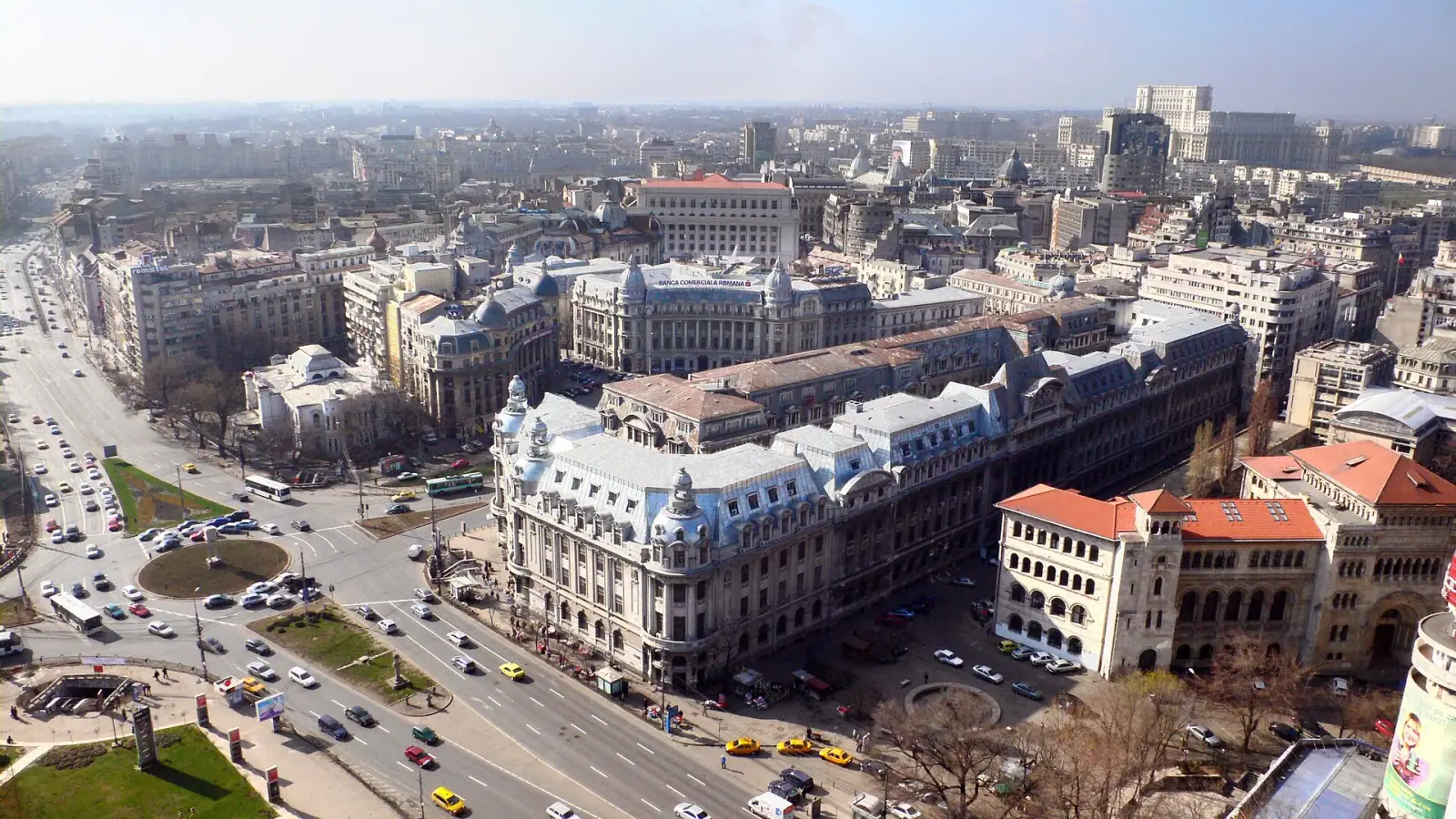
Experienced Europe-based nomads who want a quieter, underrated destination to park for a few months will find Bucharest underestimated. History and architecture enthusiasts will appreciate the layers of the city, from Belle Epoque buildings to communist-era boulevards.
It is a less natural fit for nomads who prioritize a built-in community of other digital nomads, a walkable compact city, or a beach or mountain backdrop. If you need warm weather year-round or want a city that feels energetically social from day one, you may find Bucharest requires more effort to crack than destinations like Split, Lisbon, or Chiang Mai.