Cost of Living in Strasbourg
Real market data
Source: Numbeo · August 2026
$1,970/moSolo nomad1-bed centre + living costs
$2,720/moCoupleshared 1-bed + costs
$1,690/moLean / localcheaper area + costs
- 1-bed rent, city centre$1,020€888
- 1-bed rent, outside centre$740€645
- Monthly costs excl. rent (1 person)$950€821
- Meal, inexpensive restaurant$17€15
- Monthly transit pass$64€56
- Buy price, per m² (centre)$5,430€4,718
Prices are from Numbeo (August 2026), converted to USD at $1 = €0.87 (01 Aug 2026). The monthly living-costs figure is our transparent one-person basket, groceries, a few meals out, utilities, phone, internet, transport and essentials, priced from those figures. Solo adds central rent; couple and lean are estimates from the same numbers.
Strasbourg sits 30-40% below Paris prices, making it one of the more affordable large cities in France. A furnished studio in the centre runs roughly $805-1,040/month (about $770-990). In residential areas like Neudorf, Cronenbourg, or Hautepierre you can find similar spaces for $635-805/month ($600-770). Furnished short-stay rentals (Airbnb-style) run higher, around $1,040-1,380/month for a studio.
- Rent (central studio, long-term lease): $805-1,040
- Groceries: $230-345/month
- Eating out (lunch menu): $15-21 per meal; dinner $23-40
- Coworking hot desk: $230-435/month; some spaces offer day passes around $23-30
- Local transport (monthly pass): $58-69
- Mobile data: $17-29/month
A comfortable nomad budget in Strasbourg runs $1,730-2,530/month ($1,650-2,400). If you lock in a medium-term lease and cook most meals, you can get by closer to $1,500-1,840/month ($1,430-1,760).
Where to Work
Strasbourg has a decent coworking scene for a city its size, anchored by a handful of solid spaces. Now Coworking at Place Gutenberg operates inside a classified 16th-century building steps from the cathedral, with 110 desks and meeting rooms. La Place Digitale near the city centre is popular with freelancers and tech workers. Anticafe Strasbourg near Petite France runs on an hourly model ($7/hour, $30/day), which suits drop-in work well. Les Compotes in Neudorf is a community-feel hybrid cafe-coworking open six days a week. Le Grub and Rocket Tower (near the train station) round out the options. Overall, the selection is adequate but limited compared to Paris or Lyon; plan ahead if you need a guaranteed desk.
Cafe culture for laptop work is solid in central Strasbourg. Coffee Stub on Quai des Pecheurs and Cafe Bretelles (locations in Krutenau and Petite France) both have reliable wifi and power outlets. Oh My Goodness in the centre is comfortable for morning work sessions, though it restricts laptops on Saturdays. Most cafes do not explicitly ban laptops on weekdays, but ordering every couple of hours is expected etiquette.
Fiber internet is widespread, and home connections are fast. Public wifi in coworking spaces is consistently fast. Library wifi at the Mediatheque Malraux is free and reliable if you need a quiet alternative.
Getting Around
Strasbourg is one of the most walkable cities in France. The historic centre, Petite France, Krutenau, and the university area are all reachable on foot within 15-20 minutes of each other. Cycling is equally practical: the city has an extensive dedicated bike lane network and a public bike-share system called Velhop with 35 stations.
The tram network (lines A through F) is efficient, frequent (every 4-8 minutes during the day), and covers all major districts. A single tram trip costs around $2; a monthly pass runs $58-69. Buses complement the tram lines. You rarely need a car inside the city.
Getting to and from Strasbourg Airport (SXB) is straightforward: a shuttle train connects the airport to the central station in 8 minutes, running up to five times per hour. The combined Bus-Tram+TER ticket costs $5.50. High-speed TGV trains connect Strasbourg to Paris in 1h45 and to Frankfurt in 1h40, making the city well positioned for European travel.
Sorting transport? Book an airport transfer, or compare car rental on Auto Europe and QEEQ.
Visas and Staying Long-Term
Strasbourg is in France, which is part of the Schengen Area. Most Western passport holders (US, Canada, UK, Australia, New Zealand) can enter visa-free and stay up to 90 days within any 180-day period across the entire Schengen zone, not just France.
France has no dedicated digital nomad visa and has not announced plans to create one. Your main long-stay options are:
- Long-Stay Visitor Visa (VLS-TS Visiteur): Allows stays of 12 months, renewable, but officially prohibits any work activity including remote work for foreign employers. As of June 2025, French tax authorities formally confirmed this restriction.
- Profession Liberale Visa: For registered freelancers and independent contractors working for clients outside France. Requires showing roughly $2,030/month in income and a business registration.
- EU Blue Card or Salaried Worker Visa: If you are employed by a French or EU company.
The honest picture: legally working remotely long-term in France as a non-EU citizen is more complex than in countries with formal nomad visas.
Best Time to Visit
Strasbourg has a semi-continental climate: cold winters, warm summers, and rain spread fairly evenly through the year (about 660mm annually). The clearest windows for productive remote work are May to June and September to October. Temperatures are mild (15-22 C / 59-72 F), tourist crowds are manageable, and the city is at its most pleasant for cycling and outdoor lunches.
July and August are warm (up to 30 C / 86 F) and busy with tourism, which raises short-stay rental prices and makes the centre more crowded. November and December bring Strasbourg's famous Christmas markets, drawing enormous crowds that clog the city from late November onward. January through March is cold, grey, and wet, but accommodation prices drop and the city is genuinely quiet, which some remote workers prefer.
Autumn is arguably the sweet spot: comfortable temperatures, fewer tourists than summer, beautiful foliage along the canals, and the local rhythm returns after August.
Pros and Cons
Pros
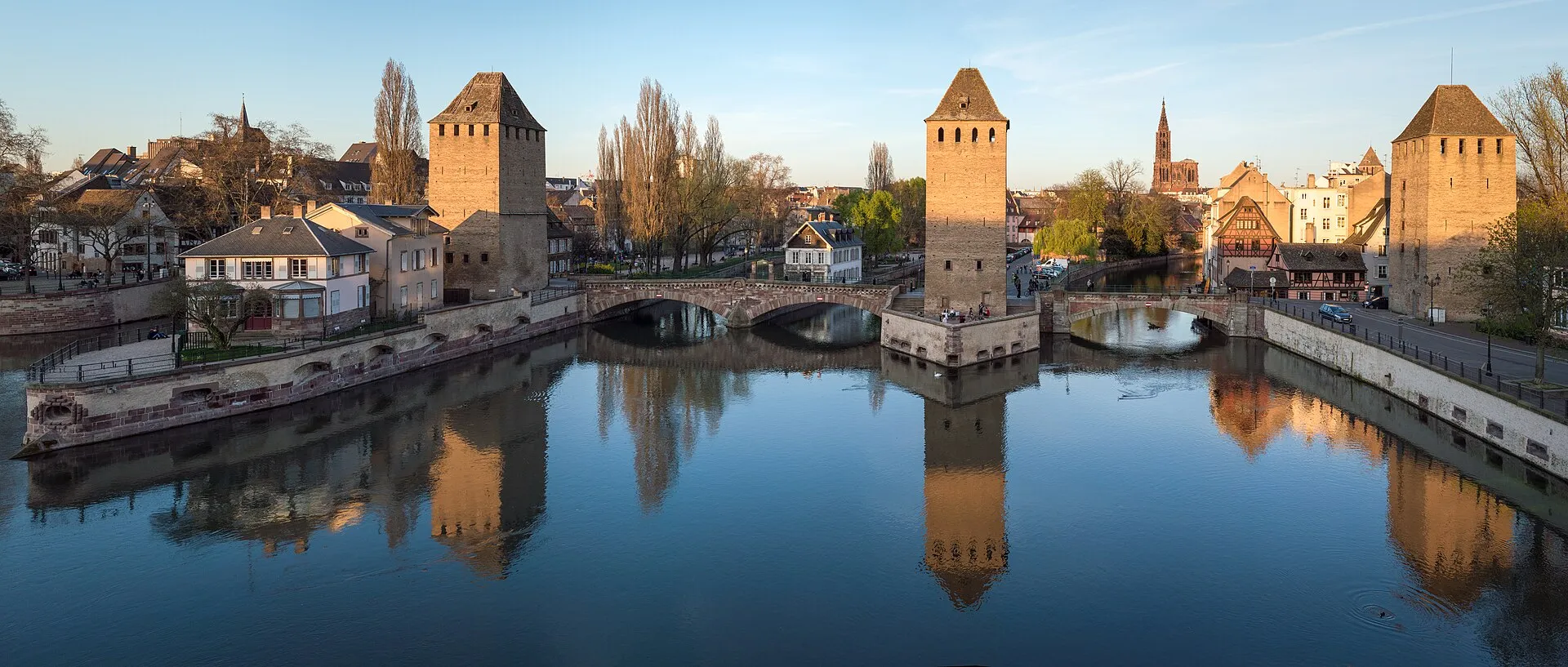
- Beautifully preserved historic centre with canals, half-timbered houses, and a cathedral worth seeing
- Excellent tram system and cycling infrastructure make getting around easy without a car
- Fast trains to Paris (1h45) and Frankfurt (1h40) open up weekend travel across Europe
- Bilingual city (French and Alsatian-German heritage); English widely spoken in professional and EU contexts
- Strong Alsatian food culture: winstubs, tarte flambee, choucroute, and good local wine within budget
- Safer than most French cities of similar size, with low violent crime rates
- European Parliament and Council of Europe presence creates an international community
Cons
- No dedicated digital nomad visa for France; long-term legal status is genuinely complicated
- Coworking options are limited compared to larger French cities
- Winters are cold, grey, and long (November through February)
- Short-term furnished rentals are expensive relative to the local long-term market
- Strasbourg's nomad community is small; networking requires effort
- December Christmas market crowds make the city feel more like a tourist attraction than a place to work
Who Strasbourg Is Best For
Strasbourg suits you well if you have your visa situation handled (EU passport, existing long-stay status, or a shorter Schengen stint), appreciate architecture and food culture, and want a quieter pace than Paris without sacrificing infrastructure. It is particularly rewarding for people interested in European institutions, cross-border France-Germany culture, or simply a beautiful mid-sized city with good trains and cycling.
It also works for people who prefer a genuine local neighbourhood feel: Krutenau has independent bars and bistros, Neudorf is family and student-oriented, and Petite France is postcard-perfect but liveable.
Skip Strasbourg if you need a large, established nomad community to plug into quickly, if you require an extensive coworking market with lots of hot-desk options, or if your work depends on a long-stay visa that France currently does not offer. It is also not the best pick for people who find cold, dark winters difficult to work through.