Cost of Living in Kairouan
Where this figure comes from. No cost survey covers Kairouan, so the $600 a month above is our own estimate rather than a measurement. On 416 of our 999 city guides the figure is built from a published Numbeo basket, a one-bedroom rent in the centre plus one person's monthly costs without rent, converted to USD; this city is not one of them. How we source everything.
Kairouan is one of the most affordable cities you can base yourself in as a nomad, largely because it sits inland on the central Tunisian plain, away from the pricier coastal resort belt. A comfortable solo budget runs roughly $400 to $900 a month, and many stays land in the lower half of that range. Local guesthouses and simple apartments are cheap, fresh-market produce and street food cost very little, and a plate of couscous or a bag of the city's famous makroudh pastries barely dents a daily budget. The main costs that add up are imported goods, air conditioning through the fierce summer, and travel out to the coast or Tunis. This is a place where a modest budget stretches a long way. Kairouan is also a real city of about 210,000 people, not a village around a mosque, so the modern districts outside the walls have the supermarkets, pharmacies and bank branches, and day-to-day shopping happens there at local prices rather than in the medina.
- Budget guesthouse or simple apartment: roughly $150 to $400 per month.
- Local meal (couscous, brik, grilled fare): often $2 to $6.
- A box of traditional makroudh from a medina bakery: a few dollars.
- SIM with data from a local carrier: a few dollars per month.
Where to Work in Kairouan
Nobody built Kairouan around laptops: this deeply traditional city has essentially no dedicated coworking scene, and the connection you get changes from one guesthouse or cafe to the next. Wifi in guesthouses and cafes ranges from decent to frustrating, so your single most important step is buying a local SIM (Ooredoo, Orange, or Tunisie Telecom) and leaning on mobile data as your real backbone. Before you book any accommodation, ask the host directly about speeds and, ideally, request a screenshot of a speed test. A few cafes near the medina and in the modern town welcome laptops for an hour or two, but expect noise, patchy signal, and limited English. Kairouan rewards a slow, light-touch working style far more than heavy video-call days.
- Buy a local SIM on arrival and treat mobile data as your primary connection.
- Carry a power bank; keep a coastal backup base in mind for call-heavy weeks.
Getting Around Kairouan
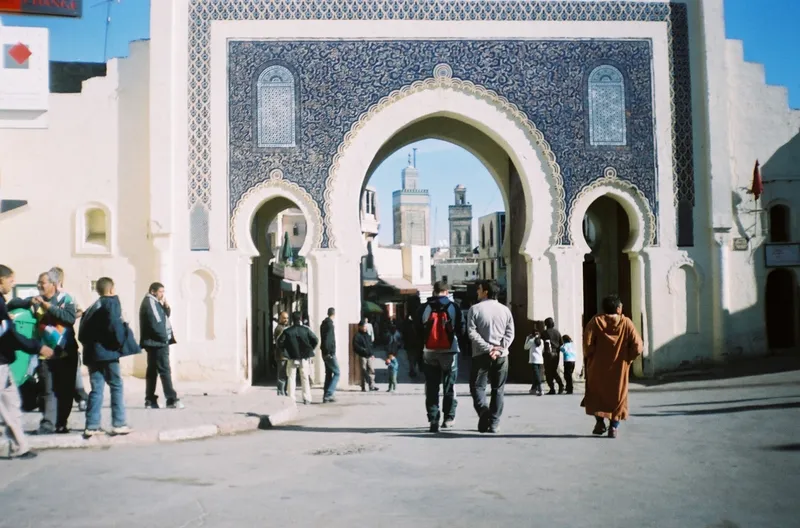
Kairouan is a walking city at heart. The whitewashed, blue-doored medina around the Great Mosque is best explored on foot, and most of the historic sights, including the Aghlabid Basins and the Zaouia of Sidi Sahbi, are within easy reach of the old town. For longer hops, cheap local taxis cover the city, while shared minibuses known as louages and intercity buses connect you outward: Sousse on the coast is about an hour away, Tunis roughly two and a half hours, and the beach towns not much further. There is no airport in Kairouan itself; the nearest gateways are Enfidha and Tunis. If you plan to explore the wider region, including the countryside and coastal escapes, renting a car gives you far more freedom.
- Walk the medina and its monuments; distances are short.
- Louages (shared minibuses) and buses reach Sousse (~1hr) and Tunis (~2.5hr).
- Nearest airports: Enfidha and Tunis.
- A rental car helps for exploring the region and coast.
Sorting transport? Book an airport transfer, or compare car rental on Auto Europe and QEEQ.
Visas for Kairouan
Tunisia is relatively open for short stays, and at a high level many nationalities enter visa-free, commonly for up to 90 days, which comfortably covers a cultural or slow-travel visit to Kairouan. Beyond paperwork, remember that Kairouan is regarded as the fourth holiest city of Islam, a conservative and deeply religious place. Dressing modestly, covering shoulders and knees, and behaving respectfully around mosques and shrines will make your stay far smoother and warmer. Visitors are welcomed, but the city expects, and deserves, a respectful guest. Canadians and Germans are the exception the other way, admitted for four months rather than three, which is long enough to stay from the first mild weeks of March into early July on a single entry.
- Many nationalities enter visa-free, often up to 90 days (verify for your passport).
- Dress modestly and behave respectfully in this conservative holy city.
Best Time to Visit Kairouan
The best windows for Kairouan are spring, roughly March to May, and autumn, roughly September to November, when the plain is mild, the light is beautiful, and long days of walking the medina are a pleasure. Summers are genuinely harsh here: inland and far from the sea, the city bakes, and midday heat can be draining, so if you come in high summer, plan around early mornings and evenings. Winters are cool and can feel chilly, especially after dark, but remain very walkable. Whenever you visit, time your look at the Great Mosque of Uqba, one of the oldest and most important mosques in North Africa, for outside prayer times, both out of respect and because access for non-worshippers is limited during prayers. The extremes are real numbers: the city's record high is 50.3 degrees, set in August, and the plain has fallen to minus 4.5 in January, so the thick-walled medina houses that stay cool in summer are cold indoors in winter, and a heater belongs in the budget.
- Spring (March to May) and autumn (September to November) are ideal and mild.
- Summers are very hot on the inland plain; plan around the midday heat.
- Winters are cool, occasionally chilly, but still pleasant for walking.
- Visit the Great Mosque outside prayer times as a matter of respect.
Pros and Cons of Kairouan
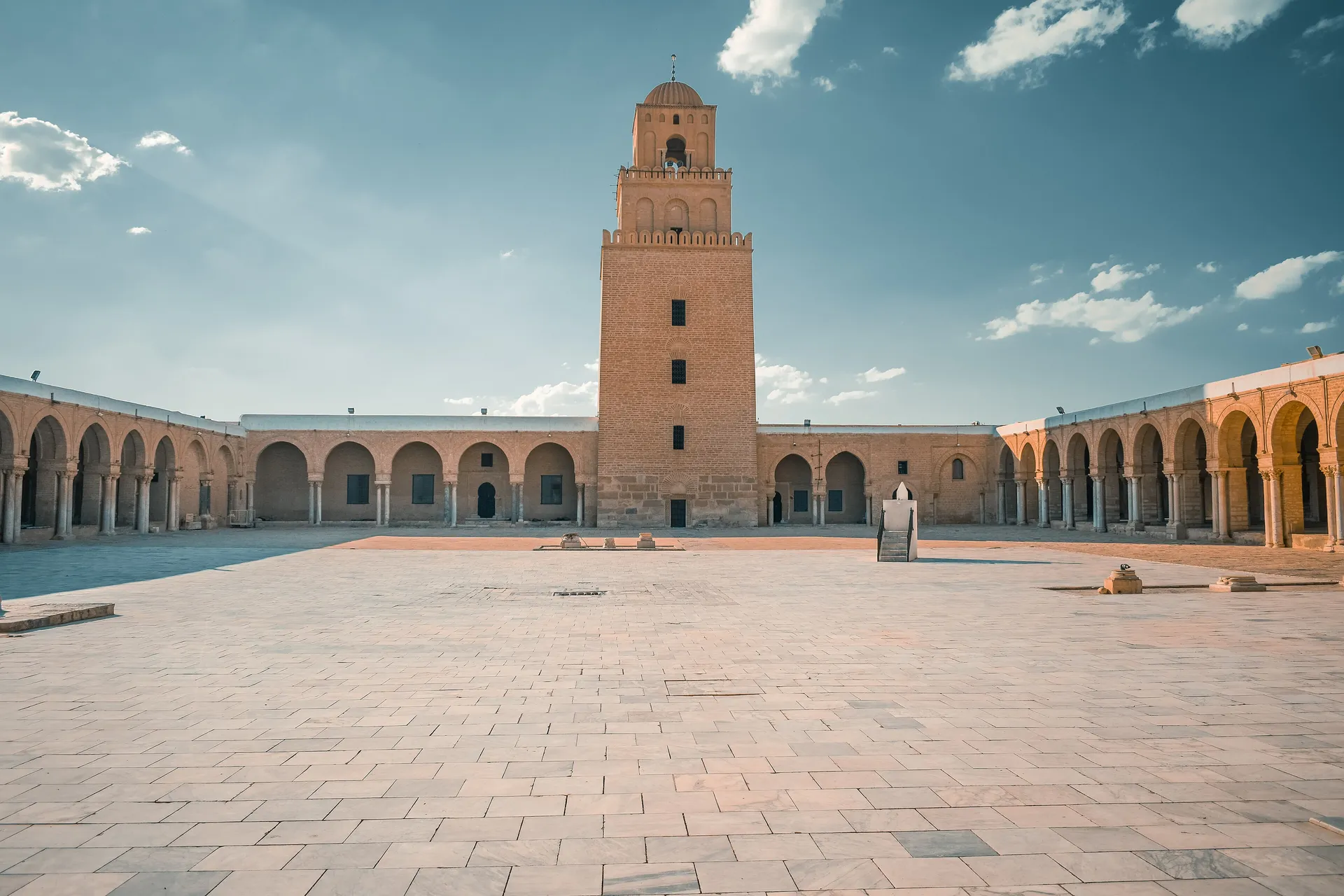
Kairouan is a place you come to for depth, not for a slick nomad hub. Its greatest gift is its extraordinary Islamic heritage: the vast, ancient Great Mosque with its enormous courtyard and towering minaret, the medieval Aghlabid Basins, the serene Zaouia of Sidi Sahbi known as the Barber's Mosque, and a living tradition of carpet weaving and makroudh baking. It is remarkably cheap, safe, and authentic, and the food is warm and generous. The trade-offs are real, though. Infrastructure is modest, wifi is unreliable, English is limited, and the nomad scene is tiny. Nightlife is essentially nonexistent in this conservative religious city. Come for culture and calm, and you will be rewarded; come expecting a connected work base, and you will struggle. Local tradition holds that seven pilgrimages to the city's chief mosque equal one to Mecca, and that status explains the city's gravity: this is a place of devotion first and a tourist sight second, which visitors feel in the dress code and the quiet evenings.
- Pros: world-class heritage, very low cost, safety, authentic food and crafts.
- Cons: variable wifi, limited English, modest infrastructure, tiny nomad community.
- Best embraced as a slow, cultural, budget-friendly stay.
Who Kairouan Is For
Kairouan suits the culturally curious slow traveler far more than the deadline-driven remote worker. If you are drawn to living inside layers of history, to hearing the call to prayer echo across a UNESCO World Heritage medina, to buying a hand-knotted carpet from the artisan who made it, and to eating makroudh warm from the oven, this city will move you. It is ideal for writers, photographers, students of Islamic art and architecture, and budget-minded nomads who can work lightly and offline. It is a poor fit for anyone who needs fast, reliable internet, a busy coworking community, English everywhere, or any nightlife. Treat Kairouan as a meaningful cultural chapter, perhaps paired with a coastal base like Sousse for heavier work weeks, and it becomes unforgettable.
- Great for: culture lovers, photographers, slow travelers, budget nomads who work lightly.
- Not for: those needing fast wifi, coworking buzz, or nightlife.
- Consider pairing it with a coastal base for connectivity-heavy work.