Cost of Living in Aomori
Where this figure comes from. No cost survey covers Aomori, so the $1,200 a month above is our own estimate rather than a measurement. On 416 of our 999 city guides the figure is built from a published Numbeo basket, a one-bedroom rent in the centre plus one person's monthly costs without rent, converted to USD; this city is not one of them. How we source everything.
Budget around $1,200 a month, which makes Aomori one of the cheaper Japanese cities. A one-bedroom runs roughly $350 to $600 and the market is soft, since the prefecture has been losing population for decades and there is more housing than demand. Groceries are reasonable and the local produce is exceptional: Aomori grows more than half of Japan's apples, the scallops from Mutsu Bay are among the best in the country, and the tuna landed at Oma commands record prices. Utilities are the exception, since heating a house through an Aomori winter is a serious annual cost. Heating runs on kerosene here rather than gas, bought by the tankful from a truck that comes round or from a pump at the filling station, and the winter spend on it is the number that separates a cheap year from an expensive one. Snow clearing is the other line: a house with a drive needs either a machine or somebody paid to come, and neither is optional for six months. Against that, empty houses are plentiful enough that the municipalities keep registers of them, and the asking prices on those registers are unlike anything in the rest of the country.
Where to Work in Aomori
Connectivity is excellent, with fibre throughout the city, complete mobile coverage and entirely reliable power, as everywhere in Japan. There is limited coworking, though the prefecture has been active in trying to attract remote workers and migrants from Tokyo as a response to depopulation, and there are subsidy programmes worth investigating for anyone considering a longer move. The time zone is nine hours ahead of GMT, which is the same constraint as everywhere in Japan: comfortable for Asian and Australian work, awkward for European, and effectively nocturnal for American. Anyone considering a winter here should also budget for the heating, which runs for six months and is the single largest line in most household bills in the prefecture. Wind is the industry nobody expects: the prefecture carries more turbines than any other in the country, along with the maintenance and grid work that goes with them, and it is one of the few technical sectors here growing rather than shrinking. Everything else runs on apples, fishing and public administration. For somebody working remotely that matters mainly as reassurance that the place is not simply emptying, and the reception for an incomer who arrives with an income already attached is correspondingly warm.
Getting Around Aomori
Aomori is compact around the bay and walkable in the centre, with buses covering the rest and bicycles workable for the seven months a year without snow. The Tohoku Shinkansen reaches Shin-Aomori, putting Tokyo about three hours away, and the same line continues under the Tsugaru Strait through the Seikan Tunnel to Hokkaido. Aomori Airport has flights to Tokyo, Osaka, Sapporo and Seoul. In winter the snow is the transport problem: the city clears it constantly and the trains generally run, but rural roads are a different matter. Anyone driving between December and March should have winter tyres fitted as a matter of course, since they are effectively mandatory here and the rural roads are not always cleared quickly. When the fast line opened, the old main route through the prefecture was handed to a third sector company part-owned by the local authorities, which is why the stopping trains here run under a different name and a different fare table from the national network. A ferry also crosses to the northern island and takes vehicles, which is slower than the tunnel and much cheaper. Buses out to the mountains stop running entirely once the snow arrives, and the road itself closes for the season.
Sorting transport? Book an airport transfer, or compare car rental on Auto Europe and QEEQ.
Visas for Aomori
Japan grants ninety days visa-free to citizens of around seventy countries, including most of Europe, the United Kingdom, the United States, Canada and Australia, with a pre-travel electronic authorisation in development that should be checked before booking. The Digital Nomad Visa introduced in 2024 allows a six month non-renewable stay for nationals of qualifying countries meeting a substantial income threshold with private insurance. Working on a tourist entry is not permitted. Anyone considering a permanent move should look at the prefecture's own migration support schemes, which are unusually generous. Anyone arriving for the Nebuta festival in early August should book accommodation many months ahead, since the city fills completely and prices in that week bear no relation to the rest of the year.
Best Time to Visit Aomori
Late April to early May, when the cherry blossom at Hirosaki Castle nearby is among the best displays in Japan, and September to October for the autumn colour in the Hakkoda mountains, are the two best windows. Early August is the Nebuta Matsuri, when enormous illuminated paper floats are pushed through the streets over six nights and the city fills completely, which is worth planning around and booking far ahead for. Winter from December to March is the defining season: Aomori receives more snow than any comparable city on earth, routinely several metres. Summer here is cool rather than hot, and in some years a cold wind off the Pacific called the yamase sits over the region for weeks and does real damage to the rice, which is a piece of local vocabulary worth knowing because it explains a great deal of the prefecture's history. In the deep of winter the firs on the mountains behind the city freeze into the shapes known as snow monsters, and a ropeway runs up among them. Between the two, meltwater keeps the rivers high into early summer and the mountain trails stay shut longer than the calendar suggests.
Pros and Cons of Aomori
The Nebuta festival is one of the great spectacles in Japan, and around it sit the Hakkoda mountains and their world-famous snow, the Shirakami-Sanchi beech forest that was among Japan's first UNESCO natural sites, and food that is genuinely exceptional even by Japanese standards. Costs are low and the prefecture actively wants incomers. Snow shovelling is a winter occupation here, the dark runs long, the time zone works against European and American hours, English is close to absent, and the city is quiet to the point of emptiness outside festival week. The prefecture also has the shortest life expectancy in Japan, which local authorities attribute partly to a salt-heavy traditional diet and which they have run public campaigns to address.
Who Aomori Is For
Skiers and snowboarders, since the Hakkoda backcountry is legendary, and anyone who genuinely enjoys deep winter rather than tolerating it. It suits people working Asian hours who want a low-cost Japanese base with fast trains to Tokyo. Jomon archaeology is what brings specialists this far north. Sannai-Maruyama outside the city is a UNESCO-listed settlement that was occupied continuously for fifteen hundred years, which is longer than most European countries have existed. Aomori takes some of the heaviest snowfall of any city on earth, so disliking snow rules it out entirely. European or American hours are impractical from here, and no international community exists this far north. The Tsugaru shamisen belongs to this region specifically. The percussive three-stringed style developed here in the north, and several bars in the city still put it on live most weeks of the year.
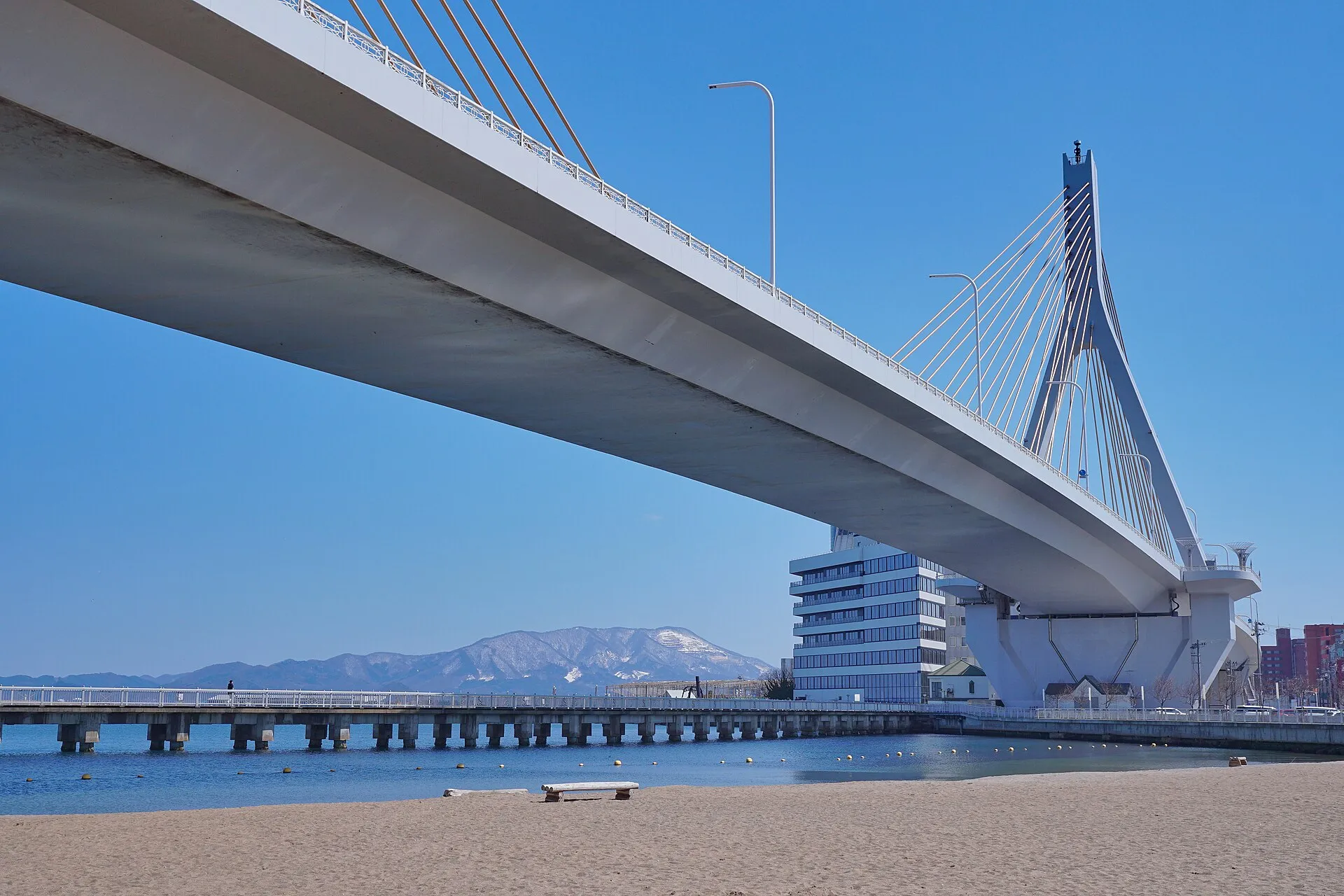 Photo: 掬茶 / Wikimedia Commons (CC BY-SA 4.0)