Cost of Living in Lauterbrunnen
Where this figure comes from. No cost survey covers Lauterbrunnen, so the $1,700 a month above is our own estimate rather than a measurement. On 416 of our 999 city guides the figure is built from a published Numbeo basket, a one-bedroom rent in the centre plus one person's monthly costs without rent, converted to USD; this city is not one of them. How we source everything.
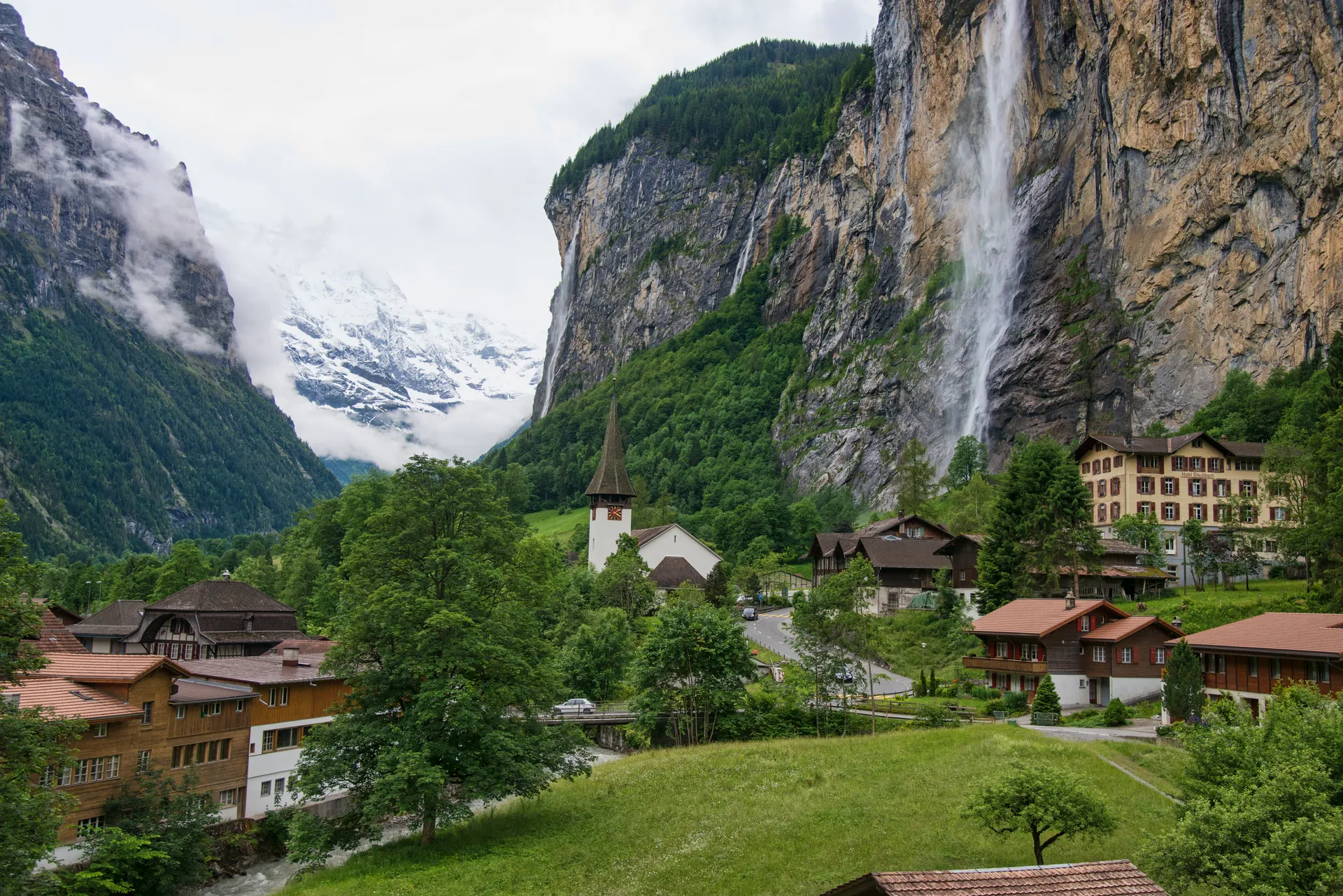
There is no gentle way to say it: Switzerland is expensive, and Lauterbrunnen is no exception. A realistic solo budget for a slow-travel month lands somewhere between $2,000 and $3,500, and it climbs quickly if you eat out often, ride every railway, or visit in peak summer. Accommodation is the biggest line item, since the valley leans on hotels, guesthouses, and short-term holiday flats rather than cheap long lets. Groceries at the Coop and Migros are manageable if you cook, but restaurant meals, mountain-top cafes, and cable-car tickets add up fast. This is a place that rewards funded slow travellers and remote workers on strong salaries far more than budget-focused nomads counting every franc.
- Holiday apartment or guesthouse room: roughly $1,200 to $2,200 per month
- Groceries cooking mostly at home: around $400 to $650
- A sit-down restaurant dinner: often $30 to $60 per person
- Mountain railway and cable-car outings: easily $50 to $120 per trip
Where to Work in Lauterbrunnen
Be clear-eyed here: Lauterbrunnen has no dedicated coworking space and no digital-nomad scene to plug into. What it does have is fast, reliable internet and a handful of laptop-friendly cafes and hotel lounges where you can settle in with a coffee and a valley view. Most remote workers base themselves in their apartment or guesthouse, where wifi is generally excellent, and treat cafes as a change of scene rather than a daily office. If you need a buzzing coworking vibe, meetups, or a built-in community, this village will feel quiet. If you can self-motivate and want silence, clean air, and cliffs framing your window, it is close to ideal for focused deep work.
- Airtime Cafe in the village: relaxed, popular with travellers, decent wifi
- Hotel cafes and lounges along the main street for a warm indoor desk
- Your own apartment: the most reliable and comfortable workspace here
- Nearby Interlaken (20 minutes by train) for larger cafes and services
Getting Around Lauterbrunnen
The village floor itself is small and easily walkable end to end. The real magic is the mountain transport network that fans out from the valley. The BOB train links Lauterbrunnen to Interlaken in about 20 minutes, and from the same station the Wengernalp cog railway climbs to car-free Wengen and onward toward the Jungfrau region. Since 2006 a cable car, which replaced the old funicular, lifts you to Grutschalp, where a narrow-gauge train runs fourteen minutes along the cliff edge to the car-free resort on top, while from the road end beyond the falls a second cable car line climbs in stages all the way to the Schilthorn summit. Postbuses connect the valley floor to Trummelbach Falls and Stechelberg. You can drive here and park, but note that Wengen, Murren, and Gimmelwald are car-free, so you leave the car below and continue up by rail or cable.
- BOB train: Lauterbrunnen to Interlaken in roughly 20 minutes
- Cog railway up to Wengen and the Jungfrau region
- Cable car and funicular to Murren, Gimmelwald, and the Schilthorn
- Postbus to Stechelberg and Trummelbach Falls
- A regional travel pass often pays off if you ride frequently
Sorting transport? Book an airport transfer, or compare car rental on Auto Europe and QEEQ.
Visas for Lauterbrunnen
Switzerland is not a member of the European Union, but it is part of the Schengen Area, so the familiar Schengen rules apply to most short stays. Many nationalities, including US, UK, Canadian, and Australian passport holders, can enter visa-free for up to 90 days within any rolling 180-day period. That window covers a generous scenic slow-travel stint but not a long-term base. Staying longer, or working locally, means looking into a Swiss national visa and residence permit, which is a separate and considerably more involved process tied to work, study, or means. Bern's small airport at Belp, reached from the valley by train and a connecting bus, runs summer holiday flights to Djerba and Monastir, and those leave the Schengen area: the Entry/Exit System records you going out and coming back at Belp, so a week on a Tunisian beach does not come out of the ninety days.
- Schengen: up to 90 days in any 180-day period for many travellers
- Switzerland is in Schengen but outside the EU
- Longer stays require a Swiss national visa or residence permit
Best Time to Visit Lauterbrunnen
Summer, roughly June through August, is the classic window: long days, thundering waterfalls fed by snowmelt, and the full sweep of hiking trails open. It is also the busiest and priciest time, and the village can feel crowded with day-trippers. Autumn brings crisp light, thinning crowds, and calmer prices, making September and October a quiet favourite for many. Winter transforms the region into a ski destination, with Wengen and Murren linking into the wider Jungfrau ski area, so December through March suits snow lovers. Spring can be beautiful but unsettled, with lingering snow up high, muddy trails, and heavy meltwater. Choose your season by whether you want hiking, quiet, or skiing. Trummelbach Falls, a short ride up the valley road, changes most with the calendar: ten falls inside the mountain drain glacier meltwater off the Eiger and the Monch, reaching around twenty cubic metres a second at peak melt, milky with sediment in spring and clearer by autumn.
- Summer: peak hiking and waterfalls, busiest and most expensive
- Autumn: calmer, cheaper, crisp and scenic
- Winter: skiing in the Jungfrau region around Wengen and Murren
- Spring: wet with snowmelt, some high trails still closed
Pros and Cons of Lauterbrunnen
Lauterbrunnen is one of the most jaw-droppingly scenic places you can open a laptop, and that scenery is the whole point. The infrastructure is superb, the internet is fast, the air is clean, and everything simply works with Swiss precision. The trade-offs are equally honest: it is very expensive, the community is tiny, nightlife is close to non-existent, and the rhythm is heavily seasonal and tourism-driven. Shops and services can be limited, especially in shoulder seasons. If your idea of a great base is quiet evenings, dawn hikes, and reliable focus rather than a social scene, the pros will win. If you crave buzz, affordability, or a big nomad crowd, look elsewhere. The same cliffs that frame the view make the valley one of the world's best-known wingsuit and BASE-jumping sites, with around twenty thousand jumps a year and an average of three deaths, so parachutes drifting over the meadows are part of a clear summer day, and so is the grim local news that follows a bad one.
- Pro: world-class alpine scenery and superb, reliable infrastructure
- Pro: excellent internet, clean air, and very high safety
- Con: high cost of living, one of Europe's priciest bases
- Con: tiny community, minimal nightlife, and strong seasonality
Who Lauterbrunnen Is For
Lauterbrunnen suits a specific kind of traveller, and it pays to know if that is you. It is a dream for the well-funded slow traveller who wants a scenic, active, deeply peaceful base and can self-motivate without a coworking crowd. Hikers, skiers, photographers, and anyone recharging between busier stints will feel spoiled. It works beautifully as a short focused chapter of a longer European trip rather than a year-round home. It is not the place for budget nomads, night owls, or anyone who needs a lively social scene and a ready-made community. Come for the waterfalls, the cliffs, and the quiet, work hard in the mornings, and let the valley do the rest. Readers and film fans have their own reasons to come: Tolkien walked through the valley in 1911 and later drew Rivendell from it, and the Piz Gloria restaurant on the Schilthorn played the villain's mountain lair in the 1969 Bond film On Her Majesty's Secret Service.
- Great for: funded slow travellers who value scenery and quiet
- Great for: hikers, skiers, and photographers who love the outdoors
- Less ideal for: budget nomads and those needing nightlife or community
- Best as: a scenic, focused chapter rather than a permanent base