Cost of Living in Yerevan
Real market data
Source: Numbeo · August 2026
$1,360/moSolo nomad1-bed centre + living costs
$1,780/moCoupleshared 1-bed + costs
$1,100/moLean / localcheaper area + costs
- 1-bed rent, city centre$840AMD 306,515
- 1-bed rent, outside centre$570AMD 210,365
- Monthly costs excl. rent (1 person)$530AMD 192,537
- Meal, inexpensive restaurant$11AMD 3,909
- Monthly transit pass$25AMD 9,000
- Buy price, per m² (centre)$3,080AMD 1,128,298
Prices are from Numbeo (August 2026), converted to USD at $1 = 366.42 AMD (01 Aug 2026). The monthly living-costs figure is our transparent one-person basket, groceries, a few meals out, utilities, phone, internet, transport and essentials, priced from those figures. Solo adds central rent; couple and lean are estimates from the same numbers. The guide below quotes its own monthly range, which is a different measurement rather than a competing one: this table prices a defined basket at the figures above, while that range is a judgement about how somebody actually lives here.
Yerevan sits at the affordable end of the European nomad circuit. Expect to spend between $900 and $1,600 per month depending on how central you live and how often you eat out.
- Rent (central Kentron district): $545-1,040 for a furnished one-bedroom apartment. Prices spike on short-term platforms; negotiate directly and monthly rates drop significantly.
- Rent (outer districts, e.g. Arabkir or Avan): $325-600 for a comparable apartment with more space.
- Groceries: $165-245 per month if you cook regularly. Markets like Pak Shuka and local produce stalls are cheap; imported goods at supermarkets like SAS cost noticeably more.
- Eating out: A sit-down lunch at a local restaurant runs $5.50-11. A proper dinner with wine lands at $22-41. Budget $220-325 monthly if you eat out most days.
- Coworking hot-desk: Day passes at established spaces cost $9.50-14. Monthly memberships range from $110-220.
- Local transport: A single bus or trolleybus ride is $0.50 (under $0.30). Metro rides are also $0.50. Yandex or Bolt app rides across the city centre rarely exceed $2.50-4.
- Total realistic range: $900-1,300 for a frugal month; $1,300-1,800 for a comfortable one with coworking, regular dining out, and travel within Armenia.
Where to Work
Yerevan has a genuine and growing coworking scene, driven partly by an influx of remote workers since 2022. The main options are well-equipped and affordable by any standard.
Impact Hub Armenia on Tigran Mets Avenue is the most established space: high-speed fiber, meeting rooms, a social enterprise community, and reasonable day and monthly rates. LOFT Yerevan on Moskovyan Street is 24-hour, centrally located near a metro stop, and popular with freelancers who keep irregular hours. It offers Skype booths, lockers, and a quiet zone. EVN Coworking on Mashtots Avenue is a newer, well-reviewed option if you prefer a less community-heavy setup.
Cafe work is widely accepted. Achajour Parpetsi near the Opera Theatre is the go-to for serious laptop sessions: reliable WiFi, plenty of seats, and no pressure to leave. Saryan Street has a concentration of cafes with outdoor terraces that work well in spring and autumn.
WiFi throughout the city is solid, and Ucom fibre is the usual pick for a fast home line. Mobile 4G LTE is stable across central districts, and 5G is rolling out in Kentron. Power cuts, once common, are now rare in central Yerevan. You will occasionally encounter slower connections at smaller cafes, but this is the exception rather than the rule.
Getting Around
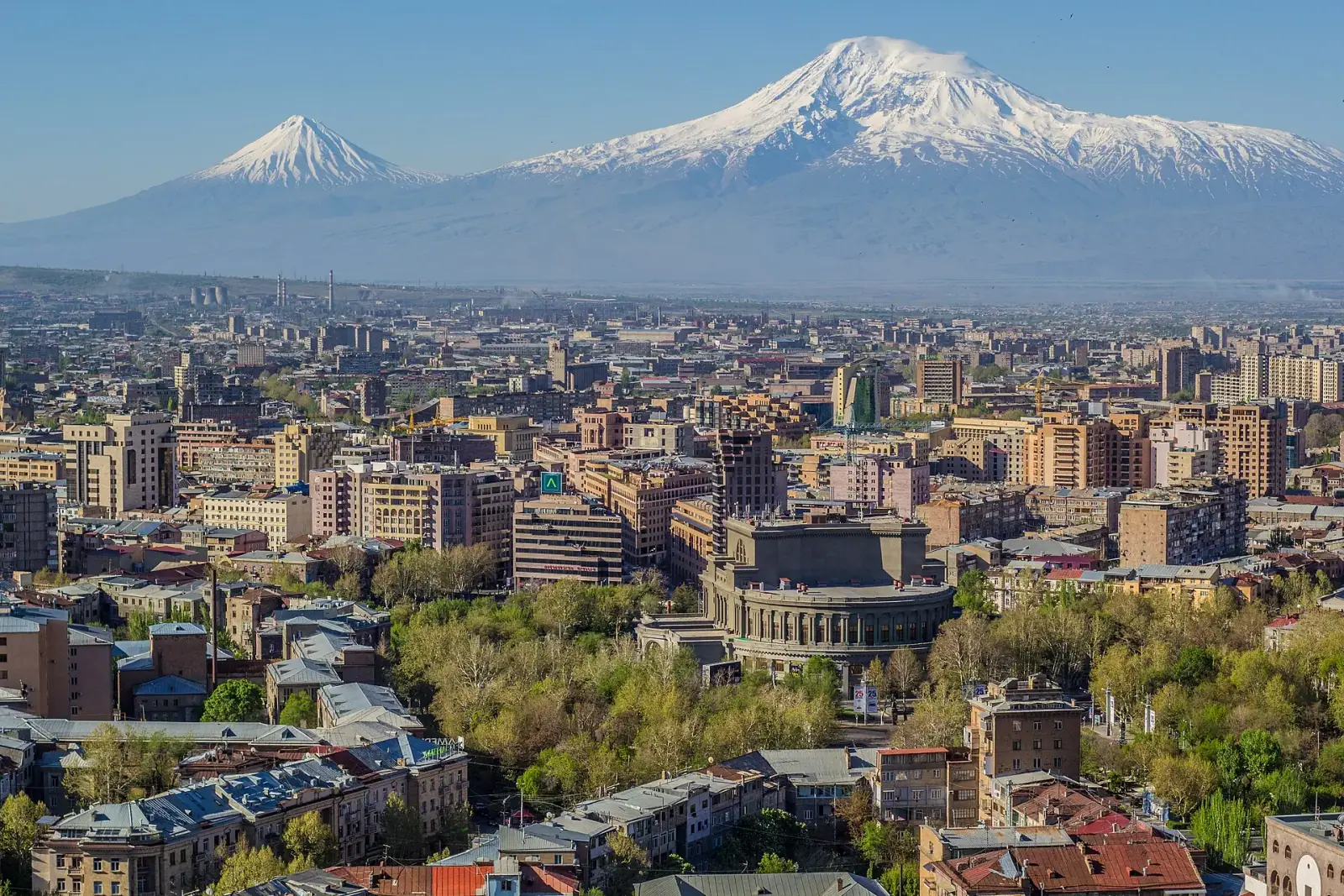
The city centre is genuinely walkable. Kentron, where most nomads stay, is compact enough that you can cover most of it on foot. Northern Avenue, Republic Square, the Cascade complex, and Abovyan Street are all within a 15-20 minute walk of each other.
Public transport is cheap and functional. Buses and minibuses (marshrutkas) cover most of the city and cost $0.50 per ride, with electronic payment cards introduced in 2025. The metro has a single line running roughly north-south through the centre and operates until midnight. Trolleybuses are slower but useful for east-west routes. Yandex Taxi and Bolt are the standard for on-demand rides: cheap, metered by app, and consistently faster than hailing a street cab.
Airport: Zvartnots International Airport is about 12 km southwest of the city centre. Bus route 100 runs 24 hours and costs around $1. A Yandex Taxi or Bolt ride takes 20-30 minutes and costs roughly $7-11. Avoid the unofficial taxi touts inside the arrivals hall; prices are 3-4x higher than app-booked rides.
Sorting transport? Book an airport transfer, or compare car rental on Auto Europe and QEEQ.
Visas and Staying Long-Term
Armenia is unusually open for long stays. Citizens of most Western countries including the US, EU member states, UK, Canada, and Australia receive visa-free entry for up to 180 days within any 12-month period. There is no stamp in your passport that resets at the border: the 180 days are tracked cumulatively per calendar year.
Armenia does not currently offer a dedicated digital nomad visa. For stays beyond 180 days, you need to apply for a residency permit through the Ministry of Foreign Affairs or depart and re-enter at the start of a new annual period. Many long-term nomads simply leave briefly to Georgia (a short flight or bus to Tbilisi) and return.
If your country is not on the visa-free list, an e-visa is available online for stays up to 21 or 120 days.
Best Time to Visit
Yerevan has a dry continental climate: summers are genuinely hot (July and August regularly hit 35-40C), winters are cold (lows of -6 to -10C) with occasional snow, and spring can be rainy and windy.
For remote work, the two sweet spots are late April through June and September through early October. These windows give you 18-25C temperatures, long daylight hours, clear skies, and the city at its most social. Outdoor cafe terraces are open, the parks are pleasant, and you can take weekend day trips to Garni, Geghard, or Lake Sevan without battling heat or ice.
Summer (July and August) is doable if you have air conditioning in your apartment, but working in a hot coworking space or cafe without strong AC gets uncomfortable. Winter is quiet, affordable, and Yerevan still functions normally, but it is not the most inspiring time to arrive for the first time.
Pros and Cons
- Pro: Extremely generous visa-free access for most Western passports
- Pro: Affordable cost of living with solid coworking infrastructure
- Pro: Fast and reliable broadband, competitive mobile data
- Pro: Very safe city, genuinely walkable centre
- Pro: Rich food culture, outstanding Armenian cuisine, excellent brandy and wine
- Pro: Growing English-speaking expat community; easy to meet people
- Con: Summers are brutal and air conditioning is inconsistent in older buildings
- Con: No direct flights to many destinations; connections usually route via Dubai, Istanbul, or Vienna
- Con: Landlocked location limits weekend travel options compared to coastal or central European hubs
- Con: Russian-language dominance in older residents; English is common among younger Armenians but less so outside the centre
- Con: Regional instability (neighbouring conflicts) occasionally affects flight prices and sentiment, though Yerevan itself is calm
- Con: Air quality in central districts can be poor on still days due to traffic and older vehicle fleets
Who Yerevan Is Best For
Yerevan is a strong fit for nomads who want a European-adjacent base that is genuinely affordable without feeling like a compromise. If you are from a country with visa-free access and you want 3-6 months somewhere with good internet, real food culture, a walkable city, and low costs, Yerevan delivers consistently. It also suits people with an interest in history and ancient culture: the Armenian highlands, monasteries, and the Ararat valley are on your doorstep.
It works especially well as a long-stay base rather than a brief stopover. A week here barely scratches the surface; two to four months is where it makes sense both logistically and financially.
It is probably not the right fit if you need a large English-only community, direct flights to multiple continents, or beach access. It also requires a higher tolerance for urban grit: pavement quality outside the centre is uneven, traffic is noisy, and summer heat can limit how much you enjoy the city outdoors. Those who come for the culture, the affordability, and a slower pace tend to stay far longer than planned.