Cost of Living in Batad
Where this figure comes from. No cost survey covers Batad, so the $600 a month above is our own estimate rather than a measurement. On 416 of our 999 city guides the figure is built from a published Numbeo basket, a one-bedroom rent in the centre plus one person's monthly costs without rent, converted to USD; this city is not one of them. How we source everything.
Batad is one of the cheapest places you could ever base yourself, largely because there is very little to spend money on. A simple homestay bed runs a few dollars a night, meals at family kitchens are modest, and a local guide for the terraces or Tappiya Falls is inexpensive. There are no rental apartments, no supermarkets, and no nightlife bills, so a slow traveler can live comfortably on a small budget. Expect a realistic monthly range of roughly $500 to $1,000 depending on how much guiding, transport in and out, and comfort you want. The upper end covers private rooms, plentiful guided treks, and frequent trips down to Banaue for supplies and better connectivity.
- Homestay bed: about $4 to $10 per night, private rooms a little more
- Simple meals: roughly $2 to $5 each at homestay kitchens
- Local guide: around $15 to $25 per day for terrace and falls treks
- Tricycle from Banaue to the saddle: a few dollars, shared or chartered
Where to Work in Batad
A village reached only on foot makes a poor office, and Batad should not be the place your income depends on. Wifi is weak or entirely absent at most homestays, mobile signal is patchy, and electricity can be intermittent, sometimes running on limited hours or a generator. A Globe or Smart SIM may pull a faint signal from certain viewpoints or the upper part of the village, but it is unreliable for calls, uploads, or anything time-sensitive. Homestays are simple wooden or concrete rooms, not offices, and there are no cafes built for laptops. If you must stay connected, plan to walk or ride down to Banaue town, where signal and power are steadier. Treat Batad as an offline retreat and do any real deadline work before you arrive or after you leave.
- Wifi is weak or unavailable; do not count on it
- Mobile data is patchy; a Globe or Smart SIM helps but is inconsistent
- Electricity can be intermittent, so charge devices and carry a power bank
- Banaue town, a rough ride away, has more reliable signal and power
Getting Around Batad
Batad itself is car-free. The village sits in a natural amphitheater below the road, so you reach it on foot, walking down from the saddle where the rough access road ends. From Banaue, a tricycle or jeepney carries you along a bumpy mountain road to that saddle, and from there it is a walk of twenty minutes to an hour depending on your homestay. Inside and around the village everything is done on foot along stone paths and terrace walls, often steep and uneven. To reach the terraces properly, or to hike to Tappiya Falls, hire a local Ifugao guide; it supports the community and keeps you safe on the trails. Getting to the region at all usually means a long journey up from the lowlands. Before heading out to the saddle, register at the municipal tourism office, which collects a small environmental fee, and expect a second fee on arrival in the village itself; both are cash, so carry small notes down with you.
- Night buses (Ohayami or Coda Lines) run Manila to Banaue in about 9 hours
- Tricycles and jeepneys cover the rough road from Banaue to the saddle
- The final approach to the village is always on foot, down and back up
- Local guides are strongly recommended for the terraces and Tappiya Falls
Sorting transport? Book an airport transfer, or compare car rental on Auto Europe and QEEQ.
Visas for Batad
Batad follows standard Philippine entry rules, since there is nothing special about the village itself. Many nationalities receive visa-free entry on arrival, commonly for 30 days, provided you hold a passport valid for at least six months and an onward or return ticket. If you want to linger in the mountains longer, the stay is extendable through the Bureau of Immigration, which you would handle in a larger city such as Baguio or Manila rather than in the villages, as there is no immigration office in Banaue. Extensions are done in stages and involve fees that rise with the length of stay. The month on your entry stamp starts at the airport, not in the mountains, and the overnight bus up plus the walk down from the saddle can eat a day or more at each end, which is worth counting before deciding whether the stay needs an extension.
- Visa-free entry is common, often 30 days, for many passports
- Carry a passport valid six months and proof of onward travel
- Extensions run through the Bureau of Immigration in major cities
Best Time to Visit Batad
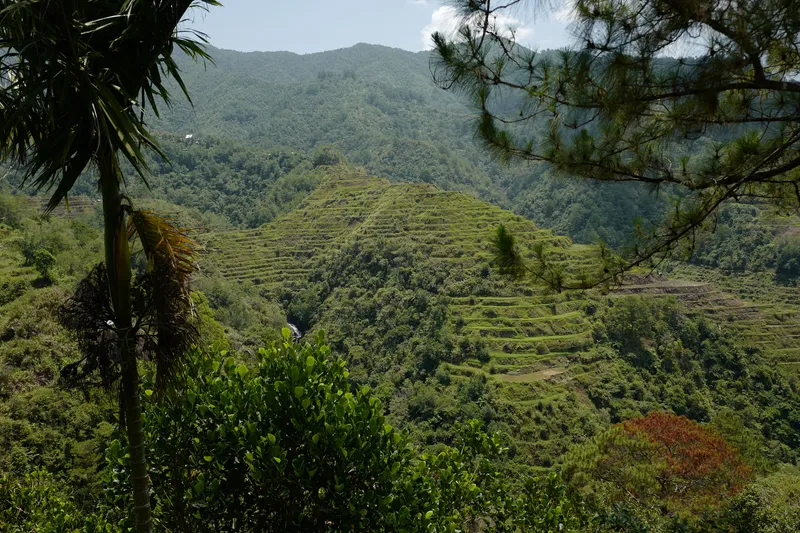
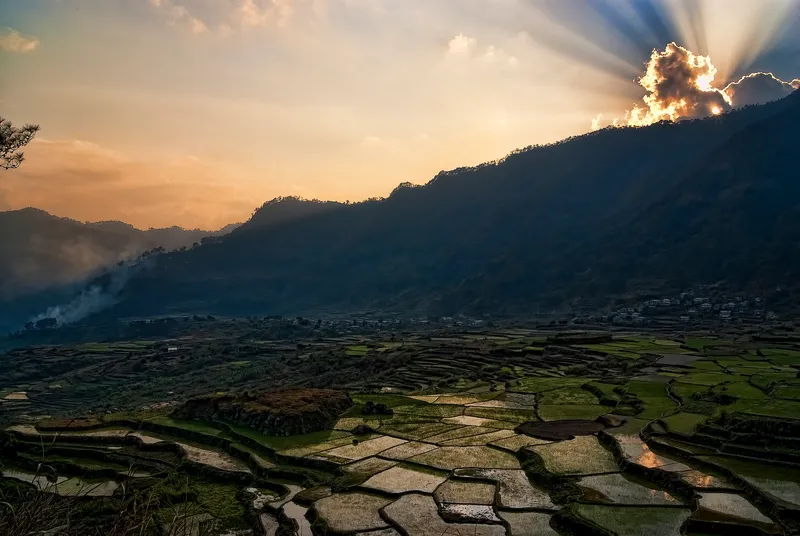
The dry season, roughly November to May, is the best window for Batad. Trails are firmer, the mountain views are clearer, and the terraces photograph beautifully. The rice terraces are at their most vivid green in the months before the pre-harvest period, so late in the dry season you can catch lush, sculpted slopes filling the amphitheater. The rainy season, roughly June to October, turns the stone paths slippery and muddy, brings leeches to the trails, and often wraps the peaks in cloud that hides the terraces entirely. It is also cool up here year round because of the altitude, so pack layers and a rain shell whenever you come. Aim for the shoulder months if you want green terraces with a lower chance of heavy rain.
- November to May: driest, clearest, best for trekking and photos
- Terraces are greenest in the months before pre-harvest
- June to October: rain, mud, leeches, and cloud-covered peaks
- Nights are cool at altitude, so bring warm layers year round
Pros and Cons of Batad
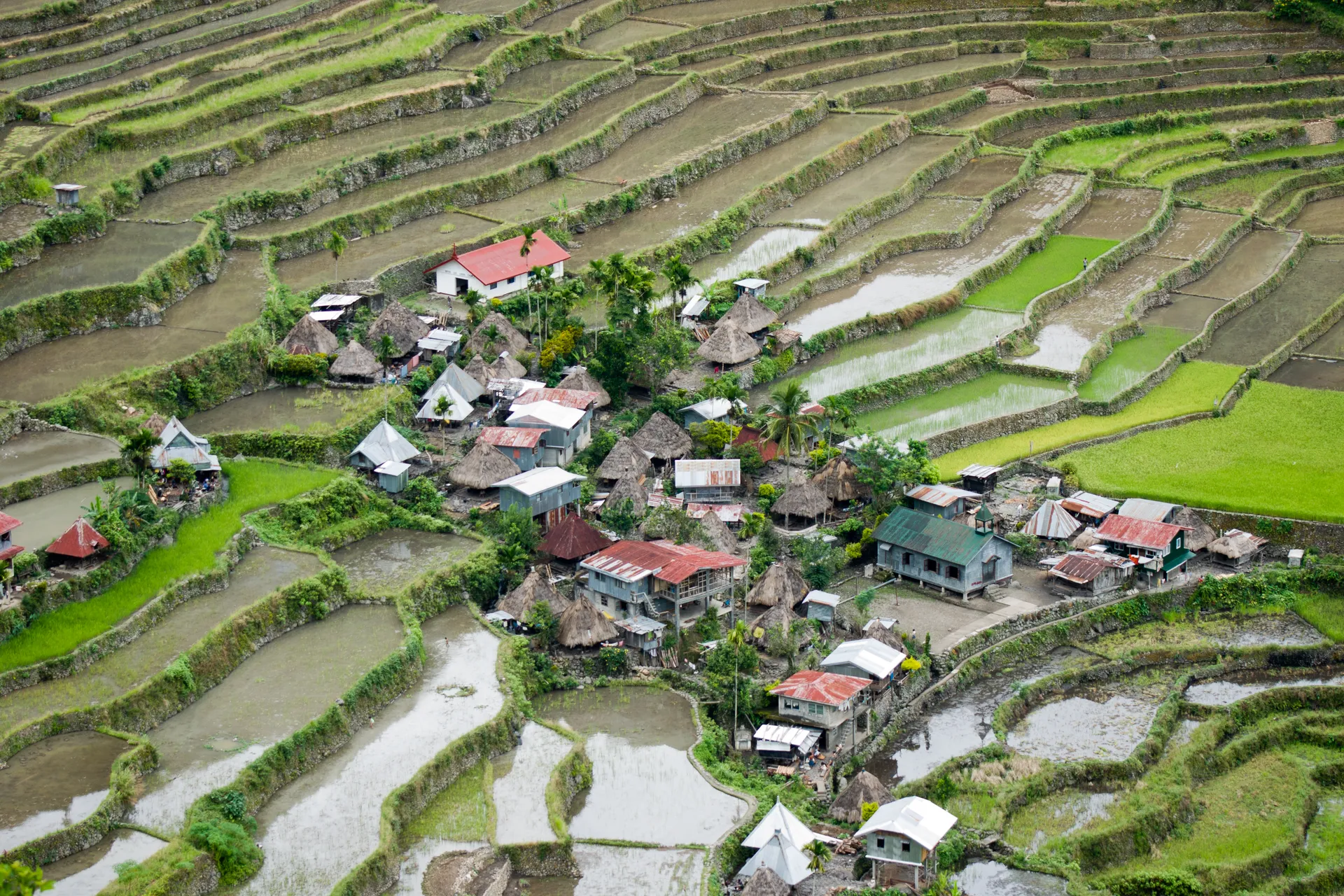
Batad rewards travelers who value place over convenience. The upside is extraordinary: you wake inside a 2,000-year-old amphitheater of hand-built rice terraces, a living UNESCO landscape, surrounded by Ifugao culture, mountain air, and genuine quiet. Trekking to Tappiya Falls or across the terrace walls is unforgettable, costs almost nothing, and puts your money directly into a small community. The downside is equally real: access is rough, infrastructure is basic, wifi and power are unreliable, and there is no nomad scene or nightlife to speak of. Comfort is limited, and anyone with a deadline will struggle. Weigh those honestly, and it becomes clear this is a destination for a chosen few rather than a general base.
- Pro: a stunning, living UNESCO terrace landscape and rich Ifugao culture
- Pro: very low cost, clean air, and deeply rewarding trekking
- Con: rough access, basic homestays, and unreliable wifi and power
- Con: no nomad community, no nightlife, and no place to do real work
Who Batad Is For
Batad is for the adventurous, culture-and-nature-focused slow traveler, not the deadline-driven remote worker. If your idea of a good week is trekking ancient terraces, learning about Ifugao life over a homestay dinner, and unplugging completely from screens, this village will move you. It suits people who can carry their own pack, handle steep trails and simple rooms, and treat patchy signal as a feature rather than a fault. It is a poor fit for anyone who needs reliable wifi, a coworking scene, comfort, or a social nomad hub. Come with time in hand, low expectations of infrastructure, and high curiosity about the place and its people, and Batad becomes one of the most memorable stops in the Philippines. Base longer-term work down in a city and keep Batad as a retreat.
- Ideal for adventurous, unplugged slow travelers and trekkers
- Great for culture seekers curious about Ifugao life and terraces
- Wrong for deadline workers who need reliable wifi and power
- Best enjoyed with patience, layers, and no fixed schedule