Cost of Living in Madaba
Where this figure comes from. No cost survey covers Madaba, so the $1,000 a month above is our own estimate rather than a measurement. On 416 of our 999 city guides the figure is built from a published Numbeo basket, a one-bedroom rent in the centre plus one person's monthly costs without rent, converted to USD; this city is not one of them. How we source everything.
Budget around $1,000 a month as a solo remote worker in Madaba, which is cheaper than Amman while sitting close enough to use it. A one-bedroom apartment runs roughly $350 to $550. Jordan is more expensive than its neighbours, with imported goods and alcohol carrying heavy duty, and the country's water scarcity shows up in utility costs. Local food is inexpensive: a full mansaf or a plate of mezze costs a few dollars, and the produce markets are cheap. Transport within the town costs almost nothing. Tourism pricing applies around the mosaic church and nowhere else. Alcohol is the sharpest difference from the rest of the region, taxed heavily enough that a beer in a licensed restaurant costs several times what the same would in Cairo or Beirut. Water reaches houses on a rota rather than continuously, filling rooftop tanks once a week, and a household that empties its tank waits for the next turn, which is why everybody here watches the level. Rent is usually quoted by the year and asked for six months or twelve at a time, so what has to be found on day one decides whether a stay is affordable at all.
Where to Work in Madaba
Madaba has no formal coworking and remote work happens from apartments or from the cafes around the town centre. Jordanian fixed broadband reaches the town with usable speeds, and mobile data is reliable and inexpensive across the built-up area. The infrastructure is adequate rather than good, and reliability is behind what a European or East Asian city offers. Amman, forty minutes away, has proper coworking and a technology sector if a desk and a professional network matter. Power cuts are uncommon but not unheard of, so a backup mobile connection is worth arranging. Jordan sits two hours ahead of central European time, which gives a full working overlap with Europe and a late-afternoon window with the eastern United States. The town runs the only institute in the region that teaches mosaic making and restoration, founded to conserve the floors that made the place famous, and its graduates work on sites across the country. That is a genuinely unusual thing for a town this size to hold. Otherwise the local economy is farming, the trade around the churches, and whatever work the capital sends out this way.
Getting Around Madaba
Madaba is small and the historic centre with the mosaic churches, the archaeological park and the market is entirely walkable. Beyond that, shared taxis and minibuses run to Amman and to the surrounding villages cheaply and frequently. Mount Nebo is fifteen minutes away, the Dead Sea about forty and the King's Highway south towards Kerak and Petra starts here, which makes the town a genuinely convenient base. Queen Alia International Airport is twenty minutes away, closer than it is to central Amman. A car helps for the desert castles and the wadis but is not needed daily. Shared taxis fill before they leave rather than running to a timetable, so a journey to Amman can mean a short wait at the stand, and the last ones back run in the early evening. The road down to the Dead Sea drops four hundred metres below sea level in about half an hour, far enough that ears pop on the way down and engines labour on the way back up. Three roads run south from here, the fast desert one, the old highway through the hill towns and the road along the valley floor, and they make three completely different days out.
Sorting transport? Book an airport transfer, or compare car rental on Auto Europe and QEEQ.
Visas for Madaba
Jordan issues a visa on arrival to most Western nationals for a modest fee, and since January 2026 it covers a stay of up to 90 days. The Jordan Pass, bought before travel, waives the visa fee and covers entry to Petra and other sites, which makes it worth buying for almost any itinerary. There is no Jordanian digital nomad visa. Longer stays are handled through residence permits tied to work, study or property, and the process is bureaucratic. Israel and the West Bank are reachable overland through several crossings, and Saudi Arabia has opened to tourism, which broadens the options for a reset. The King Hussein Bridge is the exception among the land crossings: no visa is issued there and the Jordan Pass does not cover it, so anyone entering that way needs one arranged beforehand. The pass only waives the entry fee if the stay runs to at least two whole nights, a condition people miss and then argue about at the counter. Anyone staying more than 14 days has to report to a police station with a local address, and a landlord or a hotel has to confirm that address in writing, which is straightforward if arranged ahead and tiresome if not. A stay beyond 30 days also requires an HIV test.
Best Time to Visit Madaba
March to May and September to November are the comfortable seasons, with warm dry days, cool evenings and the surrounding hills green in spring. Summer from June to August is hot and very dry, regularly above thirty, though Madaba's elevation keeps it more bearable than the Dead Sea an hour below, where temperatures are extreme. Winter from December to February is genuinely cold at this altitude, with nights near freezing, occasional snow and buildings that are not built for it. Rain falls almost entirely between November and March and the total is small. The khamsin blows dust up off the desert in spring, usually for a few days at a stretch in April and May, dropping visibility and coating everything, which is the one flaw in an otherwise ideal window.
Pros and Cons of Madaba
Madaba puts a sixth-century mosaic map of the Holy Land on a church floor in the middle of a small, mixed Christian and Muslim town, with Mount Nebo above the Dead Sea a quarter of an hour away and the airport closer than it is to the capital. It is calm, safe and genuinely welcoming. It is a small town with limited services of any kind, no nomad community and modest nightlife, Jordan is expensive for the region, and the country's position in a volatile neighbourhood means travel advice should be checked before committing. The town is also one of the few places in Jordan with a substantial Christian population, and the mixed character of the place is part of why it feels unlike the rest of the country.
Who Madaba Is For
A quiet base in Jordan with the airport, the Dead Sea and the old highway south all close, if a town rather than a city is enough. Jordan's archaeology takes weeks rather than days to work through properly, and this is where somebody doing that would sensibly base themselves. The town is mixed and unhurried in a way the capital is not. Coworking, nightlife and an international professional network all mean getting on the road to Amman, tolerable now and then and grinding as a routine. A tight budget is the other constraint, because Jordan costs meaningfully more than its neighbours and the gap shows up in every weekly shop. Frequent travellers get an advantage that is easy to overlook: Queen Alia is twenty minutes from here, which is a great deal closer than it is from most of Amman, and that gap compounds over a year of flights.
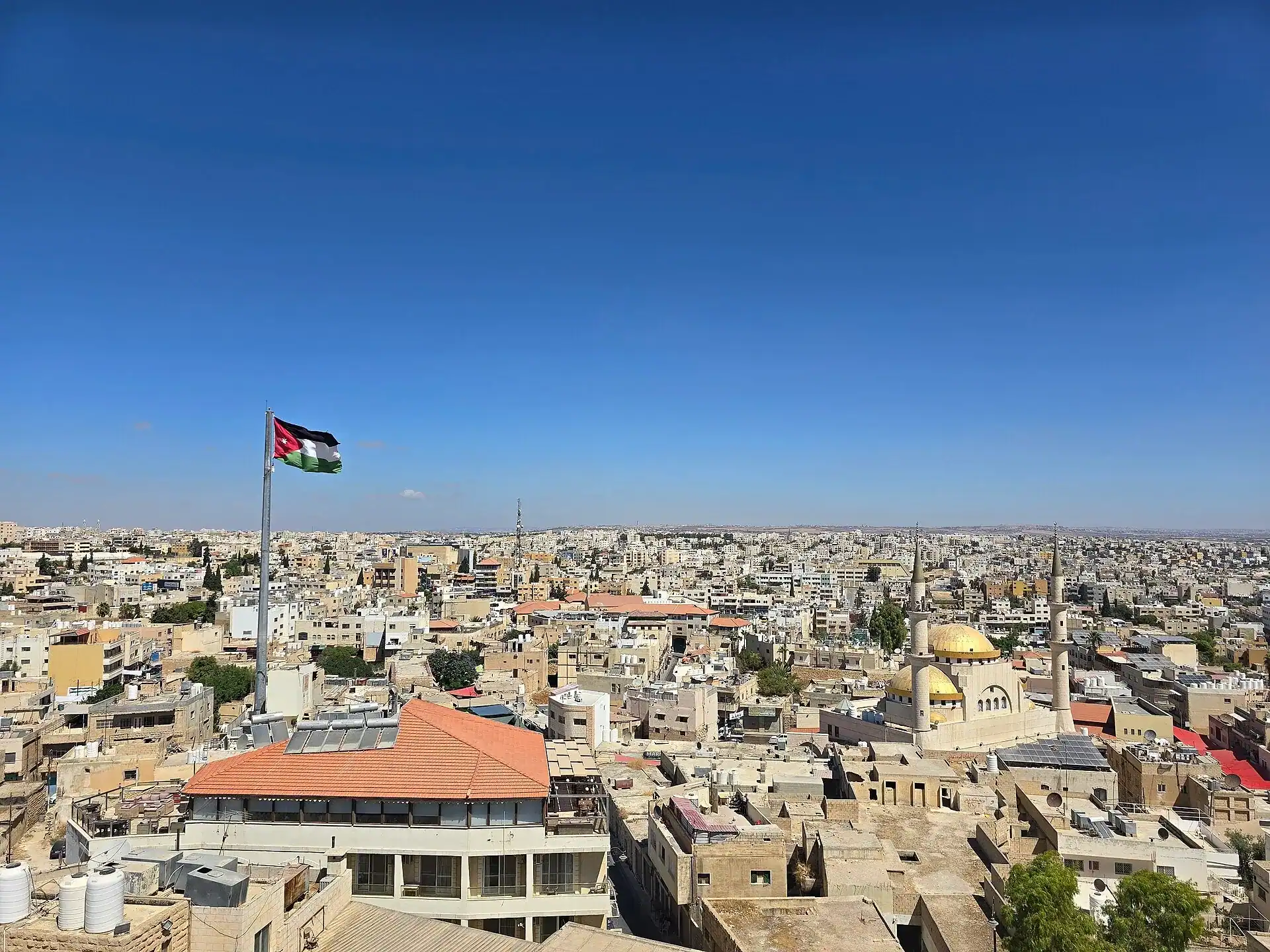 Photo: Mohammad hajeer / Wikimedia Commons (CC BY 4.0)